



A complete pilgrim record drawn from the existing published article data.
Historical Foundation
The Vision of Madhvacharya
Definition: Dvaita Vedanta
Dvaita Vedanta is a dualistic school of Hindu philosophy founded by Madhvacharya. It posits that God (Brahman or Vishnu) and the individual soul (Atman) are eternally distinct entities, advocating a clear distinction between the Supreme Being and the universe, including individual souls.
The Unique Paryaya System
"The Paryaya is not merely an administrative transfer; it is a spiritual rejuvenation, ensuring continuity and fresh perspectives in the service of Lord Krishna."
Historically, the establishment of the Ashta Mathas led to a concentration of Brahmins in Udupi, comprising 10% of the region's population, three times higher than elsewhere in South India.
Architecture & Craftsmanship
Dravidian Splendour with Tuluva Nuances
Sculptural Grandeur and Iconic Features
The Presiding Deity
Bala Krishna: The Butter-Holding Child
Deity Profile: Bala Krishna
Main Deity: Krishna
Form: Bala Krishna (Infant Krishna)
Iconography: Black stone idol, depicted holding butter and a churning rod.
Uniqueness: Installed by Madhvacharya, worshipped through the Kanakana Kindi. Symbolizes the endearing childhood लीला (leela) of Lord Krishna.
Associated Epic: Bhagavata Purana (10th Skandha)
Supporting Deities and Spiritual Lineage
Festivals & Living Traditions
A Calendar of Devotion: Major Celebrations
The temple observes several grand festivals throughout the year, each brimming with religious fervor and cultural richness:
- Krishna Janmashtami: Celebrated in August–September (Bhadrapada month), this is a 10-day extravaganza commemorating the birth of Lord Krishna. It culminates in a spectacular Ratha Yatra (chariot procession) and the joyful Vittal Pindi procession, featuring clay idols of Krishna.
- Paryaya Festival: This biennial festival in January is unique to Udupi, marking the transfer of temple administration from one Matha to another. It's a grand spectacle of rituals, cultural performances, and the installation of the new Paryaya Swamiji.
- Rathotsava: Held in March–April (Chaitra month), this chariot festival sees the processional deities taken out in exquisitely decorated chariots, drawing huge crowds.
Daily Rhythms and Cultural Expressions
Key Takeaway: Udupi Cuisine's Origins
The world-famous Udupi cuisine, celebrated for its delicious vegetarian fare like dosa, idli, and sambar, originated from the simple yet nutritious meals prepared and served at the Udupi Mathas. This culinary tradition, developed by the Shivalli Madhwa Brahmins, emphasizes purity, taste, and wholesome ingredients.
Plan Your Visit
A pilgrimage to Udupi promises a deeply enriching experience. Here’s what you need to know to plan your visit effectively.
Getting There: Travel Essentials
- Nearest City: Mangalore (approximately 58.5 km away).
- Nearest Airport: Mangalore International Airport (IXE), located 58.5 km from Udupi. It offers good connectivity to major Indian cities and some international destinations.
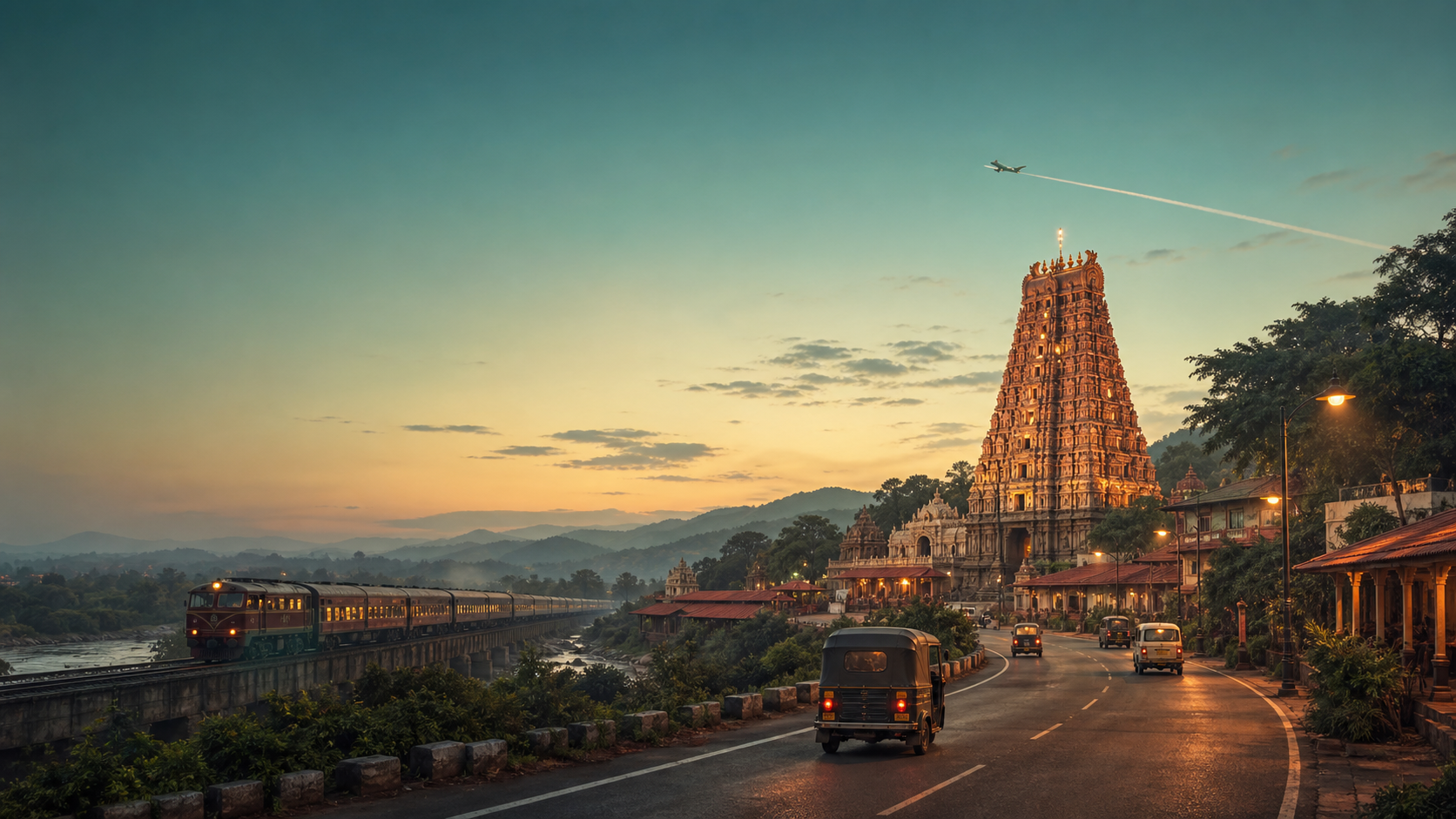
- Nearest Railway: Udupi Railway Station (UD) on the Konkan Railway network, about 4 km from the city bus stand. It has direct connections to major cities like Bengaluru, Mumbai, Delhi, and Thiruvananthapuram.
- By Road: Udupi is well-connected by National Highways NH 66 and NH 169A. Regular private and government buses operate from all major cities in Karnataka and neighboring states.
Visitor Information and Nearby Attractions
- Best Season to Visit: October to March offers pleasant weather. A visit during January is ideal to experience the grand Paryaya Festival, while August–September is vibrant with Krishna Janmashtami celebrations.
- Suggested Duration: A half-day minimum is recommended for the main temple, but a full day is advised to explore all eight Mathas, the Madhva Sarovara, and other nearby shrines.
- Visit Rules:
- Photography is prohibited inside the sanctum sanctorum.
- Devotees are requested to wear modest dress.
- Footwear must be removed before entering the temple complex.
Pro Tip: To fully immerse yourself in the local culture, try to plan your visit around the Paryaya Festival (every two years in January). This spectacular event offers a unique insight into the temple's living traditions and administrative system.Udupi Temple Walk: A Heritage Trail Through Sacred Spaces — figure 1 Udupi Temple Walk: A Heritage Trail Through Sacred Spaces — figure 2 Udupi Temple Walk: A Heritage Trail Through Sacred Spaces — figure 3 Udupi Temple Walk: A Heritage Trail Through Sacred Spaces — figure 4 Udupi Temple Walk: A Heritage Trail Through Sacred Spaces — figure 5 Udupi Temple Walk: A Heritage Trail Through Sacred Spaces — figure 6 Udupi Temple Walk: A Heritage Trail Through Sacred Spaces — figure 7 Udupi Temple Walk: A Heritage Trail Through Sacred Spaces — figure 8 Udupi Temple Walk: A Heritage Trail Through Sacred Spaces — figure 9 Related temples: A. C. Bhaktivedanta Swami Prabhupada | Abhimanyu Temple, Vayotthidam
Sacred Stories & Mythology
The Divine Discovery of the Idol
Definition: Gopichandan
Gopichandan refers to a yellowish-white clay found in sacred places, particularly associated with Dwarka. It is considered highly auspicious in Vaishnavism and is used for applying tilaka (sacred marks) on the forehead and body, symbolizing devotion to Lord Krishna.
Kanaka Dasa and the Miraculous Kindi
The Miracle of Kanakana Kindi
Kanaka Dasa, a devout follower of Lord Krishna, was unfortunately barred from entering the Udupi Sri Krishna Temple due to prevailing social customs. He took refuge behind the temple, near the kitchen, and through a small opening, he ceaselessly offered his prayers and composed soulful kirtanas in praise of Krishna. His fervent devotion touched the divine. One day, to the astonishment of all, the wall behind which Kanaka Dasa prayed cracked open, and the idol of Lord Krishna, which traditionally faces east, turned around to face west, directly towards his devoted bhakta. This miraculous event allowed Kanaka Dasa to behold his Lord, an act of divine grace that forever enshrined the 'Kanakana Kindi' as a symbol of devotion transcending all barriers.
"True devotion knows no bounds, and the Lord Himself will break barriers to answer a devotee's heartfelt prayer. The Kanakana Kindi is a testament to this eternal truth."
Saints, Poets & Devotees
Madhvacharya: The Founder and Philosopher
Kanaka Dasa: The Devoted Bard
Records, Marvels & Heritage
Unique Features and Engineering Feats
The Udupi Krishna Temple holds several distinctions, making it a truly one-of-a-kind pilgrimage destination:
- It is the seat of the Ashta Mathas, a unique system of monastic administration established by Madhvacharya.
- It is the only major Krishna temple in South India founded on Dvaita Vedanta principles.
- It is the sole temple where Krishna is worshipped through a small window (Kanakana Kindi), a feature steeped in the legend of Kanaka Dasa.
Archaeological Significance and Modern Relevance
The Udupi Sri Krishna Temple draws over 5 million visitors annually, making it one of Karnataka's most frequented pilgrimage sites and a significant contributor to the local economy and culture.
🗺 How to Reach
Hover a card to animate the journey on the map
Route to Udupi
Common Questions
Where is Udupi Temple Walk: A Heritage Trail Through Sacred Spaces located?
Udupi Temple Walk: A Heritage Trail Through Sacred Spaces is documented at Udupi, Karnataka.
Which deity is associated with Udupi Temple Walk: A Heritage Trail Through Sacred Spaces?
Udupi Temple Walk: A Heritage Trail Through Sacred Spaces is associated with Krishna.
Related Temples


A Living Covenant