A complete pilgrim record drawn from the existing published article data.
“The Dwarkadheesh Temple is a living axis mundi, where ancient myths are validated by modern archaeology and divine presence is affirmed through centuries of unwavering devotion.”
Related Temple: Somnath Temple
Historical Foundation
From Mahabharata Myth to Maritime Metropolis
The Vadhel Dynasty and the Siege of 1473
Adi Shankara’s Enduring Legacy
Architecture & Craftsmanship
Māru-Gurjara Mastery: Stone, Sea, and Sovereignty

Sculptural Narrative: Krishna-Lila in Stone

Engineering Marvels: Defying Time and Tide
The Presiding Deity
Dvārakādhīśa: The King of Dwarka
Form: The standing murti of Krishna, adorned as a royal sovereign, wears the kiritamukuta (crown) and kaustubha gem. He holds the shankha (conch) and chakra (discus). His sthana (standing) posture signifies active kingship and divine protection.
Iconographic Uniqueness: This is the singular Dvārakādhīśa icon installed by Aniruddhaśrama Śaṅkarācārya in 1559 CE, rendering it theologically and historically distinct from other Krishna murtis across India.
Consort: Rukmini Devi, enshrined in her adjacent temple, her presence inseparable from Krishna’s sovereignty.
Symbolism: The name means 'Lord of Dvaraka'. He represents not the cowherd of Vrindavan, nor the charioteer of Kurukshetra, but the perfected, established king—the embodiment of dharma as righteous rule, wisdom, and unwavering compassion.
Rukmini Devi: The Eternal Consort & Divine Counterpart
“The Dvārakādhīśa is not a god you petition for boons; he is the sovereign you surrender to, the king whose law is dharma, whose city is your refuge, and whose presence is the very ground of being.”
The Miraculous Flag & the Covenant of Eternity
Festivals & Living Traditions
Krishna Janmashtami: The Birthday of the King
Dwarka Parikrama: Walking the Path of the Divine Couple
Daily Rituals: The Fourfold Rhythm of Grace
Plan Your Visit
Getting There: The Pilgrim’s Journey
Visitor Experience & Etiquette
“Dwarka stands as a sacred bridge between the legendary past and the living present, where every stone whispers tales of divine sovereignty and unwavering devotion.”
Sacred Stories & Mythology
Foundational Legends of Dwarka
The Reclamation of Dwarka: When Krishna Commanded the Sea
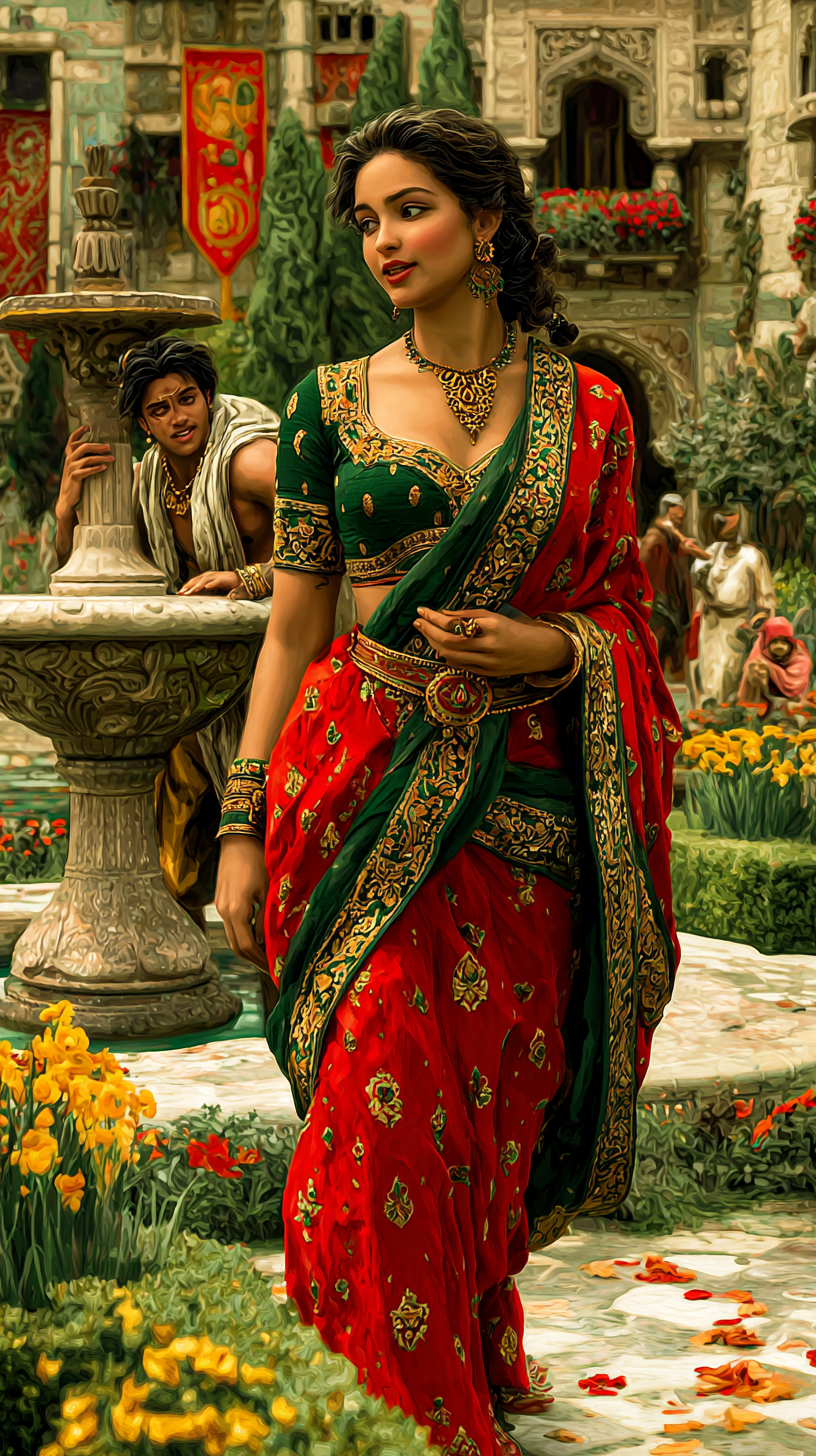
Before any temple stood, a divine command shaped the very land. The Mahabharata narrates how Krishna, having fulfilled his earthly mission, sought a permanent, inviolable abode for his people, the Yadavas. Guided by divine wisdom, he selected the shifting coastline of Saurashtra. There, with a gesture of his hand and the immense power of his will, he ordered the sea to recede. The waters obeyed, parting to reveal a vast, fertile plain of solid rock and rich soil. On this reclaimed land, Krishna oversaw the construction of Dwarka—a city of 900,000 palaces, each built of gold, silver, and precious stones, connected by roads lined with flowering trees and cooled by fountains. This foundational myth is not mere allegory; it is the narrative that the NIO’s underwater discoveries actively seek to validate. Devotees perceive the submerged structures not as ruins of a fallen city, but as the submerged foundations of Krishna’s original, divine metropolis—a testament to a power that transcends the laws of physics and geology.
Durvasa’s Curse & the Birth of Two Temples
The legend of the sage Durvasa forms the theological heart of Dwarka’s sacred geography. His visit served as a profound test of the divine couple’s humility and endurance. When Rukmini, exhausted by pulling his chariot, asked for water, Krishna’s act of striking the earth to bring forth the Ganga was an act of supreme compassion and power. Durvasa’s subsequent curse—that Rukmini would remain fixed at that spot—was transformed by his own blessing into an eternal affirmation of her status as Krishna’s inseparable Shakti. This single event brought forth two sacred nodes: the main Dwarkadheesh Temple, representing Krishna’s sovereign power, and the Rukmini Devi Temple, representing his boundless compassion and the immovable nature of pure devotion. To perform the Dwarka Parikrama is to traverse this divine relationship, internalising the lesson that true sovereignty is meaningless without devotion, and true devotion finds its fulfilment only in the presence of the sovereign.
Devotional Narratives and Miracles
Meera Bai’s Final Darshan: The Soul Merging with the Beloved
The 16th-century mystic-poet Meera Bai stands as the ultimate devotee of Dvārakādhīśa. Her life was an unyielding pursuit of Krishna, articulated through ecstatic poetry and defiant devotion that challenged societal norms. Her final pilgrimage led her to Dwarka. Historical accounts and hagiographies consistently assert that upon reaching the temple, Meera Bai entered the sanctum sanctorum, offered her final prayers, and then, in a moment of transcendent union, merged bodily into the idol of Dvārakādhīśa. This is not a metaphor; it represents a literal belief held by millions of devotees—a miraculous event validating the temple’s power to grant moksha (liberation) in this very life. A small, unassuming shrine within the complex is dedicated to her, marking the spot of her final darshan. Her story transforms the temple from a place of ritual into a portal of grace, demonstrating that the love of a single, pure-hearted devotee can dissolve the boundary between the human and the divine.
Related Temple: Bhakti Movement Saints
Saints, Poets & Devotees
Adi Shankara: The Philosopher-King of Dharma
Meera Bai: The Embodiment of Bhakti
The Silent Lineage: Priests and Patrons
Records, Marvels & Heritage
Statistical Significance: A Temple of Firsts and Foremosts
The Dwarkadheesh Temple holds a unique array of statistical and spiritual distinctions, underscoring its unparalleled importance in Hindu pilgrimage:
- One of Four Char Dham: It stands as the only Char Dham site explicitly dedicated to Krishna as Dvārakādhīśa.
- 98th Divya Desam: This is the sole Divya Desam temple located in Gujarat, revered within the Tamil Divya Prabandham.
- Sapta Puri: Dwarka is one of the seven holiest cities in Hinduism, alongside Ayodhya, Mathura, Haridwar, Varanasi, Kanchipuram, and Ujjain.
- UNESCO Proposed: The temple is listed in the Indian government’s tentative list for World Cultural Heritage status, currently undergoing assessment.
- Annual Footfall: The temple attracts over 1 million pilgrims annually, a figure inferred from its Char Dham status and documented visitor reports, especially during major festivals.
Underwater Archaeology: The Sunken City of Krishna
Conservation Challenges: The Sea’s Relentless Embrace
🗺 How to Reach
Hover a card to animate the journey on the map
Route to Devbhumi Dwarka
Common Questions
Where is Dwarkadheesh Temple: Gujarat’s Divine Char Dham & 98th Divya Desa located?
Dwarkadheesh Temple: Gujarat’s Divine Char Dham & 98th Divya Desa is documented at Tamil Nadu.
Which deity is associated with Dwarkadheesh Temple: Gujarat’s Divine Char Dham & 98th Divya Desa?
Dwarkadheesh Temple: Gujarat’s Divine Char Dham & 98th Divya Desa is associated with Krishna.
Related Temples


A Living Covenant