
A complete pilgrim record drawn from the existing published article data.
Historical Foundation
The Mythic Genesis: Krishna’s Submerged Capital
Vadhel Dynasty & the 15th-Century Crucible
“The stones of Dwarka whisper tales of destruction and rebirth, a profound narrative of faith’s triumph over adversity and the enduring spirit of devotion.”
Adi Shankara’s Enduring Imprint
Architecture & Craftsmanship
Māru-Gurjara Mastery: Stone as Scripture
The Hydraulic Theology of the Gomati Ghats
Orientation & Cosmic Alignment
The Presiding Deity
Dwarkadhish: The King Who Rules Eternity
Name: Dvārakādhīśa (Lord of Dwarka)
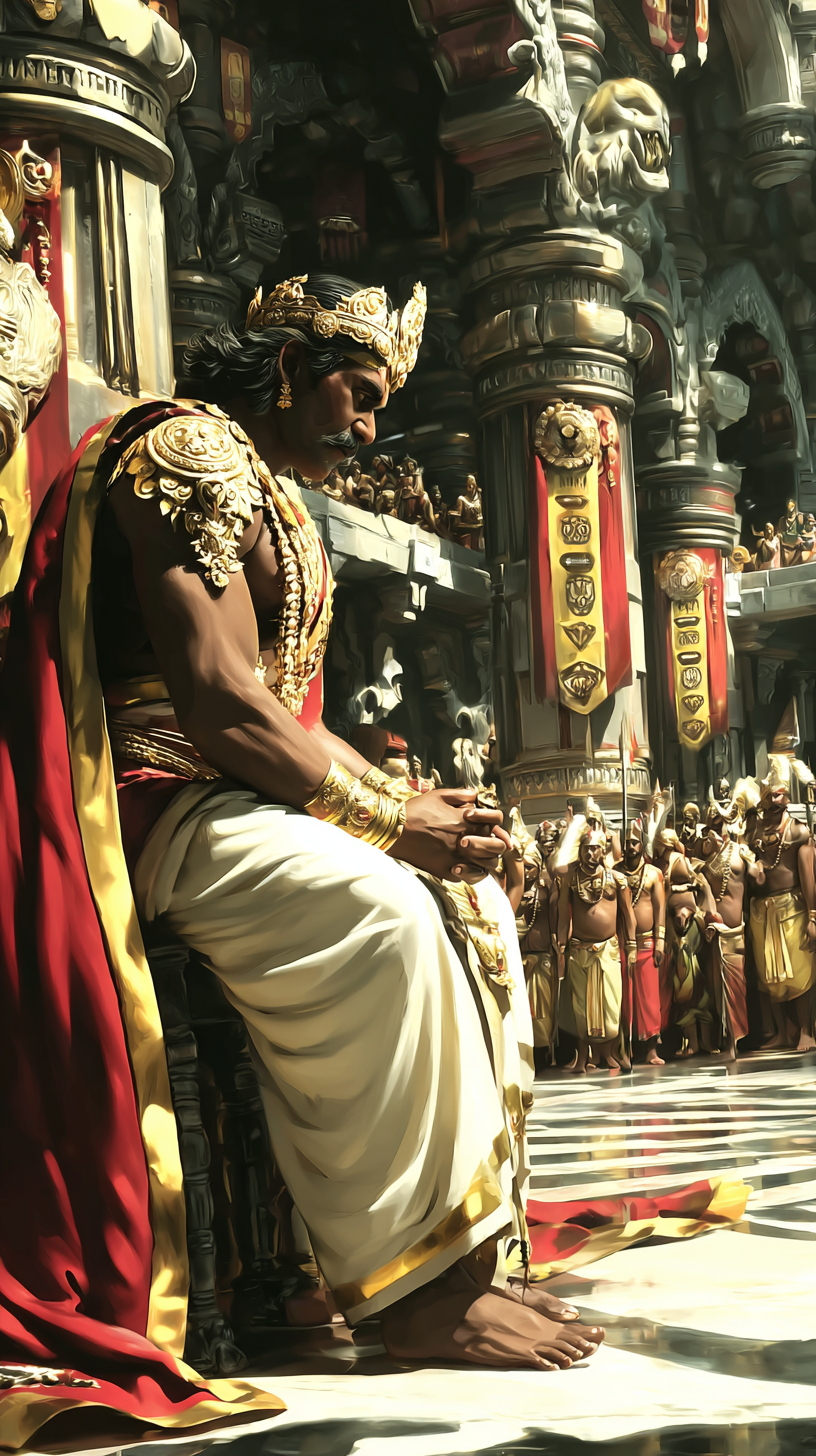
Form: Krishna as sovereign monarch—crowned, adorned with royal insignia (chakra, shankha, mace), seated on a lion-throne with gada (mace) resting on his lap.
Iconographic Uniqueness: Unlike pastoral Gopala or flute-playing Madhava forms, Dwarkadhish embodies rajadharma (royal duty)—justice, protection, and cosmic administration.
Consort: Rukmini, enshrined in a separate sanctum linked by a covered corridor, her presence affirms the inseparability of sovereignty and devotion.
Material: Black stone murti, installed in 1559 CE by Aniruddhaśrama Śaṅkarācārya, following the destruction of the 1473 idol.
The Durvasa Legend: Curse, Blessing, and Eternal Union
What is a Divya Desam?
A Divya Desam (“Divine Abode”) is one of 108 sacred Vishnu temples glorified in the Divya Prabandham, the 7th–9th century Tamil hymns composed by the Alvar saints. Dwarkadhish is the 98th Divya Desam, confirming its pan-Indian sanctity. It is revered equally in Sanskrit cosmology and Tamil devotional poetry, a dual recognition that shattered linguistic and regional barriers, making Dwarka a unifying node in India’s spiritual cartography.
Radha Damodar & the Circuit of Love
Festivals & Living Traditions
Krishna Janmashtami: The Cosmic Birthday
Dwarka Parikrama: Walking the Lila-Lines
Daily Rhythms: The Fourfold Pulse of Presence
- 6:00 AM: Mangala Aarti — awakening the deity with lamps and conch shells.
- 12:00 PM: Uchcha Aarti — the midday offering of 56 food items (chappan bhog).
- 7:00 PM: Shayana Aarti — gently putting the deity to rest with lullabies and hymns.
- 9:30 PM: Shayana Darshan — the final viewing before the temple closes for the night.
Plan Your Visit
Practical Essentials
- Opening Hours: 6:00 AM – 1:00 PM and 5:00 PM – 9:30 PM (closed 1:00–5:00 PM for deity’s rest).
- Best Season: October–March offers a pleasant climate, ideal for performing the parikrama.
- Peak Festivals: Krishna Janmashtami (Aug–Sep), Kartik Purnima (Oct–Nov), and the Dwarka Parikrama (year-round, peaking in Kartik).
- Nearest Transport:
- Railway: Dwarka Railway Station (DMK), 2 km away.
- Airport: Porbandar Airport (PBD), 95 km (connect via taxi/bus).
- Bus: Direct services are available from major cities like Ahmedabad, Rajkot, and Jamnagar.
Visitor Guidelines & Cultural Sensitivity
Respecting the sanctity of the temple and local customs is paramount for all visitors. Adhering to these guidelines ensures a harmonious experience for everyone.
- Dress Code: Modest attire is mandatory—shoulders and knees must be covered. Scarves are often provided for women at the entrance.
- Photography: Permitted in courtyards; strictly prohibited inside the garbhagriha and antarala (sanctum sanctorum).
- Footwear: Must be removed before entering the temple complex (free storage available).
- Offerings: Only flowers, tulsi leaves, and coconuts are accepted; cash donations should be made via designated hundis (donation boxes).
- Accessibility: Wheelchair ramps are available at the Moksha Dwara; guided tours for the visually impaired can be booked in advance.
Nearby Temple Circuit & Suggested Itinerary
- Day 1: Begin with Dwarkadhish Temple (morning darshan + evening aarti) → Proceed to the Rukmini Devi Temple (afternoon).
- Day 2: Visit Bet Dwarka (Shri Keshavraiji Temple) via ferry → Continue to Nageshwar Jyotirlinga, one of the 12 revered Jyotirlinga shrines.
- Day 3: Undertake the Dwarka Parikrama (start at Gomati Sangam, complete at Jagat Mandir).
- Day 4: Travel to Junagadh (Radha Damodar Temple)—130 km away, accessible by train or bus.


Sacred Stories & Mythology
The Flag Hoisting Ritual: A Covenant with Time
Every day, the temple conducts four flag hoistings—at dawn, noon, sunset, and midnight—on the main spire. This is not mere ceremonial theatre; it is a cosmic covenant. According to temple tradition, Krishna declared: “So long as my flag flies over Dwarka, I shall remain present—until the sun and moon endure.” Each hoisting renews this promise, transforming the temple into a perpetual altar of divine immanence. The flags—saffron for renunciation, green for life, and white for purity—encode the three gunas (qualities) of nature, signifying Krishna’s mastery over all modes of existence. During Kartik Purnima, the flag is replaced with a massive, handwoven silk banner, a ritual witnessed by over 200,000 pilgrims, its unfurling accompanied by Vedic chants that vibrate the ancient limestone.
Meera Bai’s Final Darshan: Where Devotion Dissolves Form
The most beloved legend associated with Dwarkadhish is that of Meera Bai, the 16th-century Rajput princess-poet and ardent devotee of Krishna. Historical records confirm she undertook pilgrimages to Dwarka, composing ecstatic padavali (verses) that fused Rajasthani folk idiom with Sanskrit theology. Temple lore holds that in her final days, Meera entered the sanctum, gazed upon Dwarkadhish, and merged with the deity—her physical form dissolving into light. No relics remain; only a simple marble plaque marks the spot.
This event is not mythologized as death but as svayam pravesh (self-entry)—the ultimate fulfillment of Bhakti, where the devotee’s love becomes so absolute that the distinction between worshipper and worshipped vanishes. Pilgrims still whisper her verses—“Paga paga dhundhata phiri, Mira na milayo Shyam…”—echoing in the antechamber where she is said to have stood, a timeless testament to the power of pure devotion.
The Submergence Prophecy & Archaeological Echoes
Saints, Poets & Devotees
Adi Shankara: The Philosopher-King’s Architect
Vallabha Acharya & the Janmashtami Renaissance
Tamil Alvars & the South Indian Connection
Records, Marvels & Heritage
The Triune Sanctity: Why Dwarkadhish Stands Alone
“Dwarka is not a city on a map — it is a state of consciousness. When you stand before Dwarkadhish, you are not looking at stone; you are gazing into the mirror of your own sovereignty.” — Swami Chinmayananda
Engineering Marvels: Defying the Sea
- Erosion-Resistant Masonry: Limestone blocks were meticulously joined with iron dowels and molten lead, techniques thoroughly documented in ASI surveys. This sophisticated construction method ensured the temple's structural integrity against constant coastal erosion.
- Hydraulic Drainage: A complex network of underground channels was engineered to divert monsoon runoff, effectively preventing waterlogging in the sanctum and preserving the sacred spaces from moisture damage.
- Acoustic Design: The arrangement of the 72 pillars creates resonant frequencies that naturally amplify Vedic chants without artificial amplification. This remarkable acoustic property has been verified by IIT Bombay acoustics studies, demonstrating the builders’ advanced understanding of sound dynamics.
Conservation Challenges & Global Recognition
🗺 How to Reach
Hover a card to animate the journey on the map
Route to Devbhumi Dwarka
Common Questions
Where is Dwarkadhish Temple: The Divine Sovereign of Dwarka located?
Dwarkadhish Temple: The Divine Sovereign of Dwarka is documented at Tamil Nadu.
Which deity is associated with Dwarkadhish Temple: The Divine Sovereign of Dwarka?
Dwarkadhish Temple: The Divine Sovereign of Dwarka is associated with Krishna.
Related Temples


A Living Covenant