



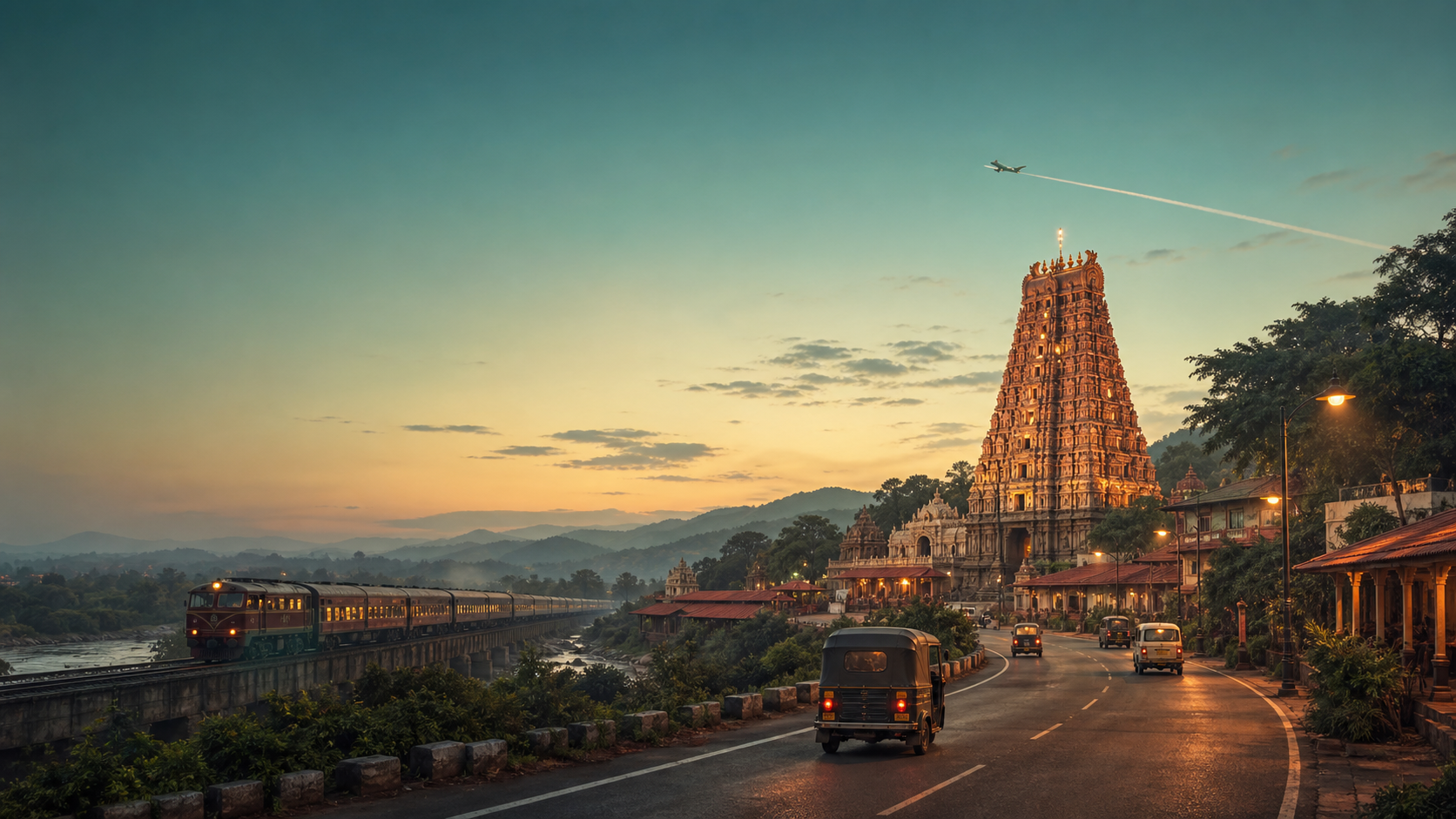
A complete pilgrim record drawn from the existing published article data.
From Pandava Legend to Travancore Patronage: The Temple's Enduring Past
Tracing its origins to the mythical Pandavas, the Aranmula Parthasarathy Temple's history begins with Arjuna's act of atonement, where he is believed to have installed the idol of Lord Krishna. This legendary founding is corroborated by ancient hymns from the 6th-9th century CE Alvars, compiled in the Nalayira Divya Prabandham. Over centuries, the temple evolved, gaining prominence under the patronage of the Travancore Kingdom from the 18th to the 20th century. The Travancore royals were historically associated with its administration, providing donations and ensuring its preservation, making it a custodian of significant religious traditions.
Arjuna's Founding Legend
The temple's inception is attributed to Arjuna, who, after the Kurukshetra war, installed the Krishna idol on a bamboo raft, seeking atonement on the Pamba's banks.
Alvar Glorification
Saints like Nammalvar and Thirumangai Alvar composed hymns in praise of the deity, solidifying its status as a sacred Vaishnava site centuries ago.
Travancore Kingdom's Legacy
The powerful Travancore Kingdom played a pivotal role in the temple's development and maintenance, extending patronage and administrative support for centuries, including wall paintings in the early 18th century.
Kerala's Temple Architecture: A Glimpse into Aranmula's Design
The Aranmula Parthasarathy Temple exemplifies the classic Kerala architectural style, characterized by its distinctive pitched roofs, gabled windows, and the extensive use of natural materials. The structure features a unique circular sreekovil, or sanctum sanctorum, which is a hallmark of traditional Kerala temple design. Intricate wood carvings adorn various parts of the temple, showcasing the region's masterful craftsmanship. Constructed primarily from granite and laterite, with elements of wood, terracotta, and copper, the temple's design reflects both aesthetic beauty and profound spiritual symbolism, harmonizing with its natural surroundings.
Distinctive Kerala Style
The temple's architecture features multi-tiered, steeply-pitched roofs and gabled windows, characteristic of Kerala's indigenous temple building traditions.
Circular Sreekovil
At its heart lies a circular sanctum sanctorum, a unique architectural element that houses the main deity and is central to the temple's spiritual layout.
Materials and Craftsmanship
Built from granite, laterite, wood, terracotta, and copper, the temple displays intricate carvings and traditional construction techniques passed down through generations.
The Divine Presence: Lord Krishna, Pandavas, and Sacred Narratives
Dedicated to Lord Krishna as Parthasarathy, the charioteer of Arjuna, the Aranmula temple is a profound embodiment of divine protection and love. Its origins are deeply intertwined with Mahabharata legends, particularly the story of Arjuna's atonement and the installation of the idol. The deity here is revered in a unique form, commemorating Krishna's vow-breaking intervention during the Kurukshetra war to protect Arjuna, a narrative emphasizing unconditional grace. This sacred space serves as a focal point for devotees, celebrating the enduring bond between Lord Krishna and his devotee, and enshrining a prominent Krishna idol.
Lord Parthasarathy
The presiding deity is Lord Krishna in his form as Parthasarathy, depicting him as Arjuna's charioteer, symbolizing divine guidance and protection.
Arjuna's Atonement
The temple's founding narrative centers on Arjuna's quest for atonement after the Kurukshetra war, leading to the installation of the Krishna idol on the Pamba River.
The Vow-Breaking Legend
A central story recounts Krishna breaking his vow not to wield weapons to protect Arjuna during battle, a unique aspect of the deity worshipped at Aranmula, embodying ultimate protection.
Experiencing Aranmula: Festivals, Rituals, and Visitor Information
Beyond its spiritual allure, the Aranmula Parthasarathy Temple is a vibrant center for cultural events, offering visitors a profound experience. The annual 10-day Utsavam in Makara month culminates in grand processions, including the Garuda Vahana Ezhunellippu. The temple is most famous for the Aranmula Boat Race, held on the last day of Onam, commemorating Arjuna’s bamboo raft crossing with spectacular snake boats and traditional music. Visitors can also experience the Arattu festival in Meenam month, involving a sacred bath in the Pamba River. The temple welcomes devotees with free entry, though traditional Kerala attire is preferred, and footwear must be removed.
Annual Utsavam and Arattu
The temple observes a 10-day Annual Utsavam in Makara month and the Arattu festival in Meenam, featuring elaborate rituals and processions to the Pamba river for a sacred bath.
Aranmula Boat Race
A highlight is the Aranmula Boat Race, a spectacular event during Onam, featuring 100-ft snake boats and traditional music, celebrating the temple's founding legend.
Visitor Guidelines
Entry is free, with traditional Kerala attire recommended (mundu for men, saree/skirt-blouse for women). The best time to visit is during the Makara Utsavam or Onam to experience the vibrant festivities.
| Deity | Krishna |
|---|---|
| Form | Parthasarathy (charioteer of Arjuna), in Vishvarupa form |
| Consort | Unknown |
| Sampradaya | Vaishnava |
| Significance | The main deity is Krishna in his fierce Vishvarupa form, as revealed to Arjuna after the Kurukshetra war. He is depicted holding the Sudarshana Chakra, symbolizing his vow-breaking act of compassion towards both Arjuna and Bhishma. |
Arjuna's Atonement and the Bamboo Raft
After the tumultuous Kurukshetra war, burdened by the weight of his actions, especially the slaying of Karna, Arjuna sought solace and expiation. He journeyed to the sacred banks of the Pamba River, where, in an act of profound devotion, he installed an idol of Lord Krishna. Legend has it that this divine image was transported across the river on a raft ingeniously fashioned from six bamboo pieces, giving rise to the temple's very name: 'Aran-villai' evolving into Aranmula. This sacred act not only marked the temple's origin but also symbolized a warrior's quest for spiritual redemption, forever embedding the Lord's boundless grace in this hallowed ground.
Even a divine vow can be broken for the sake of a devotee; such is the boundless compassion of Lord Krishna.
From bamboo rafts to sacred rivers, Aranmula stands as a testament to ancient legends and eternal devotion.
Related temples: Aazhimala Shiva Temple | Abhimanyu Temple, Vayotthidam
Aranmula Parthasarathy Temple: A Divine Legacy on the Pamba
Nestled on the serene banks of the Pamba River in Kerala, the Aranmula Parthasarathy Temple stands as a revered pilgrimage site, embodying a rich spiritual heritage and profound cultural significance. Dedicated to Lord Krishna in his form as Parthasarathy, the temple is one of the 108 Divya Desams, the holy abodes glorified by the Alvars. Its ancient origins are deeply intertwined with the legendary Pandavas, particularly Arjuna, making it a focal point for Vaishnava devotees. The temple's unique traditions and vibrant festivals reflect centuries of devotion and cultural preservation in the heart of God's Own Country.
Divya Desam Significance
As one of the 108 Divya Desams, Aranmula holds a special place in Vaishnava tradition, revered through the hymns of the Alvars, ancient Tamil poet-saints Nammalvar and Thirumangai Alvar.
Pamba River's Embrace
The temple's location on the sacred Pamba River adds to its sanctity, with the river playing a crucial role in various rituals and the annual Arattu festival.
Cultural Emblem
Beyond its religious importance, the temple is a significant cultural landmark, known for its unique architectural style and its association with the famous Aranmula Boat Race.
Cultural Impact and Local Traditions
The Aranmula Parthasarathy Temple stands as a vibrant epicenter for numerous cultural and religious festivals that deeply intertwine with the local community's life. Foremost among these is the annual Aranmula Uthrattathi Valla Sadhya, a unique ritualistic feast offered to the deity, which culminates in the famed Aranmula Valla Kali (snake boat race). This event, held on the Uthrattathi day of the Malayalam month Chingam, is not merely a sporting spectacle but a profound religious offering and a display of communal harmony, drawing thousands of devotees and tourists. Similarly, the annual Ashtami Rohini festival, celebrating Lord Krishna's birth, sees the temple premises transform into a hub of devotion, music, and traditional performances, reinforcing the temple's role as a preserver of ancient customs and a catalyst for social cohesion. These festivals are crucial for maintaining the region's unique cultural identity. Beyond its religious significance, the Aranmula Parthasarathy Temple has profoundly shaped the cultural landscape and socio-economic fabric of the region. It has historically been a patron and inspiration for traditional Kerala art forms, including mural paintings adorning its walls and classical performing arts. A particularly notable cultural artifact intrinsically linked to the temple is the Aranmula Kannadi, a unique handmade metal alloy mirror, which is often offered to the deity and is a testament to the region's exquisite craftsmanship. The continuous flow of pilgrims and the grand scale of its festivals provide significant economic impetus, supporting local artisans, vendors, and the burgeoning hospitality sector. Thus, the temple serves not just as a place of worship but as a living museum of Kerala's heritage, fostering a sustainable cultural economy and preserving invaluable traditions for future generations.🗺 How to Reach
Hover a card to animate the journey on the map
Route to Kozhenchery
Common Questions
Where is Aranmula Parthasarathy Temple: Kerala's Divine Divya Desam located?
Aranmula Parthasarathy Temple: Kerala's Divine Divya Desam is documented at Kerala.
Which deity is associated with Aranmula Parthasarathy Temple: Kerala's Divine Divya Desam?
Aranmula Parthasarathy Temple: Kerala's Divine Divya Desam is associated with Krishna.
Related Temples


A Living Covenant