A complete pilgrim record drawn from the existing published article data.
A Journey Through Time: The Temple's Rich History
Tracing its origins back to ancient periods, the Thirumailadi Sundareswarar Temple has witnessed numerous dynasties and renovations, each contributing to its enduring legacy and spiritual significance. While specific builders and founding dynasties remain unknown, the temple's architecture and historical context suggest a long and continuous history of patronage and development. Over centuries, it has been a focal point for religious practices, adapting and evolving while preserving its core sanctity. This rich historical tapestry underscores its importance as a timeless spiritual beacon in the region.
Ancient Origins
The exact period of the temple's construction is unknown, suggesting its deep roots in antiquity. Its presence predates many recorded historical accounts, indicating its long-standing spiritual importance.
Dynastic Influences
Though specific dynastic contributions are not documented, it is understood that various South Indian dynasties would have supported and renovated the temple over its long history, ensuring its preservation and growth.
Enduring Legacy
Despite the passage of time and the anonymity of its builders, the temple has maintained its spiritual vitality and structural integrity, continuing to serve as a vital center for worship.
Architectural Marvels of Thirumailadi
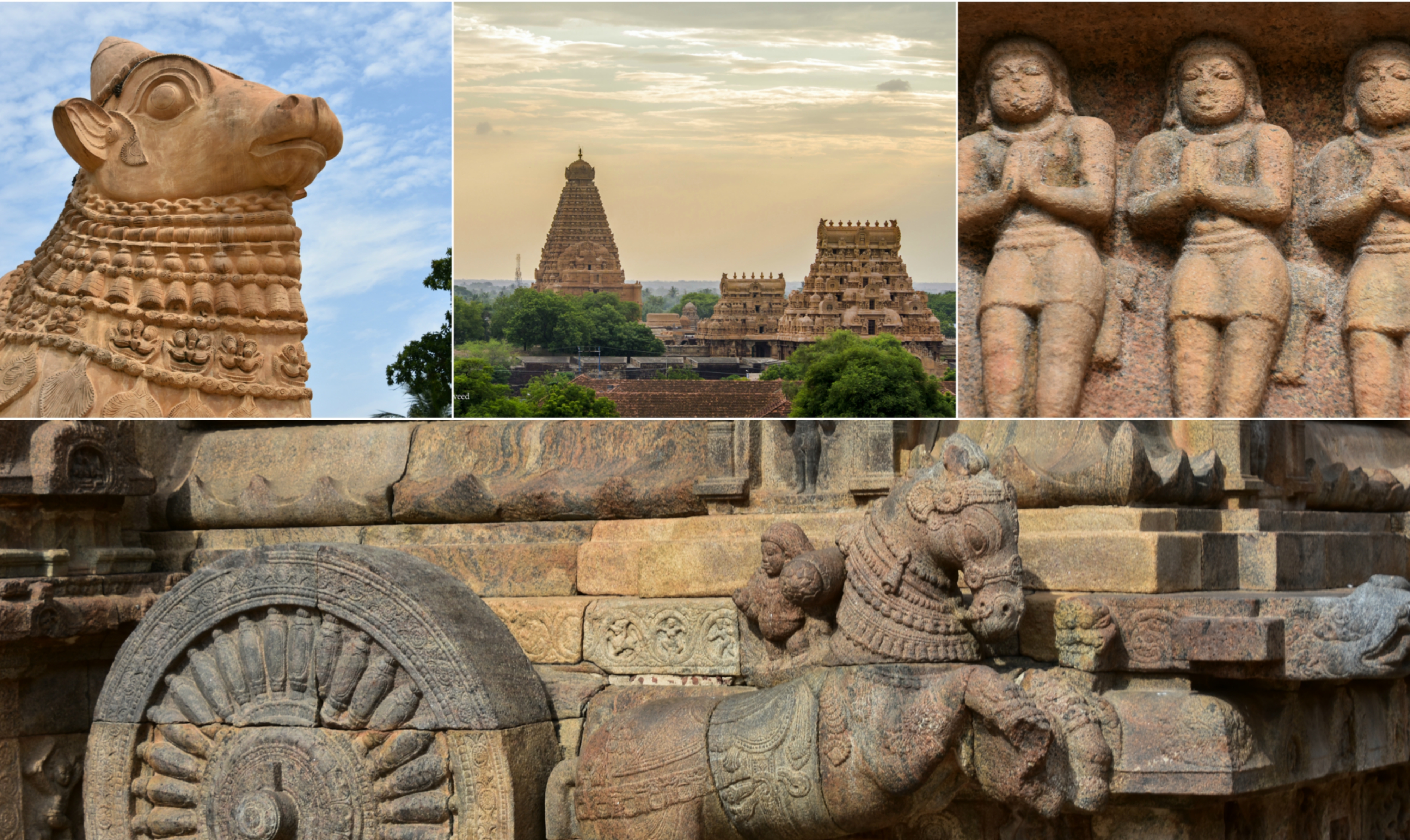
The temple's architecture showcases a quintessential Dravidian style, characterized by intricate gopurams, towering gateways, and expansive pillared halls. Detailed sculptures adorn its walls and pillars, narrating mythological tales and devotional themes from Hindu scriptures. The craftsmanship reflects the artistic prowess of ancient artisans, with each carving contributing to the temple's aesthetic and spiritual narrative. This blend of structural magnificence and artistic detail makes it a notable example of South Indian temple architecture, inviting admiration from all who visit and appreciate its historical artistry.
Dravidian Style
The temple exemplifies the classic Dravidian architectural style, known for its pyramidal gopurams, elaborate carvings, and use of stone as the primary building material.
Gopurams and Mandapams
Key features include its majestic gopurams, which serve as entrance towers, and various mandapams (pillared halls) within the complex, each with unique structural and decorative elements.
Sculptural Narratives
The temple walls and pillars are adorned with detailed sculptures depicting deities, mythological events, and scenes from Hindu epics, serving as visual narratives for devotees.
The Divine Presence: Lord Sundareswarar and Temple Legends
Dedicated to Lord Shiva as Sundareswarar, the temple is steeped in rich mythology and local legends, highlighting the deity's benevolent form and the sacred stories associated with this holy site. The primary idol of Sundareswarar is revered as a manifestation of divine grace, drawing countless devotees seeking blessings. Legends often recount miraculous events and divine interventions attributed to the Lord, strengthening the faith of the community. These narratives are integral to the temple's identity, providing a deeper spiritual context for worship and pilgrimage, connecting the faithful to ancient traditions.
Principal Deity
Lord Shiva is worshipped here as Sundareswarar, a name that signifies his beautiful form. He is the central focus of devotion and all rituals performed at the temple.
Mythological Narratives
The temple is associated with various local myths and legends that describe the divine acts and presence of Lord Sundareswarar, enriching its spiritual atmosphere.
Benevolent Manifestation
Sundareswarar is revered for his benevolent nature, believed to bestow blessings, prosperity, and spiritual liberation upon his devotees who visit the sacred premises.
Experiencing Thirumailadi: A Visitor's Guide
For pilgrims and tourists alike, visiting the Thirumailadi Sundareswarar Temple offers a profound spiritual and cultural experience. The temple is open from 6:00 AM to 12:30 PM and again from 4:00 PM to 9:00 PM, with free entry for all visitors. The best time to visit is between October and March, when the weather is most favorable for exploration and pilgrimage. Visitors are encouraged to wear traditional attire and remove footwear before entering the sacred premises, ensuring respect for the sanctity of the temple. A typical visit usually lasts between one and two hours.
Visiting Hours and Entry
The temple is accessible to visitors from 6:00 AM to 12:30 PM and 4:00 PM to 9:00 PM daily. Entry to the temple is free for all devotees and tourists.
Best Time to Visit
The period from October to March is considered the most suitable time for visiting, offering pleasant weather conditions for a comfortable and enjoyable experience.
Etiquette and Attire
Visitors are requested to adhere to traditional dress codes and remove their footwear before entering the temple complex, respecting the local customs and sacred environment.
| Deity | Shiva |
|---|---|
| Form | Shiva is often depicted as a yogi meditating on Mount Kailash or as Nataraja, the cosmic dancer. He is typically shown with a third eye, a crescent moon in his hair, and a snake around his neck. |
| Consort | Parvati |
| Sampradaya | Shaivism |
| Significance | Shiva is one of the principal deities of Hinduism, known as the Destroyer or Transformer within the Trimurti. He represents creation, preservation, and destruction, and is revered as the supreme being in Shaivism. |
The Blue-Throated Lord
During the Samudra Manthan (churning of the cosmic ocean) by devas and asuras, a deadly poison called Halahala emerged, threatening to destroy the universe. Fearing annihilation, all beings appealed to Lord Shiva. In an act of immense compassion, Shiva consumed the potent poison to save creation. His consort Parvati then clutched his throat to prevent the poison from descending into his body, causing his throat to turn blue. Thus, Shiva earned the epithet 'Neelakantha,' the blue-throated one, symbolizing his selfless sacrifice for the welfare of the cosmos.
Shiva, the Destroyer, yet the source of all creation and preservation.
In the heart of Tamil Nadu, experience the timeless presence of Lord Shiva.
Related temples: Aakkoor Thanthondreeswarar Temple | Aazhimala Shiva Temple
Discovering Thirumailadi Sundareswarar Temple
The Thirumailadi Sundareswarar Temple, nestled in Sirkali, Tamil Nadu, stands as a revered Hindu shrine dedicated to Lord Shiva. It embodies centuries of spiritual devotion and architectural grandeur, serving as a significant pilgrimage site for devotees. The temple's serene atmosphere and historical depth attract visitors seeking spiritual solace and cultural enrichment. Its main deity, Sundareswarar, is worshipped with great reverence, reflecting the rich Hindu tradition of the region. The temple stands as a testament to enduring faith and architectural excellence in South India.
Location and Significance
Situated in Thirumailadi, near Sirkali, the temple is a prominent spiritual landmark in Tamil Nadu. It holds deep religious significance for followers of Shaivism, drawing pilgrims from various parts of the state.
Deity and Tradition
The primary deity enshrined here is Lord Shiva, worshipped in his manifestation as Sundareswarar. The temple strictly adheres to the traditional practices and rituals of the Hindu religious tradition.
Restoration & Conservation Efforts
The Thirumailadi Sundareswarar Temple, like many ancient heritage sites in Tamil Nadu, has faced the ravages of time, weather, and human activity, necessitating periodic restoration and conservation efforts. Over centuries, the temple structure, particularly its intricate carvings, stucco figures, and the granite base, has undergone natural degradation due to environmental factors and the passage of time. Early interventions were often localized repairs, sometimes lacking a holistic, scientific approach. More recently, however, there has been a concerted push by the Department of Archaeology and local temple trusts to undertake systematic conservation. These efforts are crucial not only for preserving the physical integrity of the temple but also for safeguarding its invaluable artistic and historical narratives, ensuring that the architectural grandeur and spiritual essence remain intact for future generations. Contemporary conservation initiatives at Thirumailadi Sundareswarar Temple involve a multi-disciplinary approach, combining traditional sthapati (temple architect) knowledge with modern archaeological science. Detailed documentation, including photogrammetry and laser scanning, often precedes any physical intervention, allowing for precise reconstruction and repair. Specialists meticulously clean weathered surfaces, consolidate fragile elements, and replace damaged portions using materials that match the original composition as closely as possible, adhering to heritage conservation guidelines. Funding for these extensive projects often comes from government grants, endowments, and public donations, reflecting the community's deep reverence for the temple. These ongoing efforts are vital for maintaining the temple's structural stability, enhancing its aesthetic appeal, and ensuring its continued role as a vibrant center of worship and cultural heritage.🗺 How to Reach
Hover a card to animate the journey on the map
Verified routes to Thirumailadi Sundareswarar Temple
Common Questions
Where is Thirumailadi Sundareswarar: Shiva's Ancient Abode located?
Thirumailadi Sundareswarar: Shiva's Ancient Abode is documented at Sirkali, Tamil Nadu.
Which deity is associated with Thirumailadi Sundareswarar: Shiva's Ancient Abode?
Thirumailadi Sundareswarar: Shiva's Ancient Abode is associated with Shiva.