



A complete pilgrim record drawn from the existing published article data.
Architectural Splendor: Gopurams, Halls, and Sacred Spaces
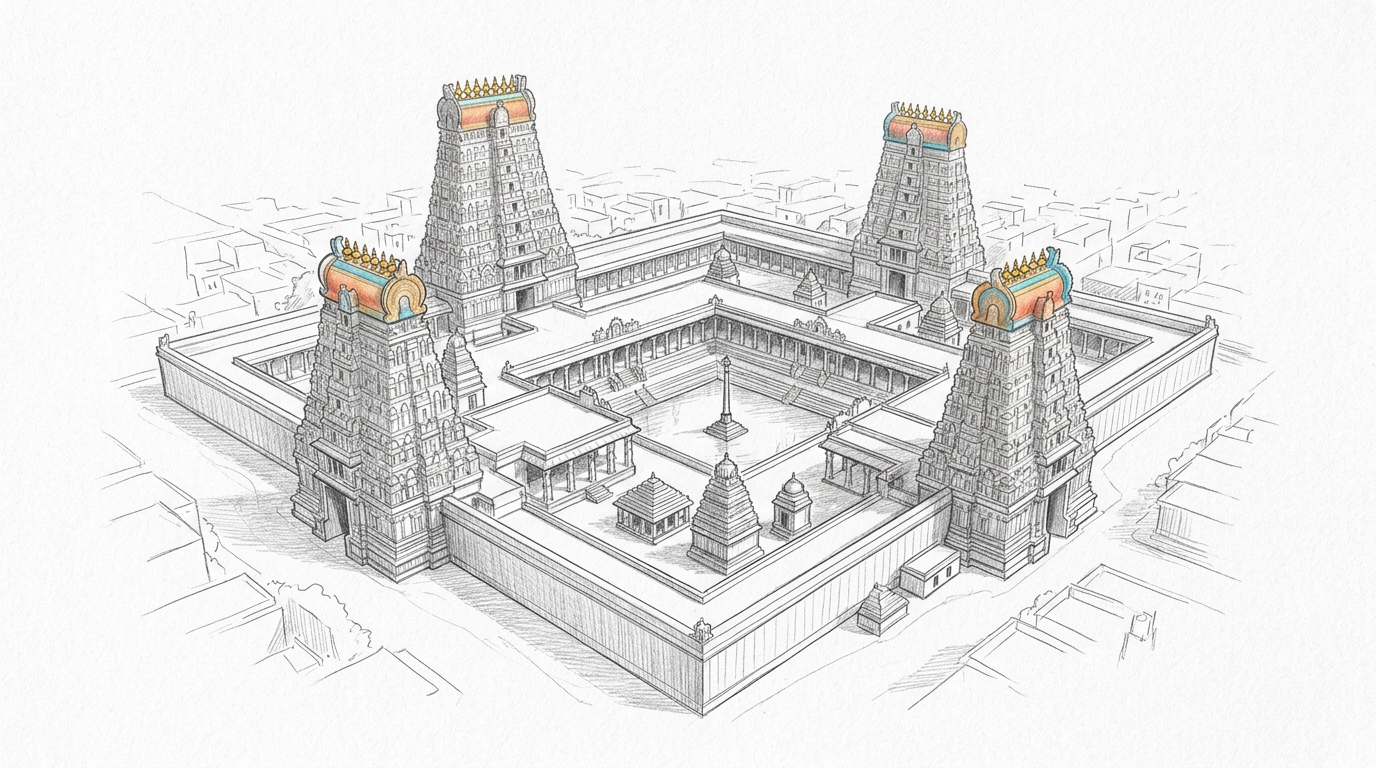
The Annamalaiyar Temple exemplifies the Dravidian style of architecture, a testament to centuries of artistic and engineering prowess. Its sprawling complex features numerous towering gopurams, serving as monumental gateways, with the eastern gopuram, completed in 1572 CE, being particularly notable. The temple is characterized by its expansive courtyards, intricate pillared halls, and numerous shrines, all constructed primarily from granite. The architectural style blends Chola and Vijayanagara influences, showcasing detailed carvings and sculptures that narrate mythological tales and depict various deities. It is recognized as an ASI National Monument.
Towering Gopurams
The temple complex is renowned for its majestic gopurams, or gateway towers, which are intricately carved and rise several stories high. The eastern gopuram is a significant example of Vijayanagara craftsmanship.
Pillared Halls
Within the temple, numerous mandapams (halls) feature elaborately carved pillars, including the thousand-pillared hall initiated by Krishnadevaraya, showcasing the detailed artistry of the period.
Dravidian Style
The architecture adheres to the traditional Dravidian style, characterized by its pyramidal gopurams, large courtyards, and use of granite, reflecting the building traditions of the Chola and Vijayanagara dynasties.
Experiencing Divinity: A Guide to Visiting Annamalaiyar Temple
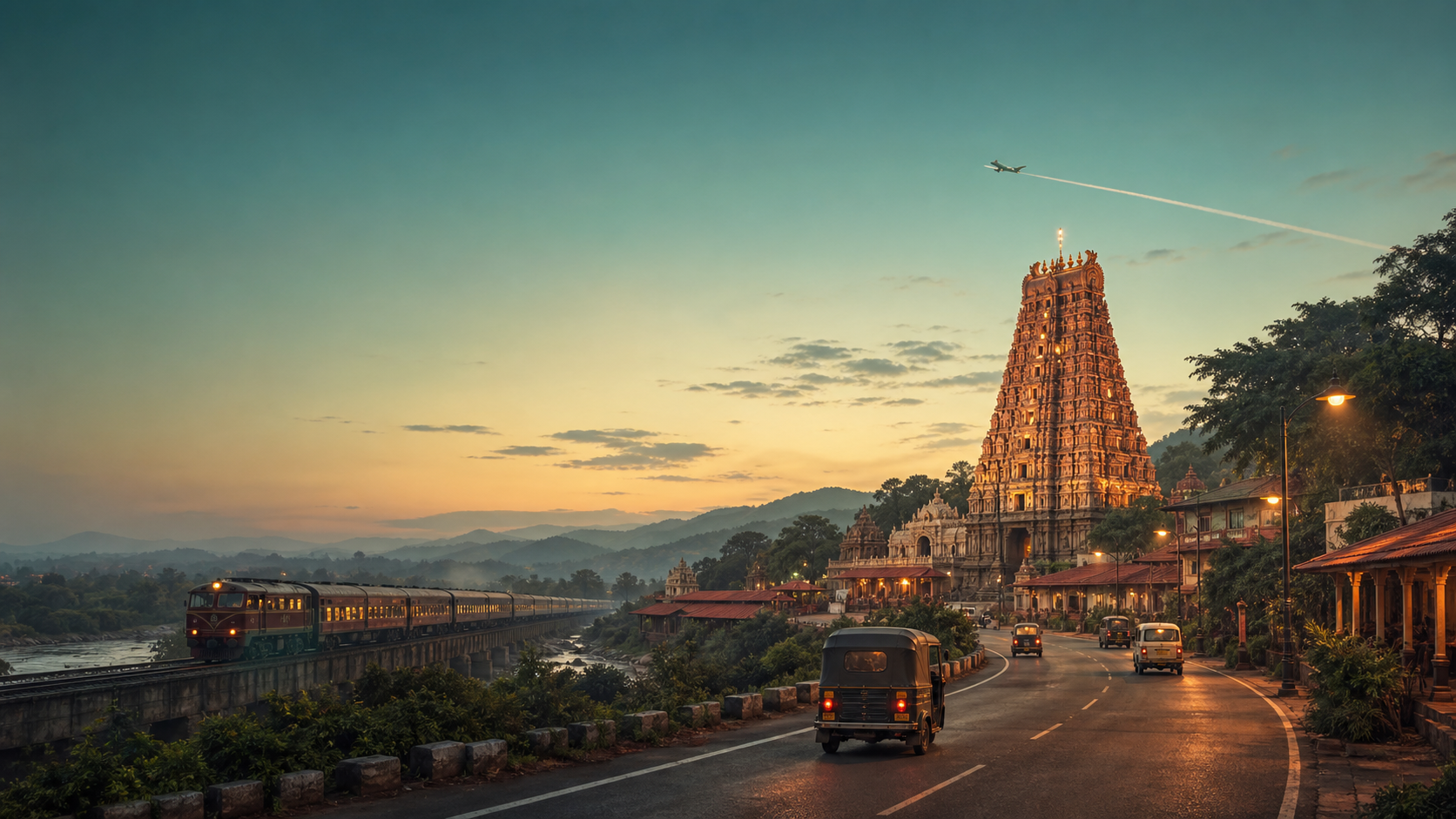
Visiting the Annamalaiyar Temple offers a profound spiritual experience, deeply rooted in Shaiva tradition. The temple is especially vibrant during its numerous festivals, with Karthigai Deepam being the most significant. During this festival, a giant beacon is lit atop Arunachala hill, symbolizing Shiva as the infinite Jyotirlinga, attracting millions of pilgrims who undertake the sacred 14 km circumambulation (girivalam). The best time to visit is from October to March. Modest dress is required, and footwear must be removed. The temple is easily accessible by bus and train, making it a key pilgrimage destination.
Karthigai Deepam Festival
The Karthigai Deepam festival, held in November-December, is the temple's most celebrated event. A massive lamp is lit on Arunachala hill, and devotees perform the girivalam, a sacred circumambulation.
Girivalam
Pilgrims undertake a 14 km circumambulation around the Arunachala hill, known as girivalam, which is considered highly meritorious, especially on full moon days.
Visitor Information
The temple is best visited between October and March. Modest attire, such as dhotis for men and sarees for women, is preferred, and all visitors must remove their footwear before entering the temple complex. It's advisable to allocate a full day for the visit.
| Deity | Shiva |
|---|---|
| Form | Shiva is worshipped as Annamalaiyar, an Agni Lingam, representing the fire element. He embodies the Arunachala hill itself in his Agneya (fire) form. |
| Consort | Parvati |
| Sampradaya | Shaiva |
| Significance | The temple is a Pancha Bhoota Sthalam, signifying Shiva as the cosmic fire. According to legend, Shiva manifested as an infinite pillar of fire to settle a dispute between Brahma and Vishnu, establishing his supreme power. |
The Infinite Pillar of Fire
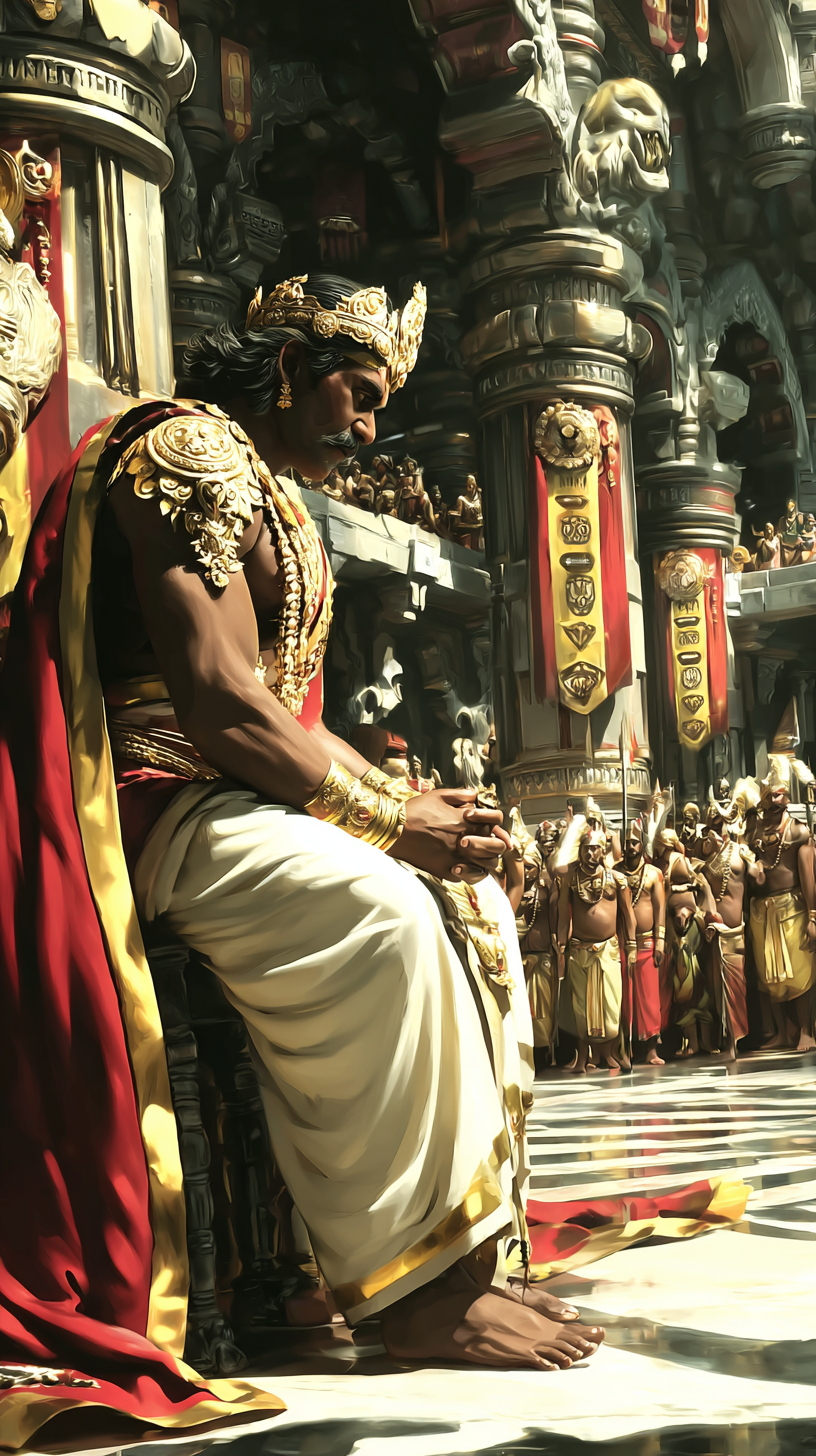
In the cosmic dawn, a fierce debate erupted between Lord Brahma, the creator, and Lord Vishnu, the preserver, each claiming supreme authority. To settle this celestial dispute, Lord Shiva manifested as an awe-inspiring, infinite pillar of fire – the luminous Jyotirlinga – at Arunachala. Brahma soared upwards to find its crown, while Vishnu delved into the depths to seek its base. After countless eons, Vishnu humbly admitted his failure. Brahma, however, returned with a thalampu flower, falsely claiming to have reached the summit. Enraged by this deceit, Shiva cursed Brahma, denying him worship in temples. Thus, Shiva eternally resides as the sacred fire on Arunachala hill, a timeless testament to his boundless supremacy.
Shiva, the infinite pillar of fire, stands eternal at Arunachala, settling cosmic disputes and revealing his boundless supremacy.
Experience the divine energy of Arunachala, where light triumphs over darkness and devotion finds its ultimate reward.
Related temples: Aakkoor Thanthondreeswarar Temple | Aazhimala Shiva Temple
A Legacy Etched in Stone: The History of Annamalaiyar
The history of the Annamalaiyar Temple is deeply rooted in ancient traditions, with Pallava-era inscriptions hinting at an earlier sacred presence. The current structure's foundation dates back to the 9th century CE, initiated by the Chola dynasty, who made significant land and cattle grants. Major expansions and architectural embellishments occurred during the 13th to 15th centuries under the Vijayanagara rulers. Notably, Krishnadevaraya began construction of the eastern gopuram and the thousand-pillared hall, with Sevappa Nayaka completing the eastern gopuram in 1572 CE, solidifying the temple's monumental scale and spiritual prominence over centuries.
Chola Foundations
The initial masonry construction of the temple core began in the 9th century CE during the Chola dynasty. Chola kings were instrumental in the early development and patronage of the temple.
Vijayanagara Expansions
The 13th to 15th centuries CE saw major expansions, particularly under the Vijayanagara period. Krishnadevaraya initiated the construction of the eastern gopuram and the thousand-pillared hall, significantly enlarging the temple complex.
Gopuram Completion
The towering eastern gopuram, a prominent feature of the temple, was completed in 1572 CE by Sevappa Nayaka, adding to the temple's architectural grandeur.
Annamalaiyar Temple: Abode of the Cosmic Fire
The Annamalaiyar Temple, located in Tiruvannamalai, Tamil Nadu, is a revered Hindu temple dedicated to Lord Shiva. It is one of the five Pancha Bhoota Sthalams, representing the element of Agni (fire). This ancient shrine is considered one of the most sacred places for Shaivites, where Lord Shiva manifested as an infinite column of fire, the Jyotirlinga. The temple complex is a significant pilgrimage site, drawing millions of devotees annually, particularly during the Karthigai Deepam festival, when a giant beacon is lit atop the Arunachala hill. It is also a Paadal Petra Sthalam, glorified by the Nayanmars.
Pancha Bhoota Sthalam
The Annamalaiyar Temple is one of the five Shiva temples, each representing one of the five primordial elements of nature: earth, water, fire, air, and space. Here, Shiva is worshipped as Agni Lingam, embodying the element of fire.
Arunachala Hill
The temple is situated at the base of the Arunachala hill, which is revered as a manifestation of Lord Shiva himself. The hill is central to the temple's mythology, particularly the story of Shiva appearing as an infinite pillar of fire.
The Fiery Essence: Lord Shiva as Annamalaiyar
At the spiritual core of the Annamalaiyar Temple is the worship of Lord Shiva in his manifestation as the Agni Lingam, symbolizing the cosmic fire. This form is central to the profound Hindu mythology of the "Infinite Pillar of Fire." The legend recounts Shiva appearing as an endless column of flame to settle a dispute between Brahma and Vishnu, proving his supreme authority. Devotees believe that Shiva eternally resides as this sacred fire on Arunachala hill. The temple is a Mukthi Thalam, a place believed to grant liberation, reinforcing its significance as a site where Shiva's fiery essence is perpetually present and worshipped.
Agni Lingam
Lord Shiva is worshipped here as the Agni Lingam, representing the element of fire. This makes Annamalaiyar Temple one of the Pancha Bhoota Sthalams.
The Infinite Pillar of Fire
Mythology states that Shiva manifested as an infinite pillar of fire at Arunachala, settling a debate between Brahma and Vishnu regarding their supremacy. This event underscores Shiva's boundless power.
Mukthi Thalam
The temple is revered as a Mukthi Thalam, a sacred place where devotees believe that simply thinking of Arunachala can lead to liberation (moksha).
Restoration and Conservation Efforts
The Annamalaiyar Temple, with its colossal gopurams and sprawling prakarams, has undergone numerous restoration and renovation efforts throughout its long history, reflecting the continuous devotion of various dynasties and patrons. Early interventions often involved rebuilding damaged structures, reinforcing foundations, and re-plastering surfaces using traditional lime mortar techniques. The sheer scale of the temple, encompassing multiple shrines, halls, and a massive compound, meant that maintenance was an ongoing and monumental task. Historical inscriptions occasionally allude to significant repairs undertaken by Vijayanagara rulers and later Nayak kings, who contributed extensively to the temple's current form. These historical efforts were crucial in preserving the temple's structural integrity and aesthetic grandeur against the ravages of time, weather, and occasional conflicts, ensuring its survival as a living heritage site for millennia. In contemporary times, the conservation of Annamalaiyar Temple involves a more scientific and systematic approach, often collaborating with archaeological departments and heritage conservation bodies. Modern efforts focus on structural stability, preserving ancient murals and sculptures, and managing environmental factors like water ingress and biological growth. Challenges include balancing traditional architectural integrity with modern engineering solutions, ensuring minimal disruption to daily rituals and pilgrim flow, and securing adequate funding for large-scale projects. Specialized teams work on documenting existing conditions, analyzing material composition, and implementing non-invasive repair techniques. The temple management, alongside government agencies, continually undertakes phased restoration projects to safeguard its priceless cultural and architectural legacy, ensuring that future generations can experience the spiritual and historical magnificence of this ancient Dravidian marvel.🗺 How to Reach
Hover a card to animate the journey on the map
Route to Tiruvannamalai
Common Questions
Where is Annamalaiyar Temple: Ancient Shiva Shrine of Fire Element located?
Annamalaiyar Temple: Ancient Shiva Shrine of Fire Element is documented at Tamil Nadu.
Which deity is associated with Annamalaiyar Temple: Ancient Shiva Shrine of Fire Element?
Annamalaiyar Temple: Ancient Shiva Shrine of Fire Element is associated with Shiva.
Related Temples


A Living Covenant