



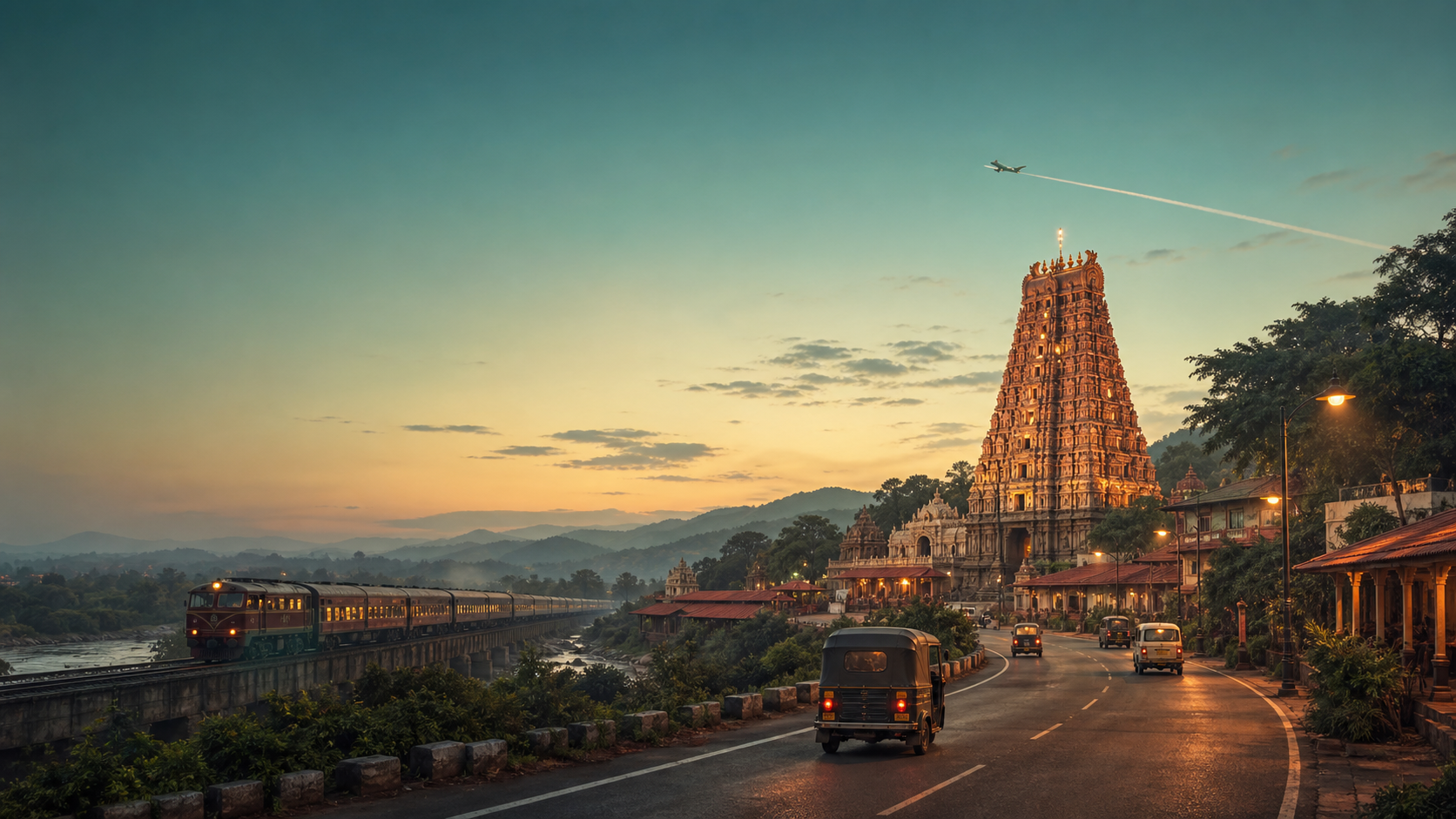
A complete pilgrim record drawn from the existing published article data.
The Haveli-Style Sanctuary: Architecture of Devotion
Shrinathji Temple's distinctive haveli-style architecture sets it apart from traditional temple designs, resembling a grand mansion rather than a conventional shrine. This unique architectural choice reflects the domestic worship protocol for Lord Krishna, where the deity is treated as a living child residing in a home. Built in 1672 under the Sisodia Rajput dynasty, the structure predominantly features black marble, stone, and wood, adorned with plaster, gold, and silver. The design fosters an intimate atmosphere, emphasizing personal devotion over elaborate rituals, consistent with the Pushtimarg tradition.
A Royal Residence for the Lord
The temple's haveli design, akin to a palatial home, underscores the belief that Shrinathji resides within, receiving daily care and services as a beloved family member.
Materials and Craftsmanship
Constructed primarily from black marble, stone, and wood, the temple showcases intricate craftsmanship, with elements of gold and silver enhancing its sacred ambiance.
Evolution of Style
While built in 1672, the haveli architecture has seen renovations, such as those in 1802, maintaining its unique blend of domesticity and grandeur.
Planning Your Pilgrimage: A Guide to Shrinathji Temple
Visitors planning a pilgrimage to Shrinathji Temple should be aware of specific darshan timings and unique devotional protocols to fully experience its spiritual atmosphere. The temple operates on a schedule of ashta-yam seva (eight daily darshans), each with distinct rituals. The period from October to March offers pleasant weather, with Annakuta and Janmashtami being ideal times for a visit due to grand celebrations. A strict dress code, favoring traditional Indian attire, is observed, and footwear is not permitted inside the haveli. Allow at least two days to witness the full cycle of seva.
Darshan Timings and Protocols
The temple follows a unique ashta-yam seva schedule, with specific timings for each of the eight daily darshans; it's advisable to contact the temple office for current schedules.
Best Time to Visit
The cooler months of October to March are recommended, especially during major festivals like Annakuta (October–November) and Krishna Janmashtami (August–September), for a vibrant experience.
Dress Code and Etiquette
A strict dress code requiring traditional Indian attire is enforced; visitors should avoid shorts and sleeveless tops, and remove footwear before entering the temple premises.
| Deity | Shrinathji |
|---|---|
| Form | Shrinathji is worshipped as Govardhanadhari Krishna, specifically in his infant form. The black marble svarupa depicts him lifting Govardhan Hill with only his left arm visible. |
| Consort | Unknown |
| Sampradaya | Vaishnava (Pushtimarg) |
| Significance | Shrinathji is a self-manifested (svayambhu) form of Krishna, uniquely depicted with only his left arm raised to lift Govardhan Hill. In the Pushtimarg tradition, Shrinathji is treated as a living infant (Balak) requiring a daily cycle of elaborate services (seva). |
The Self-Manifestation and Divine Journey of Shrinathji
The sacred image of Shrinathji self-manifested from a black marble rock on the revered Govardhan Hill in 1466. Initially, only a raised left arm was revealed, symbolizing Krishna's act of lifting Govardhan Hill. The full svarupa appeared in 1535. Centuries later, in 1672, the deity embarked on a journey from Mathura to escape Aurangzeb’s iconoclasm. The divine cart, carrying Shrinathji, halted miraculously at Sihad village (now Nathdwara), its wheels sinking axle-deep into the mud, signaling the Lord's chosen, eternal abode under the protection of Mewar.
Shrinathji, the Lord of Nathdwara, eternally protects His devotees, just as He lifted Govardhan Hill to shield Braj from Indra's wrath.
In Pushtimarg, the divine is not distant, but a beloved child, Shrinathji, whose every need is met with utmost devotion and love.
Related temples: Ahichchhatra Jain temples | Amethi Temple
The Sacred Abode of Shrinathji: A Journey to Nathdwara
The Shrinathji Temple, nestled in Nathdwara, Rajasthan, serves as a paramount pilgrimage destination for adherents of the Pushtimarg tradition. This sacred site enshrines Shrinathji, a unique manifestation of Lord Krishna. Revered as a Divya Desam and Svayambhu Sthala, the temple holds immense spiritual significance, drawing Vaishnava devotees seeking divine blessings. Its location in Rajasthan provides a serene backdrop for spiritual contemplation and devotion, making it a central hub for the worship of the child form of Krishna.
Nathdwara's Spiritual Significance
Nathdwara, meaning "Gateway to Shrinathji," became the permanent home for the deity, offering a protective sanctuary established by the Sisodia Rajputs of Mewar.
The Pushtimarg Tradition
The temple is the central shrine of the Pushtimarg sect, founded by Shri Vallabhacharya, which emphasizes devotion to Krishna as the Supreme Being and the path of grace.
Shrinathji as Svayambhu
Shrinathji is considered a svayambhu (self-manifested) deity, having emerged from Govardhan Hill, reinforcing its profound spiritual authenticity.
From Govardhan to Nathdwara: The Idol's Perilous Journey
The temple's rich history is deeply interwoven with the 17th-century relocation of the revered Shrinathji idol. Originating from Govardhan Hill near Mathura, where it self-manifested in 1466, the deity embarked on a perilous journey in 1672 to escape potential destruction during Aurangzeb’s reign. Under the protective patronage of Maharana Raj Singh of Mewar, the divine cart carrying Shrinathji miraculously halted at Sihad village, now Nathdwara, signifying the Lord's chosen, eternal abode. This event led to the foundation of the current temple, safeguarding the ancient idol.
The Self-Manifestation
Shrinathji's image first appeared from a black marble rock on Govardhan Hill in 1466, initially revealing only a raised left arm, symbolic of Krishna's act of lifting the hill.
The 17th-Century Relocation
To protect the deity from Mughal iconoclasm, Maharana Raj Singh of Mewar facilitated the idol's journey, culminating in its installation at Nathdwara in 1672.
Mewar's Patronage
The Sisodia Rajput dynasty of Mewar provided unwavering protection and patronage, ensuring the deity's safety and the temple's establishment, as seen in subsequent renovations by Maharana Bhim Singh in 1802.
Shrinathji: The Seven-Year-Old Lord of Nathdwara
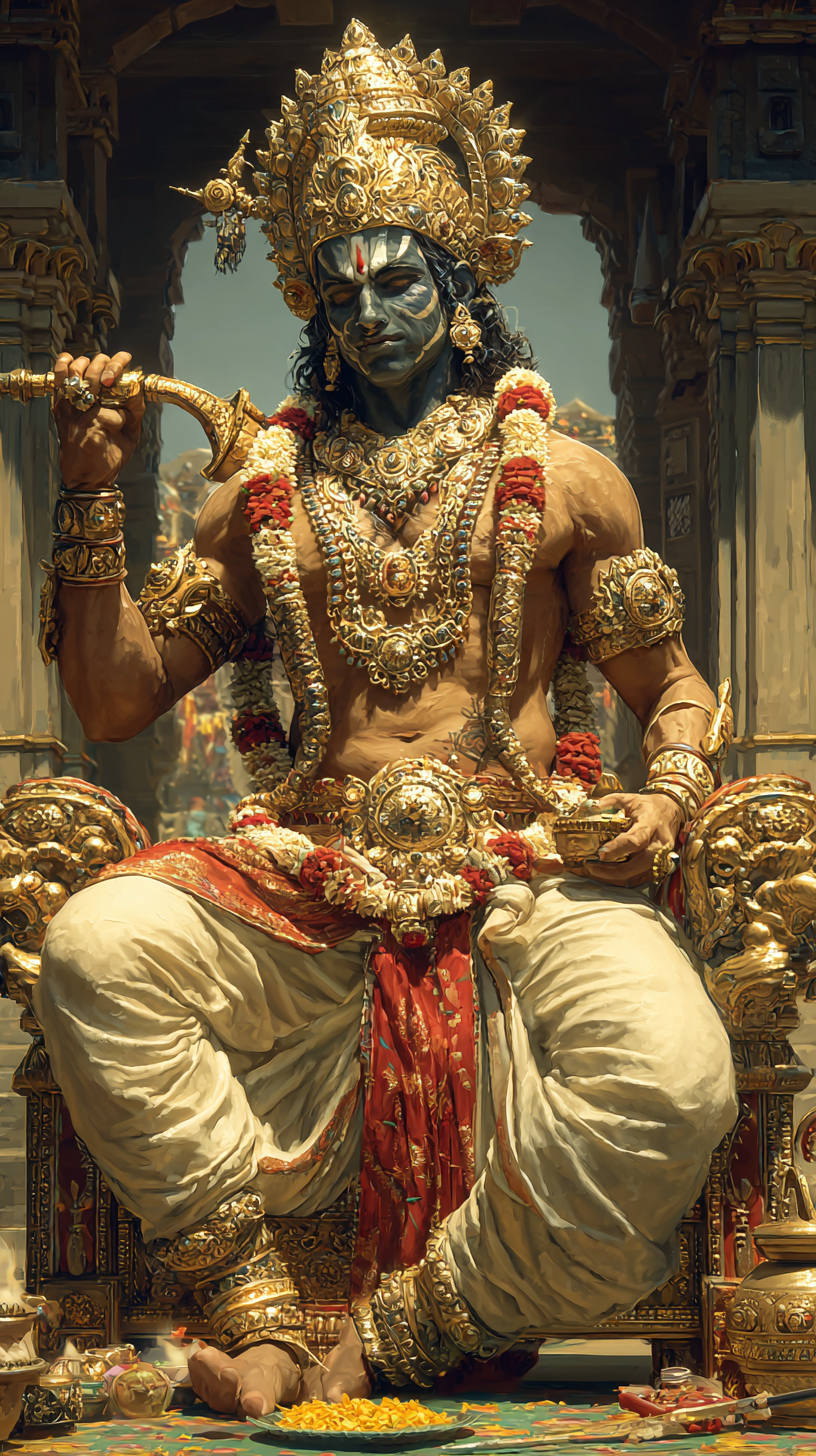
At the spiritual core of the temple resides Shrinathji, a captivating black marble idol depicting Lord Krishna as a seven-year-old child. This unique svarupa (form) is central to the devotional practices of the Vaishnava Pushtimarg sect, embodying Krishna's playful and protective nature, particularly from the Govardhan Leela. The deity's raised left arm symbolizes Krishna's act of lifting Govardhan Hill, an event commemorated through various festivals like Annakuta. This divine form is not merely an idol but a living presence, receiving daily seva (service) and darshan (sight) from countless devotees.
The *Svarupa* of Shrinathji
The black marble idol of Shrinathji represents Krishna as a seven-year-old boy, with his left arm raised, signifying his protection of Braj during the Govardhan Leela.
Central to Pushtimarg
Shrinathji is the presiding deity of the Pushtimarg tradition, where devotees engage in seva (service) and bhakti (devotion) to experience the Lord's grace and love.
Commemorating Govardhan Leela
The idol's form is a direct reference to Krishna's divine act of lifting Govardhan Hill, a story vividly recounted in the Bhagavata Purana, emphasizing divine protection.
Cultural Legacy: Pushtimarg, Paintings, and Heritage
Beyond its profound religious importance, Shrinathji Temple stands as a significant cultural beacon, deeply intertwined with the Vaishnava Pushtimarg tradition. It is widely recognized as the origin point of the renowned Nathdwara painting school, famous for its vibrant pichvais and miniature art depicting Krishna's life. The temple's heritage is further solidified as a State Protected Monument in Rajasthan, reflecting its historical and architectural value. Administered under a framework similar to HR&CE, with oversight from the Tilkayat Maharaj and Udaipur Darbar, it preserves centuries of spiritual and artistic tradition.
Origin of Nathdwara Paintings
The temple fostered the distinctive Nathdwara school of art, producing pichvais (painted backdrops) and miniature paintings that vividly narrate the stories of Krishna and the temple's rituals.
State Protected Monument
Recognized as a State Protected Monument, the temple's architectural integrity and historical significance are officially preserved, ensuring its legacy for future generations.
Pushtimarg's Artistic Expression
The Pushtimarg tradition, centered at Shrinathji, has inspired a rich tradition of music, poetry, and visual arts, all dedicated to the glorification of Lord Krishna.
🗺 How to Reach
Hover a card to animate the journey on the map
Route to Nathdwara
Common Questions
Where is Shrinathji Temple: Vaishnava Pilgrimage to Lord Krishna located?
Shrinathji Temple: Vaishnava Pilgrimage to Lord Krishna is documented at Nathdwara, Rajasthan.
Which deity is associated with Shrinathji Temple: Vaishnava Pilgrimage to Lord Krishna?
Shrinathji Temple: Vaishnava Pilgrimage to Lord Krishna is associated with Shrinathji.
Related Temples


A Living Covenant