




A complete pilgrim record drawn from the existing published article data.
Key Takeaway: The Dharma Dhwaj's Significance
The Dharma Dhwaj at Ram Mandir is more than just a flag; it is a profound symbol of the temple's ritual completion and the re-establishment of sovereign Hindu worship at Lord Rama's birthplace. Its unique iconography—Sun, Om, Kovidara—ties directly to Rama's Solar dynasty lineage and the essence of Hindu spiritual tradition, making it a powerful visual representation of faith and heritage.
Historical Foundation
Key Milestones for Ram Mandir & Dharma Dhwaj
The Mandate of the Trust
Dhwajarohan: A Ritual of Completion
What is Dhwajarohan?
Dhwajarohan (Sanskrit: ध्वजारोहण) is a significant Hindu temple ritual involving the hoisting of a sacred flag (dhvaja) atop the temple's main spire (shikhara). It signifies the formal consecration and ritual completion of the temple, invoking the presence and protection of the presiding deity, making the temple fully operational for worship.
Architecture & Craftsmanship

The grand Nagara architecture of Ram Mandir, Ayodhya.
Nagara Style and Materials
The Dharma Dhwaj: A Symbol of Elevation
The Dharma Dhwaj Iconography
The saffron flag bears three prominent sacred symbols:
- Stylised Sun (Surya): Represents the illustrious Solar dynasty (Surya Vamsha) to which Lord Rama belongs. It symbolizes illumination, vitality, cosmic order, and the sustaining power of righteousness.
- Sacred Syllable Om (ॐ): Denotes the primordial sound, the essence of Vedic and Upanishadic spiritual tradition, and the totality of existence.
- Sacred Tree Motif (Kovidara): Often identified with the Kovidara (Bauhinia variegata) or a similar auspicious tree, it symbolizes shelter, continuity, growth, and the flourishing of dharma across generations. The Kovidara tree is also traditionally associated with certain auspicious events in Hindu mythology.
Sculptural Highlights and Engineering Marvels

Detailed carvings adorning the walls of the Ram Mandir.
The Presiding Deity
Ram Lalla: The Infant Rama
Deity Profile: Lord Rama
- Main Deity: Rama (Ram Lalla - infant form, transitioning to adult Rama murti)
- Consort Deity: Sita
- Secondary Deities: Lakshmana, Bharata, Shatrughna, Hanuman, Surya (Sun God), Navagrahas (nine celestial bodies)
- Tradition (Sampradaya): Vaishnava
- Spiritual Classification: De facto Divya Desam (revered as such due to historical significance, though not part of the classical 108 list)
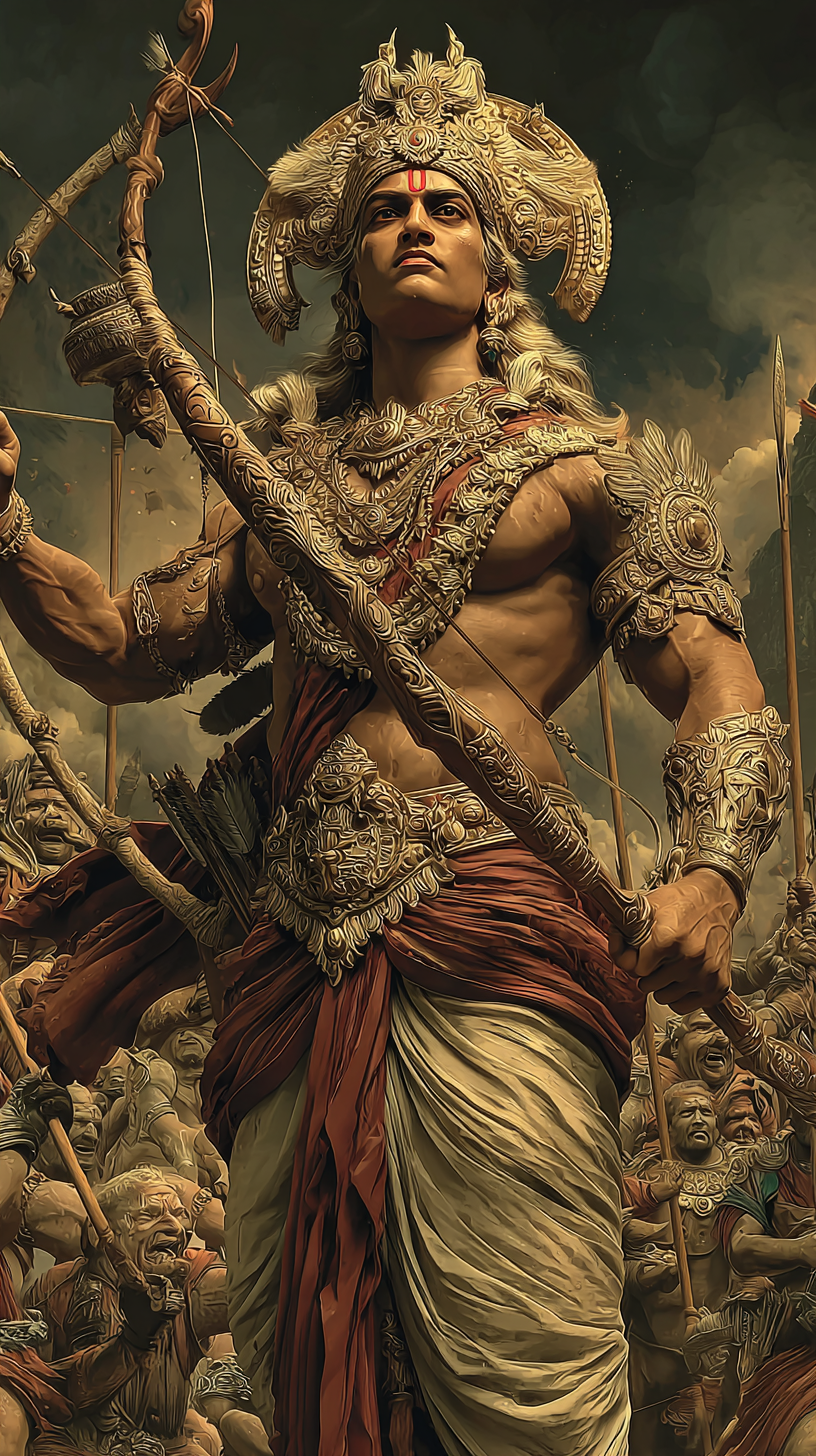
Lord Rama, the central figure of the Ramayana, is venerated as Maryada Purushottam, the 'Perfect Man' embodying righteousness, courage, compassion, and adherence to dharma. His life story, marked by exile, valor, and adherence to truth, serves as an eternal example for humanity.
The Vaishnava Tradition and Secondary Deities
Festivals & Living Traditions
Major Annual Festivals
- Vivaha Panchami: Observed on Kartik Shukla Panchami (typically November), this festival commemorates the sacred marriage of Rama and Sita. Its significance was further elevated in 2025 when the Dhwajarohan ceremony, marking the temple's ritual completion, was held on this auspicious day, forever linking it to the temple's full operational phase.
- Ram Navami: Celebrated on Chaitra Shukla Navami (March–April), this is the most important festival at the temple, marking the birth of Lord Rama. It draws the largest annual congregation of devotees, with elaborate pujas, kirtans, and spiritual discourses. The entire city of Ayodhya comes alive with unparalleled devotion and festivity.
- Diwali: Observed in Ashwin/Kartik (October–November), Diwali commemorates Rama's triumphant return to Ayodhya after 14 years of exile. The Ram Mandir and the entire city are adorned with grand illuminations, diyas, and cultural programs, echoing the joyous reception given to the returning king.
Daily Rituals and Offerings
Music and Dance Traditions

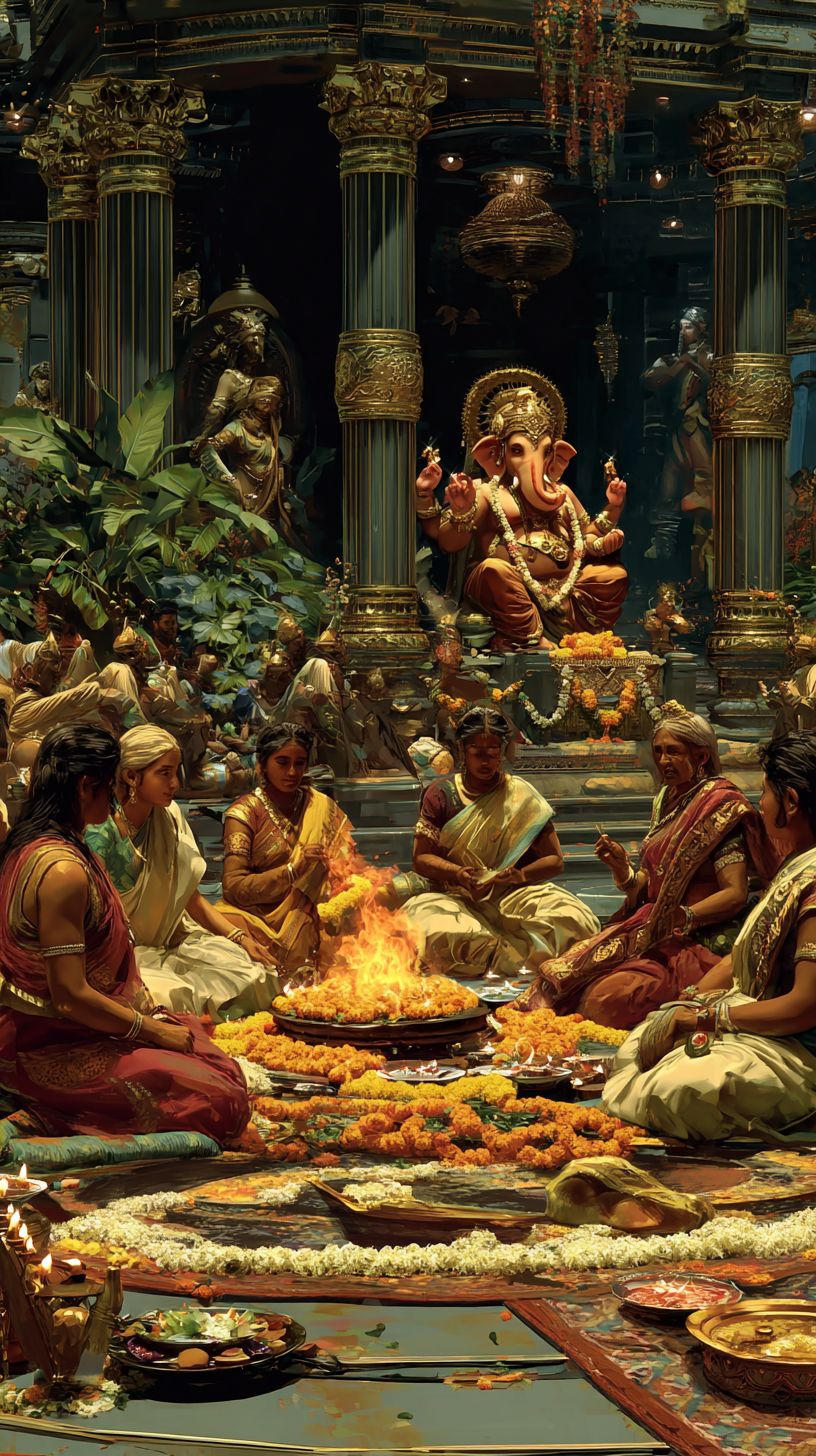
Festivities and joyous crowds celebrating at Ram Mandir.
Plan Your Visit
Getting There
- Nearest City: Ayodhya.
- Nearest Airport: Maharishi Valmiki International Airport, Ayodhya (AYQ). The airport is conveniently integrated with the temple complex, offering seamless access.
- Nearest Railway: Ayodhya Junction (AY) is approximately 4 km from the temple.
Best Time to Visit
Nearby Temple Circuit
Visit Rules and Etiquette
- Footwear: Must be removed before entering the sanctum sanctorum. Designated areas are available for shoe storage.
- Photography: Prohibited inside the garbhagriha and near the main deity to maintain sanctity and ensure smooth flow of devotees.
- Dress Code: Modest dress is required. Sleeveless tops, shorts, and overly revealing attire are discouraged as a mark of respect.
Suggested Visit Duration
Allocate a minimum of 3–4 hours for a full darshan, circumambulation (parikrama), and appreciation of the temple's architecture and surroundings. For those wishing to attend specific rituals or during festivals, 1–2 days are recommended to fully immerse in the spiritual atmosphere and explore other sacred sites of Ayodhya.
Related temples: Ahichchhatra Jain temples | Amethi Temple
Sacred Stories & Mythology
Ayodhya: The Birthplace of Rama
The Divine Birth of Rama
Long ago, in the illustrious city of Ayodhya, ruled the benevolent King Dasharatha. Despite his prosperity, he grieved for not having an heir. Upon the advice of his preceptors, he performed the Putrakameshti Yajna with utmost devotion. From the sacrificial fire emerged a divine being, offering the king a bowl of celestial pudding (payasam) for his queens. Distributed among Kaushalya, Kaikeyi, and Sumitra, this sacred offering led to the birth of four illustrious sons: Rama, Lakshmana, Bharata, and Shatrughna. Rama, born to Queen Kaushalya, was an incarnation of Vishnu himself, destined to restore righteousness and vanquish evil, making Ayodhya forever sacred as his Janmabhoomi.
Vivaha Panchami and Other Mythological Events

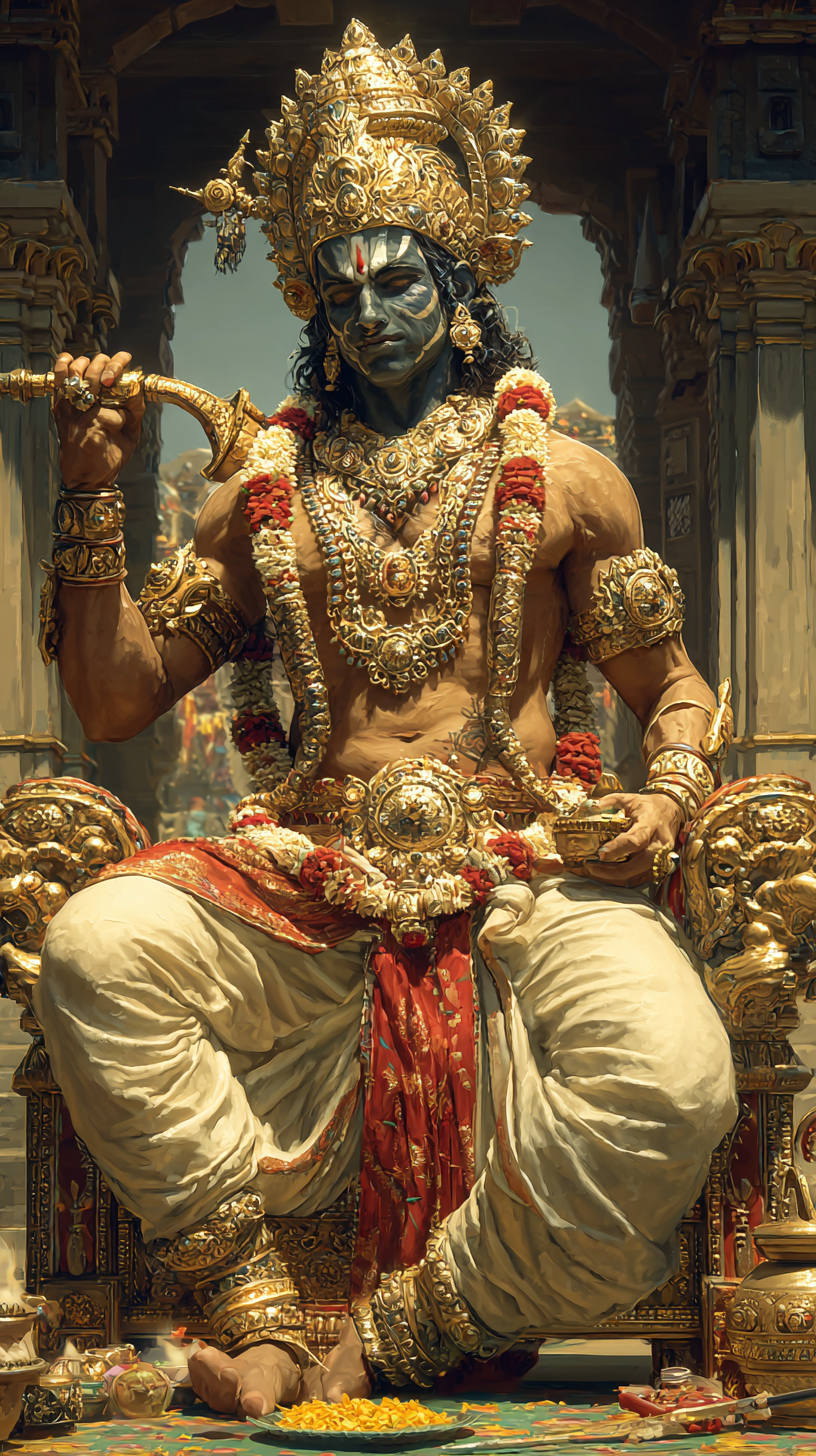
A vibrant scene depicting Lord Rama from the Ramayana.
Saints, Poets & Devotees
Valmiki: The Adi Kavi
Tulsidas: The Bhakti Poet
Pro Tip for Devotees
When visiting Ayodhya, consider exploring not only the Ram Mandir but also other sites associated with Valmiki and Tulsidas, such as Hanuman Garhi and Kanak Bhawan, which resonate with the spiritual legacies of these great devotees. Reading excerpts from the Ramayana or Ramcharitmanas before or during your visit can deepen your experience.
Records, Marvels & Heritage
Unique Records and Features
- Tallest Shikhara: At 161 feet, the main shikhara of the Ram Mandir is the tallest in Ayodhya, making it a prominent landmark on the city's skyline.
- First Dhwajarohan on Vivaha Panchami: It is the first temple in modern India to formally inaugurate its ritual functioning via a nationally televised Dhwajarohan on the auspicious day of Vivaha Panchami.
- Unique Dharma Dhwaj Iconography: The Dharma Dhwaj is the only temple flag bearing the tri-sacred motif of the Sun, Om, and the Kovidara tree atop a newly consecrated Ram Janmabhoomi temple, explicitly linking it to Vivaha Panchami and the Solar dynasty lineage.
- Constitutionally Recognized Commencement: It is the only temple in India where the Dhwajarohan ceremony was nationally televised and explicitly recognized as the formal commencement of sovereign Hindu worship at a historically contested sacred site, post-2019 Supreme Court verdict.
Engineering and Architectural Marvels
The construction and the flag installation itself involved remarkable feats of engineering:
- Motorized, 360° Rotating Flag Mast: The 42-foot flagpole is equipped with a motorized system that allows for a full 360-degree rotation and wind-alignment, ensuring the flag is always proudly displayed.
- Resilient Flag Material: The saffron flag itself is made from parachute-grade material, specifically engineered to withstand wind speeds up to 60 kmph, guaranteeing its durability in diverse weather conditions.
- Structural Integration: The integration of the heavy, 42-foot mast into the 161-foot shikhara was a complex engineering challenge, meticulously executed without compromising the temple's seismic stability or ritual integrity, adhering to ancient Vastu principles.
Archaeological and Heritage Status
Archaeological Survey of India (ASI) excavations confirmed pre-16th century temple remains, underpinning the historical claims of the Janmabhoomi site.

The intricate details reflecting the rich heritage of the Ram Mandir.
🗺 How to Reach
Hover a card to animate the journey on the map
Route to Ayodhya
Common Questions
Where is Ram Mandir Dharma Dhwaj, Ayodhya located?
Ram Mandir Dharma Dhwaj, Ayodhya is documented at Ayodhya, Uttar Pradesh.
Which deity is associated with Ram Mandir Dharma Dhwaj, Ayodhya?
Ram Mandir Dharma Dhwaj, Ayodhya is associated with Rama.
Related Temples

A Living Covenant