



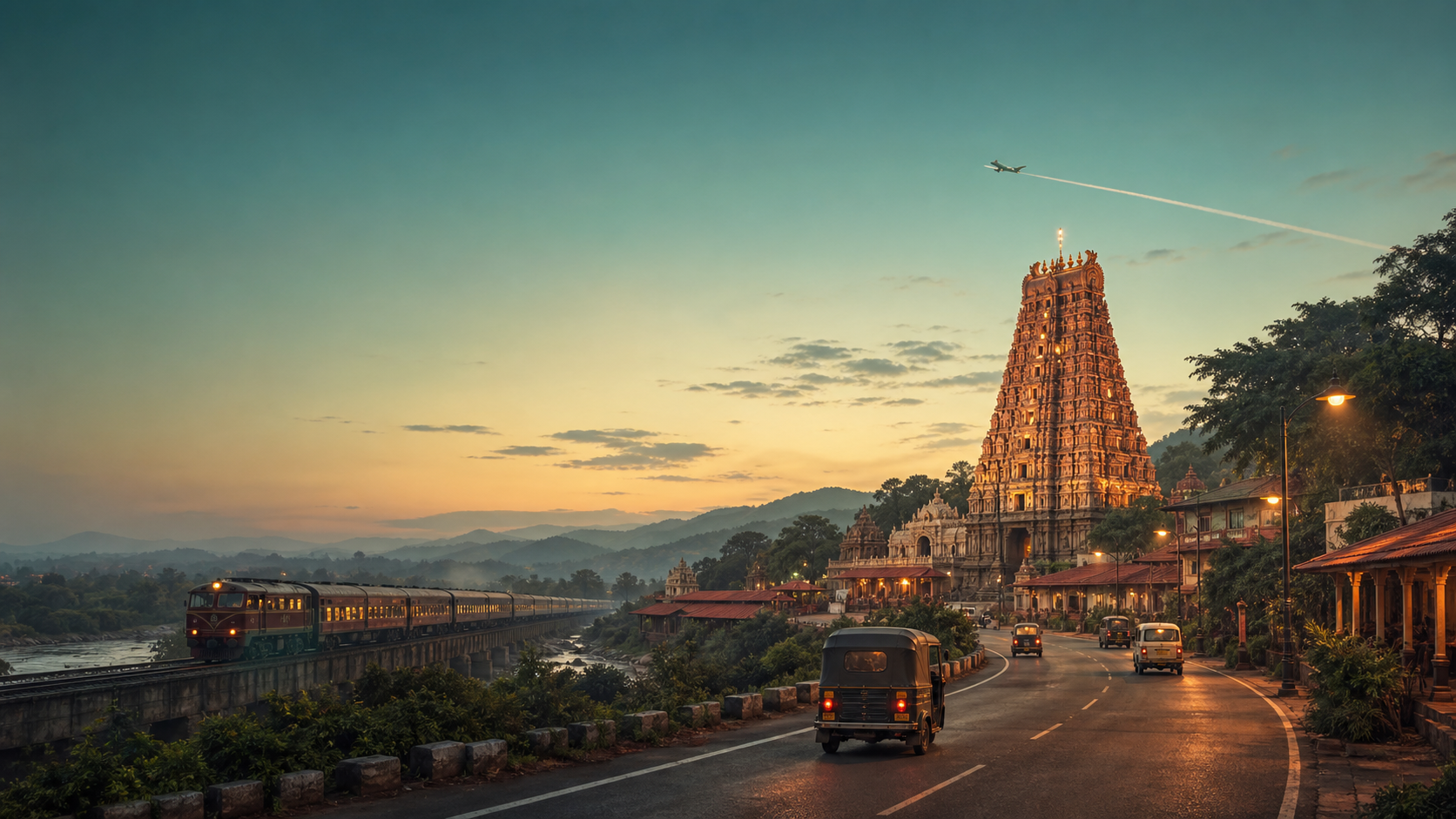
A complete pilgrim record drawn from the existing published article data.
A Legacy Forged by Kings: The History of Shri Raghunath Mandir
The history of Shri Raghunath Mandir is deeply intertwined with the Kullu Kingdom. Built in 1660 CE by King Jagat Singh, its origin stems from a personal affliction: a curse and leprosy. Following the counsel of Siddhguru Krishnadas Payahari, idols of Rama, Sita, and Hanuman were brought from Ayodhya by disciple Damodar Das. Their installation led to the King's miraculous recovery, establishing Shri Raghunath as the sovereign deity. This royal patronage has preserved its significance, with the temple currently managed by the Royal Family of Kullu and recognized as a State Protected Monument.
Royal Founding and Affliction
King Jagat Singh of Kullu built the temple in 1660 CE after being afflicted by a curse and leprosy, seeking divine intervention.
Divine Idols from Ayodhya
Siddhguru Krishnadas Payahari advised the king, leading to disciple Damodar Das bringing idols of Rama, Sita, and Hanuman from Ayodhya.
Miraculous Recovery and Sovereignty
The idols' installation cured King Jagat Singh, establishing Shri Raghunath as the sovereign deity and 'Rajadhiraja' of the Kullu Valley.
Architectural Grandeur: A Blend of Himalayan and Traditional Styles
Shri Raghunath Mandir showcases a distinctive architectural blend, reflecting both local Pahari and traditional Pyramidal styles. Constructed primarily from stone, Deodar cedar wood, and river stones likely sourced from the Beas River, the temple's design elements are robust and aesthetically unique. This combination of materials and styles creates a structure that is deeply rooted in the Himalayan landscape while embodying classical temple building principles. Its sturdy construction has allowed it to stand for centuries, a testament to its craftsmanship.
Unique Style Blending
The temple exhibits a unique Pahari and Pyramidal blended style, distinguishing it among regional temples.
Indigenous Materials
Construction primarily utilizes durable local materials: stone, Deodar cedar wood, and river stones, possibly from the Beas River.
Enduring Structure
These material choices and architectural style contribute to its longevity and integration with the Himalayan environment.
Lord Rama: The Presiding Deity and Soul of Kullu Dussehra
Lord Rama, along with Sita and Hanuman, is the presiding deity of Shri Raghunath Mandir, holding profound spiritual significance for the Kullu Valley. Established as the 'Rajadhiraja' (king of deities), Lord Rama is considered the sovereign protector of the region. His indispensable role as the central figure of Kullu Dussehra elevates the festival to the largest public gathering in the Himalayan region. During this International Mega Festival, approximately 500 local deities gather to pay homage, reaffirming Lord Rama's supreme spiritual authority and his enduring presence in the cultural and religious life of Kullu.
Primary Deities
Lord Rama, accompanied by Sita and Hanuman, constitutes the main deity ensemble of the temple.
Spiritual Sovereignty
Lord Rama is revered as the 'Rajadhiraja' and sovereign protector of the Kullu Valley, embodying divine authority.
Dussehra's Central Figure
He is the indispensable focal point of Kullu Dussehra, with about 500 local deities paying homage in a grand procession.
Planning Your Pilgrimage: A Guide to Visiting Shri Raghunath Mandir
Planning a visit to Shri Raghunath Mandir offers a profound cultural and spiritual experience. The temple is conveniently located within Kullu town, accessible via local buses from Kullu Bus Stand. For those arriving by air, Bhuntar Airport (Kullu-Manali Airport) is approximately 10 km away. The best time to visit is during October for the week-long Kullu Dussehra festival, or in spring (March–May) for pleasant weather. Visitors should allow 2–3 hours for a general visit and observe the modest attire requirement.
Accessibility and Transport
The temple is within Kullu town. Bus service is available from Kullu Bus Stand. Bhuntar Airport is ~10 km away.
Optimal Visiting Times
The best time is October for Kullu Dussehra or spring (March–May) for pleasant weather.
Visitor Guidelines
Entry is free, but modest attire is required. A general visit typically takes 2–3 hours.
| Deity | Lord Rama |
|---|---|
| Form | Shri Raghunath is depicted in his royal form, not as Balak Ram. The main idol is approximately 3 inches tall and weighs about 500 grams. |
| Consort | Goddess Sita |
| Sampradaya | Vaishnava |
| Significance | Lord Rama, as Shri Raghunath, is the sovereign deity of the Kullu Valley, revered as its 'Rajadhiraja' or king of deities. His installation in the temple cured King Jagat Singh's affliction and established his divine rule over the region. |
The King's Redemption and Lord Rama's Divine Journey to Kullu
King Jagat Singh of Kullu, burdened by the tragic, unjust death of the astrologer Durgadutt, found himself cursed with leprosy and haunted by visions of blood. Seeking solace and a cure, he consulted the revered Siddhguru Krishnadas Payahari. Following the guru's divine counsel, a disciple named Damodar Das embarked on a sacred pilgrimage to Ayodhya. There, from the ancient Tretanath Mandir, he procured the holy idols of Lord Rama, Sita, and Hanuman. On their return journey, at Haridwar, Ayodhya's priests attempted to reclaim the idols, but miraculously, they were unable to lift them. Yet, Damodar Das effortlessly carried them, affirming Lord Rama's divine will to reside in Kullu. Upon their installation in 1660, the King was instantly cured of his affliction, and Lord Raghunath was thenceforth revered as the supreme sovereign deity of the entire Kullu Valley, with all local deities paying homage to Him.
Lord Raghunath, the sovereign deity, chose Kullu as his divine abode, bringing healing and establishing his eternal rule over the valley.
In Kullu, the King of deities reigns supreme, and all local gods gather to honor His divine presence.
Related temples: Ahichchhatra Jain temples | Amethi Temple
Shri Raghunath Mandir: The Heart of Kullu's Devotion
Shri Raghunath Mandir stands as a pivotal spiritual and cultural landmark in Kullu, holding the unique status as the Kullu Valley's de facto 'Rajadhiraja' shrine. Revered as the primary deity for approximately 500 local gods, its immense significance is further highlighted by its central and indispensable role in the renowned Kullu Dussehra. This International Mega Dussehra Festival sees hundreds of deities gather annually to pay homage, underscoring the temple's enduring spiritual power and cultural importance in the Himalayan region.
Sovereign Deity Status
The temple is revered as the 'Rajadhiraja' (king of deities) of the Kullu Valley, serving as the primary shrine for about 500 local deities who pay homage here.
Focal Point of Kullu Dussehra
As the central figure, Lord Raghunath is indispensable to the week-long Kullu Dussehra, an International Mega Festival with grand processions and ritual assemblies.
Divine Protection and Miracles
The temple is associated with beliefs in divine protection for the valley and miraculous recovery of stolen idols, reinforcing its spiritual power.
Restoration & Conservation
The venerable Shri Raghunath Mandir, a monument steeped in centuries of history, has naturally endured the relentless march of time and the elements, necessitating consistent restoration and conservation efforts. Early interventions were often localized and reactive, primarily addressing immediate structural concerns or superficial damage. However, in recent decades, a more systematic and scientifically informed approach has been adopted, involving collaboration between archaeological experts, conservation architects, and skilled artisans. These comprehensive projects aim not only to repair and stabilize the temple's ancient fabric but also to meticulously preserve its original aesthetic and material integrity. Significant challenges include the procurement of traditional building materials that match the temple's original construction, deciphering archaic building techniques, and mitigating the pervasive effects of environmental degradation, such as moisture ingress, erosion, and biological growth, which continuously threaten the intricate carvings and delicate frescoes adorning its sacred spaces. Modern conservation initiatives at Shri Raghunath Mandir are frequently spearheaded by the Archaeological Survey of India (ASI) or the Uttar Pradesh State Archaeology Department, often in partnership with local temple trusts and community heritage groups. These meticulous projects typically encompass a multi-faceted approach, beginning with detailed photographic and architectural documentation, followed by structural assessments, and the careful chemical cleaning of stone surfaces to remove grime without harming the original patina. Expert artisans then undertake the painstaking repair of damaged sculptures, eroded architectural elements, and deteriorated mural paintings, using reversible and non-invasive techniques. Funding for these extensive undertakings is usually derived from government grants, augmented by generous contributions from devotees and national cultural heritage organizations. The overarching goal is to ensure that this profound spiritual and architectural landmark continues to stand as a vibrant testament to India's rich cultural legacy, inspiring future generations while maintaining its authentic historical character.🗺 How to Reach
Hover a card to animate the journey on the map
Route to Kullu
Common Questions
Where is Shri Raghunath Mandir: Lord Rama's Sacred Abode in Kullu located?
Shri Raghunath Mandir: Lord Rama's Sacred Abode in Kullu is documented at Kullu, Uttar Pradesh.
Which deity is associated with Shri Raghunath Mandir: Lord Rama's Sacred Abode in Kullu?
Shri Raghunath Mandir: Lord Rama's Sacred Abode in Kullu is associated with Rama.
Related Temples


A Living Covenant