A complete pilgrim record drawn from the existing published article data.
Tracing the Legacy: History of the Five Sacred Halls
The historical origins of the Pancha Sabhai are deeply intertwined with the ancient dynasties of South India. While some temples boast ancient foundations, their current structures largely reflect the architectural patronage of the Chola, Pandya, and Vijayanagara empires. These powerful dynasties contributed significantly to the expansion and embellishment of these sacred sites, transforming them into magnificent centers of Shaivism. Royal inscriptions and literary works provide glimpses into their rich past, detailing endowments, renovations, and the continuous devotion of rulers and commoners alike. The architectural evolution over centuries showcases a blend of early Dravidian styles with later modifications.
Ancient Foundations
Many of the Pancha Sabhai temples have origins predating major imperial dynasties, with references found in Sangam literature and early devotional hymns, indicating their significance since ancient times.
Royal Patronage
The Cholas were particularly instrumental in elevating these temples, commissioning grand gopurams, mandapams, and intricate sculptures. Later, the Pandyas and Vijayanagara rulers also made substantial contributions, ensuring their architectural grandeur and spiritual prominence.
Architectural Evolution
The temples exhibit a layered architectural history, from early brick structures to monumental stone edifices. Successive renovations and additions by various dynasties led to the diverse and complex temple complexes seen today, showcasing evolving Dravidian temple architecture.
Stones that Dance: Architecture and Artistry of Pancha Sabhai
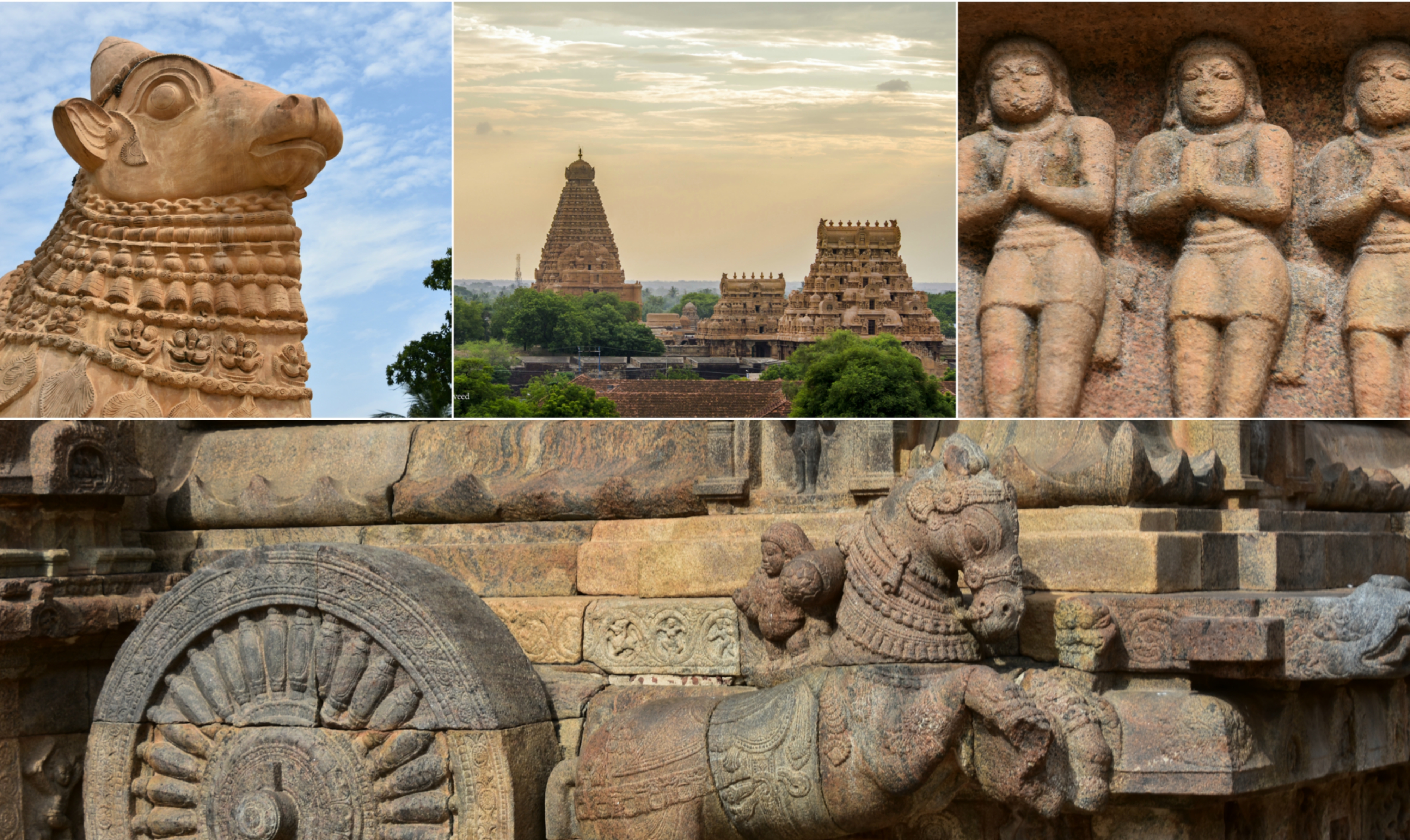
The Pancha Sabhai temples are prime examples of Dravidian architecture, characterized by towering gopurams, massive walls, and intricate sculptural details. Each Sabhai possesses distinct architectural styles and artistic elements that reflect its age and the patronage it received. The inner sanctums, often modest in comparison to the outer structures, house the primary deity. Intricate carvings depicting mythological narratives, celestial beings, and various forms of Shiva adorn the pillars, walls, and ceilings, bringing the stone to life. These temples stand as testaments to the skill of ancient artisans and the grandeur of Tamil temple building traditions.
Dravidian Grandeur
The temples exemplify classical Dravidian architecture, featuring multi-tiered pyramidal vimanas over the sanctum, elaborate gopurams (entrance towers), and pillared halls (mandapams), often adorned with intricate stucco figures.
Symbolic Carvings
Every carving within these temples holds symbolic meaning, from the various postures of Nataraja to depictions of Shiva's leelas (divine plays) and other deities. These sculptures serve as visual narratives of Hindu mythology and philosophy.
Unique Architectural Features
Chidambaram's Chit Sabha with its golden roof, Madurai's Rajat Sabhai with its silver altar, and Tirunelveli's Tamra Sabhai with its copper-plated roof are examples of the distinctive materials and craftsmanship employed in each sacred hall.
The Divine Dancer: Mythology and Significance of Nataraja
Lord Shiva's form as Nataraja, the cosmic dancer, is central to the mythology and theological significance of the Pancha Sabhai. This iconic representation encapsulates the universe's cyclical nature: creation, preservation, dissolution, illusion, and liberation. Nataraja's dance, particularly the Ananda Tandava, is not merely a performance but a continuous cosmic activity that sustains existence. His various attributes – the drum, flame, raised leg, and hand gestures – each carry profound symbolic meaning, illustrating the fundamental principles of Shaiva Siddhanta. The Pancha Sabhai are considered the very stages where these divine cosmic dances are eternally performed.
Symbolism of Nataraja's Form
Nataraja's iconography is rich in symbolism: the drum represents creation, the flame destruction, the raised foot liberation, and the dwarf demon Apasmara underfoot signifies ignorance overcome by divine knowledge.
Cosmic Functions
The dance of Nataraja embodies Shiva's fivefold cosmic functions (Pancha Kritya), which are the continuous processes of creation (Srishti), sustenance (Sthiti), destruction (Samhara), concealment (Tirobhava), and bestowing grace (Anugraha).
Theological Narratives
Mythological narratives describe Shiva's dance in various contexts, including his challenge to Kali and his performance in the presence of sages, establishing the profound spiritual power and significance of his cosmic movements across these sacred sites.
Pilgrim's Path: A Guide to Experiencing Pancha Sabhai
Embarking on a pilgrimage to the Pancha Sabhai offers a profound spiritual experience. Each temple, located in different parts of Tamil Nadu, presents unique rituals and architectural marvels. The Chit Sabhai at Chidambaram (ether), Velli Sabhai at Madurai (silver/earth), Tamra Sabhai at Tirunelveli (copper/water), Chitra Sabhai at Courtallam (art/air), and Ratna Sabhai at Tiruvalangadu (ruby/fire) are the five halls. Pilgrims typically visit these temples in a specific order, often starting with Chidambaram. Understanding the unique elemental and artistic significance of each site enhances the spiritual journey.
Locations and Elements
The Pancha Sabhai are: Chidambaram (Akasha/Ether), Madurai (Prithvi/Earth), Tirunelveli (Appu/Water), Courtallam (Vayu/Air), and Tiruvalangadu (Tejas/Fire). Each location offers a distinct spiritual atmosphere linked to its elemental representation.
Unique Rituals and Offerings
Each temple has specific daily rituals and festivals. For example, special abhishkam (sacred bathing) and arati (lamp offerings) are performed for Nataraja. Devotees offer specific flowers, prasadam, and prayers, often participating in darshan (viewing the deity) during designated times.
Planning Your Journey
Visiting all five Sabhai requires careful planning due to their geographical spread. It is advisable to utilize local transport, trains, or hired vehicles. Accommodation options are available near each temple town, catering to pilgrims and tourists.
| Deity | Shiva |
|---|---|
| Form | Shiva, in his cosmic dance form as Nataraja, is typically depicted with four arms, holding a drum and a flame, with one hand in Abhaya Mudra and the other pointing to his raised foot. He dances within a flaming aureole, symbolizing the cosmic cycles. |
| Consort | Parvati |
| Sampradaya | Hindu |
| Significance | As Nataraja, Shiva performs the Ananda Tandava, the dance of bliss, which represents the five cosmic activities: creation, preservation, destruction, illusion, and liberation. This form embodies the dynamic energy and cyclical nature of the universe. |
The Cosmic Dance of Nataraja
In the cosmic arena, Lord Shiva performs the Ananda Tandava, the dance of bliss, a profound spectacle that embodies the universe's ceaseless rhythm. With each movement, he cycles through creation, preservation, destruction, illusion, and liberation. His raised foot signifies release from worldly bonds, while the drum in his hand beats the rhythm of creation. The flame represents destruction and renewal. This divine dance is not merely an act but a continuous revelation of cosmic energy, reminding devotees of the impermanence of existence and the path to ultimate freedom. The Pancha Sabhai are sacred spaces where this eternal dance is believed to have been performed or witnessed.
Shiva's dance is the rhythm of the cosmos, a perpetual motion of creation, preservation, and dissolution, guiding souls towards ultimate liberation.
In every beat of Nataraja's drum, the universe is born anew, and in every fiery gesture, it dissolves, only to be reborn.
Related temples: Aakkoor Thanthondreeswarar Temple | Aazhimala Shiva Temple
The Cosmic Dance: An Introduction to Pancha Sabhai
The Pancha Sabhai, meaning 'Five Halls' or 'Five Assemblies,' are a collection of five revered Shiva temples located across Tamil Nadu, each holding profound spiritual significance as a unique cosmic dance hall of Lord Nataraja. These sacred sites are central to Shaivism, embodying Shiva's dynamic role as the cosmic dancer whose eternal movements orchestrate the universe's creation, preservation, and dissolution. Each Sabhai is uniquely associated with one of the Pancha Bhoota, the five classical elements, making them distinct spiritual centers where devotees seek to connect with the divine energy of the dancing Shiva.
The Ananda Tandava
The Ananda Tandava, or Dance of Bliss, is Lord Shiva's cosmic dance, symbolizing the five divine acts: Srishti (creation), Sthiti (preservation), Samhara (destruction), Tirobhava (illusion), and Anugraha (liberation). This continuous, dynamic process sustains the cosmos.
Elemental Representations
Each of the Pancha Sabhai is linked to one of the five primordial elements (Pancha Bhoota): earth, water, fire, air, and ether. This elemental connection imbues each temple with a unique spiritual resonance, reflecting Shiva's pervasive presence in nature and the universe.
Cultural Impact and Artistic Legacy
The concept of the Pancha Sabhai extends far beyond mere religious pilgrimage, deeply embedding itself into the cultural tapestry of Tamil Nadu. These five sacred sites, each representing a unique aspect of Nataraja's cosmic dance, have served as enduring founts of inspiration for generations of artists, poets, and sculptors. Their iconography, particularly the dynamic form of Nataraja, has become a quintessential symbol of South Indian art, influencing temple architecture, bronze casting, and classical dance forms like Bharatanatyam. The philosophical underpinnings of Shiva's dance – creation, preservation, destruction, illusion, and liberation – are not just theological tenets but also profound metaphors that resonate across various artistic expressions, shaping the aesthetic sensibilities and spiritual outlook of the region. The artistic legacy of the Pancha Sabhai is particularly evident in the rich tradition of Tamil devotional literature and performing arts. The hymns of the Nayanmars, particularly those found in the Tevaram, extol the glories of these very temples, weaving intricate narratives and poetic descriptions of Shiva's divine lila (play). These literary works, composed centuries ago, continue to be sung and recited, keeping the spiritual and cultural significance of the Sabhai alive. Furthermore, the intricate sculptures and frescoes adorning these temples are not merely decorative; they serve as visual treatises on Shaivism, educating devotees and inspiring awe. The dynamic poses of dancers depicted in temple carvings often mirror the very mudras and karanas found in classical Indian dance, illustrating a seamless continuum between religious devotion, architectural grandeur, and artistic expression.🗺 How to Reach
Hover a card to animate the journey on the map
Verified routes to Pancha Sabhai: Five Cosmic Dance Halls of Nataraja
Common Questions
Where is Pancha Sabhai: Shiva's Five Cosmic Dance Halls located?
Pancha Sabhai: Shiva's Five Cosmic Dance Halls is documented at Tamil Nadu.
Which deity is associated with Pancha Sabhai: Shiva's Five Cosmic Dance Halls?
Pancha Sabhai: Shiva's Five Cosmic Dance Halls is associated with Shiva.