A complete pilgrim record drawn from the existing published article data.
Centuries of Devotion: The History of Annamalaiyar
The origins of the Annamalaiyar Temple are shrouded in antiquity, with its earliest mentions found in ancient Tamil literature. While exact founding dates are unknown, the temple complex has seen continuous development and expansion over centuries. Major contributions and structural additions were made by various prominent South Indian dynasties. The Cholas, Pandyas, Hoysalas, and Vijayanagara rulers significantly enriched the temple's architecture and administration. Their patronage ensured the temple's growth into the sprawling complex seen today, preserving its spiritual legacy through eras of political change and cultural evolution. It remains a testament to enduring faith and royal devotion.
Ancient Origins
The temple's history dates back to ancient times, with references found in early Tamil literary works, indicating its long-standing spiritual importance.
Dynastic Patronage
Numerous powerful dynasties, including the Cholas, Pandyas, Hoysalas, and Vijayanagara emperors, contributed to the temple's construction and expansion over many centuries.
Enduring Legacy
Despite centuries of change, the temple has maintained its status as a vital pilgrimage site, preserving its religious practices and architectural grandeur.
Stone and Spirit: The Architecture of Annamalaiyar Temple
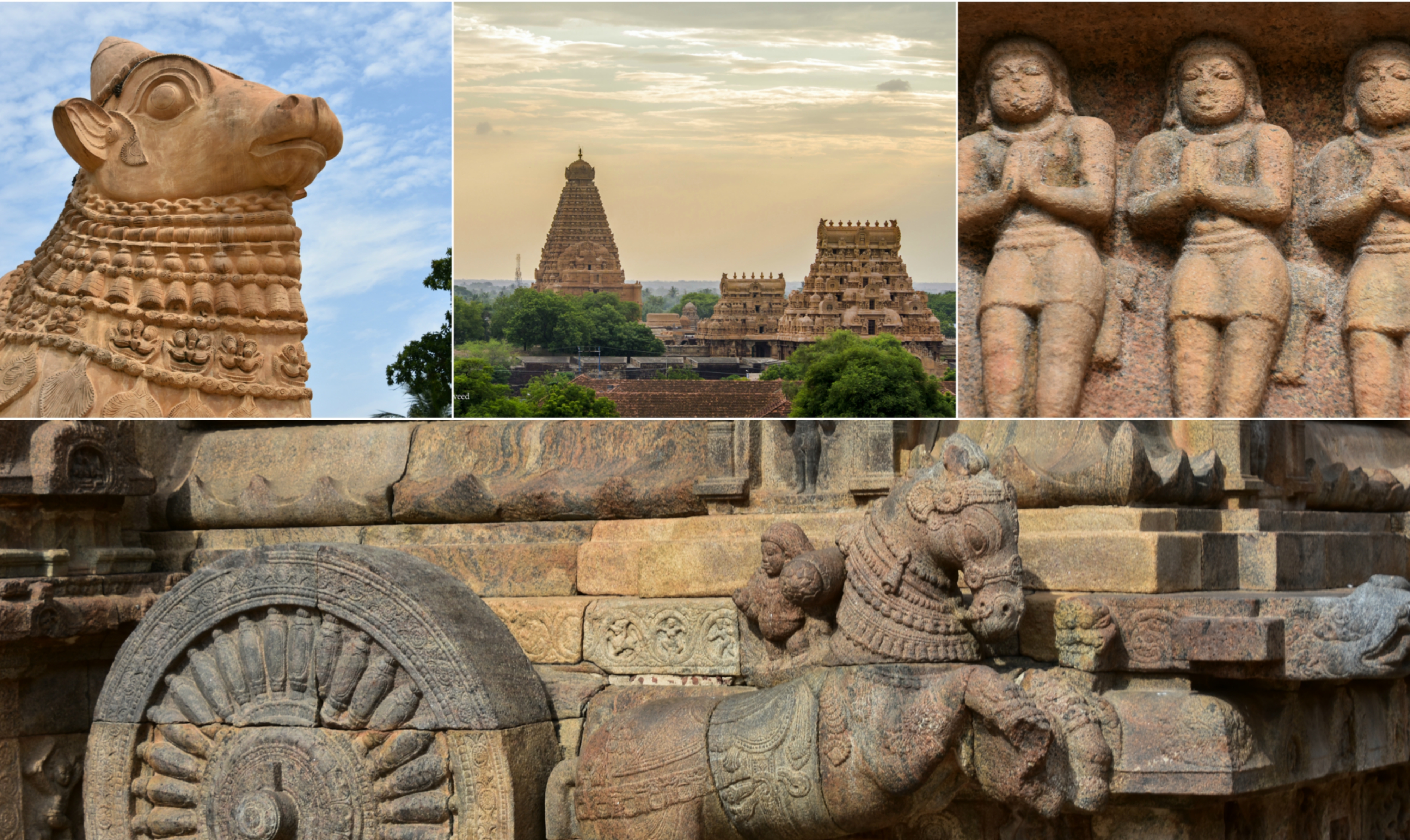
The Annamalaiyar Temple exemplifies the quintessential Dravidian architectural style, characterized by its towering gopurams (gateway towers), expansive courtyards, and intricate sculptural details. The temple complex spans a vast area, featuring multiple enclosures and shrines. Its four massive gopurams, particularly the eastern Rajagopuram, soar to impressive heights, adorned with thousands of stucco figures depicting deities and mythological scenes. Inside, pillared halls, sacred tanks, and subsidiary shrines create a journey through art and devotion. The craftsmanship reflects the artistic prowess of the various dynasties that contributed to its construction, making it a living museum of South Indian temple architecture.
Dravidian Architectural Style
The temple showcases classic Dravidian architecture, featuring pyramid-shaped gopurams, large courtyards, and detailed stone carvings.
Towering Gopurams
Four prominent gopurams, including the magnificent eastern Rajagopuram, serve as monumental gateways, each adorned with intricate sculptures.
Expansive Complex
The temple grounds encompass numerous shrines, mandapams (halls), and sacred tanks, reflecting centuries of architectural development and religious dedication.
The Cosmic Fire: Shiva as Agni Lingam and Related Legends
At the heart of the Annamalaiyar Temple's mythology is the legend of Lord Shiva manifesting as an infinite column of fire, the Agni Lingam. This cosmic fire pillar emerged to resolve a dispute between Lord Brahma and Lord Vishnu over who was supreme. Brahma, taking the form of a swan, flew upwards to find the top, while Vishnu, as a boar, delved downwards to find the base. Neither could find an end to the fiery column, symbolizing Shiva's boundless and ultimate supremacy. This event established Tiruvannamalai as the sacred place where Shiva revealed himself as the source of all creation, sustenance, and dissolution, embodying the element of fire.
Agni Lingam Manifestation
Lord Shiva manifested as an endless column of fire, the Agni Lingam, at Tiruvannamalai, representing his infinite nature and supreme power.
Brahma and Vishnu's Quest
The legend recounts Brahma and Vishnu's attempt to find the ends of the fiery pillar, a task at which both failed, affirming Shiva's ultimate cosmic form.
Symbol of Supremacy
The Agni Lingam symbolizes Shiva's role as the uncreated, boundless reality, transcending all other deities and dimensions.
Journey to the Sacred Hill: A Visitor's Guide to Annamalaiyar
Visiting the Annamalaiyar Temple offers a profound spiritual experience. The temple is open daily from 6:00 AM to 12:30 PM and again from 4:00 PM to 9:00 PM, allowing ample time for darshan. Entry to the temple is free, though donations are accepted. The best time to visit is during the cooler months, from October to March. Pilgrims typically perform Girivalam, a barefoot circumambulation of the Annamalai hill, especially during full moon days, which is considered highly auspicious. Traditional attire is preferred for visitors, and footwear must be removed before entering the inner sanctums. Allow 2-3 hours to explore the sprawling complex.
Darshan Timings and Entry
The temple is open from 6:00 AM to 12:30 PM and 4:00 PM to 9:00 PM; entry is free for all visitors.
Girivalam (Circumambulation)
Many devotees undertake the 14-kilometer barefoot circumambulation of the Annamalai hill, particularly on full moon days, for spiritual merit.
Dress Code and Best Time to Visit
Traditional attire is recommended, and footwear should be removed. The cooler months from October to March are ideal for a visit.
| Deity | Shiva |
|---|---|
| Form | Shiva is often depicted in various forms, including the cosmic dancer Nataraja, the ascetic yogi, or as the Lingam, representing his aniconic presence. In the Pancha Bhuta Sthalams, he is worshipped as the embodiment of the five elements. |
| Consort | Parvati |
| Sampradaya | Shaivism |
| Significance | As part of the Hindu Trimurti, Shiva is the destroyer of evil and transformer, representing the cycle of creation, preservation, and dissolution. He is revered as the supreme being in Shaivism, embodying both destructive and benevolent aspects. |
The Cosmic Dance of Elements
The Pancha Bhuta Sthalams are not just temples, but sacred spaces where Shiva manifests as the five primordial elements. Each temple embodies one element – earth, water, fire, air, and ether – symbolizing the cosmic dance of creation and dissolution. Devotees believe that worshipping Shiva in these elemental forms brings them closer to the fundamental forces of the universe, experiencing the divine presence in nature itself.
Shiva is the destroyer of evil and transformer, representing the cycle of creation, preservation, and dissolution.
In the Pancha Bhuta Sthalams, Shiva is worshipped as the embodiment of the five elements, connecting devotees to nature's fundamental forces.
Related temples: Aakkoor Thanthondreeswarar Temple | Aazhimala Shiva Temple
The Sacred Fire: Annamalaiyar Temple at Tiruvannamalai
The Annamalaiyar Temple, nestled at the base of the Annamalai hills in Tiruvannamalai, Tamil Nadu, stands as a profound symbol of cosmic energy. It is one of the revered Pancha Bhuta Sthalam, representing Agni, the element of fire. Dedicated to Lord Shiva, manifested as Agni Lingam, this ancient shrine embodies the transformative and purifying power of the divine flame. Pilgrims from across the globe visit to experience its spiritual aura, believing that a mere thought of Tiruvannamalai can grant liberation. The temple's significance is deeply rooted in Hindu scriptures and ancient traditions, making it a pivotal center for Shaivism.
Pancha Bhuta Sthalam Designation
The Annamalaiyar Temple is uniquely identified as the representation of the fire element among the five elemental abodes of Shiva, known as Pancha Bhuta Sthalam.
Spiritual Significance
This temple is a site of immense spiritual power, believed to grant moksha (liberation) to those who contemplate or visit the sacred hill and its presiding deity.
Modern Pilgrimage and Tourism
The Pancha Bhuta Sthalam temples continue to draw immense numbers of devotees and tourists, reflecting their enduring spiritual and cultural significance in modern India. Pilgrims often undertake a circuit, visiting all five temples over several days, believing that this journey purifies the five elements within their own bodies and connects them deeply with Shiva's cosmic energy. This modern pilgrimage is facilitated by improved infrastructure, including road networks, train services, and accommodation options ranging from traditional guesthouses to contemporary hotels. While the core rituals and devotional practices remain rooted in ancient traditions, the experience is now intertwined with logistical planning and the conveniences of modern travel, making these sacred sites accessible to a wider demographic than ever before, including international visitors seeking spiritual insight. The influx of pilgrims and tourists has significantly impacted the local economies surrounding each of the Pancha Bhuta Sthalam temples. This includes the proliferation of small businesses catering to visitors, such as flower vendors, souvenir shops, food stalls, and transport services, providing livelihoods for many in these regions. State tourism boards and local authorities actively promote these circuits, recognizing their potential for cultural tourism and economic development. However, this increased footfall also presents challenges, including the need for robust crowd management during festivals, maintaining cleanliness and sanitation, and preserving the delicate architectural and ecological balance of these ancient sites. Balancing the demands of modern tourism with the sanctity and historical integrity of these revered temples remains a continuous and evolving endeavor.🗺 How to Reach
Hover a card to animate the journey on the map
Verified routes to Pancha Bhuta Sthalam: Five Element Shiva Temples
Common Questions
Where is Pancha Bhuta Sthalam: Sacred Cosmic Shiva Temples located?
Pancha Bhuta Sthalam: Sacred Cosmic Shiva Temples is documented at Tamil Nadu.
Which deity is associated with Pancha Bhuta Sthalam: Sacred Cosmic Shiva Temples?
Pancha Bhuta Sthalam: Sacred Cosmic Shiva Temples is associated with Shiva.