A complete pilgrim record drawn from the existing published article data.
Glorified by Valmiki: The Ancient Roots of Kothandarama Temple
The Kothandarama Temple's spiritual importance is deeply rooted in ancient legends, particularly its association with Maharishi Valmiki, the revered author of the epic Ramayana. Tradition holds that Valmiki himself glorified this sacred site, either through his presence, worship, or by establishing the deity. This connection imbues the temple with a profound historical and spiritual weight, linking it directly to the narrative of Lord Rama's life and virtues as depicted in the epic.
Valmiki's Association
Legends suggest that Maharishi Valmiki had a direct connection to Thillaivilagam, possibly residing here or worshipping the deity, thus sanctifying the land with his spiritual energy.
Ramayana Connection
The temple's antiquity is often tied to events or periods mentioned in the Ramayana, signifying its existence and reverence from ancient times, making it a living testament to the epic.
Historical Context
While specific dates are often subject to legend, the temple is considered to have ancient origins, predating many later constructions and maintaining its spiritual significance through centuries.
Architectural Features of Kothandarama Temple
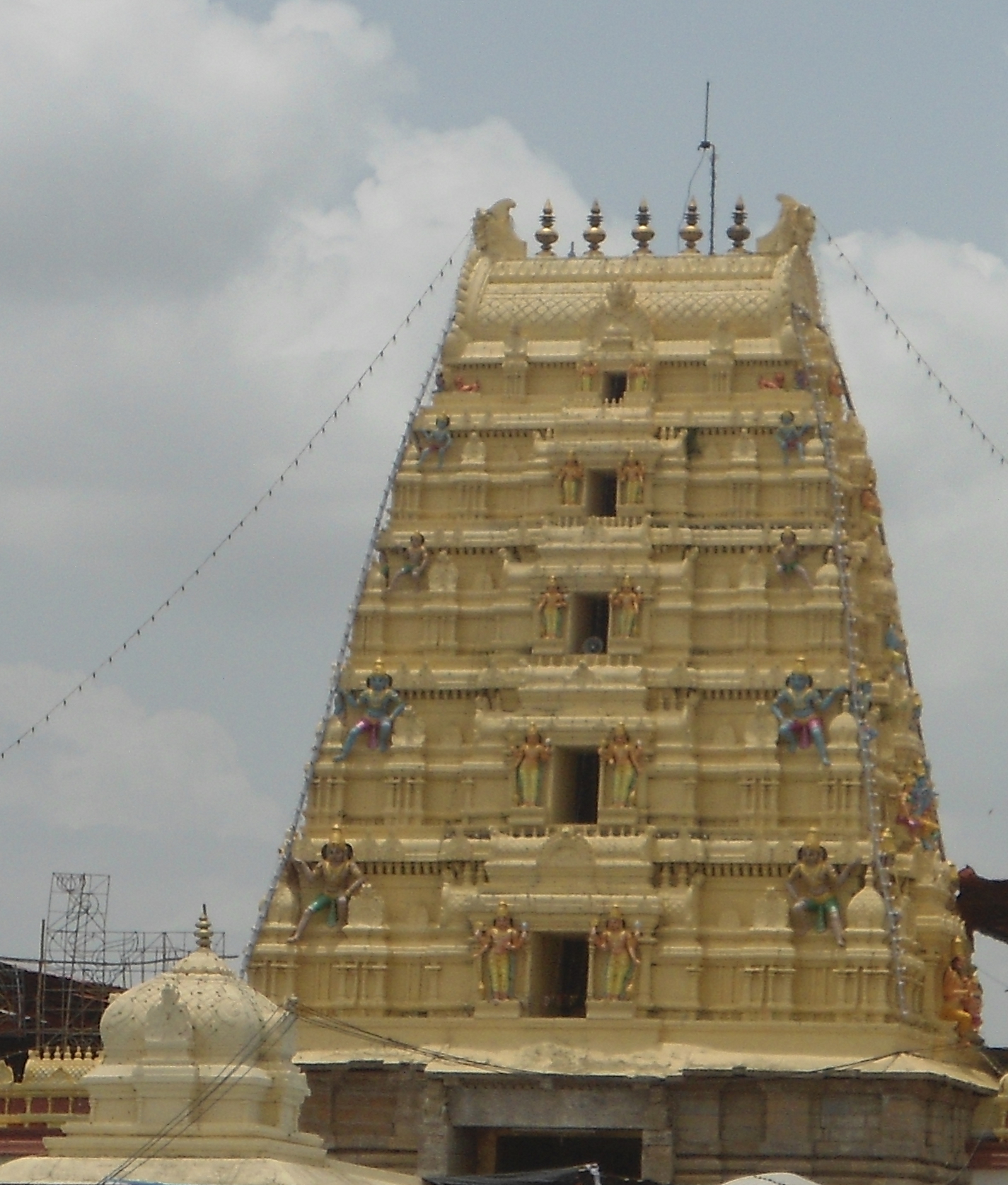
The Kothandarama Temple showcases architectural elements characteristic of South Indian temple construction, primarily reflecting the Dravidian style. While specific details of its age are often intertwined with legend, the temple likely features a gopuram (ornate tower at the entrance), a vimana (tower over the sanctum sanctorum), and various mandapams (halls). These structures typically incorporate intricate stone carvings and stucco work depicting mythological figures, deities, and epic scenes, reflecting the rich artistic heritage of the region.
Dravidian Style
The temple's architecture generally follows the Dravidian style, characterized by its pyramidal towers, elaborate sculptures, and use of stone as the primary building material.
Key Structures
Prominent features include a multi-tiered gopuram at the entrance, a vimana above the main shrine, and various mandapams such as the maha mandapam and ardha mandapam, serving different ritual purposes.
Sculptural Details
The walls and pillars are adorned with intricate carvings and stucco figures, illustrating episodes from the Ramayana and other Hindu scriptures, adding to the temple's aesthetic and spiritual appeal.
Lord Rama: The Presiding Deity of Thillaivilagam
The Kothandarama Temple is dedicated to Lord Rama, the seventh avatar of Vishnu, worshipped here in his form as Kothandarama. This specific iconography typically depicts Lord Rama holding his bow (Kothandam), often accompanied by Sita, Lakshmana, and Hanuman. As a central figure in the Vaishnavate tradition, Lord Rama embodies dharma, righteousness, and ideal kingship. Devotees seek his blessings for strength, protection, and the removal of obstacles, finding solace in his divine presence.
Iconography of Kothandarama
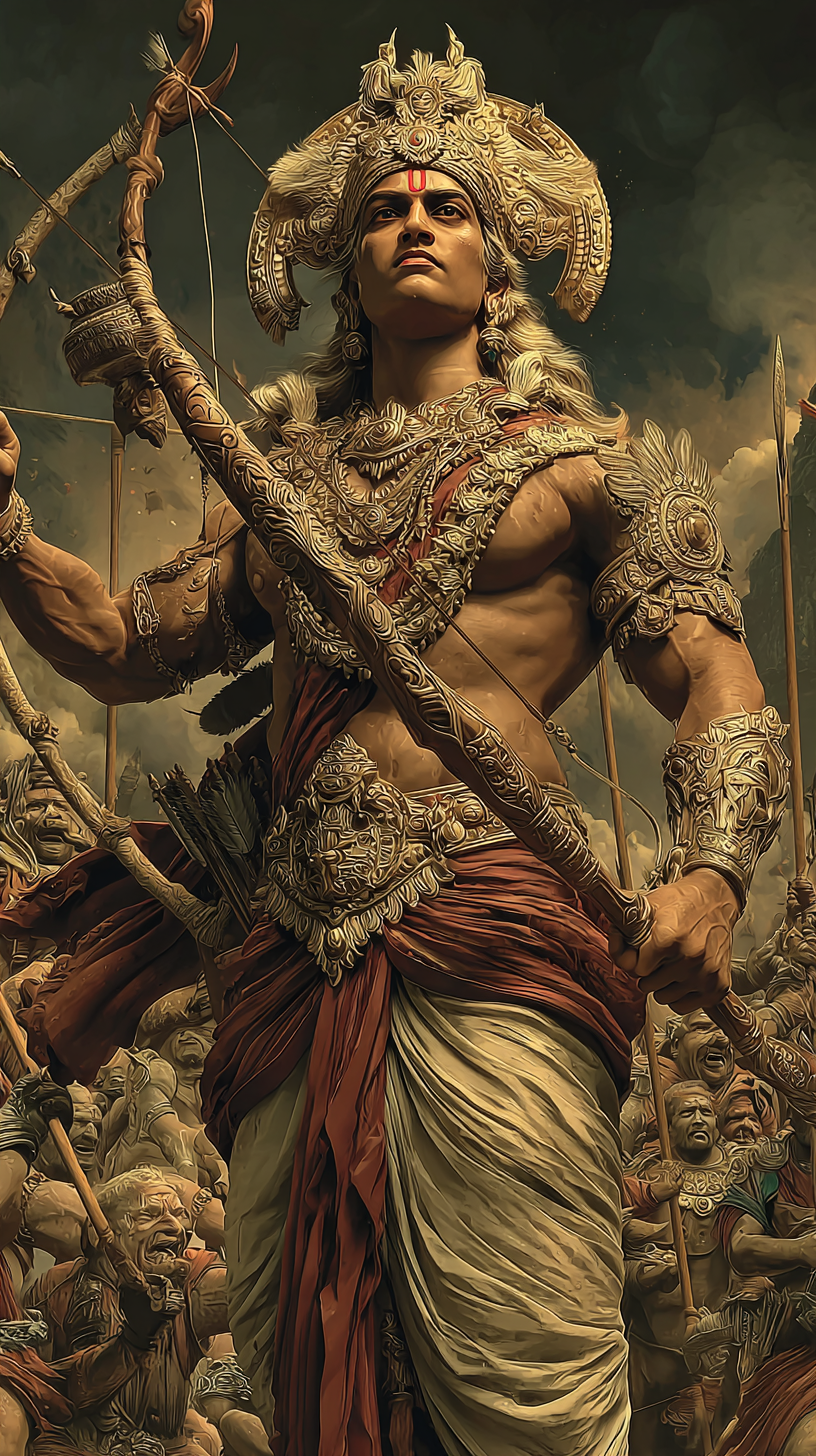
The main deity, Kothandarama, is usually depicted standing with his bow (Kothandam), symbolizing his readiness to uphold justice and protect his devotees. He is often flanked by Sita, Lakshmana, and Hanuman.
Vaishnavate Tradition
The temple adheres to the Vaishnavate tradition, focusing on the worship of Vishnu and his avatars, with Lord Rama being a principal deity revered for his virtuous qualities and divine power.
Significance of the Deity
Lord Rama at Thillaivilagam represents an ideal of righteousness and courage. Worshippers believe that devotion to Kothandarama brings prosperity, peace, and spiritual liberation.
Planning Your Pilgrimage to Kothandarama Temple
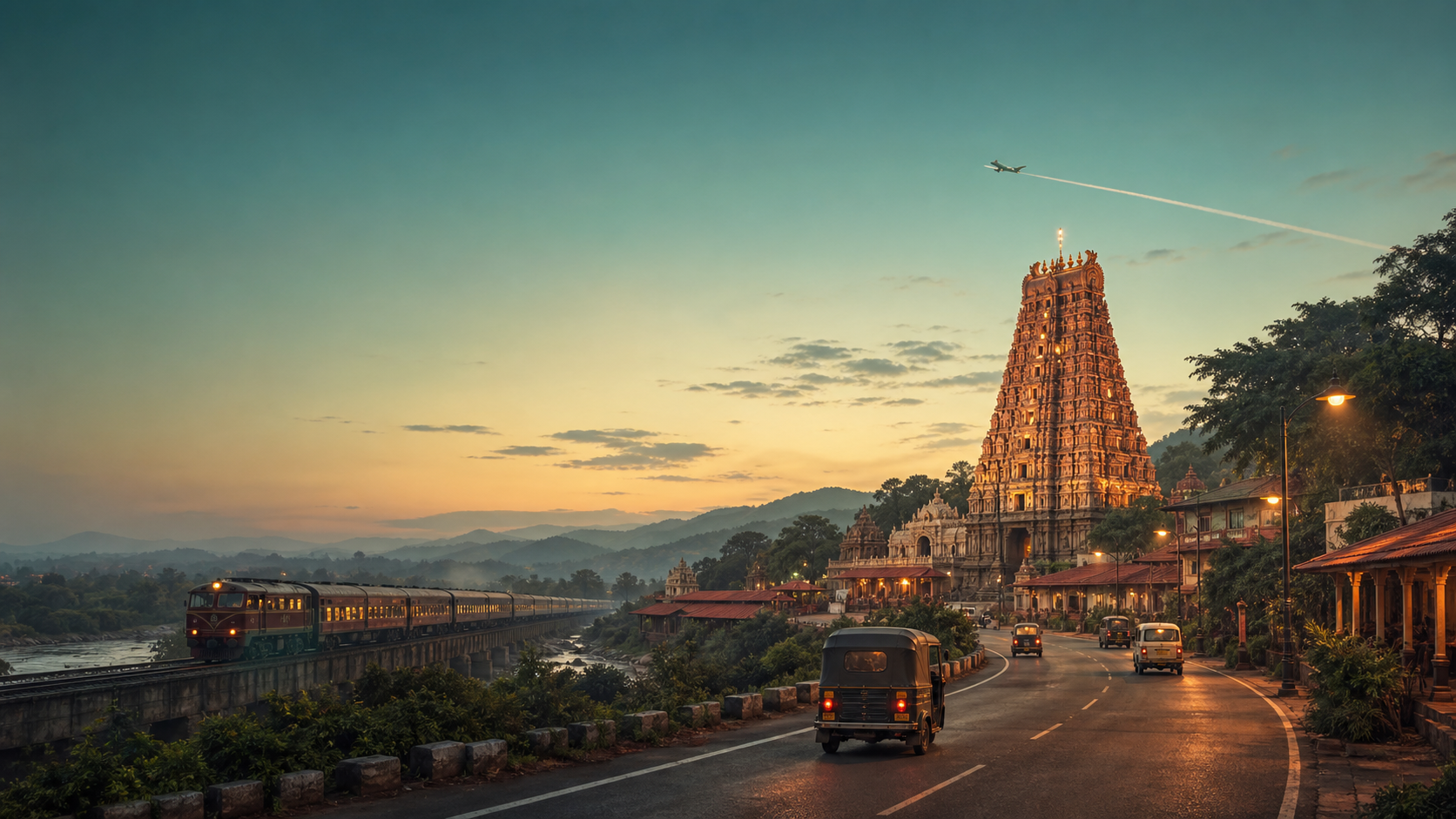
For those planning a pilgrimage to the Kothandarama Temple in Thillaivilagam, several transportation options are available. The temple is accessible by road, with Chennai being approximately 394 km away, a journey that takes around 9 hours by bus. For train travelers, Thiruvarur Junction (TVR) is the nearest major station, located about 40 km from the temple. Flights can be taken to Tiruchirappalli Airport (TRZ), which is approximately 100 km away, followed by ground transport.
Reaching Thillaivilagam
By bus, Chennai is about a 9-hour journey (~394 km). The nearest train station is Thiruvarur Junction (TVR), approximately 40 km away. Tiruchirappalli Airport (TRZ) is the closest airport, about 100 km from the temple.
Temple Timings and Entry
Specific timings for the Kothandarama Temple are not readily available. Entry to the temple is generally free for all visitors. It is advisable to check local schedules or inquire upon arrival for precise darshan timings.
Visitor Information
The best time to visit Hindu temples in Tamil Nadu is typically during the cooler months, from October to March. Visitors are advised to dress modestly, covering shoulders and knees, as is customary in South Indian temples. The duration of a visit can vary based on individual interest, but a typical visit might last 1-2 hours.
| Deity | Rama |
|---|---|
| Form | The seventh avatar of the god Vishnu |
| Consort | Not specified |
| Sampradaya | Vaishnavate tradition |
| Significance | The temple is glorified by Maharishi Valmiki and classified as one of the 108 Abhimana Kshethrams of the Vaishnavate tradition. It is also one of the Pancha Rama Kshethrams, with locations mentioned in Ramayana. |
The Sage's Sanctuary: Rama's Presence in Thillaivilagam
The Kothandarama Temple at Thillaivilagam holds a profound spiritual legacy, being one of the sacred sites glorified by the revered sage Maharishi Valmiki himself. This ancient temple is counted among the 108 Abhimana Kshethrams, signifying its immense importance in the Vaishnavate tradition. Furthermore, it is recognized as one of the Pancha Rama Kshethrams, places intimately connected with Lord Rama's earthly journey as chronicled in the epic Ramayana. Devotees believe that the very soil of Thillaivilagam resonates with the divine presence of Rama, sanctified by the sage's devotion and the Lord's historic association.
Glorified by Maharishi Valmiki, this temple stands as a testament to Lord Rama's enduring presence.
One of the sacred Pancha Rama Kshethrams, where the echoes of the Ramayana resonate.
Journey to Thillaivilagam: A Sacred Abhimana Kshetram
The Kothandarama Temple, nestled in Thillaivilagam within the Thiruthiraipoondi taluk of Tiruvarur district, Tamil Nadu, stands as a significant Vaishnavate shrine. It is revered as an Abhimana Kshetram, a place where devotees believe the Lord's presence is particularly strong due to the devotion of great sages or devotees. This temple also holds the distinction of being one of the Pancha Rama Kshetrams, a group of five sacred sites dedicated to Lord Rama in the region.
Location and Significance
Situated in the Tiruvarur district, the temple is a focal point for devotees seeking the blessings of Lord Rama. Its tranquil setting reflects the spiritual serenity associated with such ancient sites.
Abhimana Kshetram Status
An Abhimana Kshetram signifies a place where the deity is worshipped with immense devotion, often by revered saints or divine beings, making it highly potent for spiritual practices and blessings.
Pancha Rama Kshetram
As one of the five Pancha Rama Kshetrams, this temple is part of a special circuit of temples dedicated to Lord Rama, each holding unique historical and spiritual importance in the Vaishnava tradition.
🗺 How to Reach
Hover a card to animate the journey on the map
Verified routes to Kothandarama Temple, Thillaivilagam
Common Questions
Where is Kothandarama Temple, Thillaivilagam located?
Kothandarama Temple, Thillaivilagam is documented at Tiruturaipundi, Tamil Nadu.
Which deity is associated with Kothandarama Temple, Thillaivilagam?
Kothandarama Temple, Thillaivilagam is associated with Rama.