



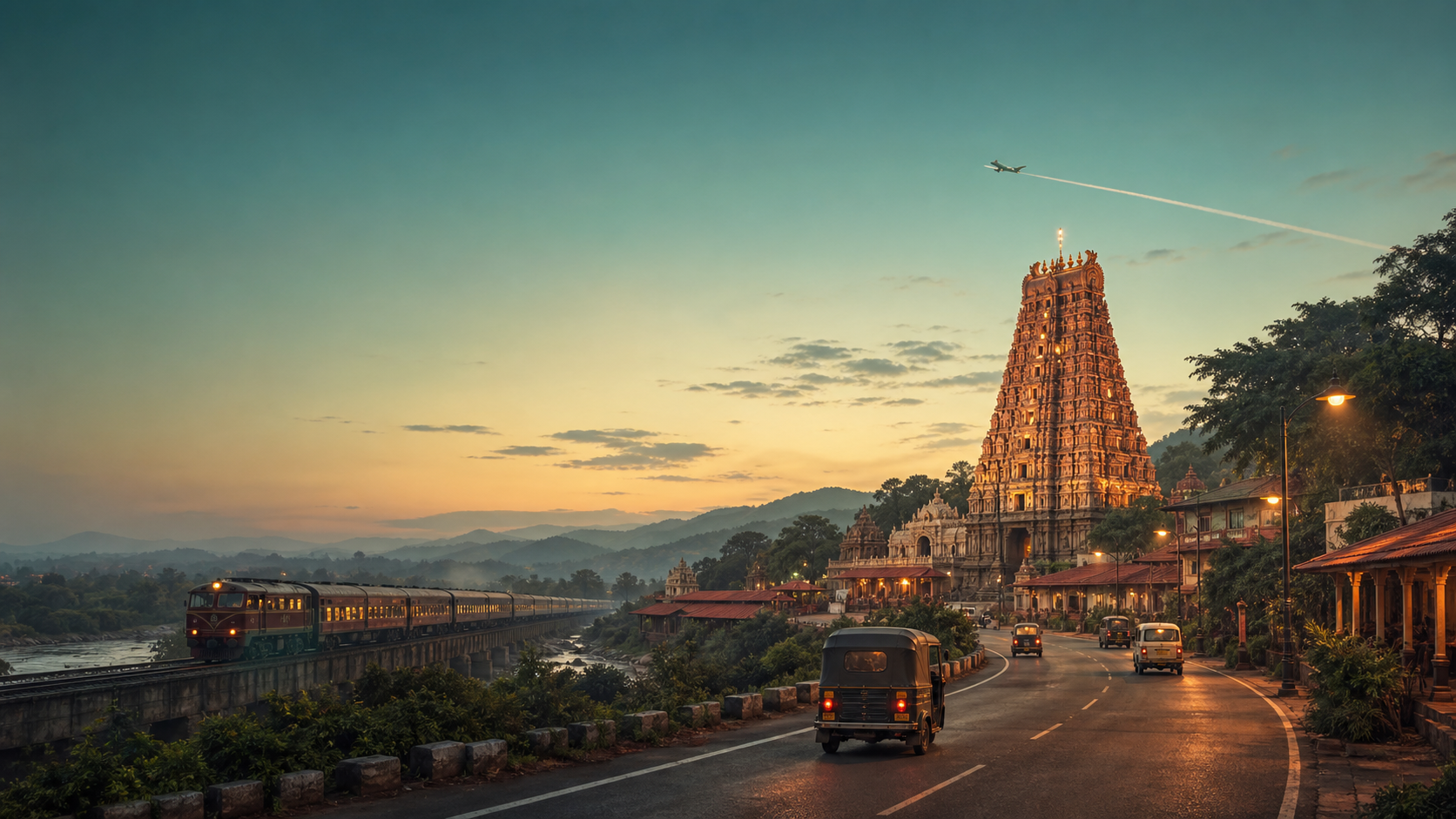
A complete pilgrim record drawn from the existing published article data.
Tracing the Temple's Ancient Origins and Qutb Shahi Legacy
The Sita Ramachandraswamy Temple's history intertwines ancient legend with 17th-century construction. Its origins are rooted in the discovery of self-manifested idols by Pokala Dhammakka, fulfilling a divine vow made to the sage Bhadra. Historically, the temple was built by Kancherla Gopanna, also known as Bhadrachala Ramadasu, between 1670 and 1685. This construction occurred under the patronage of Abul Hasan Qutb Shah, the last ruler of the Qutb Shahi dynasty of the Golconda Sultanate, marking a significant period of royal support for this revered Dravidian-style shrine.
Legendary Beginnings
The temple's foundation is linked to the sage Bhadra's penance and the divine discovery of idols by Pokala Dhammakka, a descendant of Sabari.
The Builder and Royal Patronage
Kancherla Gopanna, or Bhadrachala Ramadasu, constructed the temple circa 1670–1685, with patronage from Abul Hasan Qutb Shah of the Qutb Shahi dynasty.
The Distinctive Architecture of Bhadrachalam's Sacred Shrine
The Sita Ramachandraswamy Temple showcases a distinctive Dravidian architectural style, characterized by its intricate carvings and towering gopurams. Constructed primarily from granite and stone, with key idols crafted from panchaloha, the temple is renowned for its unique central deity configuration. Unlike many temples where deities face east, the main idols of Lord Rama, Sita, and Lakshmana face west, towards the sacred Godavari River. This rare Vaikuntha Rama-Sita-Lakshmana triad, with Sita on Rama's lap and Lakshmana standing by, presents a visual and spiritual rarity, distinguishing Bhadrachalam's sacred shrine.
Dravidian Style and Materials
The temple exhibits a Dravidian architectural style, built with granite and stone, featuring idols made from panchaloha.
The Westward-Facing Deities
A unique feature is the main deity triad of Rama, Sita, and Lakshmana facing west, a rare orientation towards the Godavari River.
Unveiling the Legends of Lord Rama, Sita, and Lakshmana
At the spiritual core of Bhadrachalam lies the profound significance of Lord Rama, Sita, and Lakshmana, whose divine presence defines the temple as a sacred Divya Kshetram. According to legend, the sage Bhadra performed intense penance, and Lord Rama vowed to appear to him. This vow was fulfilled centuries later when Lord Vishnu manifested as the unique four-armed Rama, holding Sita on his lap, with Lakshmana alongside. The self-manifested idols were later discovered by the humble tribal woman, Pokala Dhammakka, guided by a divine dream, solidifying the temple's legendary status and deep spiritual roots.
The Vow Fulfilled: Rama's Appearance
Lord Rama appeared to the sage Bhadra in a unique four-armed form, fulfilling a vow made during the Treta Yuga, with Sita and Lakshmana.
Divine Discovery by Pokala Dhammakka
The self-manifested idols were found by Pokala Dhammakka, a tribal woman, who discovered them within an anthill after a divine dream.
Planning Your Pilgrimage: A Visitor's Guide to Bhadrachalam
For a fulfilling pilgrimage to the Sita Ramachandraswamy Temple, visitors should plan their trip between December and February for pleasant weather, or during Rama Navami (March-April) to experience the vibrant Vasantha Paksha Prayukta Srirama Navami Brahmotsavam and the Sri Sitarama Thirukalyana Mahotsavam. Modest attire is required, and footwear must be removed before entering the sanctum. The temple is accessible via Bhadrachalam Bus Station, Bhadrachalam Road railway station (10 km away), and Rajiv Gandhi International Airport, Hyderabad (270 km away). A half-day to full-day visit is recommended to fully appreciate the temple's spiritual ambiance.
Best Time to Visit and Dress Code
The ideal time to visit is December to February, or during Rama Navami. Modest attire is mandatory, and footwear must be removed.
Travel and Key Festivals
Access is available by bus, train (Bhadrachalam Road, 10 km), or flight (Hyderabad, 270 km). Major festivals include Sri Sitarama Thirukalyana Mahotsavam and Srirama Navami Brahmotsavam.
| Deity | Rama |
|---|---|
| Form | Vaikuntha Rama, depicted as four-armed, seated in padmasana with Sita on his lap, holding shankha, chakra, bow, and arrow. |
| Consort | Sita |
| Sampradaya | Vaishnava |
| Significance | This is a rare self-manifested icon of Rama, facing west, with a conch in his right upper hand, distinguishing it from standard Vishnu iconography. Its origin is linked to an anthill discovery by Pokala Dhammakka, fulfilling a promise made to the devotee Bhadra. |
The Vow Fulfilled: Rama's Appearance to Bhadra
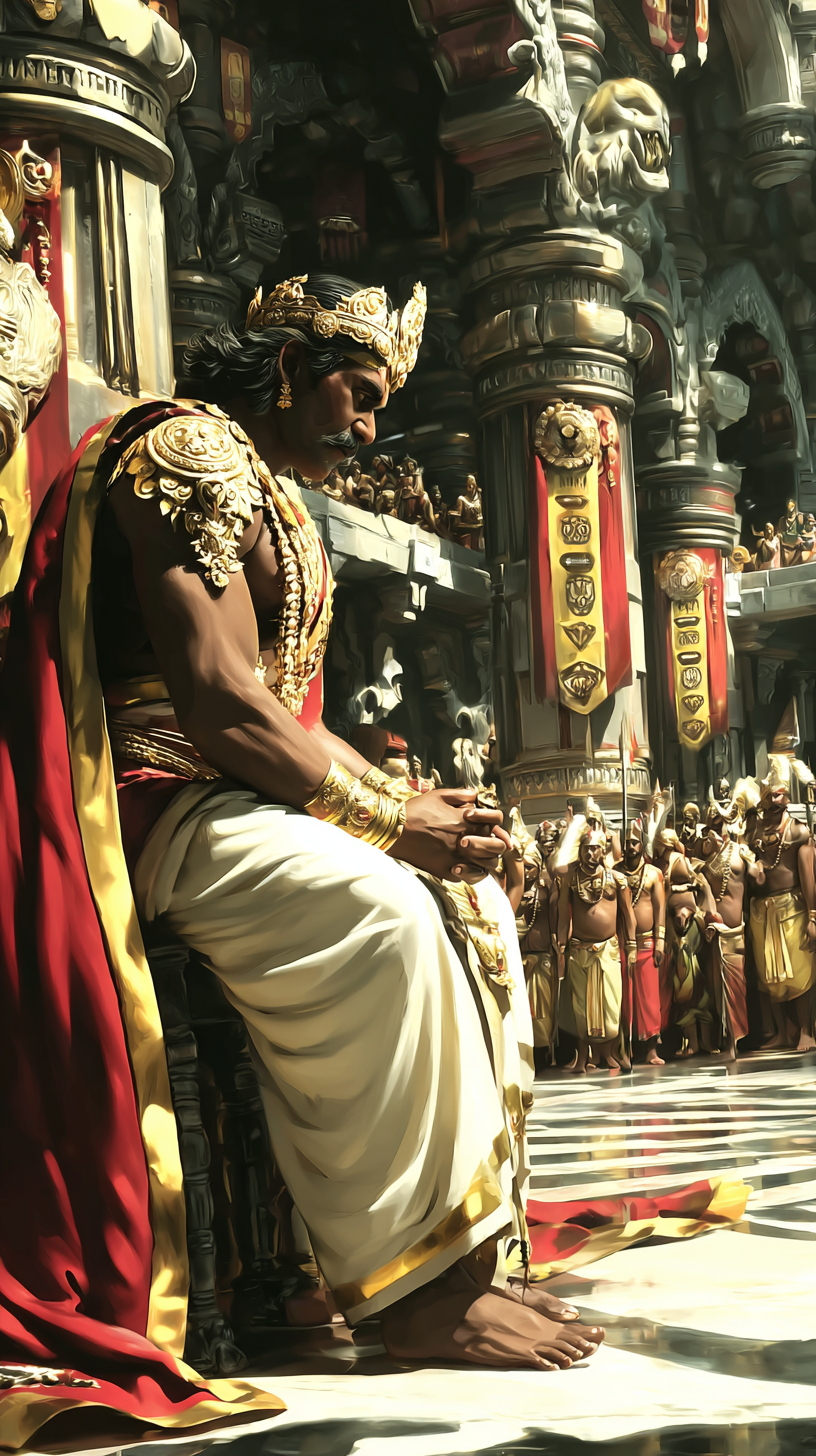
In the ancient Treta Yuga, on the sacred banks of the Godavari River, lived Bhadra, a devout sage. Blessed by Lord Rama in the Dandaka forest, he meditated for years, chanting the Rama Taraka mantra. Though Rama had promised to return after rescuing Sita, his mortal form could not fulfill this vow. Centuries later, Lord Vishnu, recognizing Bhadra's profound penance, manifested as the divine Rama. This unique four-armed form depicted him with Sita on his lap and Lakshmana by his side. This self-manifested deity, a direct fulfillment of Rama's promise, became the central icon of Bhadrachalam, embodying the Lord's eternal compassion.
The Lord's boundless grace and the power of unwavering faith.
A rare self-manifested icon of Rama, fulfilling an eternal promise to his devout sage Bhadra.
Related temples: Aakkoor Thanthondreeswarar Temple | Abhaya Varadeeswarar Temple, Adirampattinam
Sita Ramachandraswamy Temple: A Sacred Abode on the Godavari
The Sita Ramachandraswamy Temple in Bhadrachalam, Tamil Nadu, stands as a revered Vaishnava pilgrimage site, celebrated as a Divya Kshetram of the Godavari and affectionately known as Dakshina Ayodhya. This sacred abode is unique for its self-manifested deity of Lord Rama, accompanied by Sita and Lakshmana, in a rare Vaikuntha form, making it a pivotal spiritual destination for devotees seeking divine blessings on the banks of the sacred Godavari River. It is a cornerstone of spiritual life in the region.
Location and Significance
Situated in Bhadrachalam, Tamil Nadu, the temple is recognized as a Divya Kshetram of the Godavari, holding immense spiritual importance for Vaishnava devotees.
The Divine Triad
The temple houses a unique self-manifested deity of Lord Rama, with Sita on his lap and Lakshmana by his side, presented in a rare Vaikuntha form.
Cultural Impact
The Sita Ramachandraswamy Temple at Bhadrachalam holds immense cultural significance, deeply influencing the artistic and devotional landscape of the region. It is particularly renowned for its association with Bhakta Ramadasu, a celebrated 17th-century composer and devotee of Lord Rama. His numerous kirtanas (devotional songs) dedicated to Rama, many composed while imprisoned for using state funds for temple construction, are cornerstones of Carnatic music and are widely performed and cherished. The temple's architectural grandeur, with its intricate carvings and spiritual narratives, also serves as a source of inspiration for local artisans and sculptors, perpetuating traditional art forms. Annual festivals, especially the Brahmotsavams, transform the temple into a vibrant cultural hub, showcasing traditional music, dance, and storytelling.
Beyond its direct religious functions, the temple plays a pivotal role in shaping the social fabric and community identity of Bhadrachalam and its surrounding areas. It acts as a central gathering point, fostering a sense of shared heritage and collective devotion among pilgrims and locals alike. Historically, the temple's prominence has stimulated local economies, supporting a wide array of services catering to pilgrims, from hospitality to traditional crafts. Furthermore, the narratives associated with the temple, deeply rooted in the epic Ramayana, serve as a powerful medium for transmitting moral values, ethical principles, and cultural traditions across generations, reinforcing the temple's enduring influence on regional customs, festivals, and community life.
🗺 How to Reach
Hover a card to animate the journey on the map
Route to Temple
Common Questions
Where is Sita Ramachandraswamy Temple: Rama's Sacred Abode located?
Sita Ramachandraswamy Temple: Rama's Sacred Abode is documented at Bhadrachalam, Tamil Nadu.
Which deity is associated with Sita Ramachandraswamy Temple: Rama's Sacred Abode?
Sita Ramachandraswamy Temple: Rama's Sacred Abode is associated with Rama.
Related Temples


A Living Covenant