A complete pilgrim record drawn from the existing published article data.
Chola Architectural Marvels
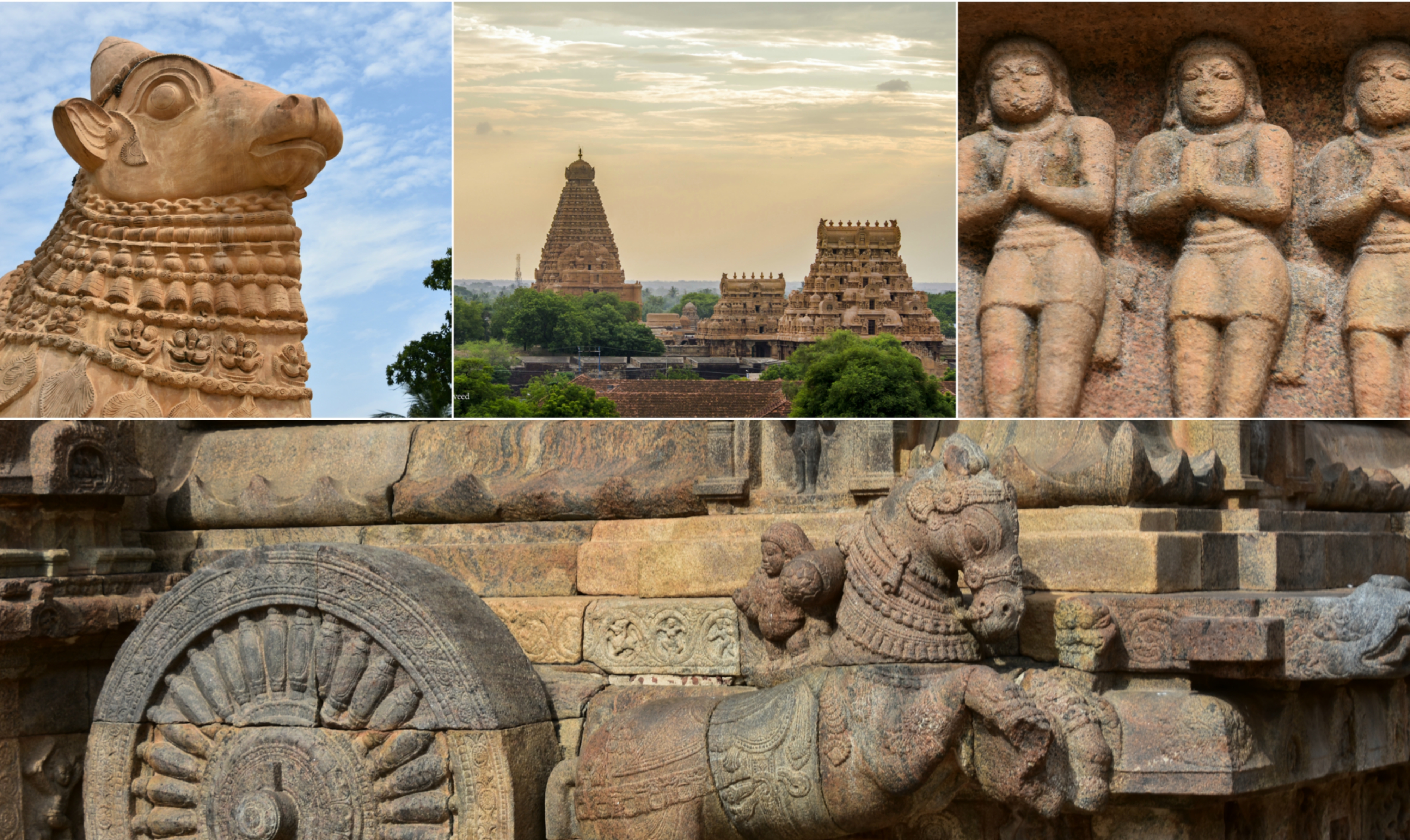
The Korukkai Veeratteswarar Temple exemplifies the distinctive architectural style perfected by the Chola dynasty. Dating back to the 7th century, the temple's design reflects the early Chola period's characteristics, including a sturdy stone construction, well-proportioned vimana (tower above the sanctum), and intricate sculptural details. While specific features are not detailed, Chola temples typically feature elaborate gopurams (entrance towers), mandapams (halls), and finely carved deities and mythological figures, showcasing exceptional craftsmanship and engineering prowess that have withstood centuries.
Early Chola Period Design
The temple's architecture showcases the foundational elements of the 7th-century Chola style, emphasizing durability and aesthetic balance.
Key Architectural Features
Characteristic Chola elements, such as the vimana and detailed stone carvings, are prominent, reflecting the era's artistic sophistication.
Craftsmanship and Durability
The construction highlights the Chola artisans' skill in creating robust and artistically rich structures that have endured for centuries.
Planning Your Pilgrimage
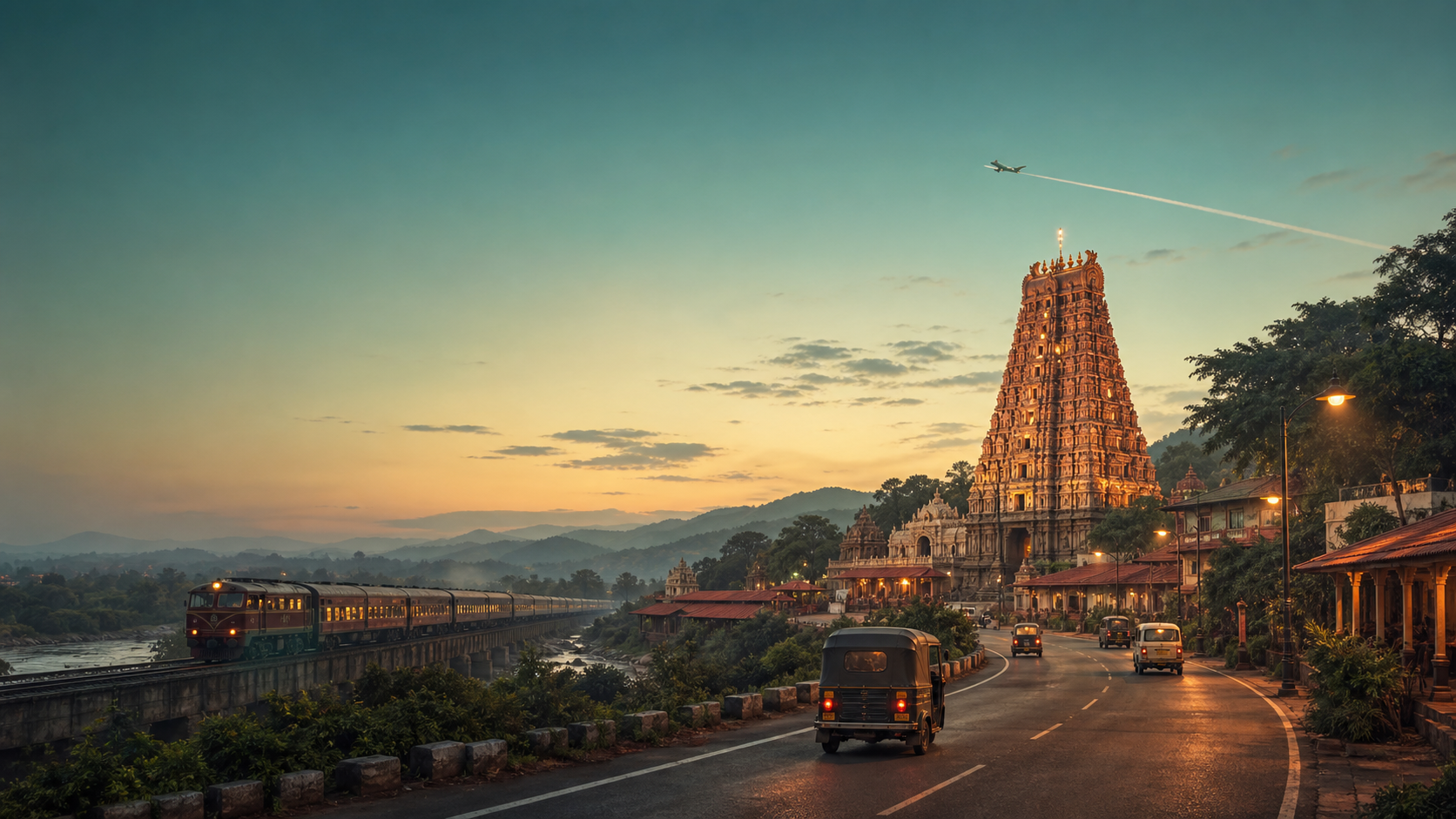
For those planning a visit to the Korukkai Veeratteswarar Temple, several transport options are available. The temple is located near Mayiladuthurai, Tamil Nadu. By road, it is approximately 258 km from Chennai, taking about 5.5 hours by bus or 6.5 hours by car. The nearest major train station is Mayiladuturai Junction (MV), about 7 km away. For air travel, Puducherry Airport (PNY) is the closest, approximately 93 km from the temple, with onward travel by taxi or local transport.
Road Access
The temple is accessible by road, with bus services from major hubs like Chennai, taking around 5.5 hours for the 258 km journey.
Train Connectivity
Mayiladuturai Junction (MV) is the nearest railway station, located approximately 7 km from the temple, offering convenient train routes.
Air Travel Options
Puducherry Airport (PNY), about 93 km away, serves as the closest airport, followed by ground transport to the temple site.
| Deity | Veerateswarar |
|---|---|
| Form | Shiva in his fierce form, specifically as the punisher of Kama, the god of love. |
| Significance | This form of Shiva signifies his supreme ascetic power and his ability to transcend worldly desires, as demonstrated by his incineration of Kama. |
The Incineration of Kama
The Korukkai Veeratteswarar Temple is revered as one of the eight sacred sites where Lord Shiva is believed to have punished Kama, the god of love. According to legend, Kama attempted to disturb Shiva's deep meditation to help Parvati win his affection. Enraged by this interruption, Shiva opened his third eye, unleashing a fiery gaze that incinerated Kama into ashes. This powerful act established Shiva as 'Kama Dahana Murti' and signifies his absolute control over desire and his ascetic prowess. The event underscores the temple's profound spiritual significance as a place where divine power triumphed over worldly distractions.
Shiva's third eye, a gaze of fire, turned desire to ash, asserting supreme ascetic power.
At Korukkai, the divine triumph over worldly distractions is eternally enshrined.
Introduction to Korukkai Veeratteswarar Temple
The Korukkai Veeratteswarar Temple, located in Mayiladuthurai, Tamil Nadu, is a revered Hindu shrine dedicated to Lord Shiva. It is one of the eight Veeratta Sthalams, sites where Shiva is believed to have performed acts of valor. The presiding deity is Shiva in the fierce form of Veeratteswarar. This ancient temple holds profound spiritual significance, primarily known as the sacred ground where Lord Shiva incinerated Kama, the god of love, with his third eye. Its historical and religious importance draws devotees seeking blessings and spiritual solace.
Location and Significance
Situated in the Mayiladuthurai district of Tamil Nadu, the temple is a pivotal pilgrimage site, recognized for its unique association with Shiva's powerful deeds.
The Deity: Veeratteswarar
Lord Shiva is worshipped here as Veeratteswarar, a manifestation embodying his formidable power and ascetic nature.
Veeratta Sthalam Status
Korukkai is celebrated as one of the eight sacred places where Shiva displayed his heroic acts, making it a significant destination for devotees.
A Glimpse into Chola Heritage
The Korukkai Veeratteswarar Temple stands as a testament to the rich architectural and cultural legacy of the Chola dynasty. Constructed in the 7th century, this ancient edifice showcases the distinctive Chola style of temple architecture, characterized by its robust structure and intricate carvings. Its establishment during the early Chola period highlights the dynasty's profound devotion to Shiva and their patronage of grand temple building. The temple's enduring presence reflects centuries of historical continuity and artistic tradition under Chola rule.
7th Century Origins
The temple's foundation dates back to the 7th century, positioning it among the earliest and most historically significant Chola constructions.
Chola Dynasty Patronage
Built under the Chola dynasty, the temple embodies their religious fervor and their contribution to South Indian temple architecture.
Architectural Style
The temple's design adheres to the classic Chola architectural style, known for its sculptural elegance and structural integrity.
Lord Veeratteswarar: The Punisher of Kama
The central narrative associated with the Korukkai Veeratteswarar Temple revolves around Lord Shiva's fierce form as the incinerator of Kama, the god of love. According to legend, Kama attempted to disrupt Shiva's intense meditation to facilitate Parvati's union. Angered by this intrusion, Shiva opened his third eye, reducing Kama to ashes. This monumental event earned Shiva the epithet 'Kama Dahana Murti', signifying his absolute mastery over desires and his supreme ascetic power. The temple thus celebrates Shiva's triumph over worldly attachments.
The Legend of Kama Dahana
The temple is famous as the site where Lord Shiva's third eye reduced Kama, the god of love, to ashes for disturbing his penance.
Shiva as Kama Dahana Murti
This form of Shiva, 'Kama Dahana Murti', represents his control over desire and his powerful ascetic nature, celebrated at this temple.
Spiritual Significance
The legend underscores the temple's role as a place where divine power overcame worldly distractions, emphasizing spiritual detachment.
🗺 How to Reach
Hover a card to animate the journey on the map
Verified routes to Korukkai Veeratteswarar Temple
Common Questions
Where is Korukkai Veeratteswarar Temple located?
Korukkai Veeratteswarar Temple is documented at Mayiladuthurai, Tamil Nadu.
Which deity is associated with Korukkai Veeratteswarar Temple?
Korukkai Veeratteswarar Temple is associated with Shiva.