



A complete pilgrim record drawn from the existing published article data.
Historical Foundation
Origins and Patronage
Key Historical Milestones
The Chandela Legacy
Definition: Chandela Dynasty
The Chandela dynasty was a powerful Central Indian Rajput clan that ruled the Bundelkhand region from the 9th to the 13th centuries. They are renowned for their patronage of art and architecture, most notably the construction of the Khajuraho Group of Monuments, a UNESCO World Heritage Site.
Architecture & Craftsmanship

Nagara Style and Khajuraho Sub-style
Pro Tip for Architects & Art Historians
Observe the precise interlocking of sandstone blocks at Chaturbhuja Temple. This 'dry masonry' technique, without mortar, is a hallmark of ancient Indian temple engineering and speaks volumes about the structural knowledge of Chandela builders. It's best appreciated by examining the construction details closely.
Sculptural Grandeur
- Apsaras: Celestial nymphs in graceful, alluring postures, often engaged in daily activities or dance.
- Mithunas: Couples in various intimate poses, symbolizing fertility, auspiciousness, and the union of purusha and prakriti.
- Vaishnava Themes: Depictions relating to Krishna's life, Vishnu's avatars, and other mythological narratives from the Vaishnava tradition.

The Chaturbhuja Temple's sculptural program is a 'living testament to the Chandela masters' ability to infuse stone with spiritual narrative and vibrant life,' making it a microcosm of Khajuraho's artistic pinnacle.
Engineering Marvels
The Presiding Deity
Deity Profile: Chaturbhuja Krishna
- Main Deity: Krishna
- Deity Form: Chaturbhuja (Four-armed standing form)
- Attributes: Holds Shankha (conch), Chakra (discus), Gada (mace), and Padma (lotus) in his four hands.
- Iconographic Uniqueness: Rare as a standalone Chaturbhuja Krishna in Khajuraho, distinct from more common Vishnu-centric temples or Harihara forms.
- Theological Basis: Consistent with Bhagavata Purana's depiction of Krishna's chaturbhuja form as the supreme Para Vasudeva.
Iconography and Symbolism
- Shankha (Conch): Represents the primeval sound 'Om', the origin of existence, and victory.
- Chakra (Discus): Symbolizes the mind, the wheel of time, and the destruction of evil.
- Gada (Mace): Signifies intellectual power, strength, and the power of punishment.
- Padma (Lotus): Represents purity, beauty, spiritual liberation, and cosmic creation.

Key Takeaway: Iconographic Significance
The Chaturbhuja Temple at Khajuraho is uniquely significant for its dedication to a standalone, four-armed Krishna icon, rather than the more common Vishnu or syncretic forms. This points to a specific and profound Vaishnava devotion during the Chandela period, heavily influenced by the Bhagavata Purana.
Secondary Deities
- Ganesha: The elephant-headed god, revered as the remover of obstacles.
- Surya: The Sun god, often depicted with his chariots.
- Varaha: The boar avatar of Vishnu, symbolizing cosmic rescue.
- Narasimha: The man-lion avatar of Vishnu, representing divine protection.
- Durga: The fierce warrior goddess, embodying divine strength and protection.
Festivals & Living Traditions
Major Celebrations
Two major festivals stand out in the temple's annual calendar, attracting devotees and visitors alike:
- Krishna Janmashtami: Celebrated in the month of Bhadrapada (August–September), this nine-day festival marks the birth of Lord Krishna. The celebrations culminate in a midnight abhisheka (ritual bathing) of the Chaturbhuja icon, followed by enchanting rasa-lila enactments. Special darshan (viewing of the deity) is offered, with the idol adorned in elaborate floral canopies and rich garments. This festival is a period of heightened devotion, music, and dance, reminiscent of Krishna's playful childhood in Vrindavan.
- Vaikuntha Ekadashi: Occurring in Margashirsha (December–January), Vaikuntha Ekadashi is considered a highly sacred day for Vaishnavites. It is believed that observing fast and prayers on this day grants moksha (liberation). At Chaturbhuja Temple, the northern door of the sanctum is symbolically opened, a practice believed to grant special blessings and facilitate direct entry to Vaikuntha, the abode of Vishnu.

Daily Rituals and Performing Arts
Plan Your Visit
Location and Accessibility
- Nearest City: Khajuraho, Uttar Pradesh, India.
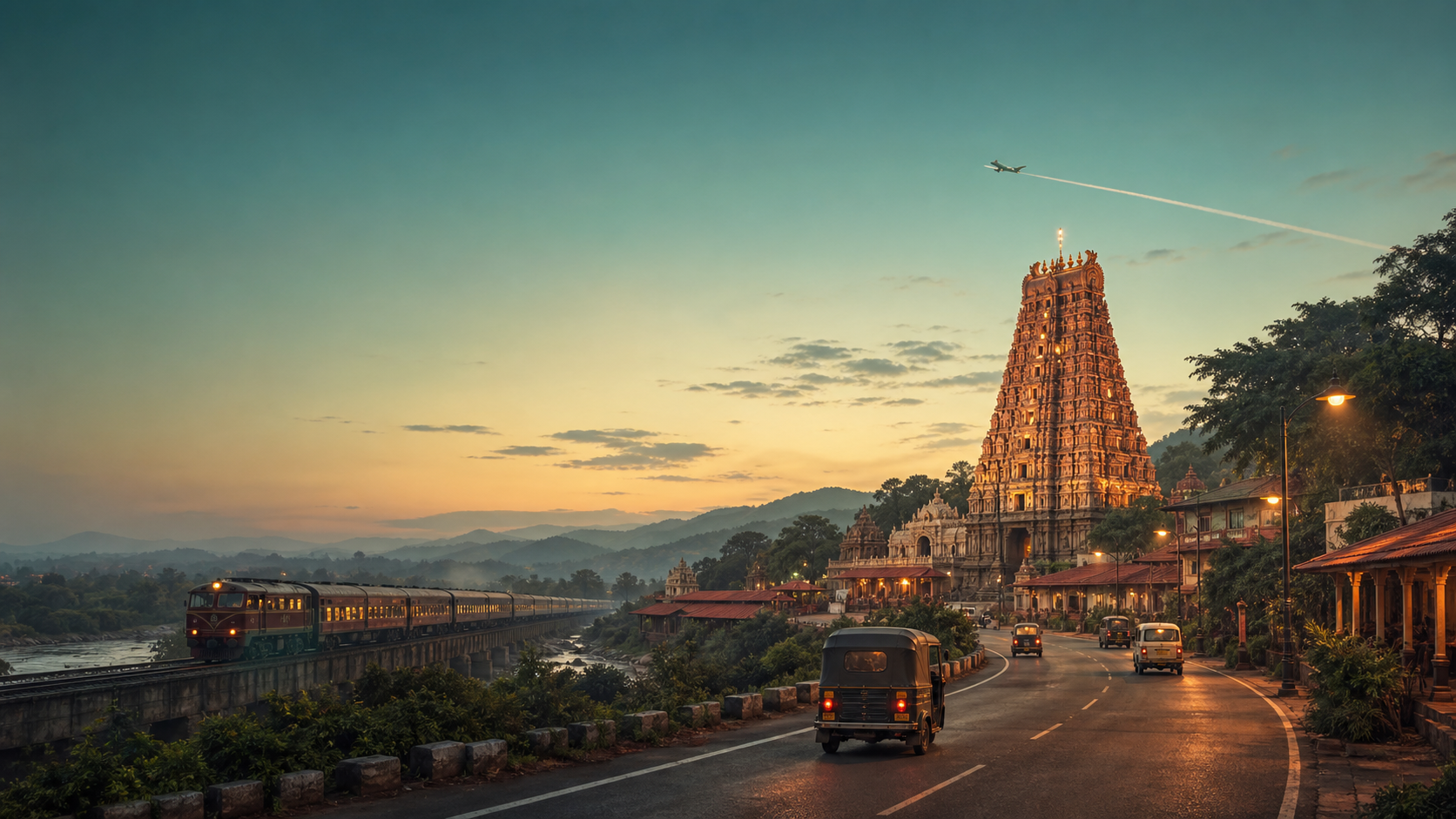
- Nearest Airport: Khajuraho Airport (HJR), approximately 4 km away, offers domestic flights.
- Nearest Railway: Khajuraho Railway Station (KURJ), about 3 km from the temple complex, connects to major cities. Satna Junction (STA), 120 km away, is a larger railway hub.
Visitor Information
- Best Season to Visit: October to March offers pleasant weather. This period also coincides with major festivals like Diwali and the internationally acclaimed Khajuraho Dance Festival (typically in February).
- Suggested Duration: Allocate 45–60 minutes specifically for the Chaturbhuja Temple. As part of the wider Khajuraho complex, a full day or two is recommended to explore all the monuments.
- Annual Visitors: The Khajuraho Group of Monuments sees approximately 1 million visitors annually, with around 250,000 visiting individual temples like Chaturbhuja.
- Visit Rules:
- Photography is generally not permitted inside the garbhagriha (sanctum sanctorum).
- Modest dress is required, respecting the sanctity of the temple.
- Footwear must be removed before entering the sanctum precinct.
- Please adhere to guidelines provided by the Archaeological Survey of India (ASI), the managing body.
Pro Tip for Visitors
Visit the Chaturbhuja Temple early in the morning, especially during the equinoxes (March/September), to potentially witness the magical moment when the sunrise illuminates the main deity's face through the eastern doorway. It's a truly spectacular experience!
Explore Nearby
The Chaturbhuja Temple is part of a larger, magnificent complex. Be sure to explore these nearby temples:
- Kandariya Mahadeva Temple: The largest and most ornate temple at Khajuraho.
- Lakshmana Temple: Another prominent Vaishnava temple, known for its intricate carvings and Vishnu image.
- Duladeo Temple: A relatively later Shiva temple.
- Vamana Temple: Dedicated to the Vamana avatar of Vishnu.
Related temples: A. C. Bhaktivedanta Swami Prabhupada | Abhimanyu Temple, Vayotthidam
Sacred Stories & Mythology
The Svayambhu Icon
The Dream of the Divine Manifestation
A devout worshipper, during the reign of King Yashovarman, experienced a vivid dream. In this celestial vision, Lord Krishna, in his majestic four-armed form, revealed himself and indicated a specific spot where his self-manifested (svayambhu) icon lay hidden. The divine message urged the King to construct a grand temple at this confluence of spiritual energies from the sacred Yamuna River and the ancient Vindhyan hills. Upon discovering the idol as foretold, King Yashovarman, deeply moved, commenced the construction of the Chaturbhuja Temple, ensuring a fitting abode for the miraculous deity, thus solidifying the temple's divine mandate and spiritual power.
Divine Intervention and Lore
Furthermore, several miracles and folk beliefs are associated with the idol and the temple itself:
- Faint Fragrance: It is widely believed that the idol emits a faint, ethereal fragrance, particularly during the auspicious occasion of Kartik Purnima, a full moon day in the Hindu calendar. This phenomenon is considered a sign of the deity's living presence.
- Shikhara Shadow: Local lore claims that the shadow of the temple's magnificent shikhara falls precisely on the sanctum entrance only on Vaikuntha Ekadashi, a significant Vaishnava holy day. This precise astronomical alignment, whether entirely factual or partly embellished, reinforces the temple's connection to cosmic forces and divine timing.
Did you know? Local beliefs suggest the Chaturbhuja idol emits a faint fragrance during Kartik Purnima and the shikhara's shadow aligns perfectly with the sanctum on Vaikuntha Ekadashi, underscoring its mystical aura.
Saints, Poets & Devotees
Vaishnava Bhakti Tradition
Literary and Theological Foundations
"The detailed iconometric prescriptions of texts like the Vishnudharmottara Purana likely guided the skilled Chandela artisans in crafting the Chaturbhuja Krishna, ensuring a sacred and authentic representation of the divine."
Records, Marvels & Heritage
Uniqueness and Significance
Among the vast Khajuraho monuments, the Chaturbhuja Temple possesses several unique distinctions:
- Krishna-Centric Shrine: It is one of only two major Vaishnava temples at Khajuraho explicitly dedicated to Krishna, making it a rare site focusing solely on this deity rather than broader Vishnu-centric themes or syncretic Harihara forms.
- Earliest Surviving Icon: It houses the earliest surviving Chaturbhuja Krishna shrine in Central India with an intact original icon, offering invaluable insights into the evolution of Krishna iconography.
- Named for the Deity: It is the only surviving early medieval temple in Khajuraho explicitly named 'Chaturbhuja,' directly reflecting its principal deity's form and theological focus.
Heritage and Conservation

Definition: UNESCO World Heritage Site
A place (such as a forest, mountain, lake, desert, monument, building, complex, or city) that is listed by the United Nations Educational, Scientific and Cultural Organization (UNESCO) as being of special cultural or physical significance.
Astronomical Precision
🗺 How to Reach
Hover a card to animate the journey on the map
Route to Mathura
Common Questions
Where is Chaturbhuja Temple, Khajuraho: Krishna's Divine Abode located?
Chaturbhuja Temple, Khajuraho: Krishna's Divine Abode is documented at Mathura, Uttar Pradesh.
Which deity is associated with Chaturbhuja Temple, Khajuraho: Krishna's Divine Abode?
Chaturbhuja Temple, Khajuraho: Krishna's Divine Abode is associated with Krishna.
Related Temples


A Living Covenant