A complete pilgrim record drawn from the existing published article data.
Tracing the Ancient Legacy of Kayaroganeshwarar
The exact origins of the Kayaroganeshwarar Temple remain largely unknown, with its builder and the specific dynasty responsible for its initial construction unrecorded. Despite the lack of definitive historical records, its architectural style suggests a deep antiquity, reflecting the enduring traditions of South Indian temple building. The temple has likely undergone numerous renovations and expansions over centuries, a common practice in ancient temple complexes, with various local patrons contributing to its upkeep and embellishment. Its continuous existence speaks to its profound cultural and religious importance within the region, maintaining its sacred status through generations.
Mysterious Origins
The temple's initial construction period, builder, and patron dynasty are not explicitly known, pointing to its ancient roots.
Enduring Presence
Despite unknown specifics, the temple's long-standing existence highlights its continuous role in local religious life.
Architectural Marvels of Kayaroganeshwarar Temple
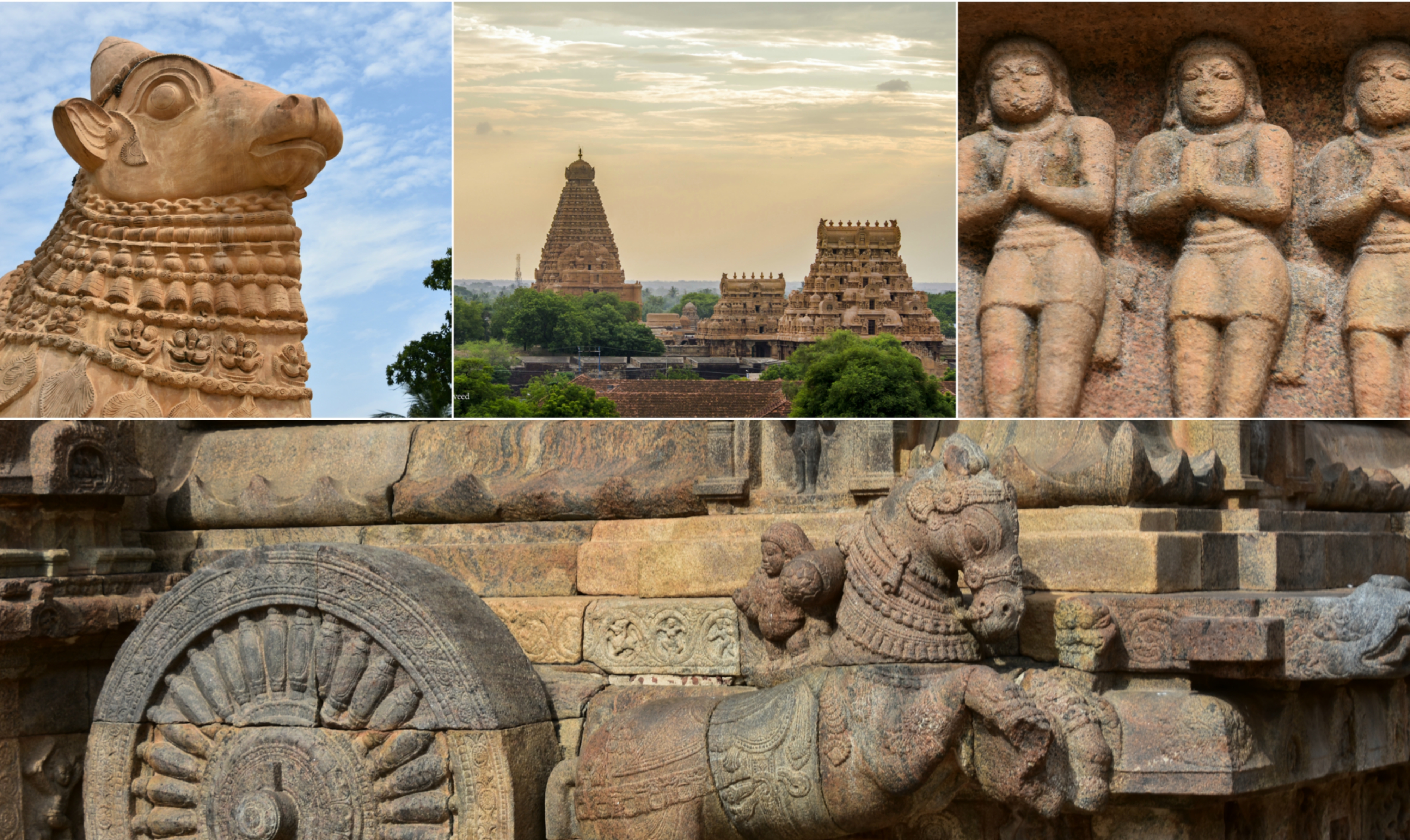
The Kayaroganeshwarar Temple exemplifies the distinctive Dravidian style of architecture, characteristic of temples in South India. While specific details of its construction materials are unknown, it features elements typical of the tradition, including a prominent vimana (tower above the sanctum) and various mandapas (halls). The temple's exterior and interior are adorned with intricate carvings and sculptures, depicting deities, mythological narratives, and decorative motifs. Its layout follows a traditional South Indian temple plan, designed to facilitate ritualistic worship and circumambulation, reflecting centuries of architectural evolution and religious symbolism.
Dravidian Style
The temple exhibits the classic Dravidian architectural style, a hallmark of South Indian temple construction.
Intricate Sculptures
Adornments of carvings and sculptures depicting mythological themes are a key feature of the temple's design.
The Divine Presence: Lord Shiva and Temple Legends
The primary deity enshrined at Kayaroganeshwarar Temple is Lord Shiva, worshipped here as Kayaroganeshwarar. The name 'Kayaroganeshwarar' is derived from 'Kaya' meaning body and 'Arogya' meaning health, suggesting Shiva as the lord who grants good health and freedom from ailments. While specific legends directly associated with this particular manifestation are not widely documented, the temple's name itself implies a significant spiritual role in bestowing physical and spiritual well-being upon devotees. The worship of Shiva in this form emphasizes his benevolent aspect as a healer and protector.
Lord Kayaroganeshwarar
The main deity is Lord Shiva, revered in the form of Kayaroganeshwarar, signifying health and well-being.
Meaning of the Name
The name 'Kayaroganeshwarar' translates to the 'Lord of the body's health', highlighting Shiva's healing aspect.
Planning Your Visit to Kayaroganeshwarar Temple
The Kayaroganeshwarar Temple welcomes visitors daily from 6:00 AM to 12:30 PM and again from 4:00 PM to 9:00 PM. Entry to the temple is free for all. The best time to visit Kanchipuram is between October and March, when the weather is most pleasant. Visitors are encouraged to wear traditional attire and remove footwear before entering the temple premises. A typical visit duration ranges from one to two hours, allowing ample time for darshan and appreciating the temple's architecture. Parking is available near the temple for those traveling by car.
Timings and Entry
The temple operates with specific morning and evening hours, offering free entry to all devotees and visitors.
Getting There
The temple is easily accessible within Kanchipuram city limits, with Kancheepuram Bus Stand and Kanchipuram Railway Station nearby. Chennai International Airport is approximately 70-80 km away, and NH48 provides good road connectivity.
| Deity | Shiva |
|---|
The Enduring Presence of Lord Shiva
While specific mythological narratives directly associated with the Kayaroganeshwarar Temple are not widely documented, the temple stands as a sacred space dedicated to Lord Shiva. Devotees believe that visiting this ancient shrine and offering prayers to Kayaroganeshwarar can bring spiritual solace and fulfill desires. The sanctity of such revered Shiva temples often stems from local legends passed down through generations, celebrating divine interventions or the establishment of the lingam by revered sages or celestial beings, reinforcing its spiritual importance in Kanchipuram.
In the heart of Kanchipuram, Kayaroganeshwarar stands, a timeless symbol of devotion to Lord Shiva.
Seek the blessings of the Destroyer, for in his presence, peace and liberation are found.
Related temples: Aakkoor Thanthondreeswarar Temple | Aazhimala Shiva Temple
Kayaroganeshwarar Temple: A Sacred Abode in Kanchipuram
The Kayaroganeshwarar Temple stands as a significant Shiva shrine within the ancient city of Kanchipuram, Tamil Nadu. Kanchipuram, renowned as a city of a thousand temples, holds a revered place in Hindu pilgrimage. This temple, dedicated to Lord Shiva, is celebrated for its spiritual ambiance and historical depth, drawing devotees seeking blessings and spiritual solace. Its presence underscores Kanchipuram's enduring legacy as a center of religious devotion and architectural splendor, making it a pivotal site for understanding the region's rich cultural tapestry.
Location and Significance
Situated in Kanchipuram, the temple is an integral part of the city's sacred landscape, known for its numerous ancient temples.
A Revered Shiva Shrine
Dedicated to Lord Shiva, the temple is a focal point for devotees, embodying centuries of worship and spiritual tradition.
Restoration & Conservation
The Kayaroganeshwarar Temple, like many ancient stone structures in India, has undergone various phases of restoration and conservation to preserve its architectural integrity and spiritual sanctity. Over centuries, exposure to weather elements, natural wear and tear, and sometimes even human intervention, have necessitated careful repair. Early efforts were often ad-hoc, carried out by local patrons or temple committees. However, in more recent times, structured conservation projects have been initiated, often involving the Archaeological Survey of India (ASI) or the Tamil Nadu State Department of Archaeology. These initiatives aim to address issues ranging from structural cracks in the vimana and mandapams to the erosion of intricate carvings and the deterioration of mural paintings, ensuring the temple's survival for future generations of devotees and art enthusiasts.
Undertaking the restoration of a temple as historically significant as Kayaroganeshwarar presents numerous challenges. Securing adequate funding is a perpetual concern, as are finding skilled artisans proficient in traditional construction and sculptural techniques. Conservators must meticulously research original materials and methods to ensure that repairs are sympathetic to the temple's heritage, often employing traditional lime mortars, stone matching, and careful chemical cleaning to remove accretions without damaging the original surface. Balancing the need for structural stability with the preservation of aesthetic and historical authenticity is a delicate act. These ongoing efforts are crucial not only for maintaining the temple as a vibrant place of worship but also for safeguarding it as a priceless cultural artifact, a testament to the enduring craftsmanship and spiritual devotion of past eras.
🗺 How to Reach
Hover a card to animate the journey on the map
Verified routes to Kayaroganeshwarar Temple Kanchipuram
Common Questions
Where is Kayaroganeshwarar Temple: Kanchi's Ancient Shiva Shrine located?
Kayaroganeshwarar Temple: Kanchi's Ancient Shiva Shrine is documented at Kancheepuram, Tamil Nadu.
Which deity is associated with Kayaroganeshwarar Temple: Kanchi's Ancient Shiva Shrine?
Kayaroganeshwarar Temple: Kanchi's Ancient Shiva Shrine is associated with Shiva.