A complete pilgrim record drawn from the existing published article data.
Journey Through Time: The History of Shri Mata Vaishno Devi Shrine
The Shri Mata Vaishno Devi Shrine boasts an ancient history, evolving from a humble natural cave into one of India's most significant pilgrimage destinations. Its origins are shrouded in antiquity, with legends suggesting its existence since the Mahabharata era. Over centuries, the site has witnessed continuous devotion and development, attracting millions annually. The Mata Vaishno Devi Shrine Board, established in 1986, has played a pivotal role in modernizing facilities while preserving the sanctity of the pilgrimage, making it accessible to a global devotee base.
Ancient Origins and Legends
Oral traditions and ancient scriptures hint at the shrine's existence for millennia, linking its sanctity to primordial spiritual practices in the Trikuta hills.
Evolution of Pilgrimage
From a challenging trek through dense forests, the pilgrimage has transformed, with improved infrastructure facilitating the journey for devotees while maintaining its spiritual essence.
Sacred Artistry: Decoding the Iconography and Architecture of Vaishno Devi
The Vaishno Devi temple's iconography, particularly within the holy cave, is unique, relying on natural geological formations rather than sculpted images. The three pindis are the central focus, representing the goddess's primary aspects. Surrounding elements, such as natural rock shapes, water flows, and smaller shrines, are imbued with symbolic meanings, narrating episodes from her life and Hindu mythology. Pilgrims learn to identify these natural symbols, which convey spiritual narratives of creation, preservation, and dissolution. The path to the cave itself, with its various stopping points and smaller shrines, also forms a part of this sacred interpretive journey, guiding devotees through a profound spiritual landscape.
The Holy Pindis
The three natural rock formations symbolize Maha Kali, Maha Lakshmi, and Maha Saraswati, representing the goddess's power, wealth, and knowledge respectively.
Natural Symbols and Narratives
Other natural formations like the Charan Paduka (footprints) and the Garbh Joon (womb cave) are significant iconographic elements, each telling a part of Mata Vaishno Devi's story.
Unveiling the Divine: An Introduction to Vaishno Devi's Iconography
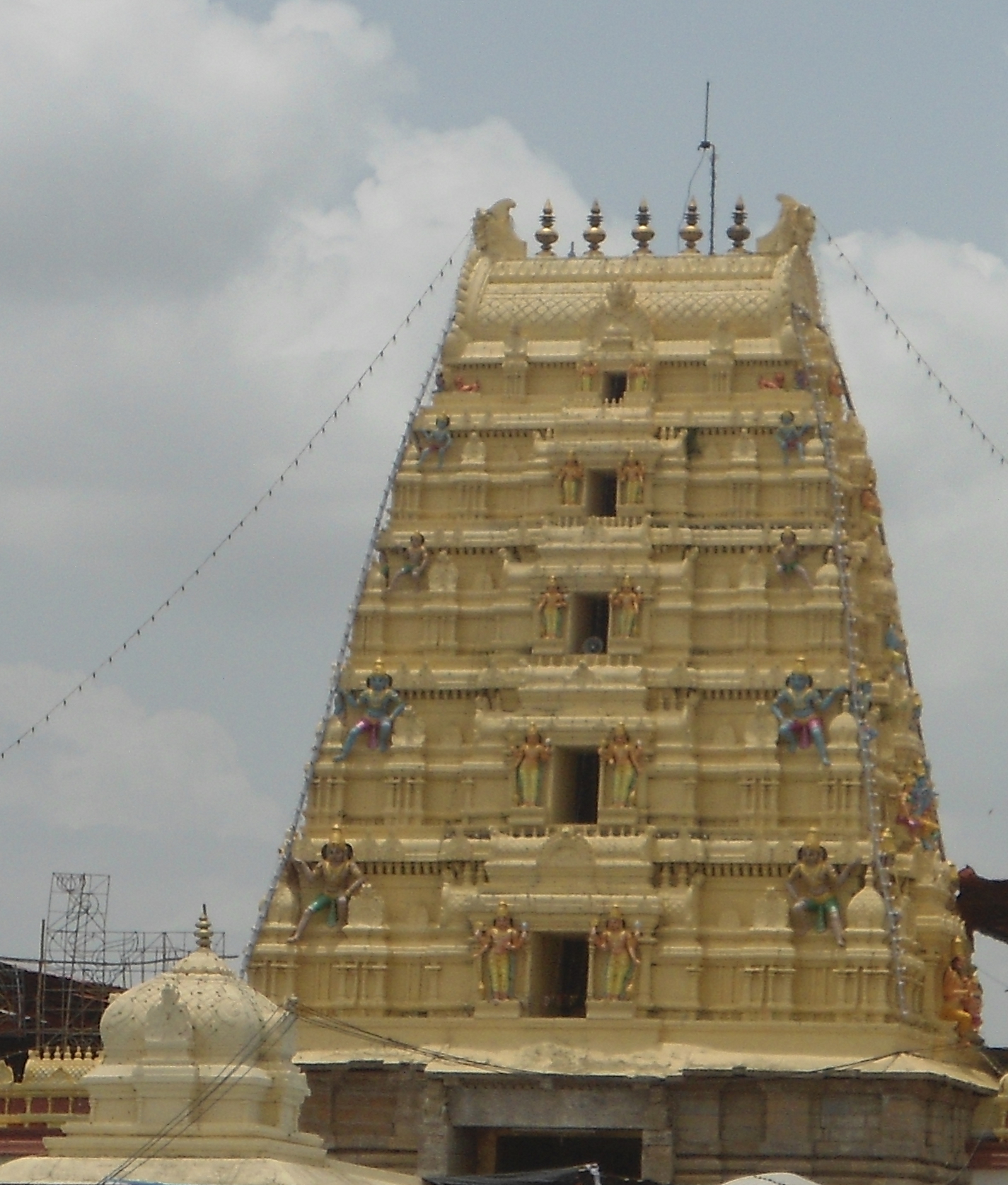
The sacred shrine of Shri Mata Vaishno Devi, nestled in the Trikuta Mountains of Jammu and Kashmir, is a revered pilgrimage site. Understanding its rich iconography is crucial for devotees seeking a deeper spiritual connection. These divine representations, etched in stone and enshrined within the holy cave, offer profound insights into the goddess's manifestations and the narratives of her power. Interpreting these visual cues guides pilgrims through the sacred stories and philosophical underpinnings of this ancient tradition, enriching the spiritual experience of darshan.
Significance of Visual Narratives
The sculptures and natural formations within the cave are not mere decorations but sacred texts, conveying ancient myths and spiritual truths. Each form holds symbolic meaning.
Interpreting Divine Forms
Learning to identify the specific attributes and postures of the deities helps pilgrims grasp the essence of Vaishno Devi's multifaceted identity and her divine roles.
Embarking on a Sacred Journey: A Visitor's Guide to Vaishno Devi
Preparing for the pilgrimage to Vaishno Devi involves practical considerations and a mindset of reverence. The journey typically begins from Katra, leading to the holy cave through a trek or alternative transport. Essential tips include wearing modest clothing, carrying necessary provisions, and respecting the sanctity of the path and the shrine. During darshan, observing silence and following queues ensures a smooth experience. Engaging respectfully with the temple's sacred art means understanding the significance of the pindis and other natural formations, deepening one's spiritual connection to Mata Vaishno Devi.
Pilgrimage Essentials
Carry comfortable footwear, warm clothes, and a valid ID. Book accommodations and transport in advance, especially during peak seasons.
Darshan Etiquette
Maintain decorum, remove footwear before entering the sanctum, and follow instructions from shrine authorities to ensure a peaceful and respectful darshan.
| Deity | Rama |
|---|---|
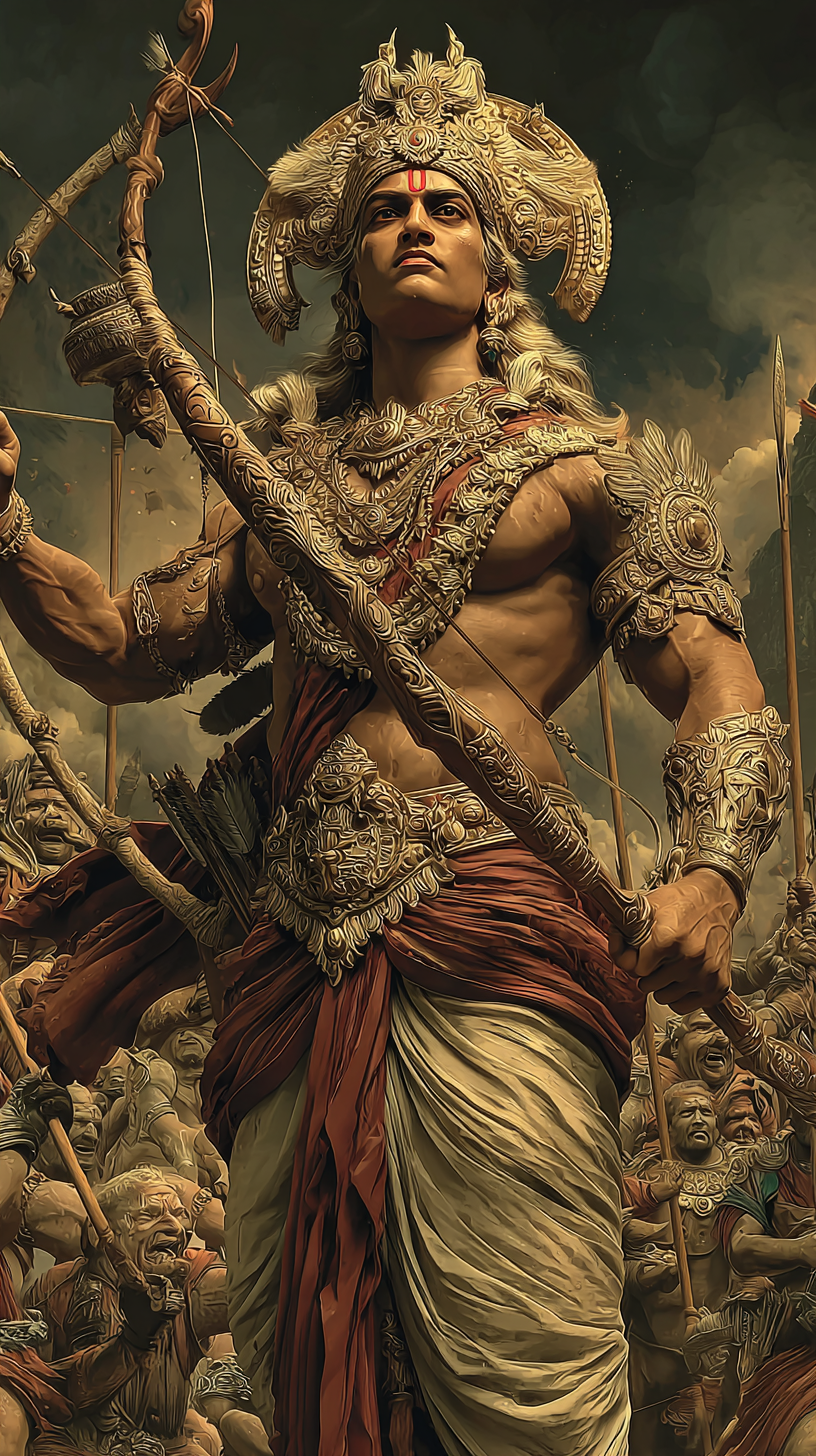
| Form | Rama is typically depicted as a young, blue-skinned prince, holding a bow and arrow. He is often accompanied by his wife Sita, brother Lakshmana, and devotee Hanuman. |
| Consort | Sita |
| Sampradaya | Hindu |
| Significance | Rama is the seventh avatar of Vishnu, revered as the ideal man, embodying dharma (righteousness), courage, and compassion. His life story, narrated in the epic Ramayana, serves as a moral guide. |
Rama's Valiant Feat: Breaking Shiva's Bow
In the ancient kingdom of Mithila, King Janaka announced a swayamvara for his daughter Sita, with a unique condition: whoever could string the mighty bow of Lord Shiva would win her hand. Many powerful kings and princes attempted, but none could even lift the colossal bow. Prince Rama, guided by Sage Vishwamitra, approached the challenge. With effortless grace and immense strength, he not only lifted the bow but strung it with such force that it snapped in two, resounding like thunder. This miraculous feat proved his divine prowess and earned him Sita's hand in marriage.
Dharma protects those who protect it. Adherence to righteousness is the greatest shield.
True strength lies not in physical might, but in unwavering adherence to righteousness and compassion for all beings.
Divine Manifestations: Understanding Mata Vaishno Devi and Her Legends
Mata Vaishno Devi is revered as a manifestation of the Hindu Mother Goddess, embodying the collective spiritual powers of Maha Kali, Maha Lakshmi, and Maha Saraswati. Her mythology details her ascetic life, her pursuit of spiritual purity, and her eventual triumph over evil, particularly the demon Bhairon Nath. She is deeply connected to the broader Hindu pantheon, and her divine energy, or Shakti, is often associated with the strength and righteousness championed by Lord Rama, whose devotion she is said to have inspired. Her forms within the cave reflect these divine attributes.
The Three Pindis
Within the holy cave, Mata Vaishno Devi is worshipped in the form of three natural rock formations, known as pindis, representing her three primary manifestations.
Connection to Lord Rama
Legends recount her spiritual connection to Lord Rama, who is believed to have blessed her and guided her path, reinforcing her role as a powerful divine protector.
🗺 How to Reach
Hover a card to animate the journey on the map
Verified routes to Iconography of Vaishno Devi: How to Read Temple Sculptures
Common Questions
Where is Vaishno Devi Iconography: Reading Sacred Rama Sculptures located?
Vaishno Devi Iconography: Reading Sacred Rama Sculptures is documented at Vaishno Devi, Jammu and Kashmir.
Which deity is associated with Vaishno Devi Iconography: Reading Sacred Rama Sculptures?
Vaishno Devi Iconography: Reading Sacred Rama Sculptures is associated with Rama.