



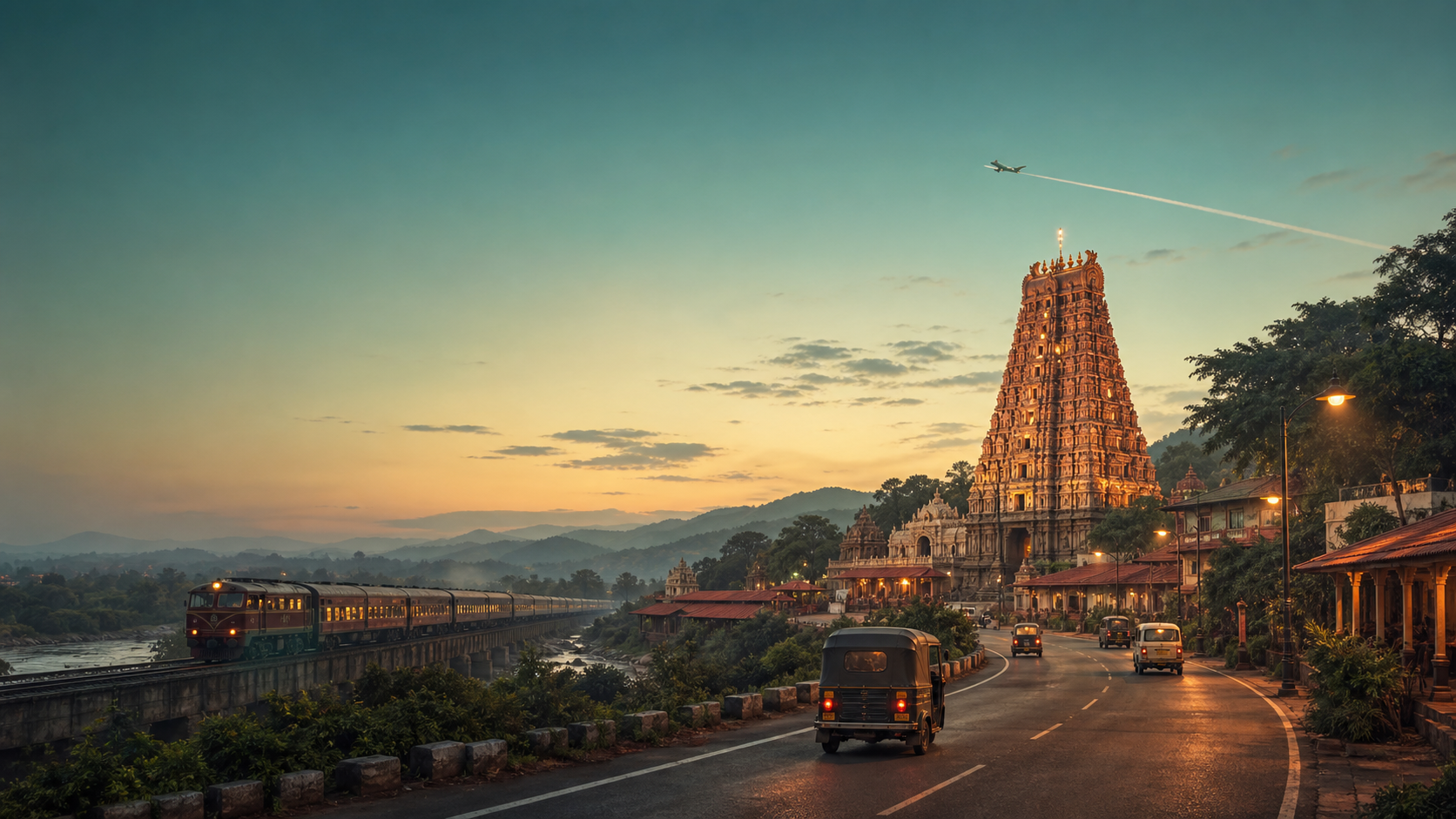
A complete pilgrim record drawn from the existing published article data.

The serene exterior of Govind Dev Ji Temple, an architectural gem within Jaipur's City Palace.
Historical Foundation
The Ancient Origins of the Deity: From Myth to Rediscovery
What is a Murti?
A Murti (Sanskrit: मूर्ति) is a devotional image, typically a statue or idol, of a deity or saint in Indian religions. It serves as a focal point for worship and meditation, allowing devotees to experience the divine presence.
Timeline: Journey of Govind Dev Ji
From Vrindavan to Jaipur: A Divine Relocation
Key Takeaway: Historical Resilience
The temple embodies resilience, having safeguarded its primary deity through centuries of socio-political changes, including a crucial protective relocation from Vrindavan to Jaipur.
Architecture & Craftsmanship
Rajput Grandeur Meets Mughal Finesse

The monumental Satsang Hall, a testament to modern engineering within the historic temple complex.
The Modern Marvel of the Satsang Hall
Guinness World Record Holder!
The Satsang Hall of Govind Dev Ji Temple was recognized in 2009 by Guinness World Records for being the world's widest concrete building with a 119-foot single-span roof.
Key Takeaway: Architectural Fusion
The temple beautifully integrates traditional Rajput architectural elements with modern engineering feats, exemplified by its Guinness World Record-holding pillarless Satsang Hall.
The Presiding Deity
Govind Dev Ji: The Face of Krishna
Deity Profile: Govind Dev Ji and Radha
Main Deity: Govind Dev Ji (Krishna)
Deity Form: Unique 'face-form' murti, representing the radiant visage of Lord Krishna.
Consort Deity: Radha, inseparable from Krishna in their divine 'svarupa' (true form).
Iconographic Uniqueness: Govind Dev Ji is one of three sacred Krishna murtis believed to be sculpted by Bajranabh, Krishna's great-grandson. It is particularly revered for depicting Krishna's face, making it distinct from other icons.
Tradition: Gaudiya Vaishnava, emphasizing devotional love (Bhakti) for Radha-Krishna.
Significance: Represents the profound beauty and sweetness of Krishna, a central figure of worship for millions of devotees worldwide, particularly in the Bhakti movement.
Radha's Eternal Presence: An Inseparable Svarupa
What is Gaudiya Vaishnavism?
Gaudiya Vaishnavism is a Vaishnava Hindu religious movement inspired by Chaitanya Mahaprabhu (1486–1534). It is primarily focused on the devotional worship (Bhakti Yoga) of Radha and Krishna and their many divine avatars as the supreme forms of God.
Key Takeaway: Unique Iconography
The temple houses the rare 'face-form' murti of Krishna, Govind Dev Ji, alongside Radha, embodying the profound and inseparable divine love central to Gaudiya Vaishnavism.
Festivals & Living Traditions
A Year of Vibrant Celebrations
- Janmashtami (Bhadrapada / August–September): The birth anniversary of Lord Krishna is celebrated with immense grandeur. The temple hosts night-long bhajans (devotional songs), dramatic reenactments of Krishna's life, and a special abhishek (ritual bathing) of the deity at midnight, culminating in a festive atmosphere.
- Radhashtami (Bhadrapada / August–September): Following Janmashtami, Radha's birth anniversary is celebrated with equal devotion. The temple is adorned with exquisite floral decorations, and exclusive seva (service) and kirtan (congregational chanting) are offered to Radha.
- Holi (Phalguna / February–March): The festival of colors is celebrated with unique devotional songs and reflects the joyous spirit of Vrindavan's 'Lathmar Holi', where playful splashes of color signify divine love.
- Gopashtami (Kartik / October–November): This festival honors Krishna’s initiation as a cowherd. Cattle are adorned, and special offerings are made, symbolizing Krishna's profound connection with nature and animal husbandry.
- Sharad Purnima (Ashwin / September–October): Known as the night of divine love, this festival is associated with Krishna's Raas Leela. Devotees offer kheer (rice pudding) under the moonlight, believing it absorbs divine blessings.
- Kartik Purnima (Kartik / October–November): Marking the culmination of the auspicious Kartik month, this day involves sacred baths and offering of lamps, signifying purification and devotion.

Festivals like Janmashtami draw massive crowds, showcasing the temple's central role in devotional life.
Daily Seva and Sacred Melodies
What is Aarti?
Aarti (Sanskrit: आरती) is a Hindu ritual of worship, part of pooja, in which light from wicks soaked in ghee (purified butter) or camphor is offered to one or more deities. Aarti also refers to the songs sung in praise of the deity when the offering is made.
The seven daily aartis are:
- Mangla Aarti: 5:00–5:15 AM (Waking the deities)
- Dhoop Aarti: 7:45–9:00 AM (Incense offering)
- Shringar Aarti: 9:30–10:15 AM (Dressing and adorning the deities)
- Rajbhog Aarti: 10:45–11:45 AM (Offering the main meal)
- Gwal Aarti: 5:00–5:15 PM (Offering a snack, symbolizing Krishna's return with cows)
- Sandhya Aarti: 5:45–6:45 PM (Evening lamp offering)
- Shayan Aarti: 8:00–8:15 PM (Putting the deities to rest)
Key Takeaway: Continuous Devotion
The temple maintains a rigorous schedule of seven daily aartis and numerous annual festivals, ensuring a continuous and vibrant cycle of devotion and celebration throughout the year.
Plan Your Visit
Visiting the Govind Dev Ji Temple offers a profoundly enriching experience. Here's what you need to know to plan your trip.
Getting There and Best Times
- Nearest City: Jaipur, Rajasthan. The temple is centrally located within the City Palace complex.
- Nearest Airport: Jaipur International Airport (JAI), approximately 12 km away.
- Nearest Railway: Jaipur Junction (JP), just about 2 km from the temple.
- Best Season to Visit: October to March offers pleasant, cool weather, ideal for exploring Jaipur and participating in temple activities. The temple experiences peak footfall during major festivals like Janmashtami and Holi, offering a unique cultural experience despite larger crowds.
Etiquette and Exploration
To ensure a respectful and fulfilling visit, please adhere to the following guidelines:
- Dress Code: Modest dress is required. Shoulders and knees should be covered.
- Footwear: Footwear must be removed before entering the sanctum sanctorum. Designated shoe-keeping facilities are usually available.
- Photography: Photography is generally prohibited inside the garbhagriha (main sanctum) to maintain sanctity. Be mindful of signs and restrictions elsewhere.
- Mobile Phones: Mobile phone usage may be restricted, especially during aarti times, to prevent disturbance.
- Suggested Duration: Allow 1.5 to 2 hours to comfortably experience the temple, attend an aarti, and soak in the atmosphere.
What is Darshan?
Darshan (Sanskrit: दर्शन) literally means 'sight' or 'vision'. In Hindu worship, it refers to the auspicious viewing of a deity, sacred person, or a holy object, considered an act of great blessing and merit.
Nearby Temple Circuit: While in Jaipur, you can explore other significant sites nearby:
- Jantar Mantar (within City Palace complex)
- Birla Mandir (Jaipur)
- Galtaji Temple (Monkey Temple)
- Chandpole Hanuman Temple
Related temples: Ahichchhatra Jain temples | Amethi Temple
Sacred Stories & Mythology
The Divine Sculptor Bajranabh and Krishna’s Likeness
The Legend of Bajranabh's Divine Sculptures
Long after Lord Krishna's earthly departure, his great-grandson Bajranabh yearned to visualize his divine ancestor. He consulted Rukmini, Krishna's queen, for a description. Based on her vivid accounts, Bajranabh painstakingly crafted three murtis. The first, Madan Mohan, depicted Krishna's feet. The second, Gopinath, captured his chest. The third, however, was said to be a perfect likeness of Krishna's face, so enchanting that Rukmini herself exclaimed, "This is Govind!" Thus, the Govind Dev Ji murti came into being, capturing the very essence of Krishna's radiant visage and eternal charm, a tradition cherished through millennia.

A glimpse of the intense devotion during aarti, with devotees seeking blessings from Govind Dev Ji.
The Philosopher's Dream and the Govinda Bhashya
What is a Sthala Purana?
A Sthala Purana (Sanskrit: स्थल पुराण) refers to the traditional legends and mythological accounts associated with a specific temple, sacred place (sthala), or pilgrimage site in India. These narratives often describe the origin of the deity, the construction of the temple, or significant miracles that occurred there.
Key Takeaway: Divine Interventions
The temple is sanctified by stories of divine intervention, from Krishna's great-grandson sculpting the deity to the deity himself guiding a philosopher's seminal work.
Saints, Poets & Devotees
Architects of Devotion: Rupa Goswami and Jiva Goswami
Baladeva Vidyabhushana and the Govinda Bhashya
Key Takeaway: Legacy of Scholars
The temple's history is interwoven with the intellectual and spiritual contributions of leading Gaudiya Vaishnava saints and philosophers, particularly Rupa Goswami, Jiva Goswami, and Baladeva Vidyabhushana.
Records, Marvels & Heritage
Guinness Recognition and Engineering Excellence
Engineering Feat: The Govind Dev Ji Satsang Hall's 119-foot single-span roof covers 15,800 sq ft, accommodating 5,000 devotees without a single pillar.

The exquisitely adorned idols of Radha and Govind Dev Ji, the heart of the temple's devotion.
A Legacy Protected and Miracles
Key Takeaway: Heritage and Innovation
The temple is a unique confluence of historical preservation, documented miracles, and cutting-edge engineering, epitomized by its Guinness World Record-holding Satsang Hall.
🗺 How to Reach
Hover a card to animate the journey on the map
Route to Jaipur
Common Questions
Where is Govind Dev Ji Temple, Jaipur: A Vaishnava Jewel located?
Govind Dev Ji Temple, Jaipur: A Vaishnava Jewel is documented at Jaipur, Uttar Pradesh.
Which deity is associated with Govind Dev Ji Temple, Jaipur: A Vaishnava Jewel?
Govind Dev Ji Temple, Jaipur: A Vaishnava Jewel is associated with Radha.
Related Temples


A Living Covenant