



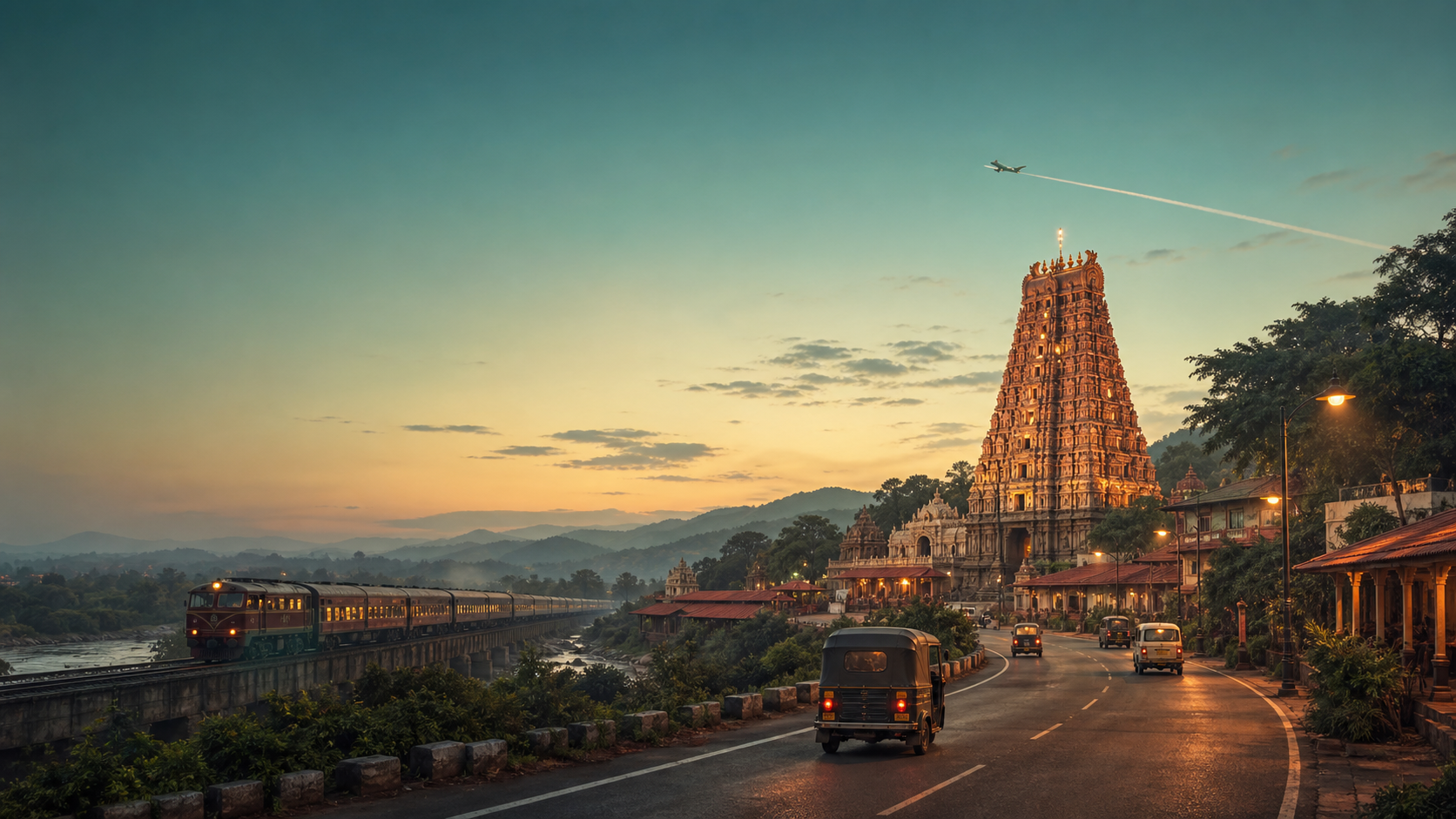
A complete pilgrim record drawn from the existing published article data.
Historical Foundation
Ancient Roots and Inscriptions
What is Periplus?
The Periplus of the Erythraean Sea is an ancient Greco-Roman periplus, written in Greek, that describes navigation and trading opportunities from Roman Egyptian ports along the coast of the Red Sea, and others along Northeast Africa and the Indian subcontinent.
Dynastic Patronage and Renovations
Architecture & Craftsmanship
Architectural Grandeur

The majestic five-storied Dwarkadhish Temple, a masterpiece of Dravidian architecture.
Exquisite Sculptural Details
Garbhagriha & Shikhara
The Garbhagriha (womb chamber) is the innermost sanctuary of a Hindu temple, housing the main deity's idol. The Shikhara is the towering cap or spire over the garbhagriha, symbolizing the cosmic mountain or a deity's celestial abode.

Detailed carvings depicting mythological figures adorn the temple walls, showcasing masterful craftsmanship.
"The Dwarkadhish Temple is not merely a structure of stone and mortar, but a living canvas of devotion, where every carving tells a story of faith and divine grace."
The Presiding Deity
Lord Dwarkadhish
Dwarkadhish (Lord Krishna)

The revered four-armed idol of Lord Dwarkadhish, the presiding deity of Dwarka.
- Main Deity: Krishna
- Deity Form: Dwarkadhish (Trivikrama form of Vishnu, four-armed)
- Spiritual Significance: Represents the supreme form of Vishnu, the cosmic preserver.
- Unique Aspect: Only temple housing the Trivikrama-form Dwarkadhish as primary deity in this specific iconographic and theological context.
- Iconography: Four arms, typically holding a conch (shankha), discus (chakra), mace (gada), and lotus (padma), though specific iconography can vary in artistic depiction.
The idol of Dwarkadhish is believed to have been hidden in the Savitri vav stepwell during Muslim invasions and later recovered, a testament to the community's enduring devotion and the idol's sacred history.
Divine Consorts & Companions
Festivals & Living Traditions
Janmashtami Celebrations
Millions Annually: Dwarka attracts numerous tourists and devotees annually, with Janmashtami being the peak time, drawing lakhs of pilgrims.
Daily Rituals & Annual Gatherings
"The chants during Janmashtami echo the very joy of creation, as Dwarka comes alive to celebrate the birth of its beloved Lord Krishna."
Plan Your Visit
Getting There
- Nearest City: Jamnagar, approximately 130 km away.
- Nearest Airport: Jamnagar Airport (JGA), connecting to major Indian cities.
- Nearest Railway: Okha Railway Station, approximately 30 km from Dwarka, well-connected to various parts of Gujarat and India. Dwarka itself has a railway station.
- By Road: Dwarka is well-connected by state and national highways to cities across Gujarat and neighboring states.
Essential Tips for Pilgrims
- Best Season to Visit: October to March offers pleasant weather, ideal for exploring. Avoid the monsoon season (June to September) due to heavy rains and the summer months (April-May) due to intense heat.
- Suggested Duration: 2-3 days is recommended to comprehensively cover the Dwarkadhish Temple, Bet Dwarka, Rukmini Temple, Gomti Ghat, Chakra Narayana Temple, and explore the possibility of the upcoming offshore archaeology sites.
- Dress Code: Modest clothing is required for temple entry. Shoulders and knees should be covered as a sign of respect.
- Photography: Photography is generally restricted inside the sanctum sanctorum of the Dwarkadhish Temple and other main shrines. Please observe all signage and guidelines.
Beyond the Main Temple
Don't miss the nearby temple circuit, including Bet Dwarka (believed to be Krishna's actual residential place), the ancient Rukmini Devi Temple, the Nageshwar Jyotirlinga Temple (one of the 12 Jyotirlingas), and the sacred Gomti Ghat temples. Each offers a unique spiritual and historical perspective.
Related temples: A. C. Bhaktivedanta Swami Prabhupada | Abhimanyu Temple, Vayotthidam
Sacred Stories & Mythology
The Founding of Dwarka
Krishna's Divine Relocation
After defeating Kamsa, Lord Krishna faced persistent threats from Jarasandha. Seeking a secure haven for his Yadava clan, Krishna invoked the sea god, Varuna, and reclaimed a vast expanse of land from the Arabian Sea. Upon this divinely gifted land, he constructed the magnificent city of Dwarka, adorned with palaces of gold and precious jewels. It was here that Krishna spent a significant portion of his earthly life, establishing a righteous kingdom and ruling with wisdom and compassion, ensuring the safety and prosperity of his people from the constant conflicts of the mainland.
The Submergence of the Golden City

A mythological rendering of Lord Krishna creating the golden city of Dwarka from the sea.
Saints, Poets & Devotees
Pioneering Spiritual Leaders
"To tread the hallowed grounds of Dwarka is to walk in the footsteps of Lord Krishna, and to feel the echoes of saints like Shankaracharya who sanctified this land."
Custodians of Faith

Adi Shankaracharya, whose spiritual contributions solidified Dwarka's position as a revered pilgrimage center.
Records, Marvels & Heritage
Archaeological Discoveries & Engineering Feats
Dwarka: A Bridge Between Myth & History
Archaeological evidence, including submerged structures and ancient anchors, provides compelling support for the legendary city of Dwarka, making it a rare site where mythological narratives align with tangible historical records.
Unique Status & Modern Recognition
🗺 How to Reach
Hover a card to animate the journey on the map
Route to Ghanshyam Nagar
Common Questions
Where is Dwarka Temple Walk: A Heritage Trail Through Sacred Spaces located?
Dwarka Temple Walk: A Heritage Trail Through Sacred Spaces is documented at Ghanshyam Nagar, Uttar Pradesh.
Which deity is associated with Dwarka Temple Walk: A Heritage Trail Through Sacred Spaces?
Dwarka Temple Walk: A Heritage Trail Through Sacred Spaces is associated with Krishna.
Related Temples


A Living Covenant