



A complete pilgrim record drawn from the existing published article data.
Historical Foundation
Udupi, a revered pilgrimage center in Karnataka, boasts a rich and ancient history deeply intertwined with its magnificent temples. The historical foundation of these sacred sites dates back centuries, primarily shaped by the philosophical contributions of Sri Madhvacharya in the 13th century, who established the Dwaita philosophy and the iconic Udupi Sri Krishna Matha. Beyond this pivotal era, earlier dynasties and local rulers also played crucial roles in constructing and patronizing many other significant shrines, each with its own unique narrative of devotion and architectural evolution.
The Vision of Madhvacharya
Establishment of the Ashta Mathas
The spiritual heart of Udupi beats in rhythm with the Ashta Mathas, or eight monasteries, profoundly established by the revered Dvaita philosopher Sri Madhvacharya in the 13th century. These institutions were founded with the primary objective of propagating his Dvaita philosophy and meticulously managing the daily rituals and administration of the iconic Udupi Sri Krishna Temple. Each Matha, led by its pontiff, plays a crucial role in the unique 'Paryaya' system, a rotational temple management duty that has been meticulously followed for centuries, ensuring the continuous spiritual legacy of the region.
Evolution Through Centuries
Key Takeaway: The Enduring Legacy
The Udupi Sri Krishna Temple's foundation by Madhvacharya in the 13th century, coupled with the ingenious Ashta Mathas system, ensured its enduring spiritual and cultural vitality, making it a unique institution in Indian religious history.
Architecture & Craftsmanship
Udupi's temples are renowned for their distinctive architectural grandeur and intricate craftsmanship, reflecting centuries of devotion and artistic skill. Primarily showcasing the Dravidian style with significant regional adaptations, these sacred structures are characterized by towering gopurams, elaborate carvings, and unique structural elements. The meticulous detailing found in their stone sculptures, wooden artistry, and vibrant frescoes narrates mythological tales and celebrates divine forms, making each temple a masterpiece of traditional Indian art and engineering.
Dravidian Grandeur with Tuluva Nuances
Udupi's sacred landscape is defined by a captivating architectural synthesis, where the majestic Dravidian style seamlessly integrates with unique Tuluva nuances. These temples, while echoing the grandeur of South Indian temple architecture with their towering gopurams and elaborate sculptures, also proudly display indigenous design elements. This distinctive blend reflects the region's rich cultural heritage, offering visitors a visual feast that is both historically significant and deeply rooted in local traditions. Explore how these architectural marvels embody this exquisite fusion.
The Enigma of Kanakana Kindi
The Kanakana Kindi, a small yet profoundly significant window at the Udupi Sri Krishna Matha, is steeped in an enigmatic legend that continues to captivate devotees and historians alike. This revered opening is intrinsically linked to the miraculous darshan granted to the saint Kanakadasa, who, according to tradition, was denied entry to the main shrine. Its enduring mystery and spiritual importance make it a focal point for understanding the temple's unique devotional narrative and the extraordinary events that shaped its legacy.
Sculptural Narratives
Udupi's temples are celebrated not only for their spiritual significance but also for their breathtaking sculptural narratives. These intricate carvings adorning walls, pillars, and ceilings serve as visual epics, depicting a rich tapestry of Hindu mythology. From the dramatic tales of gods and goddesses to scenes from ancient scriptures, each sculpture is a testament to the unparalleled artistry and devotion of the artisans. Exploring these stone stories offers a profound journey into the region's cultural and religious heritage, revealing the unique styles and themes prevalent across different temple complexes.
The Presiding Deity
At the spiritual core of every temple resides its presiding deity, the central divine manifestation to whom the sacred space is dedicated. In Udupi, this reverence primarily centers around Lord Krishna, particularly the captivating idol enshrined at the Sri Krishna Matha, believed to have been installed by Sri Madhvacharya. This section explores the profound significance of these divine forms, delving into their mythological origins, unique iconography, and the spiritual narratives that draw countless devotees. Understanding the presiding deity is essential to appreciating the deep spiritual essence and historical grandeur of Udupi's revered temples.
Bala Krishna: The Child Divine
Main Deity: Bala Krishna
Form: Infant Krishna (Bala Krishna) in a standing posture, uniquely holding butter (Navaneeta).
Iconographic Uniqueness: The idol's distinct feature is the 'Bala' (child) form, holding a butter churner in one hand and a rope in the other, depicting a mischievous yet endearing aspect of Krishna's childhood leelas. The idol is traditionally described as facing west, and its viewing through the Kanakana Kindi is unique to Udupi.
Significance: Represents innocence, divine playfulness, and the accessible form of God for devotees. It is believed to bestow blessings for prosperity and happiness.
Associated Epic: The idol enshrines Krishna as described in the 10th Skanda of the Bhagavata Purana, particularly his childhood pastimes (leelas).
The Mystique of Kanakana Kindi Darshan
The Kanakana Kindi Darshan at the Udupi Sri Krishna Matha offers a profoundly unique and spiritually charged experience. This small, intricately carved window holds immense historical and religious significance, allowing devotees to glimpse Lord Krishna. It is famously associated with the legendary saint-poet Kanakadasa, who, denied entry to the main shrine, was miraculously granted a vision of the Lord through this very opening. This sacred darshan continues to draw countless pilgrims, offering a powerful connection to the divine and a testament to unwavering faith.
Associated Deities
Udupi's spiritual landscape is profoundly shaped by a rich pantheon of revered deities, each holding unique significance in the hearts of devotees and the history of its temples. While Lord Krishna is undeniably the central figure, particularly at the renowned Sri Krishna Matha, many other divine forms are enshrined and worshipped across the region. These temples often host various manifestations of Vishnu, Shiva, Devi, and other prominent Hindu gods and goddesses, reflecting the diverse spiritual traditions prevalent in Karnataka. Understanding these associated deities is key to appreciating the profound religious heritage of Udupi.
Festivals & Living Traditions
Udupi's temples are not merely ancient structures; they are vibrant centers of spiritual life, deeply intertwined with a calendar of colorful festivals and enduring living traditions. These celebrations, ranging from grand annual events to daily rituals, showcase the rich cultural heritage and profound devotion of the region. Visitors can experience unique customs, traditional music, dance, and elaborate processions that have been meticulously preserved for centuries, offering a captivating glimpse into the heart of Udupi's spiritual identity and the continuity of its sacred practices.
The Grandeur of Krishna Janmashtami
Udupi, a spiritual heartland, comes alive with unparalleled splendor during Krishna Janmashtami, the auspicious celebration of Lord Krishna's birth. This vibrant festival transforms the city into a hub of devotion, attracting pilgrims and tourists alike. The grandeur is palpable, marked by elaborate rituals, cultural performances, and a palpable sense of joy. To truly immerse yourself in this divine experience, understanding its historical roots, specific timings, and practical ways to participate is essential.
Paryaya: A Biennial Legacy
Paryaya is a distinctive and ancient ritual that forms the spiritual heart of Udupi, particularly at the Sri Krishna Matha. This biennial ceremony signifies the transfer of temple management and worship duties among the eight Mathas (Ashta Mathas) established by Sri Madhvacharya. Every two years, one of the Swamijis assumes the sacred responsibility of performing the daily pujas and overseeing the temple's administration. This revered tradition, steeped in centuries of history, is a grand spectacle that draws devotees globally, symbolizing a continuous spiritual lineage and devotion.
5 Million+ Annual Visitors
Daily Rites and Cultural Expressions
Beyond their architectural grandeur, Udupi's temples are vibrant hubs where spiritual devotion intertwines with rich cultural expressions. A day in these sacred precincts is marked by a series of meticulously observed daily rites, from dawn pujas to evening aratis, reflecting centuries of tradition. These rituals are often complemented by unique cultural performances, classical music, and traditional art forms, showcasing the region's profound artistic and devotional heritage. Exploring these practices offers visitors a deeper understanding of the living culture and spiritual heartbeat within Udupi's revered shrines.
Plan Your Visit
Visiting the Udupi Sri Krishna Temple is a profoundly spiritual and culturally enriching experience. Here's how to plan your journey:
Getting There
- Nearest City: Mangalore (58.5 km)
- Nearest Airport: Mangalore International Airport (IXE), 58.5 km away.
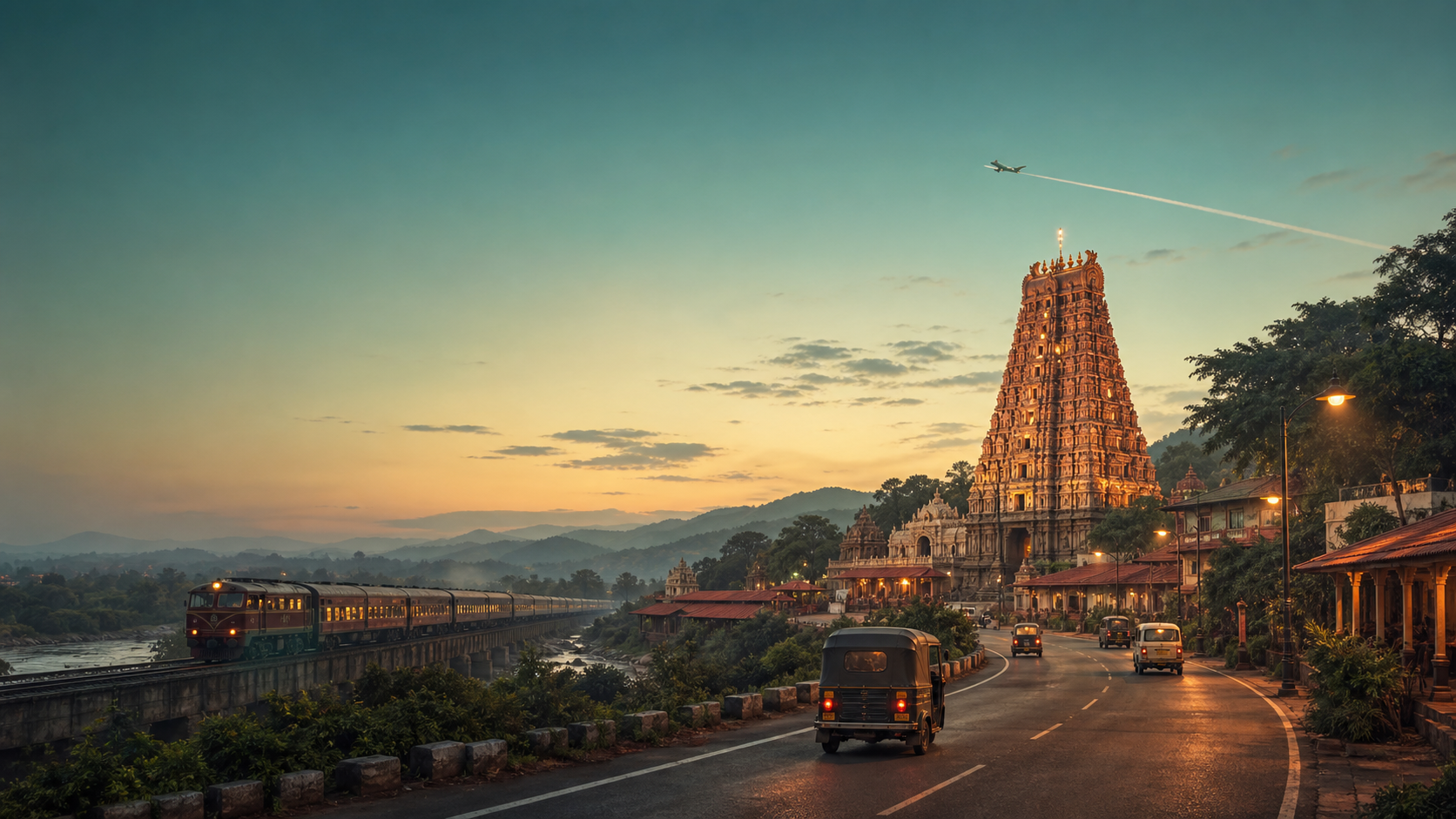
- Nearest Railway: Udupi Railway Station (Konkan Railway), 4 km from the city bus stand. Direct trains are available from major cities like Bengaluru, Mumbai, Delhi, and Thiruvananthapuram.
- By Road: Udupi is well-connected by National Highways NH 66 and NH 169A. Private and government buses link Udupi to all parts of Karnataka and neighboring states. City and suburban buses operate from the city bus stand.
- Nearest Port: Malpe (5 km) and Gangolli (36 km), with New Mangalore Port being 50 km away.
Best Time and Nearby Attractions
While in Udupi, explore the nearby temple circuit:
- Anantheshwara Temple (Udupi) - An ancient Shiva temple.
- Chandramouleshwara Temple (Udupi) - Dedicated to Shiva.
- Mahalingeshwara Temple (Karkala) - Known for its monolithic statue.
- Sringeri Sharada Peetham - A prominent Advaita Vedanta matha.
- Kollur Mookambika Temple - Famous Devi temple.
Don't miss the beautiful Kaup Beach and Malpe Beach, just a short drive away.
Visitor Guidelines
- Footwear: Must be removed before entering the temple complex.
- Photography: Prohibited inside the sanctum and the Kanakana Kindi area.
- Dress Code: Modest dress is required; shoulders and knees must be covered.
- Suggested Duration: A minimum of half a day is needed to experience the main temple; a full day is recommended to explore the Ashta Mathas and nearby sites.
 Best Temples in Udupi: History, Timings and How to Reach figure 1" loading="lazy" style="width:100%;border-radius:8px;" />
 Best Temples in Udupi: History, Timings and How to Reach figure 2" loading="lazy" style="width:100%;border-radius:8px;" />


Related temples: A. C. Bhaktivedanta Swami Prabhupada | Abhimanyu Temple, Vayotthidam
"Every stone here carries the prayers of generations who came before."
"Best Temples in Udupi: History, Timings and How to Reach is not just a temple — it is a living chronicle of faith."
Sacred Stories & Mythology
The Udupi Sri Krishna Temple is steeped in rich mythology and local legends, which form an integral part of its identity and devotional practices.
The Malpe Beach Miracle
The Divine Arrival of Bala Krishna
The most prominent sthala purana (origin legend) narrates the miraculous discovery of the Bala Krishna idol. According to tradition, the deity of Krishna was found by Madhvacharya in a large lump of gopichandana (sacred clay) that had washed ashore at Malpe beach, near Udupi. This clay lump was part of a ship's ballast, which was caught in a storm. Madhvacharya, with his divine vision, perceived the sacred idol within the lump. He retrieved it, performed elaborate purification rituals, and then installed it in the newly established temple in Udupi, bestowing upon the city its most treasured spiritual icon. This event is celebrated as a manifestation of divine grace.
This tale reinforces the belief in the temple's divine origins and Madhvacharya's profound spiritual power.
Kanaka Dasa and the Divine Peephole
Kanaka Dasa and the Kanakana Kindi
Another beloved legend explains the origin of the Kanakana Kindi. Kanaka Dasa, a revered saint and devotee of Krishna, belonged to a lower caste and was denied entry into the temple. Overcome with longing for darshan, he stood outside the temple, singing praises to Lord Krishna. His devotion was so pure and intense that, miraculously, the wall behind him developed a crack, and the idol of Krishna turned to face him, granting him a divine vision through the opening. Madhvacharya, witnessing this miracle, designated this spot for all future darshan, honoring Kanaka Dasa's unparalleled devotion. The peephole was later formalized and known as Kanakana Kindi (Kanaka's window).
Purana Connections
The sacred landscape of Udupi is deeply interwoven with the rich tapestry of Hindu mythology, with many of its prominent temples boasting profound connections to ancient Puranas. These revered scriptures not only narrate the divine origins and miraculous deeds associated with the deities enshrined here but also provide invaluable insights into the spiritual significance and historical evolution of these holy sites. Exploring these Purana connections unveils the timeless legends and epic tales that have shaped the religious identity and cultural heritage of Udupi for millennia, offering devotees a deeper understanding of their faith.
Saints, Poets & Devotees
Udupi's spiritual landscape has been profoundly shaped by numerous saints, poets, and devotees whose lives and works are intrinsically linked to its revered temples. Their contributions, ranging from profound philosophical treatises to heartfelt devotional hymns, have not only enriched the region's religious practices but also attracted countless pilgrims over centuries. This section delves into the lives and legacies of these influential figures, exploring their enduring impact on Udupi's unique cultural and spiritual heritage.
Madhvacharya: The Founder
Madhvacharya, a towering figure in Indian philosophy, is revered as the founder of the Dvaita school of Vedanta. Born near Udupi, he established the iconic Udupi Krishna Temple and organized its unique worship system, profoundly shaping the spiritual landscape of the region. His teachings emphasized the distinction between God and the individual soul, attracting numerous disciples and establishing Udupi as a pivotal center for Vaishnavism. This section delves into his life, philosophical contributions, and the enduring legacy he left behind.
Kanaka Dasa: The Devotee
Kanaka Dasa, originally Thimmappa Nayaka, was a revered saint, philosopher, and musician from 16th-century Karnataka, whose life epitomizes unwavering devotion. His profound spiritual journey and unwavering bhakti towards Lord Krishna, particularly the deity at Udupi, transcended societal barriers of his time. Despite facing discrimination, his faith led to miraculous events, forever linking his name with the sacred Udupi Sri Krishna Matha. This section delves into the inspiring life of this extraordinary devotee, exploring his early years, his spiritual awakening, and the enduring legacy of his philosophical compositions that continue to inspire millions.
The Ashta Matha Seers
The spiritual heart of Udupi pulsates around the revered Sri Krishna Matha, an institution intrinsically linked with the unique system of the Ashta Mathas. These eight monastic institutions, established by the great Dvaita philosopher Sri Madhvacharya in the 13th century, play a pivotal role in the daily worship and administration of the Udupi Krishna Temple. Each Matha, headed by its own seer (Swamiji), takes turns managing the temple's affairs for a two-year period, a tradition known as the 'Paryaya'. This rotational system ensures the continuous spiritual vibrancy and preservation of ancient rituals.
Records, Marvels & Heritage
The Udupi Sri Krishna Temple holds a distinguished position in India's religious landscape due to its unique features and enduring legacy.
One-of-a-Kind Devotion
Udupi is renowned for its deeply ingrained and truly distinctive forms of devotion, offering pilgrims an unparalleled spiritual experience. The temples here are not just architectural marvels but living centers of unique traditions, philosophical depth, and vibrant worship practices that set them apart. This section explores the special essence of devotion found in Udupi, delving into the unique rituals, festivals, and spiritual atmosphere that make a visit here a one-of-a-kind journey for every seeker.
Engineering and Acoustic Feats
Beyond their spiritual significance, the temples of Udupi stand as remarkable testaments to ancient Indian engineering and acoustic mastery. The architects and builders of these sacred structures incorporated ingenious principles that continue to fascinate modern experts. From precisely calculated structural designs ensuring longevity to innovative techniques for sound propagation and resonance within the prayer halls, these temples showcase an advanced understanding of physics and construction. This section explores the awe-inspiring methods employed to create such enduring and acoustically rich spaces, highlighting the genius behind their timeless creation.
A Center of Dvaita Scholarship
Udupi stands as a pivotal center for the Dvaita philosophy, a distinct school of Hindu thought founded by the revered Sri Madhvacharya in the 13th century. This ancient city, particularly around the iconic Sri Krishna Matha, has historically served as a vibrant hub for theological discourse, scriptural study, and the propagation of Dvaita tenets. The temples here are not merely places of worship but also institutions that have meticulously preserved and expanded this rich intellectual tradition, fostering generations of scholars and spiritual leaders. This section explores the profound historical and ongoing scholarly significance of Dvaita in Udupi.
🗺 How to Reach
Hover a card to animate the journey on the map
Route to Udupi
Common Questions
Where is Udupi Sri Krishna Temple: History, Architecture & Guide located?
Udupi Sri Krishna Temple: History, Architecture & Guide is documented at Udupi, Karnataka.
Which deity is associated with Udupi Sri Krishna Temple: History, Architecture & Guide?
Udupi Sri Krishna Temple: History, Architecture & Guide is associated with Krishna.
Related Temples


A Living Covenant