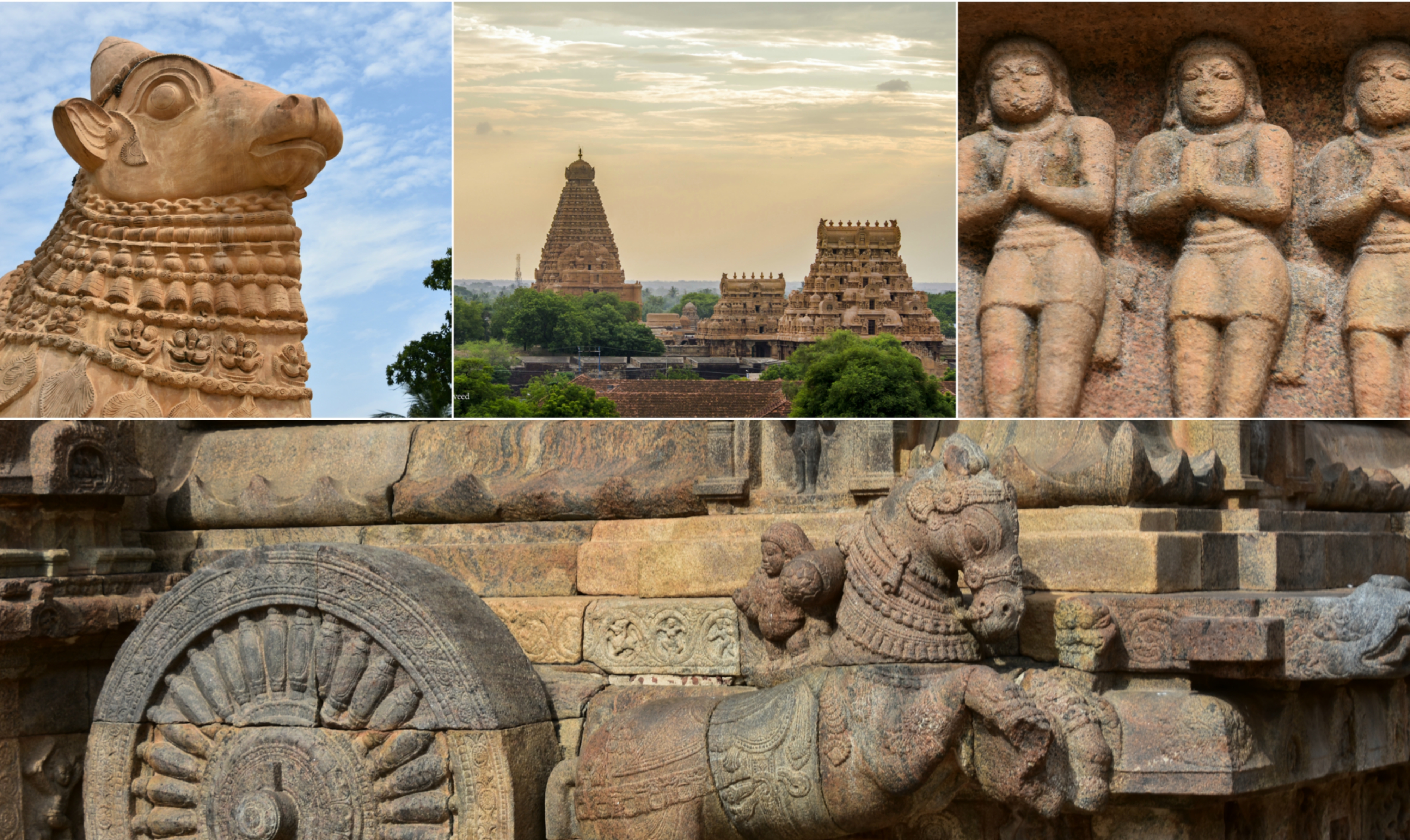
A complete pilgrim record drawn from the existing published article data.
Tracing the Ancient History of Arunachaleswarar Temple
The Arunachaleswarar Temple boasts a rich historical tapestry, with its earliest structures dating back to the Pallava period. Significant expansions and architectural enhancements were undertaken by the Chola dynasty, laying the groundwork for its grandeur. The temple reached its monumental scale under the patronage of the Vijayanagara Empire, which added the towering gopurams and vast mandapams that define its present-day appearance. Subsequent rulers from various dynasties also contributed, ensuring its continuous development and cementing its status as a prominent spiritual and architectural marvel through centuries of devotion.
Pallava and Chola Origins
The foundational elements and earliest inscriptions of the temple point to its establishment during the Pallava era, with the Chola kings significantly contributing to its initial structural expansions and artistic embellishments.
Vijayanagara Empire Expansions
The most dramatic architectural additions, including the massive gopurams and extensive prakarams (courtyards), were completed under the powerful Vijayanagara rulers, transforming the temple into its current sprawling complex.
Centuries of Royal Patronage
Beyond the major dynasties, various local chieftains and later empires continued to patronize the temple, adding shrines, halls, and maintaining its spiritual and physical integrity over millennia.
The Dravidian Splendor: Architecture of Arunachaleswarar
The Arunachaleswarar Temple is a prime example of magnificent Dravidian architecture, characterized by its towering gopurams (gateway towers) that soar above the surrounding landscape. The sprawling complex encompasses multiple concentric courtyards, intricately carved mandapams (pillared halls), and a sacred temple tank, each element showcasing exceptional engineering and artistic mastery. Detailed sculptures depicting mythological scenes, deities, and celestial beings adorn the walls and pillars, reflecting centuries of skilled craftsmanship and devotional artistry. The sheer scale and intricate detailing make it an architectural marvel.
Towering Gopurams
The temple features nine monumental gopurams, with the eastern gopuram, known as Rajagopuram, being the tallest at 217 feet (66 meters), adorned with thousands of stucco figures.
Intricate Mandapams
Within the complex, numerous pillared halls like the Kili Gopura Mandapam and the 1000-Pillared Hall display exquisite carvings, each column telling a story from Hindu mythology.
Sacred Temple Tank
The Shivaganga Teertham, the temple's sacred tank, is an integral part of the architectural layout, used for ritual bathing and adding to the spiritual ambiance of the complex.
The Divine Presence: Lord Shiva as Arunachaleswarar
At Arunachaleswarar Temple, Lord Shiva is worshipped in his unique manifestation as Arunachaleswarar, embodying the Agni Lingam, a cosmic pillar of fire. The profound mythology associated with this form recounts how Brahma and Vishnu debated their supremacy, prompting Shiva to appear as an infinite column of fire. Neither deity could find its origin or end, thus establishing Shiva's unparalleled cosmic power. This legend firmly places the temple as one of the Pancha Bhoota Sthalams, specifically representing the element of fire, signifying Shiva as the eternal, unmanifest flame and the source of all creation.
The Agni Lingam Legend
The temple's central deity, Arunachaleswarar, is revered as the Agni Lingam, representing the cosmic pillar of fire that Shiva manifested to resolve a dispute between Brahma and Vishnu.
Shiva as the Cosmic Fire Pillar
This form signifies Shiva's boundless nature, as Brahma (the creator) and Vishnu (the preserver) failed to find the top or bottom of the fiery column, asserting Shiva's ultimate supremacy.
Connection to the Element of Fire
As one of the Pancha Bhoota Sthalams, the Arunachaleswarar Temple is intrinsically linked to the element of fire, believed to purify sins and grant liberation, attracting devotees seeking spiritual transformation.
Arunachaleswarar Temple: A Spiritual Journey for Solo Travelers
The Arunachaleswarar Temple stands as a profound spiritual center, revered as one of the Pancha Bhoota Sthalams, representing the element of fire. For solo travelers, it offers a unique opportunity for deep introspection and an authentic cultural immersion in the sacred town of Tiruvannamalai. Its ancient aura, vibrant spiritual practices, and the welcoming atmosphere attract individuals seeking meaningful experiences on a budget. The temple provides a serene backdrop for personal spiritual growth, making it an ideal destination for those embarking on a solo pilgrimage or cultural exploration.
Pancha Bhoota Sthalam Significance
Arunachaleswarar Temple is one of five temples dedicated to Lord Shiva, each representing one of the five primordial elements. Here, Shiva manifests as Agni Lingam, symbolizing the element of fire, making it a powerful site for spiritual awakening.
Appeal to Solo Explorers
The temple's tranquil environment and the town's spiritual energy are particularly appealing to solo travelers. It provides a safe and reflective space for personal journeys, allowing for unhurried exploration and engagement with local customs.
Budget-Friendly Spiritual Retreat
Tiruvannamalai offers numerous affordable accommodation options, from ashrams to guesthouses, and inexpensive local cuisine, enabling solo travelers to experience a rich spiritual journey without significant financial outlay.
Navigating Tiruvannamalai: Tips for the Solo Budget Traveler
For solo budget travelers, Tiruvannamalai offers practical solutions to enhance the spiritual journey. Affordable guesthouses, ashrams, and basic hotels are plentiful near the temple and along the Girivalam path. Local transportation, primarily auto-rickshaws and shared tempos, is inexpensive and efficient for navigating the town. Embrace authentic culinary experiences by dining at local eateries, which serve delicious South Indian vegetarian meals at minimal cost. Engage respectfully in temple rituals, observing local customs. The Girivalam, a sacred barefoot circumambulation of Arunachala Hill, is a must-do, offering a deeply spiritual and communal experience.
Budget Stays and Local Transport
Seek out ashrams like Sri Ramanasramam or various guesthouses for economical lodging. Utilize shared auto-rickshaws or walk to explore the town, keeping transport costs low.
Authentic Culinary Experiences
Enjoy traditional South Indian vegetarian thalis and snacks at small, local restaurants. These establishments offer fresh, flavorful, and budget-friendly meals, providing a true taste of the region.
Engaging with Rituals and Girivalam
Participate in temple pujas (worship rituals) with reverence. Undertake the Girivalam, the 14-kilometer barefoot circumambulation of Arunachala Hill, a profound spiritual practice. Dress modestly and be mindful of local customs.
| Deity | Shiva |
|---|---|
| Form | Shiva is primarily worshipped as the Agni Lingam at Arunachaleswarar Temple, representing the cosmic pillar of fire. He is also depicted in anthropomorphic forms such as Nataraja, the cosmic dancer, and as a meditating yogi. |
| Consort | Parvati |
| Sampradaya | Hindu |
| Significance | As one of the principal deities of Hinduism, Shiva is known as the Destroyer and Transformer within the Trimurti. He embodies both destructive and creative aspects, representing the cycle of existence and ultimate reality. |
The Cosmic Pillar of Fire
When Brahma and Vishnu disputed their supremacy, Shiva manifested as an infinite column of fire, the Arunachala Lingam, challenging them to find its beginning or end. Brahma ascended as a swan to find the top, and Vishnu descended as a boar to find the base. Neither succeeded. Brahma falsely claimed he found the top, while Vishnu humbly admitted his failure. Shiva then revealed himself from the fiery pillar, establishing his supreme status and declaring Arunachala as his form. This event is celebrated as Lingodbhava.
Where Shiva manifested as an infinite column of fire, a beacon of cosmic truth and ultimate reality.
The sacred Arunachala mountain itself is revered as Shiva, a living embodiment of the divine.
🗺 How to Reach
Hover a card to animate the journey on the map
Verified routes to Arunachaleswarar Temple Tiruvannamalai: Solo Traveler Tips: Budget Stay and Local Experiences
Common Questions
Where is Arunachaleswarar Temple: Solo Traveler's Budget Guide located?
Arunachaleswarar Temple: Solo Traveler's Budget Guide is documented at Tamil Nadu.
Which deity is associated with Arunachaleswarar Temple: Solo Traveler's Budget Guide?
Arunachaleswarar Temple: Solo Traveler's Budget Guide is associated with Shiva.