A complete pilgrim record drawn from the existing published article data.
Tracing the Ancient Roots: History of Arunachaleswarar Temple
The Arunachaleswarar Temple boasts a rich history, with its origins shrouded in antiquity, possibly dating back to the Pallava period. Significant expansions and renovations were undertaken by various powerful dynasties. The Chola rulers, particularly Rajaraja Chola I and Rajendra Chola I, made substantial contributions, adding structures and endowments. Later, the Pandyas also played a role in its development. However, it was during the Vijayanagara Empire, especially under emperors like Krishnadevaraya, that the temple achieved much of its current grandeur, with the construction of towering gopurams and vast mandapams, cementing its legacy as a continuously evolving sacred space.
Early Origins and Patronage
The temple's earliest structures are believed to have existed for over a millennium, with initial patronage from local chieftains and possibly the Pallavas, establishing its foundational sanctity.
Chola and Pandya Contributions
The Chola dynasty significantly expanded the temple complex, adding numerous shrines and endowments. The Pandyas also contributed to its architectural and religious development, enriching its spiritual and physical landscape.
Vijayanagara Expansions
The Vijayanagara period marked a golden era of construction for the temple. Emperors like Krishnadevaraya were instrumental in building the massive gopurams, fortress walls, and elaborate halls, giving the temple its iconic appearance.
Arunachaleswarar Temple: A Beacon of Devotion and Grandeur
The Arunachaleswarar Temple, nestled at the base of the sacred Arunachala Hill in Tiruvannamalai, Tamil Nadu, stands as a profound symbol of Hindu devotion. Dedicated to Lord Shiva, it is revered as one of the Pancha Bhoota Sthalams, representing the element of fire (Agni Lingam). This ancient temple is not only a spiritual powerhouse but also a monumental architectural marvel, attracting countless pilgrims and art enthusiasts. Its sprawling complex and towering gopurams proclaim centuries of religious significance and artistic excellence, embodying the spiritual heart of the region.
Pancha Bhoota Sthalam Significance
The temple is one of five sacred sites where Lord Shiva is worshipped as a manifestation of the five natural elements. Here, Shiva is the Agni Lingam, representing fire, making it a focal point for spiritual energy and purification.
Architectural Splendor
Beyond its spiritual importance, Arunachaleswarar Temple is celebrated for its vast scale and intricate Dravidian architecture. Its colossal gopurams, elaborate halls, and numerous shrines showcase the pinnacle of ancient Tamil craftsmanship and engineering.
Lord Shiva as Agni Lingam: Mythology and Spiritual Significance
At the heart of the Arunachaleswarar Temple's spiritual allure is the worship of Lord Shiva as the Agni Lingam, representing the cosmic fire. According to legend, Brahma and Vishnu once disputed their supremacy. To resolve this, Shiva appeared as an infinite column of fire, challenging them to find its beginning or end. Neither could, establishing Shiva's ultimate cosmic power. The Arunachala Hill itself is revered as a manifestation of this Agni Lingam, making circumambulation (Girivalam) a highly sacred practice. This temple is a pivotal center for Shaivism, offering devotees a path to spiritual enlightenment and liberation through devotion to the fiery form of Shiva.
The Legend of Agni Lingam
The temple's central myth describes Lord Shiva manifesting as an infinite column of fire, or Agni Lingam, to demonstrate his supremacy to Brahma and Vishnu, who were unable to find its extremities.
Arunachala Hill: Shiva's Manifestation
The sacred Arunachala Hill is considered a direct manifestation of Lord Shiva as the Agni Lingam. Pilgrims perform Girivalam, circumambulating the hill, believing it to be an act of worshipping Shiva directly.
Shaivite Pilgrimage and Enlightenment
Arunachaleswarar Temple is a vital pilgrimage site for Shaivites, offering a profound connection to Shiva's fiery essence. It is believed to be a place where spiritual enlightenment and self-realization can be attained.
Planning Your Pilgrimage: Experiencing the Divine at Tiruvannamalai
A visit to Arunachaleswarar Temple offers a deeply spiritual experience. The temple is open from 6:00 AM to 12:30 PM and 4:00 PM to 9:00 PM daily. The best time to visit is between October and March, when the weather is pleasant. Pilgrims often undertake Girivalam, a 14-kilometer circumambulation of Arunachala Hill, especially during full moon days. Traditional attire is preferred, and footwear must be removed before entering. The temple is well-connected by bus and train to major cities, with Chennai and Bengaluru airports providing air access. Ample parking is available for those traveling by car.
Optimal Visit Times and Rituals
The temple is open throughout the day with a break in the afternoon. The cooler months from October to March are ideal for visiting, allowing comfortable exploration and participation in rituals.
Girivalam: Sacred Circumambulation
A significant ritual is Girivalam, the circumambulation of the Arunachala Hill. This spiritual walk, particularly potent on full moon nights, is believed to bestow immense blessings and spiritual merit.
Travel and Accommodation Tips
Tiruvannamalai is accessible via bus and train, with major airports in Chennai and Bengaluru. Visitors should dress modestly and remove footwear. Various accommodation options are available in the town for pilgrims and tourists.
| Deity | Lord Shiva |
|---|---|
| Form | Lord Shiva is often depicted as an ascetic yogi, adorned with a crescent moon, a third eye, and the river Ganga flowing from his matted hair. He is also worshipped in the aniconic form of the Lingam. |
| Consort | Parvati |
| Sampradaya | Hindu |
| Significance | As part of the Hindu Trimurti, Shiva is the Destroyer and Transformer, responsible for cosmic dissolution and regeneration. He represents ultimate consciousness, asceticism, and the cosmic dance of creation and destruction. |
The Lingam of Light
According to legend, Lord Vishnu and Lord Brahma once disputed over who was supreme. To settle this, Lord Shiva appeared as an infinite column of fire, a cosmic Lingam, challenging them to find its beginning or end. Brahma, taking the form of a swan, flew upwards to find the top, while Vishnu, as a boar, delved downwards to find the base. Neither could succeed. Brahma falsely claimed to have found the top, but Shiva revealed his deception. Humbled, both deities recognized Shiva's supremacy, and the column of light solidified into the Arunachala Hill, making Tiruvannamalai a sacred abode of Shiva.
Arunachala is truly the Supreme Being. It is the holy place where all can attain liberation.
In this sacred abode, the cosmic dance of creation and destruction unfolds, revealing the ultimate truth of existence.
Architectural Masterpiece: Design, Layout, and Sculptural Details
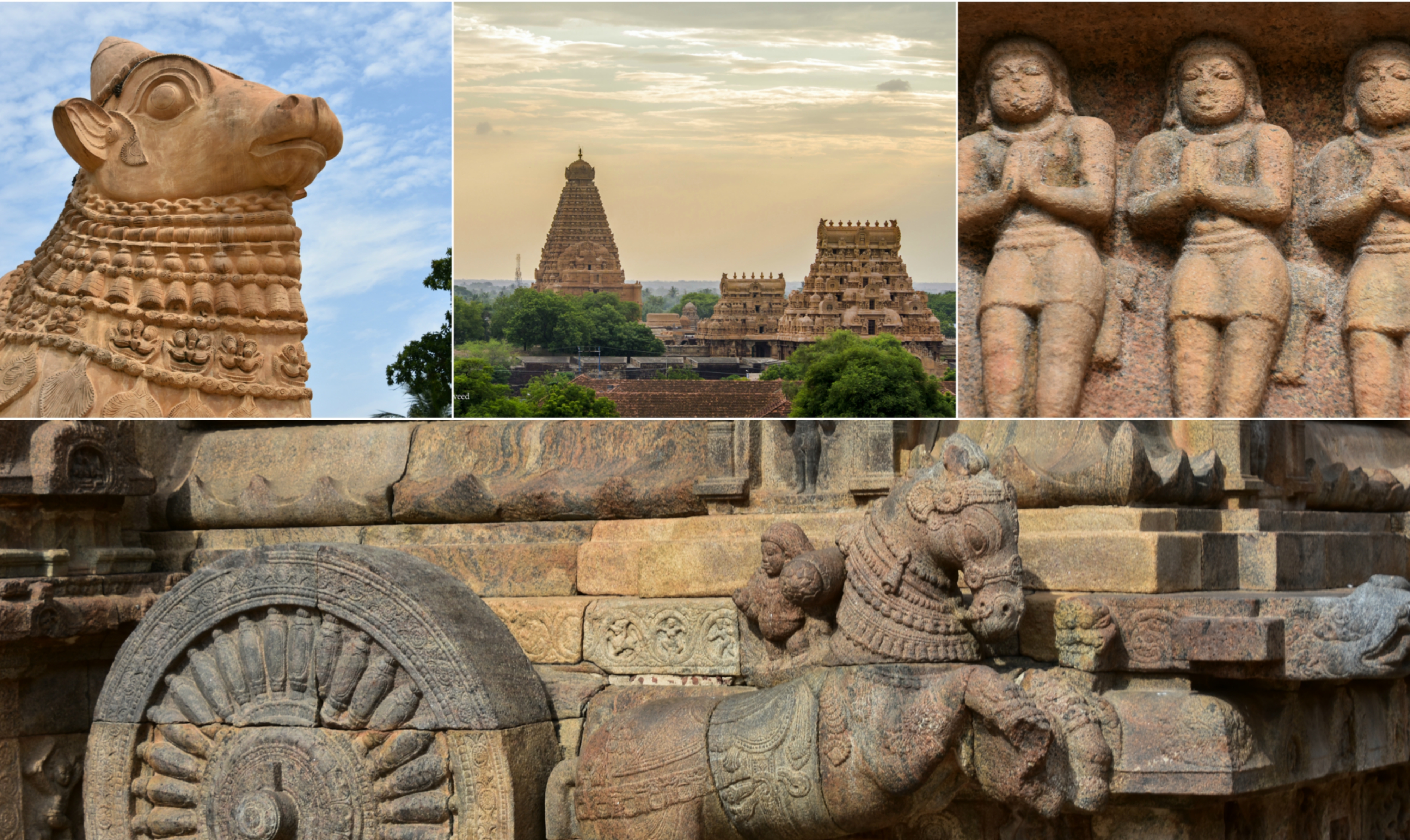
The Arunachaleswarar Temple exemplifies classic Dravidian temple architecture, characterized by its monumental scale and intricate detailing. The temple complex spans over 25 acres, featuring four towering gopurams on each cardinal direction, with the eastern Rajagopuram being the tallest at 217 feet. Within its fortified walls, multiple prakarams (courtyards) house various shrines, mandapams, and sacred tanks. Notable structures include the Thousand-Pillared Hall, the Kalyana Mandapam, and the Siva Ganga Tank. Every surface, from pillars to ceilings, is adorned with exquisite sculptures depicting deities, mythological narratives, celestial beings, and flora, showcasing the pinnacle of Tamil artistry and craftsmanship.
Towering Gopurams and Courtyards
The temple is famed for its four majestic gopurams, which serve as gateways to its expansive courtyards. The Rajagopuram, the eastern tower, is a colossal structure, intricately carved and reaching impressive heights.
Mandapams and Sacred Tanks
Within the complex are several significant mandapams, including the Thousand-Pillared Hall and the Kalyana Mandapam, known for their architectural grandeur. Sacred tanks like the Siva Ganga Tank are also integral to the temple's layout.
Exquisite Sculptural Narratives
The temple's walls, pillars, and ceilings are a canvas for intricate sculptures. These carvings depict a rich tapestry of Hindu mythology, divine forms, and historical events, offering a visual encyclopedia of religious art.
🗺 How to Reach
Hover a card to animate the journey on the map
Verified routes to Arunachaleswarar Temple Tiruvannamalai: Architectural Masterpiece: Design, Layout and Sculptural Details
Common Questions
Where is Arunachaleswarar Temple: Architectural Masterpiece located?
Arunachaleswarar Temple: Architectural Masterpiece is documented at Tamil Nadu.
Which deity is associated with Arunachaleswarar Temple: Architectural Masterpiece?
Arunachaleswarar Temple: Architectural Masterpiece is associated with Shiva.