A complete pilgrim record drawn from the existing published article data.
Centuries of Devotion: Unraveling the Temple's Past
The history of the Amritaghateswarar-Abirami Temple is deeply intertwined with Hindu mythology, tracing its origins to the Samudra Manthan, the churning of the cosmic ocean. It is believed that the pot of Amrita (nectar of immortality) rested here. Architecturally, the temple showcases the evolution of Dravidian style, with contributions from various South Indian dynasties. While its mythical roots are ancient, the present structure largely reflects the architectural prowess of the Cholas, Pandyas, and later, the Vijayanagara rulers, who expanded and embellished the complex over centuries. Its mention in the Tevaram hymns dates its existence to at least the 7th century CE.
Mythical Genesis
The temple's foundation is linked to the legend of the Amrita Ghata (pot of nectar) from the Samudra Manthan, which Shiva is believed to have protected at this site.
Chola and Later Dynasties
Significant architectural additions and renovations were undertaken by powerful dynasties like the Cholas, Pandyas, and Vijayanagara emperors, shaping its current grandeur and layout.
Literary Mentions
The temple's antiquity is confirmed by its glorification in the Tevaram compositions of the Saivite Nayanmars, particularly Appar and Sambandar, dating back to the 7th century.
Stone Speaks: The Dravidian Marvel of Thirukkadaiyur
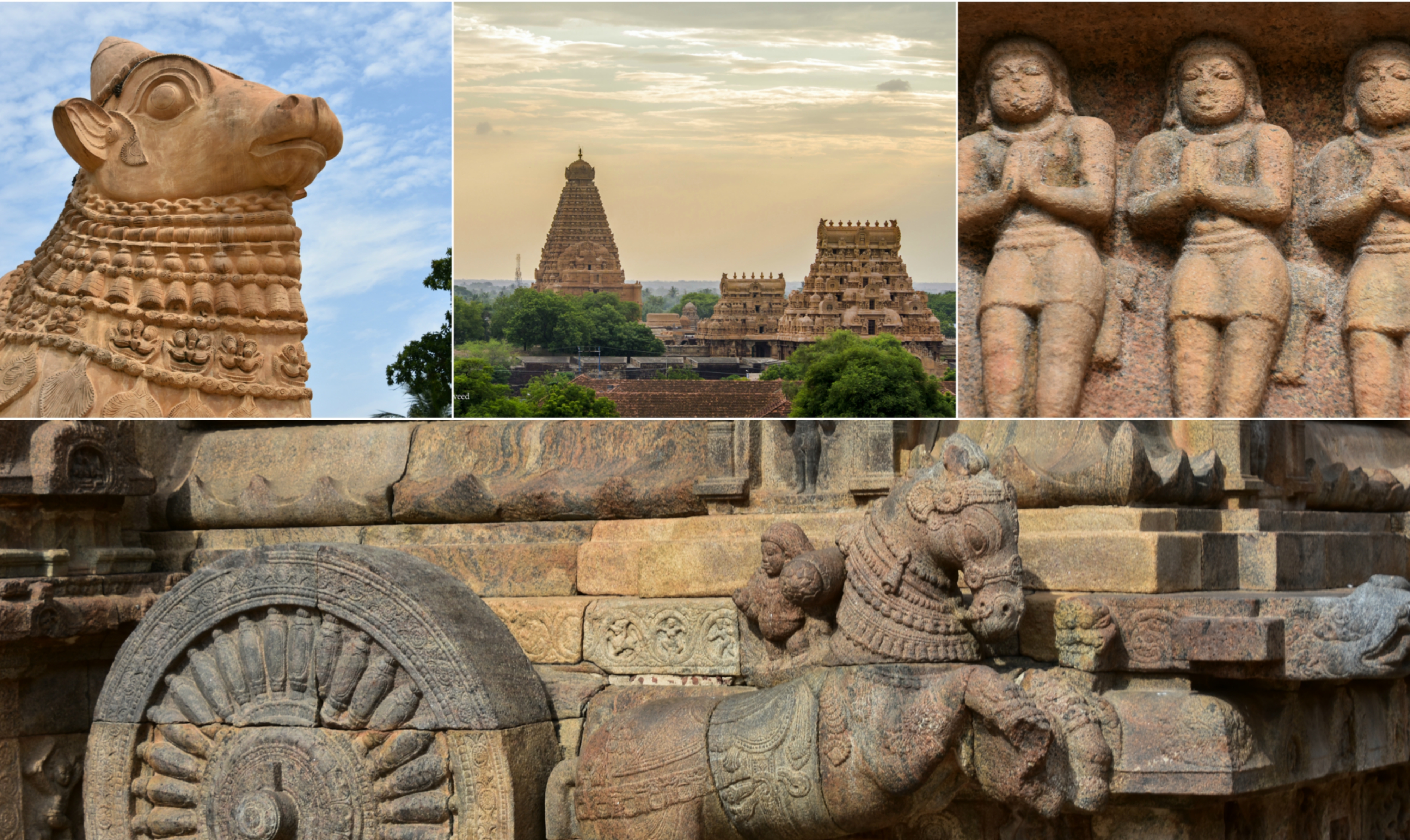
The Amritaghateswarar-Abirami Temple exemplifies classical Dravidian architecture, characterized by its towering gopurams and intricate sculptural details. The temple complex features multiple gateways, each adorned with elaborate carvings depicting mythological scenes and deities. Within its precincts, various mandapams (halls) with exquisitely carved pillars lead to the main shrines. The central sanctum houses Lord Amritaghateswarar, while a separate, prominent shrine is dedicated to Goddess Abirami. The vimana (tower over the sanctum) is also a significant architectural feature, though often overshadowed by the grand gopurams.
Towering Gopurams
The temple is fronted by impressive multi-tiered gopurams, serving as monumental gateways, richly adorned with sculptures of gods, goddesses, and mythical creatures, showcasing Dravidian artistry.
Intricate Mandapams
Numerous mandapams, such as the maha mandapam and ardha mandapam, feature elaborately carved pillars and ceilings, depicting mythological narratives and showcasing the artisans' skill.
Sacred Sanctums
The primary shrines are dedicated to Amritaghateswarar (Shiva in lingam form) and Abirami Amman (Parvati as an idol), both revered by devotees and forming the spiritual core of the complex.
Planning Your Pilgrimage: A Visitor's Guide to Thirukkadaiyur
The Amritaghateswarar-Abirami Temple welcomes visitors during specific hours: 6:00 AM – 12:30 PM and 4:00 PM – 9:00 PM, with free entry. The best time to visit is from October to March, offering pleasant weather. Traditional attire is preferred, and footwear must be removed before entering. A typical visit lasts 1–2 hours. The temple is accessible by bus from Mayiladuthurai (25 km), which is also the nearest railway junction (MV). Tiruchirappalli International Airport (TRZ) is 160 km away. Ample parking is available, and National Highway 32 (NH32) provides good road connectivity.
Temple Timings and Etiquette
The temple is open daily during specific morning and evening hours. Visitors are encouraged to wear traditional clothing and observe temple customs, such as removing footwear before entering sacred areas.
Rituals for Longevity
Many devotees perform special Ayush Homams and Abishekams here, particularly during milestone birthdays like the 60th and 80th, seeking blessings for a long and healthy life.
Accessibility and Transport
Located 25 km from Mayiladuthurai, the temple is well-connected by regular bus services and is near Mayiladuthurai Junction (MV) for train travel. Tiruchirappalli International Airport (TRZ) is the nearest airport.
| Deity | Shiva |
|---|---|
| Form | Shiva in his fierce manifestation as Kalantaka, depicted as the vanquisher of Kala (Death). |
| Consort | Not specified |
| Sampradaya | Hindu |
| Significance | This form symbolizes Shiva's power over death and his role as a protector, particularly known for saving the young sage Markandeya from Yama. |
Mythological Story Not Provided
The provided information does not include any specific mythological stories or legends associated with the Amritaghateswarar-Abirami Temple.
Shiva, in his form as Kalantaka, stands as the ultimate vanquisher of death, offering protection to his devotees.
At Thirukkadaiyur, witness the divine power that transcends even the grasp of Kala, the lord of time and death.
The Sacred Abode of Immortality: Amritaghateswarar-Abirami Temple
The Amritaghateswarar-Abirami Temple in Thirukkadaiyur, Tamil Nadu, is a revered Hindu pilgrimage site dedicated to Lord Shiva, specifically in his manifestation as Kalantaka. This ancient temple holds profound spiritual significance, primarily associated with the legend of immortality. Devotees visit seeking blessings for longevity and to celebrate milestone birthdays. The temple is also home to Goddess Abirami, a form of Parvati, whose shrine is equally prominent. It is one of the 275 Padal Petra Sthalams, glorified in the Tevaram hymns by the Nayanmars, underscoring its historical and religious importance within Saivism.
Deities of Thirukkadaiyur
The primary deity is Lord Shiva as Amritaghateswarar, meaning "Lord of the Pot of Nectar," with his consort Abirami Amman. Lord Kalantaka, the vanquisher of Yama, is also central to the temple's mythology.
Significance for Longevity
The temple is particularly famous for rituals performed to extend life and overcome death, drawing pilgrims celebrating their 60th (Sashtiabdhapoorthi) and 80th (Sathabhishekam) birthdays.
Padal Petra Sthalam
As a Padal Petra Sthalam, the temple has been sanctified by the hymns of the Saivite saints, confirming its ancient and hallowed status in the Tamil Saivite tradition.
Defying Death: The Divine Saga of Lord Shiva and Markandeya
The foundational myth of Thirukkadaiyur revolves around the young sage Markandeya. Destined to die at the age of sixteen, Markandeya spent his final moments in fervent devotion to Lord Shiva, embracing the lingam. When Yama, the god of death, arrived to claim his soul, he cast his noose around Markandeya and, inadvertently, around the lingam itself. Enraged by this sacrilege, Lord Shiva emerged from the lingam as Kalantaka, the "ender of death," striking down Yama with his Trishula. This divine intervention granted Markandeya eternal youth and immortality, establishing Thirukkadaiyur as a sacred site for defying death.
Markandeya's Devotion
The young sage Markandeya's unwavering devotion to Lord Shiva, even in the face of imminent death, was central to his salvation and the temple's legend.
Shiva as Kalantaka
Lord Shiva manifested as Kalantaka, the vanquisher of Yama, to protect his devotee, thus earning his epithet as the "one who conquered time" or "death's destroyer."
The Boon of Immortality
Due to Shiva's divine intervention, Markandeya was blessed with eternal life, making the temple a significant place for devotees seeking longevity and protection from untimely demise.
🗺 How to Reach
Hover a card to animate the journey on the map
Verified routes to Amritaghateswarar-Abirami Temple,Thirukkadaiyur
Common Questions
Where is Amritaghateswarar-Abirami Temple: Defying Death's Grip located?
Amritaghateswarar-Abirami Temple: Defying Death's Grip is documented at Tharangambadi, Tamil Nadu.
Which deity is associated with Amritaghateswarar-Abirami Temple: Defying Death's Grip?
Amritaghateswarar-Abirami Temple: Defying Death's Grip is associated with Shiva.