A complete pilgrim record drawn from the existing published article data.
Tracing the Ancient History of Amirthakadeswarar Temple
The Amirthakadeswarar Temple boasts a rich historical tapestry, with its origins dating back several centuries. While precise founding dates are often debated, inscriptions and architectural styles suggest significant development during the Chola period. Various dynasties, including the Cholas and later rulers, provided patronage, contributing to its expansion and artistic embellishment. Over time, the temple has undergone numerous renovations, carefully preserving its structural integrity and spiritual essence. These historical layers offer valuable insights into the religious and cultural evolution of the region, solidifying its enduring legacy as a sacred site.
Early Origins
The temple's foundational elements are believed to originate from ancient times, with early structures possibly predating the major dynastic periods. Initial worship practices laid the groundwork for its future growth.
Dynastic Patronage
The Chola dynasty, renowned for its temple-building prowess, significantly contributed to the temple's construction and artistic development. Subsequent rulers also added to its grandeur through endowments and architectural enhancements.
Notable Renovations
Throughout its history, the Amirthakadeswarar Temple has seen various renovation efforts. These projects were crucial in maintaining the temple's structural stability and preserving its intricate carvings and sacred spaces for future generations.
The Dravidian Splendor of Amirthakadeswarar Temple Architecture
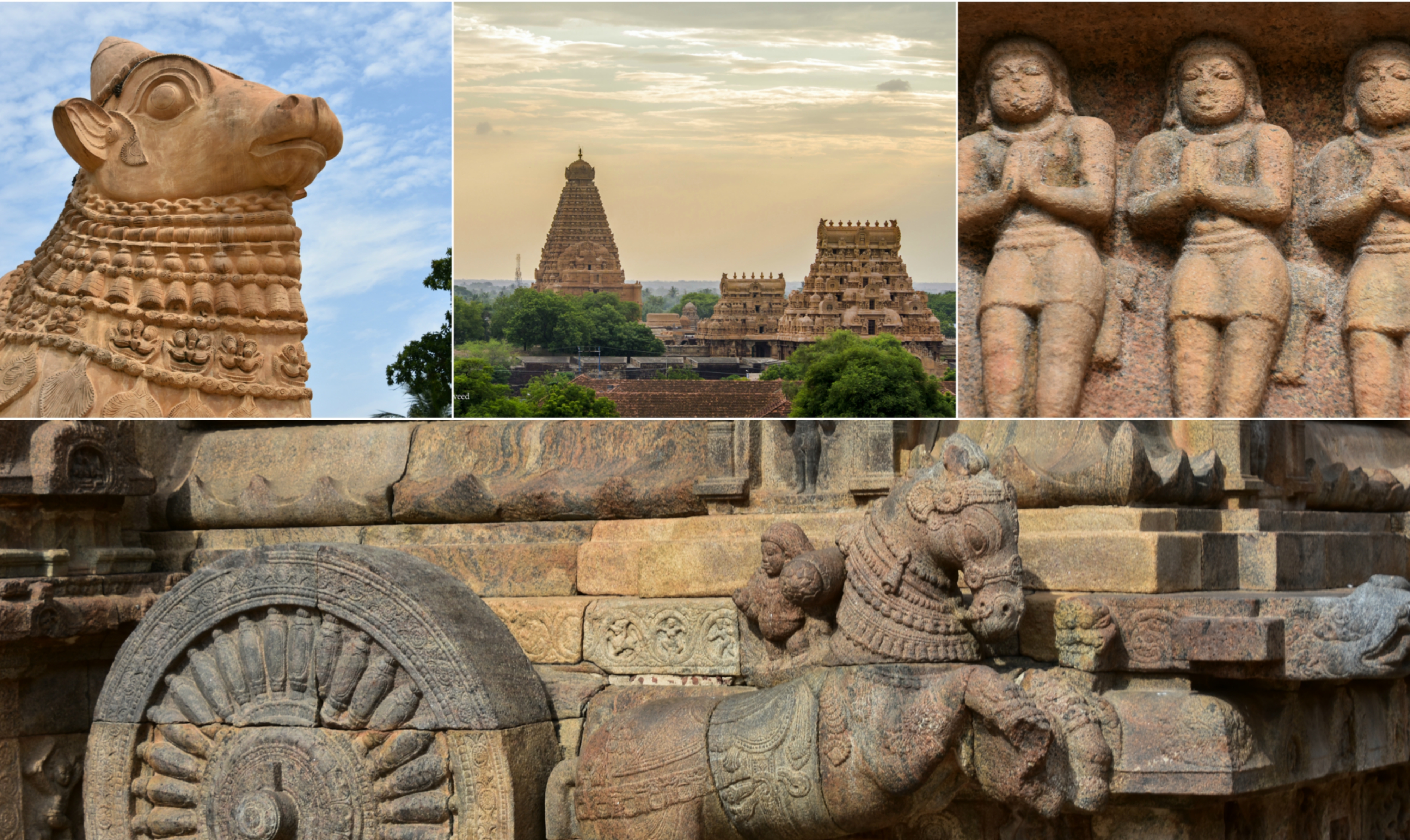
The Amirthakadeswarar Temple exemplifies the intricate Dravidian architectural style, characterized by its towering gopurams, elaborate mandapams, and detailed sculptural work. The multi-tiered gopurams, adorned with myriad deities and mythical figures, serve as majestic gateways. Inside, the various mandapams feature finely carved pillars and ceilings, depicting scenes from Hindu mythology and epic tales. Every surface of the temple, from its walls to its vimana, is a canvas narrating ancient stories and spiritual concepts through stone, showcasing the exceptional craftsmanship of the artisans who built it.
Distinctive Gopurams
The temple's gopurams are prominent features, rising majestically and intricately sculpted with mythological narratives and divine forms. They symbolize the temple's grandeur and spiritual entry.
Intricate Mandapams
Within the temple complex, various mandapams (halls) serve different ritualistic purposes. These halls are distinguished by their ornate pillars, often featuring detailed carvings of gods, goddesses, and mythical creatures.
Sculptural Narratives
The entire temple functions as a sculptural gallery. The walls, pillars, and ceilings are adorned with carvings that vividly depict episodes from Hindu scriptures, local legends, and the lives of saints, offering visual storytelling.
Amirthakadeswarar: The Deity, Mythology, and Spiritual Significance
The Amirthakadeswarar Temple is primarily dedicated to Lord Shiva, manifested here as Amirthakadeswarar. The name itself, 'Amirthakadeswarar,' is often linked to legends involving 'Amirtham' (divine nectar). One prominent legend associated with the temple recounts how the devas worshipped Shiva here to retrieve the nectar of immortality. This mythological connection underscores the temple's profound spiritual essence and its role in local Hindu traditions. Devotees believe that worshipping Amirthakadeswarar bestows longevity, prosperity, and liberation, making it a revered site for specific rituals and prayers.
Manifestation of Shiva
Lord Shiva is worshipped here as Amirthakadeswarar, a form believed to be particularly benevolent. This manifestation is central to the temple's identity and the focus of all devotional practices.
Temple Legends
A significant legend connects the temple to the Samudra Manthan (churning of the ocean) and the distribution of Amirtham. It is believed that the devas prayed to Shiva at this very spot, linking the deity to the nectar of immortality.
Local Traditions and Worship
The temple plays a vital role in the spiritual lives of the local community. Specific pujas and festivals are observed according to ancient traditions, with devotees seeking blessings for health, prosperity, and spiritual growth.
A Comprehensive Guide to Visiting Amirthakadeswarar Temple
For those planning a visit to the Amirthakadeswarar Temple, practical information is essential for a fulfilling experience. The temple is located in Sakkottai, Valangaman, Tamil Nadu, and is accessible by road from major towns. Darshan timings typically vary, so checking current schedules before arrival is advisable. Visitors should be aware of the dress code, usually traditional Indian attire, and respect the temple's customs during rituals. In addition to the main shrine, the surrounding Valangaman region offers other cultural and historical sites, allowing for an enriching itinerary beyond the temple premises.
Accessibility and Location
The Amirthakadeswarar Temple is situated in Sakkottai, Valangaman, Tamil Nadu. It can be reached via local transportation from nearby cities and towns, with well-maintained roads leading to the temple complex.
Darshan Timings and Rituals
The temple typically opens for darshan in the morning and evening, with specific timings for various pujas. Visitors are encouraged to inquire about the current schedule to participate in the rituals and witness the daily worship.
Nearby Attractions
While in Valangaman, visitors can explore other nearby temples and historical sites that showcase the rich cultural heritage of Tamil Nadu. These additional attractions can complement a spiritual journey to Amirthakadeswarar Temple.
| Deity | Shiva |
|---|---|
| Form | Shiva is often worshipped in the aniconic form of a Lingam, symbolizing his cosmic creative and destructive power. He is also depicted anthropomorphically as a yogi, with a third eye, a crescent moon, and a serpent around his neck. |
| Consort | Parvati |
| Sampradaya | Shaivism |
| Significance | As one of the principal deities of Hinduism, Shiva is known as 'The Destroyer' or 'The Transformer' within the Trimurti. He represents the cyclical nature of existence, embodying both creation and dissolution, and is the supreme being in Shaivism. |
In the heart of devotion, Shiva's presence transforms all, guiding souls through creation and dissolution with divine grace.
The sacred Lingam stands as a timeless symbol of the divine, an eternal source of cosmic energy and spiritual awakening.
Discovering Amirthakadeswarar Temple: A Sacred Abode in Valangaman
The Amirthakadeswarar Temple, located in Sakkottai, Valangaman, Tamil Nadu, stands as a significant Hindu pilgrimage site. Dedicated to the deity Shiva, it embodies centuries of spiritual devotion and architectural heritage. This revered temple serves as a focal point for devotees seeking blessings and spiritual solace. Its ancient origins and continuous worship reflect a deep-rooted cultural and religious tradition in the region. The temple's serene atmosphere and historical significance draw visitors from various places, making it a prominent landmark of faith and history in the Valangaman area.
Location and Overview
Situated in Sakkottai, within the Valangaman region of Tamil Nadu, the Amirthakadeswarar Temple is easily accessible and forms a central part of the local religious landscape. It is a prime example of South Indian temple architecture.
Spiritual Significance
As a temple dedicated to Lord Shiva, Amirthakadeswarar holds immense spiritual value. Devotees believe that worship here can lead to liberation and fulfillment, adhering to ancient Hindu traditions and rituals.
🗺 How to Reach
Hover a card to animate the journey on the map
Verified routes to Amirthakadeswarar Temple, Sakkottai
Common Questions
Where is Amirthakadeswarar Temple: Ancient Chola Shiva Shrine located?
Amirthakadeswarar Temple: Ancient Chola Shiva Shrine is documented at Valangaman, Tamil Nadu.
Which deity is associated with Amirthakadeswarar Temple: Ancient Chola Shiva Shrine?
Amirthakadeswarar Temple: Ancient Chola Shiva Shrine is associated with Shiva.