A complete pilgrim record drawn from the existing published article data.
Chola Dynasty's Legacy: The History of Airavatesvara
The Airavatesvara Temple, a jewel of Dravidian architecture, was constructed in the 12th century by the illustrious Chola king Rajaraja Chola II. This period marked a zenith for the Chola empire, known for its patronage of art, literature, and temple building. The temple's creation solidified its standing as a significant center of devotion and artistic expression, showcasing the Chola dynasty's enduring influence on South Indian culture and spirituality. Its historical significance lies in its reflection of the era's religious fervor and architectural prowess.
Rajaraja Chola II's Vision
King Rajaraja Chola II commissioned the temple, dedicating it to Lord Shiva. His reign fostered a period of immense cultural and architectural growth, with Airavatesvara standing as a prime example of his royal patronage.
12th-Century Construction
Built around 1166 CE, the temple exemplifies the mature Chola architectural style. Its construction involved skilled artisans and sculptors who meticulously crafted every detail, reflecting the era's sophisticated building techniques.
Chola Empire's Influence
The temple serves as a testament to the Chola empire's power and cultural dominance. It was not merely a place of worship but also a hub for education, art, and community life, reflecting the comprehensive role of temples in Chola society.
Stone Symphony: The Architecture of Airavatesvara
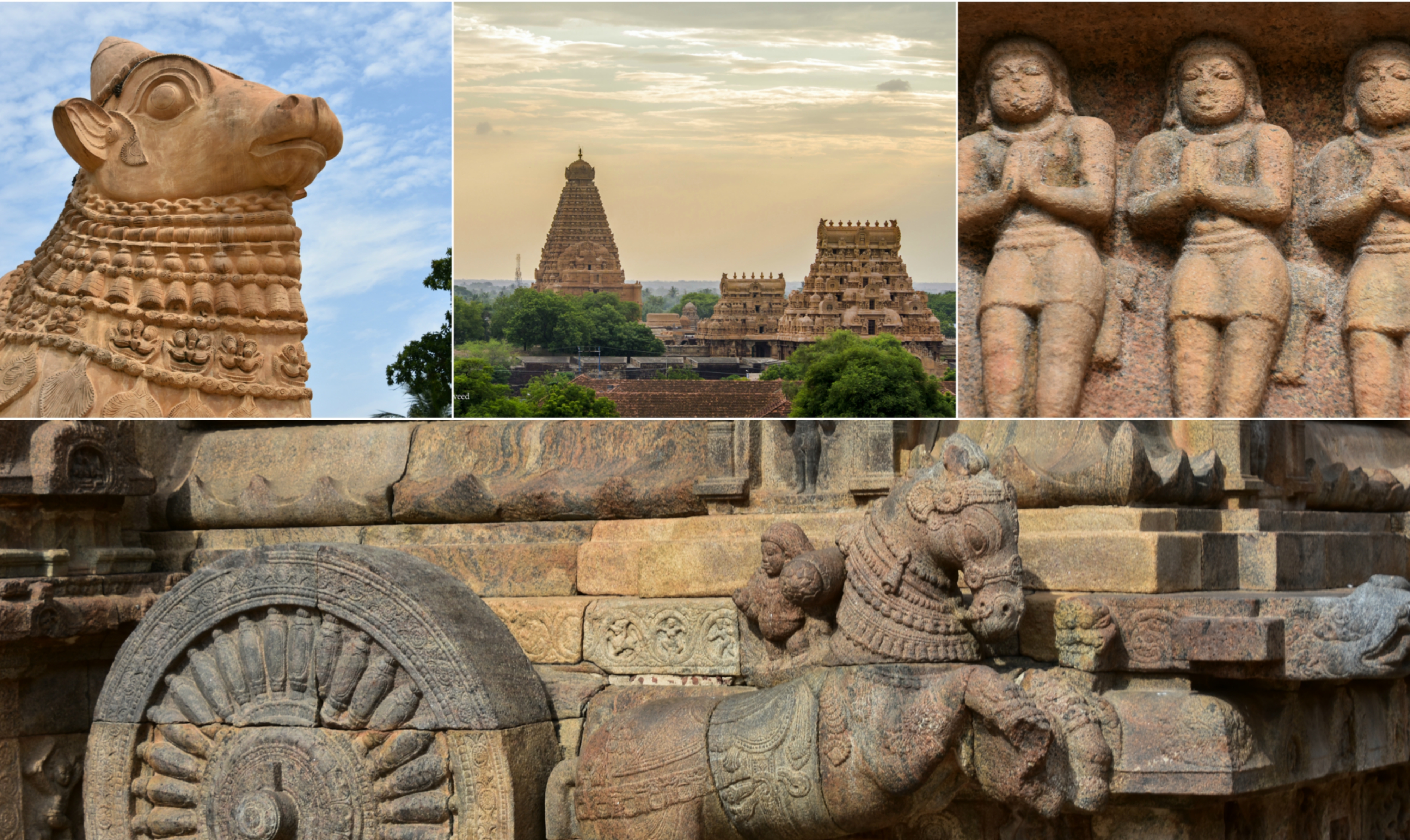
Airavatesvara Temple is a masterpiece of Dravidian architecture, renowned for its intricate carvings and unique features. The entire structure is designed to resemble a colossal chariot, complete with wheels and horses, a signature Chola innovation. Its walls are adorned with thousands of miniature sculptures depicting celestial beings, mythological narratives, and everyday life scenes, offering a visual encyclopedia of 12th-century South India. The famous musical steps, which produce different notes when struck, exemplify the advanced acoustical knowledge of its builders, making the temple a true stone symphony.
Chariot-Shaped Mandapa
A distinctive feature is the maha mandapa (main hall) designed as a chariot, with carved wheels and horses, symbolizing the movement of the divine. This architectural motif adds a dynamic quality to the sacred space.
Intricate Sculptural Details
The temple is a canvas of detailed sculptures, showcasing exquisite craftsmanship. From divine figures and apsaras to dancers and musicians, each carving contributes to the temple's rich narrative tapestry.
Musical Steps
At the entrance of the balipitha (altar), a set of stone steps is known for producing musical notes when tapped. This acoustic marvel highlights the advanced engineering and artistic ingenuity of the Chola period.
Divine Narratives: Lord Shiva and Airavata's Legend
The Airavatesvara Temple derives its name from a captivating mythological tale involving Indra's divine white elephant, Airavata. According to legend, Airavata, cursed by Sage Durvasa, regained his pristine white color and health by worshipping Lord Shiva at this very spot. This legend underscores the temple's sacredness and its deep connection to Shiva, who is the presiding deity. The narrative is beautifully depicted in the temple's sculptures, reinforcing its spiritual significance and the power of devotion to overcome adversity.
The Legend of Airavata
Airavata, the celestial white elephant of Lord Indra, is said to have worshipped Lord Shiva here to be cured of a curse. This act of devotion gave the temple its distinctive name, Airavatesvara.
Shiva as Presiding Deity
The temple is primarily dedicated to Lord Shiva, known here as Airavatesvara Mahadeva. The central shrine houses the lingam, representing Shiva, revered by devotees seeking blessings and spiritual solace.
Mythological Depictions
Numerous carvings within the temple illustrate scenes from the Airavata legend and other Puranic stories, visually narrating the temple's mythological origins and its divine associations for pilgrims and visitors.
Airavatesvara Temple: A Culinary and Spiritual Journey
The Airavatesvara Temple in Darasuram, a magnificent UNESCO World Heritage site, stands as a testament to Chola architectural brilliance and profound spiritual traditions. Beyond its intricate carvings and towering vimana, the temple offers a unique spiritual experience centered around sacred food offerings and prasadam. These consecrated dishes are not merely sustenance but are considered an integral part of devotion, symbolizing the divine presence and blessing. Visitors are invited to explore the temple's grandeur while also partaking in these hallowed culinary traditions, which enrich the spiritual journey and connect devotees to the divine in a tangible way.
UNESCO World Heritage Status
Recognized for its outstanding universal value, the Airavatesvara Temple is part of the Great Living Chola Temples, a UNESCO World Heritage site since 1987. This designation acknowledges its exceptional architectural and artistic contributions to human heritage.
Architectural Grandeur
The temple's design showcases the pinnacle of Chola artistry, featuring a vimana (temple tower) adorned with exquisite sculptures and a unique chariot-shaped mandapa. Every stone narrates a tale of devotion and craftsmanship.
Sacred Food Traditions
Integral to the temple's spiritual life are the naivedyam (food offerings to deities) and prasadam (consecrated food distributed to devotees). These practices highlight the belief in the divine's accessibility through shared sustenance.
Journey to Darasuram: A Visitor's Guide to Airavatesvara
Visiting the Airavatesvara Temple in Darasuram offers a profound cultural and spiritual experience. While specific timings and entry details should be confirmed with the temple office, the period from October to March is generally considered the best time due to pleasant weather. Visitors are encouraged to wear traditional attire as a mark of respect and to remove footwear before entering the temple premises. Allowing 1–2 hours for the visit ensures ample time to appreciate the intricate architecture, sculptures, and to soak in the spiritual atmosphere. Partaking in prasadam, if available, adds a unique dimension to the visit.
Best Time to Visit
The months between October and March offer cooler, more comfortable weather, making it ideal for exploring the temple and its surroundings without the intense heat of other seasons.
Dress Code and Etiquette
Traditional Indian attire is preferred for visitors, reflecting respect for the sacred site. Removing footwear before entering the main temple complex is mandatory, a common practice in Indian temples.
Experiencing Prasadam
Inquire about prasadam distribution times, as partaking in this consecrated food is a unique way to engage with the temple's spiritual traditions and receive blessings from the deity.
| Deity | Shiva |
|---|---|
| Form | Lingam (presiding deity), also depicted in various sculptural forms throughout the temple. |
| Consort | Periya Nayaki (Parvati) |
| Sampradaya | Shaivism |
| Significance | Worshipped by Airavata, Indra's white elephant, to regain his original color after being cursed. Represents Shiva as the lord who restores and blesses. |
The Elephant's Devotion: How Airavata Worshipped Lord Shiva
Legend has it that Airavata, the white elephant of Lord Indra, was cursed by Sage Durvasa, causing his skin to lose its pristine white color. Distraught, Airavata came to this spot, worshipped Lord Shiva with great devotion, and bathed in the sacred tank. Pleased by his penance, Shiva restored Airavata's original color and blessed him. The temple is thus named Airavatesvara, commemorating this divine event and Shiva's compassion.
Every stone here sings the glory of the Cholas, a symphony in granite crafted for the divine.
Witness the dance of celestial beings, etched in stone, a testament to devotion and unparalleled artistry.
Taste of Devotion: Temple Food and Prasadam at Airavatesvara
At Airavatesvara Temple, the tradition of sacred food offerings, known as naivedyam, and the subsequent distribution of prasadam are central to the devotional experience. These offerings, typically vegetarian and prepared with utmost purity, are first presented to Lord Shiva. Following the rituals, the consecrated food, now imbued with divine blessings, is distributed among devotees. Common prasadam items may include sweet pongal, idli, dosa, or various rice preparations, varying by day and special occasions. Partaking in prasadam is considered a spiritual act, symbolizing acceptance of the deity's grace and a shared connection with the divine community. Visitors can experience this unique culinary and devotional aspect by participating in temple rituals and accepting prasadam when offered.
Naivedyam: Sacred Offerings
Food offerings (naivedyam) are meticulously prepared and presented to the deities as a gesture of devotion. These offerings are traditionally vegetarian, fresh, and prepared in a ritually clean environment.
Prasadam: Divine Blessings
Prasadam refers to the consecrated food that has been offered to the deity and then distributed to devotees. It is believed to carry the deity's blessings and is consumed with reverence.
Types of Temple Delicacies
While specific items vary, common prasadam at South Indian temples like Airavatesvara may include sweet pongal, vada, payasam, or savory rice dishes. These are often simple yet flavorful preparations.
🗺 How to Reach
Hover a card to animate the journey on the map
Verified routes to Airavatesvara Temple Darasuram: Temple Food and Prasadam: What to Try
Common Questions
Where is Airavatesvara Temple: Divine Flavors & Offerings located?
Airavatesvara Temple: Divine Flavors & Offerings is documented at Tamil Nadu.
Which deity is associated with Airavatesvara Temple: Divine Flavors & Offerings?
Airavatesvara Temple: Divine Flavors & Offerings is associated with Shiva.