A complete pilgrim record drawn from the existing published article data.
Historical Tapestry: The Chola Legacy of Airavatesvara
The Airavatesvara Temple, a jewel of Dravidian architecture, was constructed in the 12th century by the illustrious Chola king Rajaraja Chola II. It served as a royal temple, reflecting the zenith of Chola artistic and architectural patronage. While smaller than its counterparts in Thanjavur and Gangaikondacholapuram, its intricate detailing and sculptural richness are unparalleled. The temple's creation marked a significant period of cultural flourishing under the Cholas, eventually contributing to its recognition as a UNESCO World Heritage site, preserving its legacy for future generations.
Built by Rajaraja Chola II
Commissioned by the powerful Chola emperor Rajaraja Chola II, the temple stands as a testament to his reign and the artistic prowess of the 12th century.
Chola Dynasty's Patronage
The temple exemplifies the extensive architectural and artistic support provided by the Chola dynasty, showcasing their profound influence on South Indian culture and religion.
Journey to UNESCO Status
Its unique historical and architectural value led to its inscription as a UNESCO World Heritage site, ensuring its preservation and global recognition as part of the Great Living Chola Temples.
Architectural Marvels: The Dravidian Grandeur of Airavatesvara
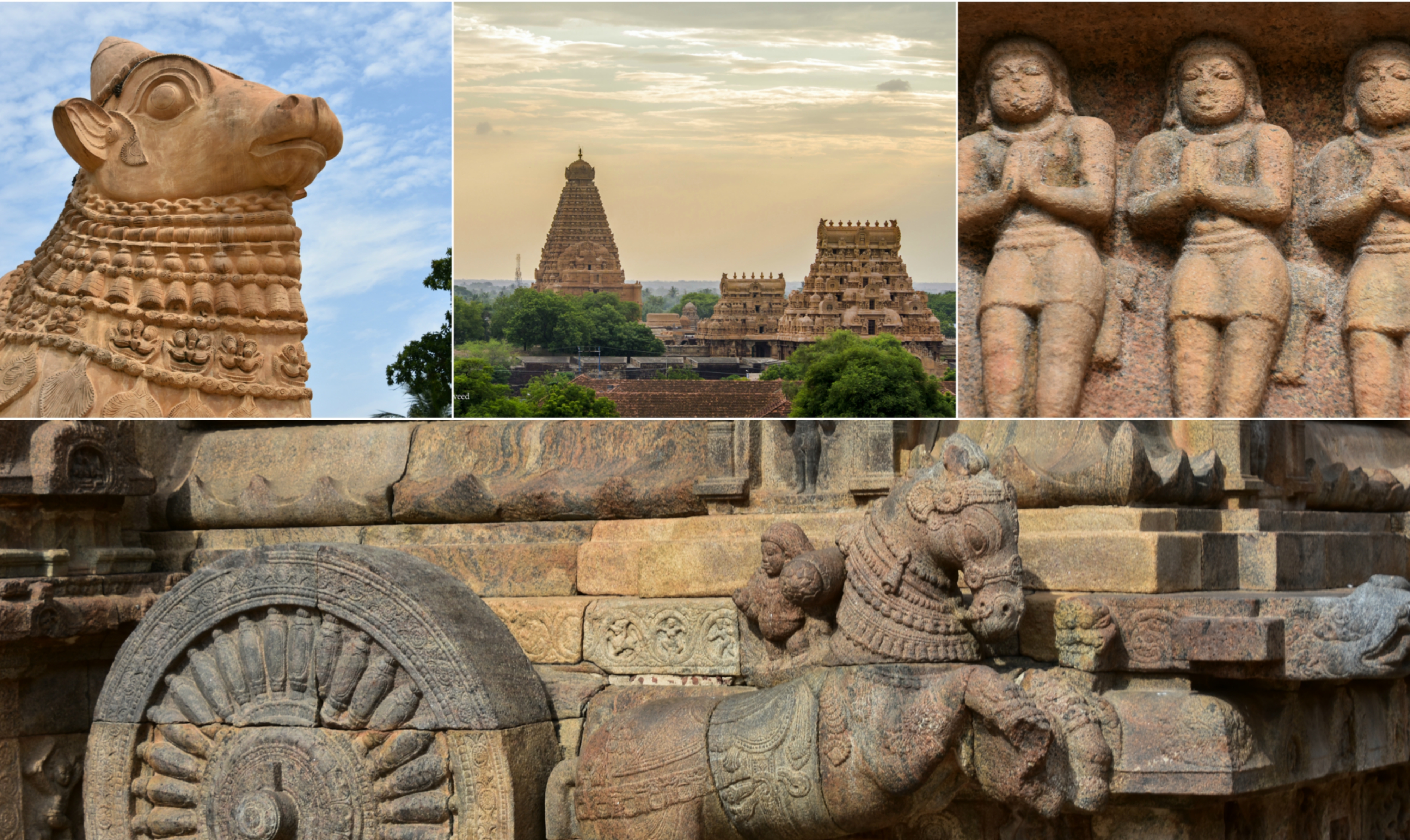
Airavatesvara Temple showcases the pinnacle of Dravidian architecture, characterized by its intricate carvings and innovative design. The temple is designed as a stone chariot with exquisitely carved wheels and horses, a signature Chola architectural element. Its mandapa features unique 'musical steps' that produce different notes when tapped. Every surface is adorned with detailed sculptures depicting Hindu myths, celestial beings, and scenes of daily life, offering a visual encyclopedia of Chola society. The vimana (tower) rises majestically, intricately sculpted with various deities and narratives, demonstrating the Chola artisans' mastery over stone.
The Chariot-Shaped Mandapa
A distinctive feature is the main hall, or mandapa, designed as a monumental stone chariot, complete with carved wheels and horses, symbolizing celestial movement.
Musical Steps and Intricate Sculptures
The temple boasts unique 'musical steps' that resonate with different melodic tones. Its walls are a canvas of exquisite sculptures detailing Hindu myths, dancers, and daily life.
Chola Artistic Prowess
The entire complex is a testament to the Chola dynasty's exceptional artistic skill, visible in every finely carved detail, from deities to narratives etched in stone.
Discovering Airavatesvara Temple: A Solo Traveler's Guide
The Airavatesvara Temple in Darasuram, a UNESCO World Heritage site, stands as a testament to Chola architectural brilliance and spiritual devotion. Dedicated to Lord Shiva, this 12th-century marvel offers a profound cultural and historical journey. For solo travelers, it presents an opportunity for deep personal reflection amidst intricate carvings and serene surroundings. This guide aims to enrich your visit by providing insights into its grandeur, while also offering practical tips for budget-friendly exploration and authentic local experiences in the heart of Tamil Nadu.
A UNESCO World Heritage Marvel
Airavatesvara Temple is part of the Great Living Chola Temples, recognized globally for its exceptional architecture and historical significance, offering a glimpse into a bygone era.
Spiritual and Architectural Grandeur
Dedicated to Lord Shiva, the temple's intricate carvings and unique design elements captivate visitors, blending spiritual reverence with artistic mastery in a tranquil setting.
Setting the Stage for Solo Exploration
This section introduces the temple's essence, preparing solo adventurers for an immersive experience, focusing on both its historical depth and practical travel considerations for an enriching visit.
Deities, Myths, and the Elephant's Tale: Lord Shiva at Airavatesvara
Airavatesvara Temple is primarily dedicated to Lord Shiva, revered here as Airavatesvara, a name derived from a captivating legend. According to mythology, Indra's white elephant, Airavata, was cursed by Sage Durvasa and regained its purity by worshipping Lord Shiva at this very spot. The temple's sculptures vividly narrate this and other Puranic tales, including those of various Nayanmars (Shaivite saints). The main deity, a lingam, resides in the garbhagriha (sanctum sanctorum), serving as the spiritual heart of the temple and a focal point for devotees seeking blessings and spiritual solace.
Lord Shiva as Airavatesvara
The temple's principal deity is Lord Shiva, worshipped as Airavatesvara, a name intimately linked to the temple's founding myth and spiritual significance.
The Legend of Airavata
A central myth recounts how Indra's divine white elephant, Airavata, worshipped Shiva here to be cleansed of a curse, giving the temple its unique name and spiritual narrative.
Mythological Depictions
Beyond Airavata's tale, the temple's walls are richly adorned with sculptures illustrating numerous Hindu myths, tales of Nayanmars, and other divine narratives.
Solo Exploration: Budget Stays and Local Immersion in Darasuram
For solo travelers visiting Airavatesvara Temple, Darasuram and the nearby city of Kumbakonam offer excellent options for budget-friendly stays and authentic local immersion. Kumbakonam, just 4 km away, provides a range of guesthouses and smaller hotels at reasonable prices. Local buses and auto-rickshaws are readily available for transport between Kumbakonam and Darasuram, making independent travel convenient and economical. Engage with local vendors, sample traditional Tamil cuisine, and explore the vibrant markets to truly experience the region's culture beyond the temple walls. Consider staying in a homestay for a more personal cultural exchange.
Budget Accommodation in Kumbakonam
Kumbakonam, a short distance from Darasuram, offers numerous affordable guesthouses and lodges, providing comfortable stays without straining a solo traveler's budget.
Navigating Local Transport
Efficient local buses and auto-rickshaws connect Darasuram to Kumbakonam, allowing solo travelers easy and inexpensive access to the temple and surrounding areas.
Authentic Cultural Experiences
Beyond the temple, immerse yourself in local life by trying traditional Tamil food, exploring bustling markets, and interacting with residents for a deeper cultural understanding.
| Deity | Shiva |
|---|---|
| Form | Shiva is often depicted in various forms, including the cosmic dancer Nataraja, the ascetic Yogishvara, or as a lingam, an aniconic representation of his divine energy. |
| Consort | Parvati |
| Sampradaya | Hindu |
| Significance | As one of the principal deities of Hinduism, Shiva is known as 'The Destroyer' within the Trimurti, responsible for destruction and transformation, and is also revered as the patron of yoga and arts. |
No Specific Story Available
No specific mythological story associated with this temple was provided in the given information.
Shiva, the Destroyer and Transformer, embodies the cosmic dance of creation and dissolution, revered as the patron of yoga and arts.
Experience the divine presence of Shiva in Darasuram, where ancient tradition meets spiritual reverence.
🗺 How to Reach
Hover a card to animate the journey on the map
Verified routes to Airavatesvara Temple Darasuram: Solo Traveler Tips: Budget Stay and Local Experiences
Common Questions
Where is Airavatesvara Temple Darasuram: Solo Traveler's Chola Marvel located?
Airavatesvara Temple Darasuram: Solo Traveler's Chola Marvel is documented at Tamil Nadu.
Which deity is associated with Airavatesvara Temple Darasuram: Solo Traveler's Chola Marvel?
Airavatesvara Temple Darasuram: Solo Traveler's Chola Marvel is associated with Shiva.