A complete pilgrim record drawn from the existing published article data.
The Dravidian Marvel: Intricate Carvings and Musical Steps
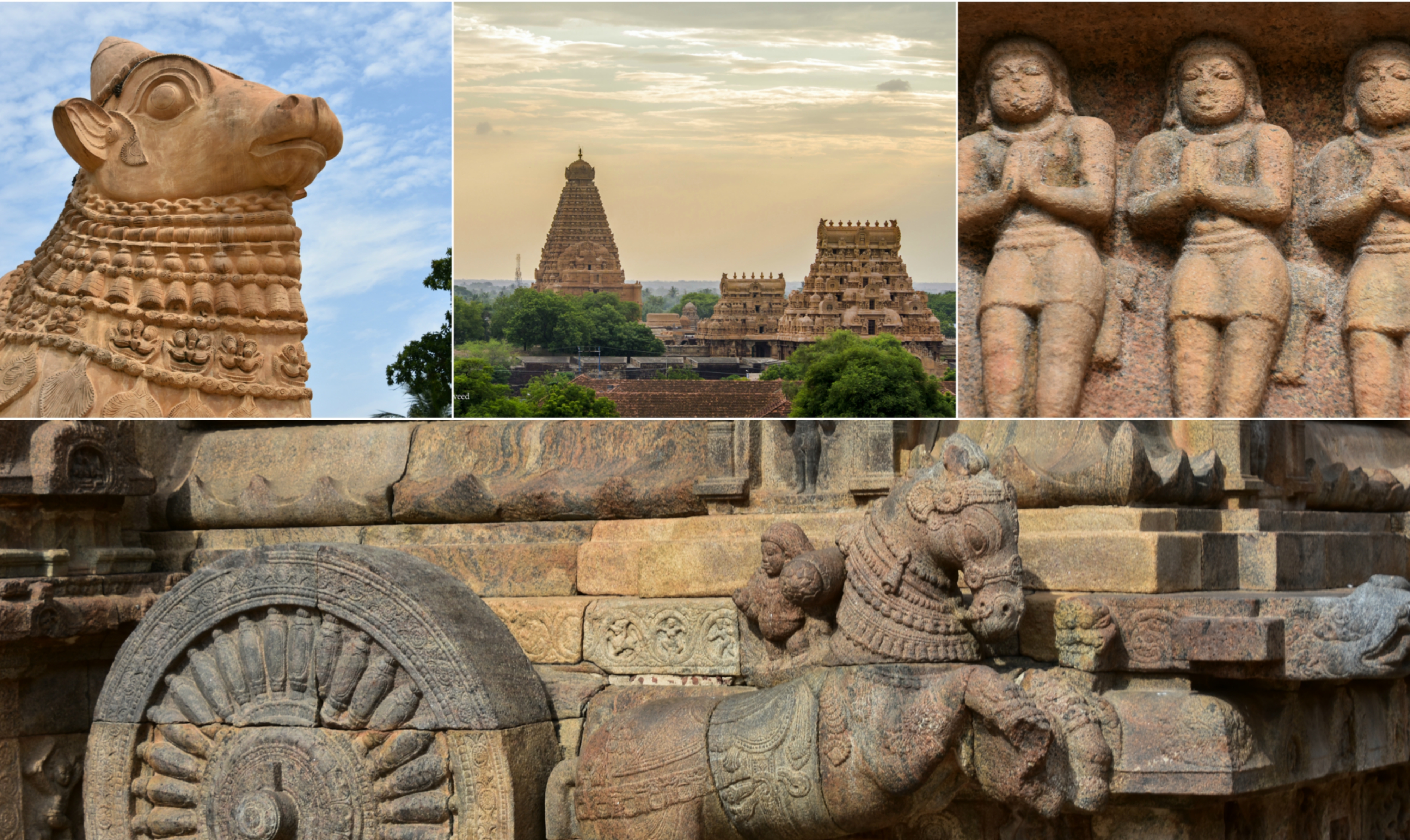
Airavatesvara Temple exemplifies the pinnacle of Dravidian architecture, characterized by its majestic Vimana (tower), multiple mandapas (halls), and an abundance of intricate carvings. The main shrine features a 24-meter tall Vimana, adorned with exquisite sculptures depicting deities, mythical creatures, and everyday life. A unique architectural highlight is the set of musical steps at the entrance to the Balipitha, which produce different musical notes when tapped. This showcases the ancient Chola engineers' profound understanding of acoustics and stone craftsmanship, blending art with scientific principles.
Vimana and Mandapas
The temple's towering Vimana and the interconnected mandapas, including the Raja Gambhira Mandapa, are adorned with thousands of detailed sculptures.
Musical Steps
At the entrance to the Balipitha, a set of stone steps is engineered to produce distinct musical notes, a marvel of ancient Indian acoustics and architecture.
From Rajaraja Chola II to Modern Day: The Temple's Enduring Legacy
The rich history of Airavatesvara Temple begins with its foundation during the reign of the illustrious Chola king, Rajaraja Chola II (1146-1172 CE). Conceived as a royal temple, it embodied the zenith of Chola art and architecture. Over centuries, the temple has witnessed various periods of patronage and preservation, ensuring its survival despite historical upheavals. Its enduring legacy is a testament to the continuous efforts of local communities and archaeological departments to maintain its structural integrity and cultural significance, allowing it to stand as a living monument today.
Chola Patronage
Built by Rajaraja Chola II, the temple served as a significant cultural and religious center, showcasing the Chola empire's power and artistic refinement.
Historical Preservation
Despite centuries of change, the temple has been meticulously preserved, often undergoing restoration efforts by the Archaeological Survey of India to maintain its ancient glory.
Airavatesvara Temple: A Chola Masterpiece in Stone
Airavatesvara Temple, located in Darasuram, Tamil Nadu, stands as a profound testament to the spiritual and architectural brilliance of the Chola dynasty. Dedicated to Lord Shiva, this 12th-century marvel is a vital component of the "Great Living Chola Temples," a UNESCO World Heritage site. Its intricate carvings and unique design elements reflect a deep-rooted religious devotion and unparalleled artistic skill. The temple's significance extends beyond its religious function, serving as a historical chronicle of Chola culture and engineering prowess.
UNESCO World Heritage Status
Recognized for its outstanding universal value, Airavatesvara Temple was inscribed as a UNESCO World Heritage site in 1987, alongside Brihadeeswarar Temple and Gangaikondacholapuram Temple.
Spiritual Significance
The temple is a revered abode of Lord Shiva, worshipped here as Airavatesvara. Its sacred spaces and sculptures narrate ancient Hindu mythologies, fostering a deep spiritual connection for devotees.
Lord Shiva and Airavata: Legends Etched in Stone
At the spiritual heart of Airavatesvara Temple lies its dedication to Lord Shiva, known here as Airavatesvara. The temple's name itself is rooted in a captivating mythology involving Airavata, the white elephant mount of Lord Indra. Legend states that Airavata, cursed by Sage Durvasa, regained its pure white color after worshipping Lord Shiva at this site. This sacred narrative is beautifully depicted through various sculptures and friezes throughout the temple complex, inviting devotees and visitors to delve into the rich tapestry of Hindu mythology.
The Legend of Airavata
Indra's elephant, Airavata, worshipped Shiva at this spot to be cured of a curse, giving the temple its distinctive name.
Deity and Iconography
The primary deity is Shiva, depicted in various forms, with numerous other Hindu deities and mythological figures carved into the temple's walls and pillars.
Experience Darasuram: A Guide to Airavatesvara Temple
Planning a visit to Airavatesvara Temple offers an enriching cultural journey. The temple is open from 6:00 AM to 12:30 PM and again from 4:00 PM to 9:00 PM. Entry is free for all visitors. The best time to experience its grandeur is during the cooler months, from October to March. Visitors are encouraged to wear traditional attire and remove footwear before entering the temple premises as a sign of respect. Allocate 1-2 hours to fully appreciate the intricate details and serene atmosphere of this ancient Chola masterpiece.
Timings and Entry
The temple is open daily during specified hours, offering free entry to all visitors, allowing ample time for exploration.
Best Time to Visit
The months between October and March provide pleasant weather conditions, ideal for exploring the temple complex comfortably.
| Deity | Shiva |
|---|---|
| Sampradaya | Hindu |
| Significance | A principal deity in Hinduism, known as the Destroyer and Transformer within the Trimurti. |
No Specific Story Provided
No specific mythological story or legend associated with this temple was provided in the given facts.
Within these sacred walls, the divine presence of Shiva offers solace and spiritual reflection.
A journey to this temple is a step into the heart of Hindu tradition and faith.
🗺 How to Reach
Hover a card to animate the journey on the map
Verified routes to Airavatesvara Temple Darasuram: Complete History: From Foundation to Present Day
Common Questions
Where is Airavatesvara Temple Darasuram: Chola Grandeur & Shiva's Abode located?
Airavatesvara Temple Darasuram: Chola Grandeur & Shiva's Abode is documented at Tamil Nadu.
Which deity is associated with Airavatesvara Temple Darasuram: Chola Grandeur & Shiva's Abode?
Airavatesvara Temple Darasuram: Chola Grandeur & Shiva's Abode is associated with Shiva.