A complete pilgrim record drawn from the existing published article data.
Echoes of the Chola Dynasty: The Temple's Genesis
The Airavatesvara Temple was constructed during the glorious reign of the Chola dynasty, specifically commissioned by King Rajaraja Chola II in the 12th century CE. This period marked a zenith for Chola art and architecture, and the temple serves as a prime example of their enduring legacy. It reflects the dynasty's immense artistic and religious patronage, evident in the meticulous craftsmanship and the grandeur of its design. The temple was not merely a place of worship but also a center for art, culture, and learning, encapsulating the Chola empire's power and sophistication.
Royal Commission
King Rajaraja Chola II, a prominent ruler of the Chola empire, initiated the construction of the Airavatesvara Temple, dedicating it to Lord Shiva.
12th Century Grandeur
Built in the 12th century, the temple embodies the architectural and sculptural advancements achieved during the later Chola period, setting a benchmark for future temple constructions.
Experiencing Airavatesvara: A Visitor's Guide
To fully appreciate the Airavatesvara Temple, visitors should plan for a duration of 1 to 2 hours. The temple is open from 6:00 AM to 12:30 PM and again from 4:00 PM to 9:00 PM, with free entry for all. The best time to visit is between October and March, when the weather is most pleasant. Traditional attire is preferred, and removing footwear before entering the temple premises is customary. Ample parking is available. The temple is easily accessible from Kumbakonam, approximately 4 km away, via frequent local buses, auto-rickshaws, or taxis.
Planning Your Visit
The temple is open from 6:00 AM to 12:30 PM and 4:00 PM to 9:00 PM. Entry is free, and a visit typically lasts 1 to 2 hours.
Accessibility
Located approximately 4 km from Kumbakonam Bus Stand and Railway Station, the temple is well-connected by local transport options.
Etiquette and Best Time
Visitors are encouraged to wear traditional attire and remove footwear. The cooler months from October to March offer the most comfortable visiting experience.
| Deity | Shiva |
|---|
The Elephant's Devotion
Legend has it that Airavata, the white elephant mount of Lord Indra, was cursed and lost his pristine white color. To regain his original hue, Airavata worshipped Lord Shiva at this very spot. Pleased by his devotion, Shiva restored Airavata's color, and in gratitude, the elephant consecrated a Lingam here. The temple is thus named Airavatesvara, meaning "Lord of Airavata," commemorating this divine event and the elephant's unwavering faith.
In the sacred space where Airavata found solace, Shiva's grace restores all that is lost.
The stones whisper tales of devotion, echoing the prayers of ages past to the Lord of Airavata.
Related temples: Aakkoor Thanthondreeswarar Temple | Aazhimala Shiva Temple
Airavatesvara Temple: A Chola Masterpiece
The Airavatesvara Temple, located in Darasuram near Kumbakonam in Tamil Nadu, stands as a magnificent testament to Chola artistry. This Hindu temple, dedicated to Lord Shiva, is a designated UNESCO World Heritage site, recognized for its exceptional architectural brilliance and profound spiritual significance. It forms part of the "Great Living Chola Temples," showcasing the pinnacle of Dravidian temple architecture. The temple's intricate carvings and unique design elements draw visitors and scholars alike, offering a glimpse into a rich cultural heritage.
UNESCO Recognition
The temple's outstanding universal value led to its inscription as a UNESCO World Heritage site in 2004, alongside the Brihadeeswarar Temple at Thanjavur and the Gangaikonda Cholapuram Temple.
Spiritual Significance
Dedicated to Airavatesvara, a form of Lord Shiva, the temple is a revered pilgrimage site, embodying centuries of devotion and religious tradition within the Shaivite faith.
Dravidian Splendor: Artistry in Stone
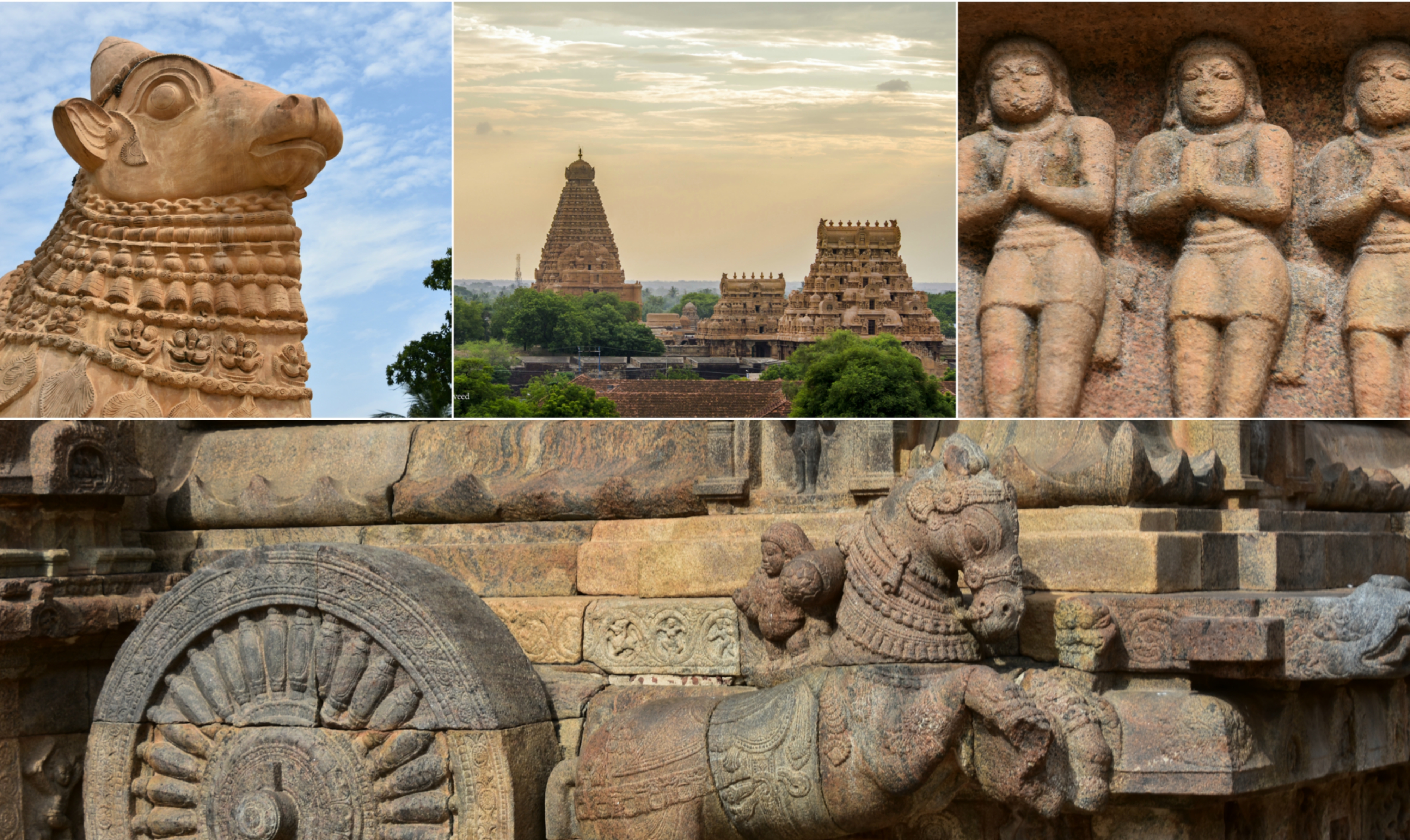
The Airavatesvara Temple exemplifies the intricate Dravidian architectural style, characterized by its towering vimana (main shrine tower), elegant mandapas (halls), and a profusion of exquisitely detailed sculptures. The entire complex is conceived as a chariot, with stone wheels and horses carved into the base, a unique feature. Its gopurams (gateways) are adorned with mythological narratives, while the pillars and walls of the maha mandapa (main hall) depict dancers, musicians, and various divine figures. These carvings serve as visual scriptures, narrating ancient tales from Hindu mythology and Puranas, transforming the temple into a living canvas of religious art.
Chariot Design
A distinctive feature is the main mandapa designed as a chariot, complete with carved stone wheels and horses, symbolizing the movement of the divine.
Sculptural Narratives
Every surface, from the vimana to the gopurams and mandapa pillars, is adorned with detailed sculptures depicting mythological stories, celestial beings, and daily life scenes.
Musical Steps
The temple features unique musical steps at the entrance of the maha mandapa, which produce different musical notes when tapped.
Lord Shiva as Airavatesvara: The Elephant's Devotion
The temple's name, Airavatesvara, is rooted in a fascinating Hindu mythology involving Lord Shiva and Airavata, the white elephant of Indra, the king of gods. According to legend, Airavata suffered from a curse that discolored its pristine white skin. It worshipped Lord Shiva at this very spot, performing severe penance. Pleased by Airavata's unwavering devotion, Lord Shiva appeared and restored the elephant's original radiant white color. Consequently, Lord Shiva came to be known as Airavatesvara, "the Lord of Airavata," signifying his compassion and the power of devotion.
The Curse of Airavata
Airavata, Indra's celestial white elephant, lost its color due to a curse, leading it to seek divine intervention.
Penance and Restoration
Through intense worship and devotion at this site, Airavata appeased Lord Shiva, who restored its pure white complexion.
The Name's Origin
This mythological event led to Lord Shiva being revered here as Airavatesvara, commemorating the elephant's devotion and Shiva's grace.
Restoration and Conservation Efforts
The Airavatesvara Temple, a magnificent testament to Chola architecture from the 12th century, has naturally faced the relentless march of time and environmental degradation. Over centuries, intricate carvings have weathered, and structural elements have required careful attention to prevent decay. The Archaeological Survey of India (ASI) has played a pivotal role in its preservation, undertaking extensive restoration work at various periods. These efforts have focused on stabilizing the structure, meticulously repairing damaged sculptures, and consolidating fragile stone surfaces. The challenge lies in employing conservation methods that respect the original craftsmanship and materials, often involving traditional lime mortar and minimal intervention techniques to retain the temple's historical and artistic integrity. This delicate balance ensures that while the temple is preserved, its authentic character remains uncompromised for future generations to appreciate. The temple's inclusion in the UNESCO World Heritage list, as part of the "Great Living Chola Temples," significantly elevated its conservation status and brought international attention to its preservation needs. This designation mandates adherence to stringent international conservation standards, ensuring that all restoration activities are thoroughly documented and scientifically informed. Ongoing efforts involve regular structural assessments, environmental monitoring to mitigate factors like humidity and pollution, and the continuous training of skilled artisans who possess the traditional knowledge essential for working with ancient stone. Funding from both government bodies and international organizations supports these crucial initiatives, aiming not only to repair but also to proactively protect the temple from further deterioration, securing its legacy as a cultural and architectural marvel for centuries to come.🗺 How to Reach
Hover a card to animate the journey on the map
Verified routes to Airavatesa temple
Common Questions
Where is Airavatesa Temple: Dravidian Marvel of Kumbakonam located?
Airavatesa Temple: Dravidian Marvel of Kumbakonam is documented at Kumbakonam, Tamil Nadu.
Which deity is associated with Airavatesa Temple: Dravidian Marvel of Kumbakonam?
Airavatesa Temple: Dravidian Marvel of Kumbakonam is associated with Shiva.