A complete pilgrim record drawn from the existing published article data.
Tracing the Ancient History of Adi Kumbeswarar
The origins of the Adi Kumbeswarar Temple are shrouded in antiquity, with its earliest structures believed to date back to the Sangam period. However, the temple's current grandeur is largely attributed to the medieval Chola dynasty, who extensively rebuilt and expanded the complex from the 9th century onwards. Subsequent contributions from the Vijayanagara and Nayaka rulers further enriched its architecture and religious practices. Inscriptions found within the temple provide evidence of its continuous development and the patronage it received from various royal lineages, solidifying its status as a historical and spiritual landmark over millennia.
Chola Dynasty's Influence
The Cholas were instrumental in transforming the temple into a magnificent stone structure, adding many of its iconic features.
Later Dynastic Contributions
Vijayanagara and Nayaka kings also made significant additions and renovations, enhancing the temple's artistic and structural elements.
Ancient Roots
While precise founding dates are debated, its spiritual significance dates back to ancient times, predating many existing structures.
Dravidian Marvel: The Architecture of Adi Kumbeswarar
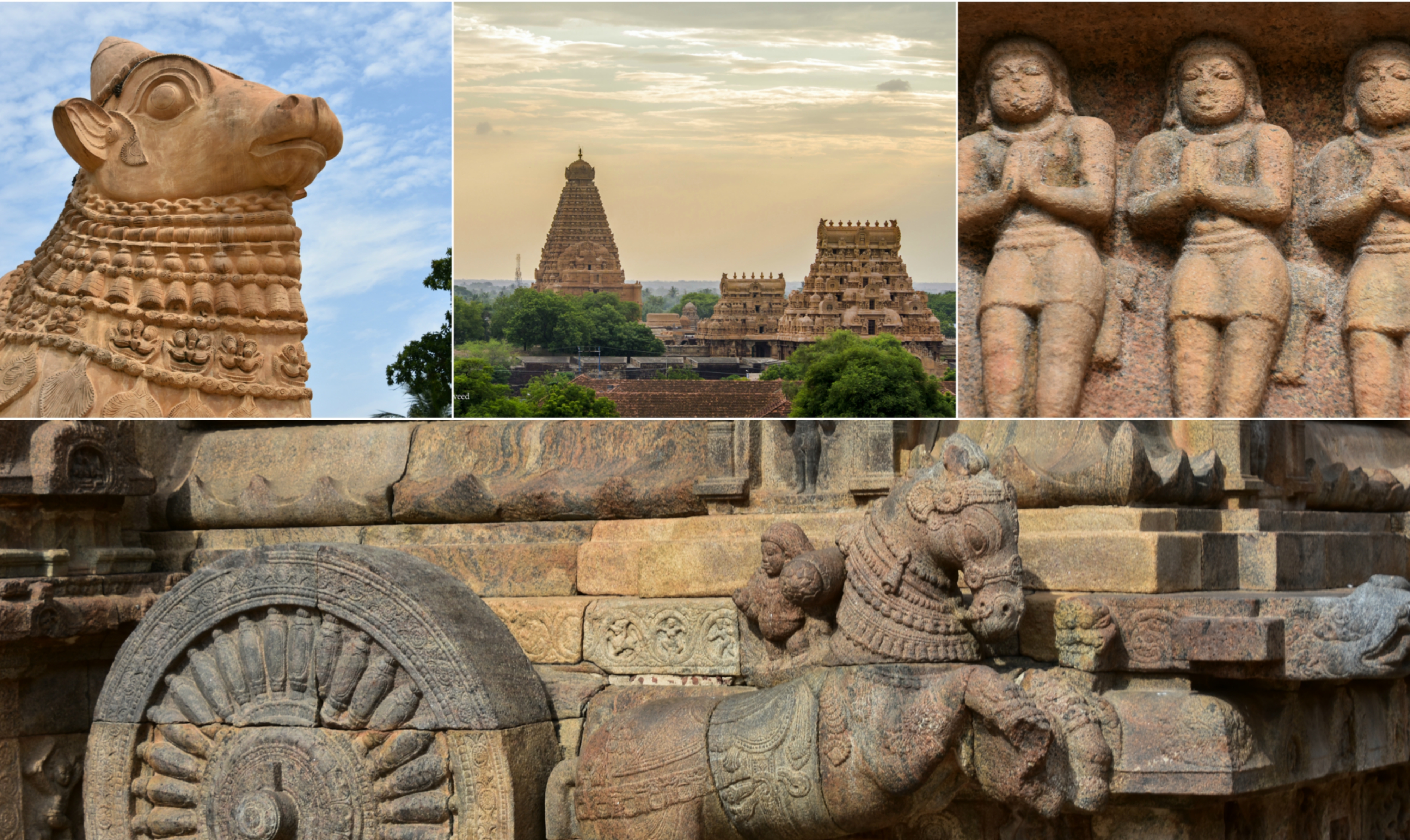
The Adi Kumbeswarar Temple exemplifies the quintessential Dravidian architectural style, characterized by its towering gopurams and intricate sculptural details. The temple complex features multiple gopurams, the tallest being the eastern gopuram, which rises to a height of 128 feet across nine tiers. Within the sprawling precincts, numerous mandapams (halls) like the Mahamaham Mandapam and the Nageswarar Mandapam are adorned with finely carved pillars depicting mythological scenes and deities. Every surface, from the vimanas to the outer walls, is embellished with exquisite sculptures, showcasing the artistic prowess of ancient Tamil craftsmen and the rich iconographic traditions.
Towering Gopurams
The temple's monumental entrance towers are multi-tiered structures, intricately sculpted with divine figures and mythological narratives.
Elaborate Mandapams
Various halls within the complex, such as the 16-pillared Mahamaham Mandapam, serve ceremonial purposes and display remarkable artistry.
Sculptural Grandeur
Intricate carvings of deities, mythical creatures, and epic tales adorn the walls, pillars, and ceilings, reflecting rich Hindu iconography.
The Legend of Kumbeswarar: Shiva's Divine Play
The central deity, Lord Shiva, is worshipped here as Adi Kumbeswarar, deriving his name from a profound mythological event. According to legend, during the cosmic dissolution (pralaya), Lord Brahma collected the seeds of creation in a kumbha (pot) filled with amrita (nectar of immortality). This pot was set afloat and eventually came to rest at the present site of Kumbakonam. Lord Shiva, in the form of a hunter, shot an arrow at the kumbha, spilling its contents and creating the Mahamaham tank. The lingam formed from the broken pot became Adi Kumbeswarar, signifying the re-creation of the universe.
The Cosmic Pot (Kumbha)
The legend centers on a pot containing the essence of creation, carried by the cosmic flood.
Shiva's Intervention
Lord Shiva, as Kirata (hunter), broke the pot, initiating the re-creation of life on Earth.
Origin of the Lingam
The lingam of Adi Kumbeswarar is believed to have manifested from the fragments of this divine pot.
Experiencing Adi Kumbeswarar: A Visitor's Guide
Visiting the Adi Kumbeswarar Temple offers a deeply enriching spiritual experience. The temple is open daily from 6:00 AM to 12:30 PM and 4:00 PM to 9:00 PM, with free entry. The best time to visit is between October and March, when the weather is pleasant. Visitors are encouraged to wear traditional attire and remove footwear before entering. The temple is famous for the Mahamaham festival, celebrated once every 12 years, drawing millions of devotees to the sacred Mahamaham tank. Daily rituals and pujas are performed, offering pilgrims opportunities for worship and spiritual reflection during their 1-2 hour visit.
Temple Timings and Entry
The temple operates on a split schedule, opening in the morning and evening, with no entry fee for visitors.
Key Festivals
The Mahamaham festival, held every twelve years, is the most significant event, attracting a massive congregation.
Visitor Etiquette
Respectful dress, such as traditional Indian clothing, and removal of shoes are customary practices within the temple premises.
| Deity | Shiva |
|---|---|
| Form | Shiva is often worshipped in the aniconic form of the Lingam, representing his cosmic creative and destructive power, or in anthropomorphic forms like Nataraja, the cosmic dancer. |
| Consort | Parvati |
| Sampradaya | Hindu |
| Significance | As one of the Trimurti, Shiva is the Destroyer, responsible for dissolution and recreation, embodying both asceticism and fertility. |
The Legend of Brahma's Pot
During a cosmic deluge, Lord Brahma's pot (Kumbha), containing the seeds of creation, was carried by the floodwaters. It is believed to have settled at the spot where Kumbakonam now stands. Lord Shiva, in his divine play, shot an arrow to break the pot, releasing its contents and forming the sacred Mahamaham tank. The Lingam enshrined in the Adi Kumbeswarar Temple is said to be fashioned from the fragments of this very pot, making the temple a site of profound cosmic significance and creation.
He is the beginning and the end, the creator and the destroyer, the ultimate reality.
In the heart of devotion, Shiva resides, guiding all towards liberation.
Adi Kumbeswarar Temple: A Sacred Heart of Kumbakonam
The Adi Kumbeswarar Temple stands as a monumental Shiva temple in the heart of Kumbakonam, Tamil Nadu. Revered as one of the oldest and most significant places of worship dedicated to Lord Shiva, it serves as a vibrant spiritual epicenter for devotees. This ancient shrine is central to the cultural and religious identity of the region, embodying centuries of devotion and architectural brilliance. Its profound spiritual atmosphere draws pilgrims seeking blessings and divine connection, making it an indispensable part of South Indian Hindu tradition.
Spiritual Significance
The temple is deeply revered, believed to grant spiritual liberation and fulfill wishes of its devotees.
Central Deity
Lord Shiva is worshipped here as Adi Kumbeswarar, accompanied by his consort Mangalambigai.
Pilgrimage Destination
It is a prime destination for pilgrims, especially during auspicious festivals and events.
🗺 How to Reach
Hover a card to animate the journey on the map
Verified routes to Adi Kumbeswarar Temple
Common Questions
Where is Adi Kumbeswarar Temple: Ancient Chola Shiva Shrine located?
Adi Kumbeswarar Temple: Ancient Chola Shiva Shrine is documented at Kumbakonam, Tamil Nadu.
Which deity is associated with Adi Kumbeswarar Temple: Ancient Chola Shiva Shrine?
Adi Kumbeswarar Temple: Ancient Chola Shiva Shrine is associated with Shiva.