



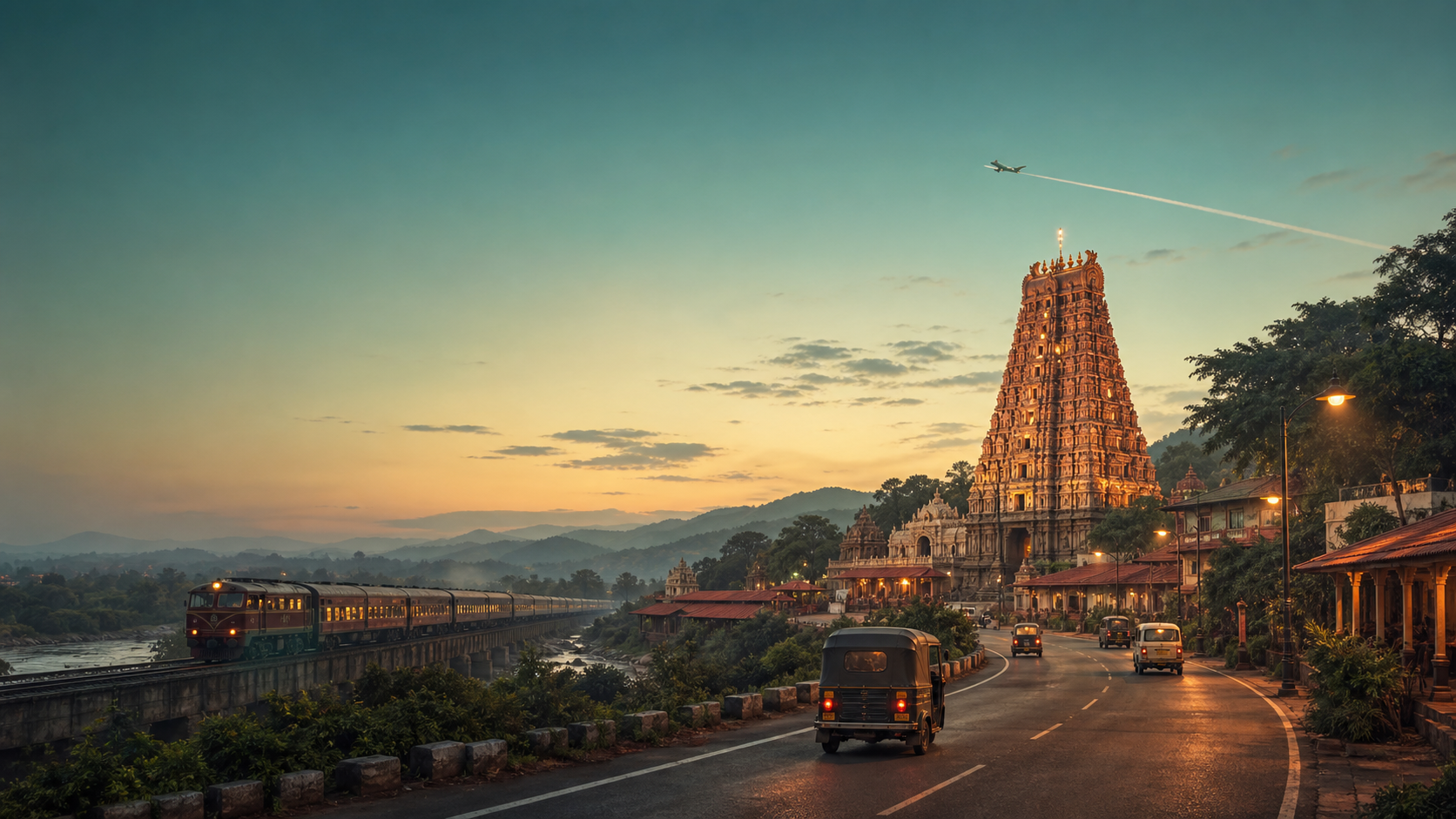
A complete pilgrim record drawn from the existing published article data.
Tracing the Centuries: From Chalukya Foundations to State Protection
The Yellamma Temple's history spans centuries, with evidence of megalithic occupation and an earlier temple structure dating from the mid-8th to mid-11th centuries CE, linked to early Rashtrakuta and late Chalukya periods. The current temple structure was built in 1514 CE, commissioned by Bomappa Nayaka of Raybag. Since 1975, the Government of Karnataka has undertaken its management and infrastructure development, ensuring its preservation as a state-protected heritage site for future generations.
Ancient Origins
The site's history predates the current structure, with archaeological findings indicating megalithic presence and an earlier temple existing between the mid-8th and mid-11th centuries CE, during the Chalukya and Rashtrakuta eras.
Construction of the Current Temple
The present temple complex was constructed in 1514 CE under the patronage of Bomappa Nayaka of Raybag, solidifying its place as a significant religious landmark.
Modern Management and Heritage
Since 1975, the Government of Karnataka has managed the temple, contributing to its infrastructure and preserving its heritage status, although it is not an ASI National Monument.
Stone Narratives: Unveiling the Temple's Architectural Heritage
The Yellamma Temple showcases a distinctive blend of regional architectural styles, primarily Chalukyan and Rashtrakuta, reflecting its long history and the contributions of various ruling dynasties. Constructed mainly from stone and granite, the temple embodies the Karnataka Chalukya-Rashtrakuta hill temple style. These architectural elements narrate the temple's evolution, integrating design principles from different eras into its sacred structure and offering insights into the region's rich artistic traditions.
Architectural Fusion
The temple's design is a blend of Chalukyan and Rashtrakuta styles, characteristic of the Karnataka region, demonstrating the artistic confluence of these powerful dynasties.
Materials and Style
Built predominantly with stone and granite, the temple exemplifies the robust and enduring Karnataka Chalukya-Rashtrakuta hill temple architectural style, suited to its elevated location.
Dynastic Contributions
The architectural nuances within the temple reflect the influence and contributions of both the Chalukya and Rashtrakuta dynasties, whose patronage shaped its structural and artistic elements over centuries.
The Divine Mother: Mythology and Significance of Goddess Renuka
At the heart of the Yellamma Temple lies the veneration of Goddess Renuka, a powerful manifestation of Devi whose mythology is deeply intertwined with local legends and pan-Indian traditions. Her story includes the dramatic narrative of her beheading by Parashurama and subsequent miraculous rebirth, which led to her unique dark-faced iconography. Renuka is revered as the divine mother of all, notably embracing her transgender children. The temple holds folk/cult status as a Shakti Peetha, embodying sacrifice, divine power, and universal maternal love within the Shakta tradition.
The Legend of Renuka's Rebirth
Goddess Renuka's mythology centers on her beheading by Parashurama at his father Jamadagni's command and her subsequent miraculous restoration, which resulted in her distinctive iconography.
Universal Motherhood
Renuka is revered as the divine mother, notably accepting and protecting her transgender children, making the temple a significant site for the transgender community seeking her blessings.
Shakta Tradition and Shakti Peetha
Associated with Saptamatrika worship, the temple holds folk/cult status as a Shakti Peetha, embodying the powerful divine feminine energy central to the Shakta tradition.
The Sacred Abode of Yellamma: A Pilgrimage of Faith and History
The Yellamma Temple in Saundatti, Karnataka, is a pivotal pilgrimage site, renowned for its deep spiritual significance and unique cultural practices. Revered for Goddess Renuka, it draws countless devotees from across India, particularly during the vibrant Yellamma Jatra fair. The temple is a beacon of faith, known for its inclusive environment and the prominent participation of the transgender community, who consider Renuka their divine mother. Its historical depth and spiritual pull make it a central site for devotion in South India.
Pilgrimage Destination
The Yellamma Temple attracts lakhs of devotees annually, making it one of the most significant pilgrimage centers in Karnataka and surrounding regions. The main pilgrimage season culminates during the Yellamma Jatra.
Unique Cultural Practices
The temple is distinguished by its unique devotional practices, including ritual circumambulation (Nimmana) and the active involvement of the transgender community, reflecting the Goddess's embrace of all her children.
Spiritual Significance
Dedicated to Goddess Renuka, the temple is a powerful spiritual center, believed to offer blessings, purification through sacred waters, and a unique connection to the divine feminine energy.
Cultural Impact and Regional Significance
The Yellamma Temple holds profound cultural significance, extending far beyond its immediate religious functions to shape the identity and traditions of North Karnataka and neighboring regions. It is a focal point for numerous annual festivals, most notably the Yellamma Jatra, which draws millions of devotees and transforms Saundatti into a vibrant hub of spiritual fervor and community gathering. These festivals are not merely religious observances but also crucial social events, fostering communal bonds, trade, and the perpetuation of unique folk arts and performances associated with the goddess. The temple's narratives and iconography are deeply woven into local folklore, songs, and oral traditions, serving as a repository of regional history and cultural memory, and reinforcing a distinct regional identity. The cultural impact of the Yellamma Temple also manifests in its influence on local customs, artistic expressions, and social structures, albeit with evolving interpretations over centuries. Historically, the temple was central to the Devadasi system, a practice that has undergone significant reform and abolition, yet its legacy remains a complex part of the temple's social history and academic discourse. Today, the temple continues to inspire various forms of devotional art, music, and dance, with local artists often depicting scenes from the goddess's legends or composing hymns in her praise. Its enduring presence provides a spiritual anchor for countless families and communities who trace their ancestral devotion back to Renuka-Yellamma, ensuring its continued relevance in the contemporary cultural landscape.Journey to Yellamagudda: A Comprehensive Visitor's Guide
Visiting the Yellamma Temple offers a profound spiritual experience, with practical considerations for travel and understanding unique devotional practices. The best time to visit is October to April, especially during the peak Yellamma Jatra in December–January. Saundatti is the nearest bus hub, and Savadatti Railway Station is approximately 5 km away. Modest attire is expected, and footwear must be removed before entering. The temple embraces unique devotional practices, including the significant presence and participation of the transgender community, who find spiritual solace and acceptance here.
Travel and Access
Saundatti serves as the primary bus hub, located 5 km from the temple. Savadatti Railway Station is also nearby, approximately 5 km away. Belagavi Airport (IXG) is the closest airport, about 120 km distant.
Optimal Visit Times
The ideal period for a visit is between October and April, with December–January being particularly vibrant due to the Yellamma Jatra festival, which draws large crowds.
Devotional Practices and Community
Visitors are expected to dress modestly and remove footwear. The temple is notable for its inclusive devotional practices, including the prominent role of the transgender community in worship and processions.
| Deity | Renuka (Yellamma) |
|---|---|
| Form | Renuka is worshipped as Yellamma, a form of Devi embodying fertility, Kali, and the Saptamatrikas. She is uniquely depicted with a dark face, symbolizing the transplanted head from another woman. |
| Consort | Unknown |
| Sampradaya | Shakta |
| Significance | She is deified as the divine mother of transgender children and is associated with the Saptamatrika tradition. Her iconography reflects the legend of her beheading and revival, where another woman's head was attached to her body. |
The Beheaded Goddess and Her Rebirth
In ancient times, on these very lands, lived the revered sage Jamadagni and his devoted wife, Renuka. One day, a moment of perceived impurity in Renuka’s mind enraged Jamadagni, who commanded his son, Parashurama, to behead his own mother. Though distraught, Parashurama obeyed. Overcome with remorse, he pleaded with his father to restore her. Jamadagni, pleased with his son’s obedience, granted the boon, but in his haste, Parashurama mistakenly attached the head of another woman to Renuka's body. This miraculous, yet unusual, restoration gave birth to the unique, dark-faced iconography of Goddess Renuka as she is worshipped today, embodying sacrifice, divine power, and rebirth. This sacred site is also believed to be where Parashurama performed intense penance to atone for his act.
From beheading to rebirth, Renuka's story is a testament to divine power and miraculous transformation. She is the mother who transcends all boundaries.
This temple stands as a beacon of hope and acceptance, where Goddess Renuka embraces all her children, especially the transgender community, with boundless compassion.
Related temples: Akkana Basadi | Amareshwar Temple
🗺 How to Reach
Hover a card to animate the journey on the map
Route to Yellamagudda
Common Questions
Where is Yellamma Temple Saundatti: Renuka Devi's Ancient Abode located?
Yellamma Temple Saundatti: Renuka Devi's Ancient Abode is documented at Yellamagudda, Karnataka.
Which deity is associated with Yellamma Temple Saundatti: Renuka Devi's Ancient Abode?
Yellamma Temple Saundatti: Renuka Devi's Ancient Abode is associated with Durga.
Related Temples


A Living Covenant