



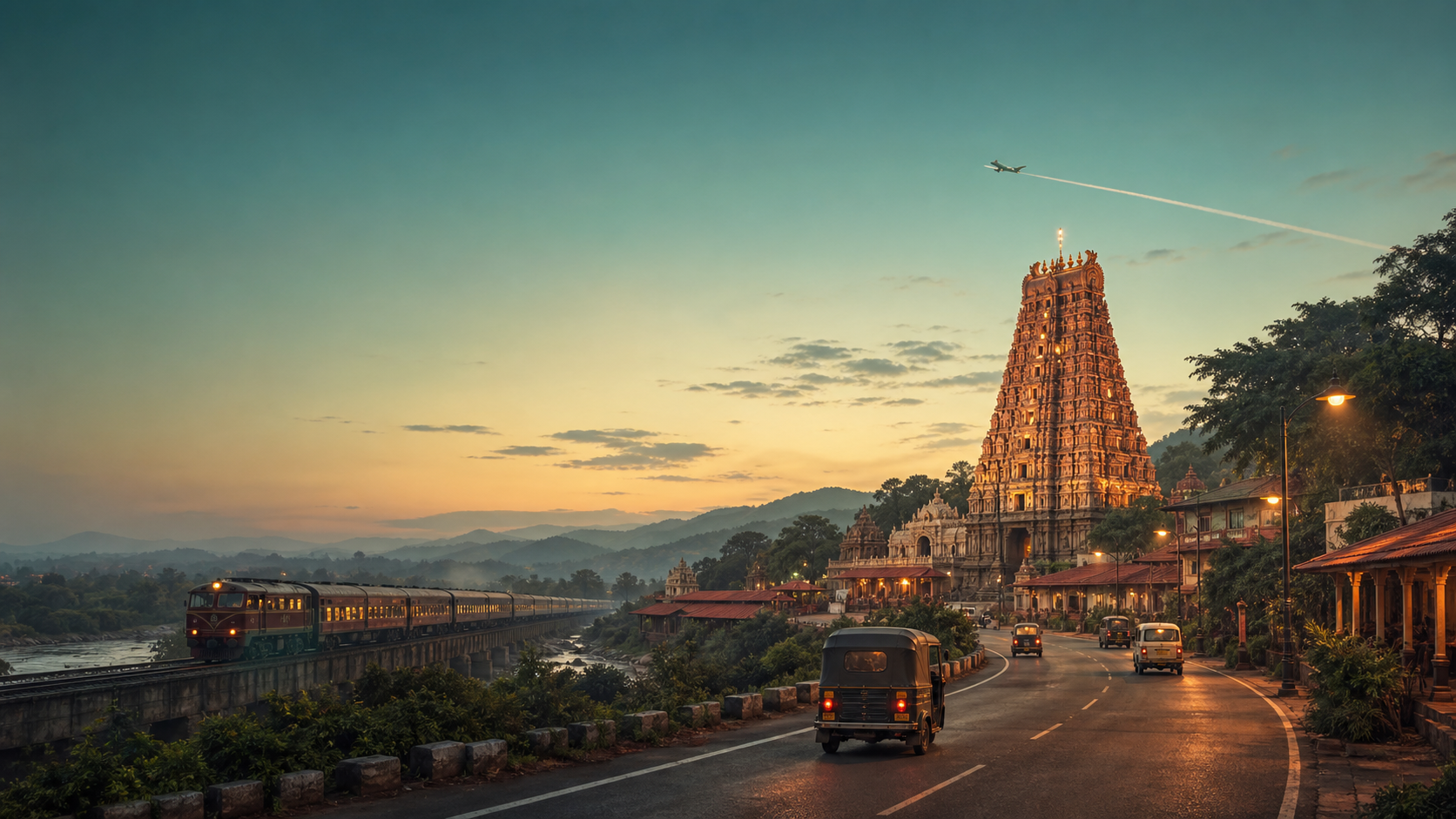
A complete pilgrim record drawn from the existing published article data.
Historical Tapestry: The Hoysala Dynasty's Golden Age
The Hoysala Empire, emerging in the 10th century, rose to prominence in the 12th and 13th centuries, ruling much of present-day Karnataka. This period marked a golden age for art, literature, and architecture, driven by powerful rulers like King Vishnuvardhana and King Ballala II. Their reign saw the construction of numerous elaborate temples, showcasing a unique architectural style that blended Chalukyan and Dravidian influences. These temples were not merely places of worship but also centers of cultural activity, reflecting the dynasty's prosperity and religious devotion, particularly towards Vaishnavism and Shaivism. The intricate carvings and detailed sculptures stand as enduring testaments to Hoysala artistic prowess and their significant contribution to South Indian heritage.
Rise of the Hoysala Power
Originating as feudatories of the Western Ganga Dynasty and later the Western Chalukyas, the Hoysalas gradually asserted their independence. By the 12th century, under rulers like Vishnuvardhana, they consolidated their control over large parts of Karnataka, establishing their capital at Dwarasamudra (modern-day Halebidu). This political stability provided the foundation for unprecedented artistic and architectural development.
Patronage of Art and Architecture
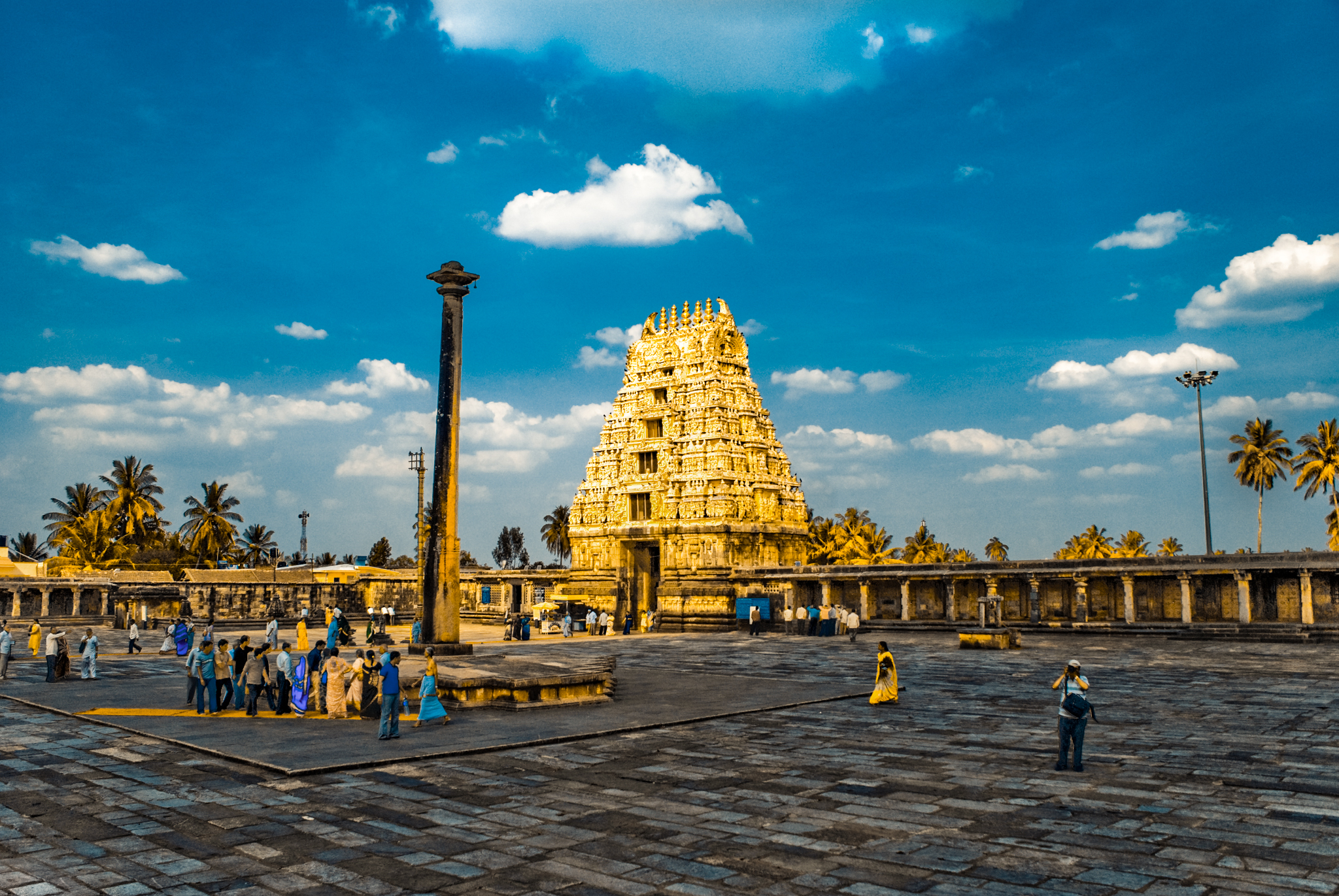
The Hoysala kings were fervent patrons of temple building, employing skilled sculptors and architects. They developed a distinctive architectural style characterized by stellate plans, intricate carvings, and friezes depicting Hindu epics, deities, and daily life. Temples like the Chennakesava at Belur and Hoysaleswara at Halebidu exemplify this period, built primarily from soapstone, allowing for minute detailing.
Religious and Cultural Flourishing
The Hoysala era witnessed a vibrant religious landscape, with significant patronage extended to both Vaishnavism and Shaivism. The influence of prominent spiritual leaders, such as the philosopher-saint Ramanujacharya, also played a crucial role, inspiring royal conversions and the dedication of grand temples to Vishnu. This cultural synthesis fostered a rich environment for artistic expression.
The Sacred Ensembles of Hoysala: Karnataka's Architectural Marvels
Hoysala temples in Karnataka represent a significant artistic and spiritual legacy. Built primarily in the 12th century CE under the Hoysala dynasty, these temples, such as the Chennakesava Temple in Belur and Hoysaleswara Temple in Halebidu, showcase the distinctive Hoysala architectural style. Known for their intricate carvings and stellate plans, they recently received UNESCO World Heritage Site status, recognizing their outstanding universal value and profound cultural significance, particularly within the Vaishnava tradition.
Architectural Grandeur and UNESCO Recognition
The Hoysala architectural style is characterized by its unique stellate plan, finely carved sculptures, and friezes depicting mythological narratives, celestial beings, and daily life. Constructed predominantly from soapstone, these structures exhibit an unparalleled level of detail and craftsmanship. The recent inscription of these ensembles as a UNESCO World Heritage Site on September 18, 2023, underscores their global importance as masterpieces of human creative genius and a testament to the rich cultural heritage of Karnataka.
Spiritual Significance and Vaishnava Tradition
These temples are deeply rooted in the Vaishnava tradition, primarily dedicated to Vishnu in various forms, including Chennakesava (Krishna). They served as centers of spiritual devotion and learning, influenced by revered saints like Ramanujacharya. The carvings are not merely decorative but serve as visual scriptures, narrating episodes from the Mahabharata and other Puranas, thereby reinforcing the spiritual narratives and devotional practices of the time. They embody a profound spiritual legacy that continues to inspire devotees.
Divine Narratives: Deities and Mythology
The temples of Karnataka, particularly the Chennakesava Temple, are primarily dedicated to Vishnu, revered here in his form as Chennakesava, a manifestation of Lord Krishna. These sacred sites are renowned for their intricate sculptural narratives that bring to life a pantheon of Hindu deities and mythological episodes. The Vaishnava tradition is central to their spiritual essence, with carvings extensively depicting tales from epics and Puranas, offering a visual scripture of ancient lore.
Chennakesava: The Beautiful Form of Krishna
Chennakesava, meaning 'beautiful Krishna,' is the principal deity enshrined. This form of Krishna is deeply associated with his role as the divine charioteer in the Mahabharata. Devotees believe that in Chennakesava, they witness the compassionate and powerful aspect of Krishna, guiding humanity through challenges, mirroring his guidance to Arjuna at Kurukshetra.
Epic Narratives in Stone
The temple walls serve as a canvas for a vast array of mythological tales. Intricate carvings vividly depict episodes from the Mahabharata, Ramayana, and various Puranas. These visual scriptures illustrate divine leelas, battles, and philosophical teachings, making the temples not just places of worship but also repositories of India's rich mythological heritage.
Planning Your Pilgrimage: A Visitor's Guide
Prepare for an enriching journey to Karnataka's Hoysala temples, now UNESCO World Heritage Sites. Careful planning ensures a comfortable and respectful visit to these architectural and spiritual marvels.
Best Time and Dress Code
Visit between October and March for pleasant, dry weather. Modest dress is required; men should wear dhoti/veshti, women saree/salwar. Footwear must be removed before entering the sanctum.
Travel and Site Duration
The temples are accessible by road, with Hassan as a key hub. Hassan Junction Railway Station is 35-40 km away. Allow a full day for Belur or Halebidu, or 2-3 days for a comprehensive regional tour.
| Deity | Vishnu |
|---|---|
| Form | Vishnu is primarily worshipped in his form as Chennakesava, which translates to 'Beautiful Lord of the Chennas'. This form is associated with Krishna, representing divine beauty and grace. |
| Consort | Goddess Lakshmi |
| Sampradaya | Vaishnava |
| Significance | As the central deity of these Vaishnava temples, Vishnu in his Chennakesava form symbolizes the supreme protector and preserver of the universe. The temples serve as significant centers for Vaishnava devotion and the worship of Vishnu's various manifestations. |
The King's Divine Vision and Ramanujacharya's Grace
Once, the powerful King Vishnuvardhana, a devout follower of Jainism, found his destiny irrevocably altered at this sacred site. It is said that a brilliant, divine light emanated from the very ground, captivating the monarch. Witnessing this celestial phenomenon, the King was deeply moved and experienced a profound spiritual awakening. It was the revered philosopher-saint Ramanujacharya who, recognizing the divine presence, guided the King towards Vaishnavism. Inspired by this miraculous revelation, King Vishnuvardhana commissioned the magnificent Chennakesava Temple, dedicating it to the deity who had manifested before him in such a glorious vision. This temple stands as a testament to a king's transformation and the saint's spiritual influence.
Every inch of these temples tells a story of devotion, craftsmanship, and divine grace.
The Hoysala temples are not just structures; they are poetry carved in stone, echoing ancient hymns.
Related temples: A. C. Bhaktivedanta Swami Prabhupada | Abhimanyu Temple, Vayotthidam
Architectural Grandeur: A Symphony in Stone
Hoysala architecture, a unique Karnataka style, is renowned for its exceptional sculptural intricacy. Utilizing soft soapstone, artisans crafted unparalleled detail, blending Dravidian and Nagara influences into a highly ornate aesthetic.
Stellate Plans and Elevated Bases
A hallmark is the star-shaped ground plan of the vimana, creating dynamic projections. Temples stand on a jagati, an elevated platform for circumambulation, bringing intricate wall carvings to eye level.
Intricate Sculptural Narratives
Every surface is adorned with exquisite carvings depicting Hindu mythology, daily life, and nature. Friezes of elephants, horses, and epic scenes, plus madanakai bracket figures, showcase delicate artistry.
Restoration & Conservation Efforts
Karnataka's ancient temples, marvels of architectural ingenuity and spiritual devotion, face significant challenges in their continued existence. Centuries of exposure to the elements, including monsoons, sun, and wind, have led to natural weathering, erosion of intricate carvings, and structural weakening. Beyond environmental factors, human impact such as neglect, vandalism, and the pressures of modern development like encroachment or increased foot traffic, also pose threats. The preservation of these sacred sites is paramount, not only for their religious significance but also as invaluable repositories of history, art, and cultural heritage. Government agencies like the Archaeological Survey of India (ASI) and the Karnataka State Archaeology Department, alongside numerous private trusts and local communities, are actively engaged in safeguarding these irreplaceable monuments for future generations. The restoration and conservation of Karnataka's temples involve a meticulous and multi-faceted approach, often blending traditional craftsmanship with modern scientific techniques. Efforts typically include detailed documentation, structural stabilization using non-invasive methods, chemical treatment to clean surfaces without damaging original patinas, and the careful reconstruction of fallen or damaged sections, often utilizing original materials sourced locally. A key principle is minimal intervention, aiming to preserve the authenticity and integrity of the original structure while ensuring its longevity. Notable examples include ongoing work at the UNESCO World Heritage site of Hampi, as well as extensive projects at the Hoysala temples of Belur and Halebidu, where intricate sculptures and delicate stone work require specialized attention. These continuous endeavors highlight a deep commitment to protecting Karnataka's rich temple legacy.🗺 How to Reach
Hover a card to animate the journey on the map
Route to Mysore
Common Questions
Where is Temples of Karnataka: Architectural Marvels & Krishna Devotion located?
Temples of Karnataka: Architectural Marvels & Krishna Devotion is documented at Mysore, Karnataka.
Which deity is associated with Temples of Karnataka: Architectural Marvels & Krishna Devotion?
Temples of Karnataka: Architectural Marvels & Krishna Devotion is associated with Krishna.
Related Temples


A Living Covenant