
A complete pilgrim record drawn from the existing published article data.
Historical Foundation
Pre-Ramanuja Sanctity: Epigraphy and Ancient Worship
Ramanuja’s Divine Mandate: From Dream to Dharmasthala
Hoysala Patronage & Dynastic Continuity
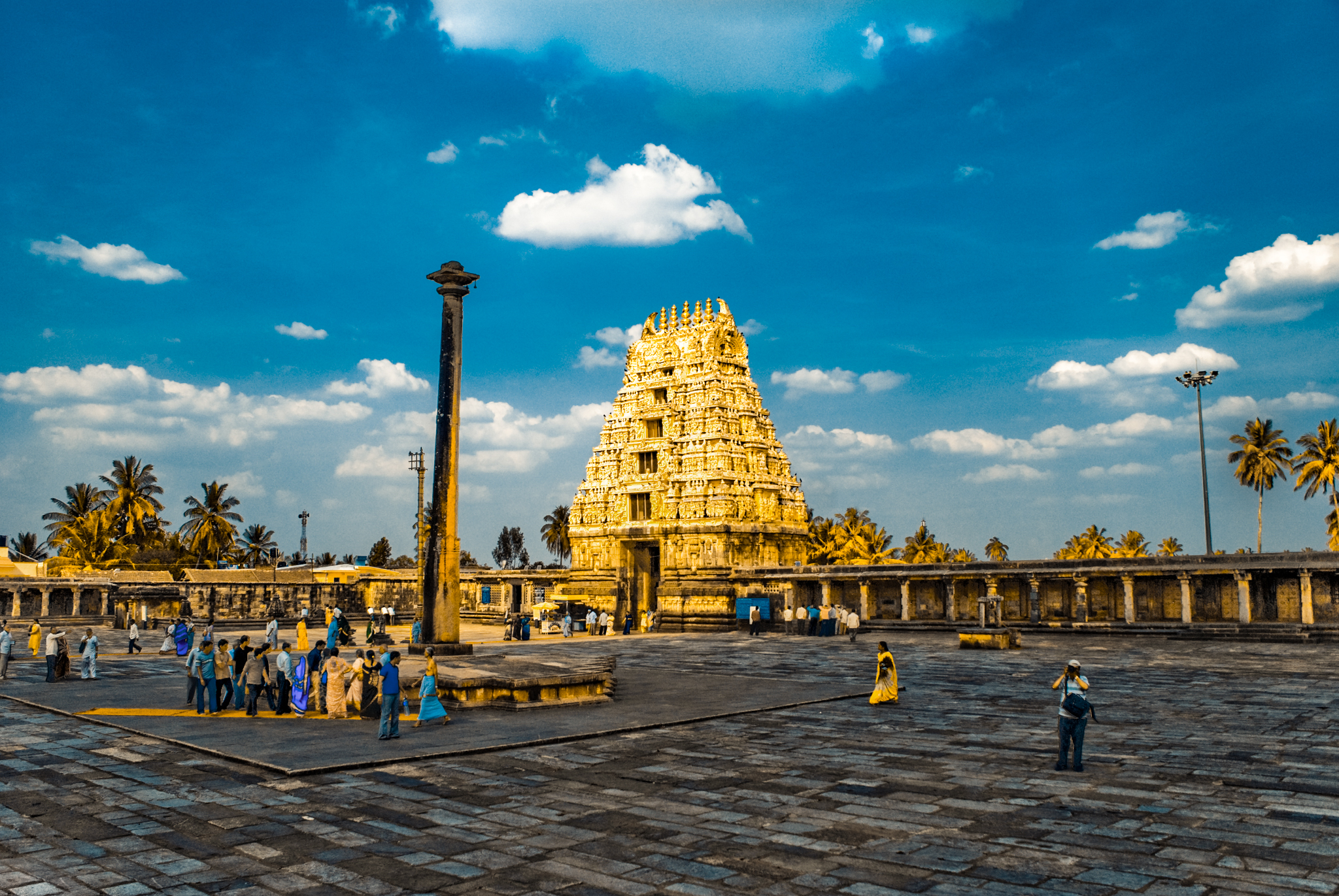
Architecture & Craftsmanship
Hoysala Dravidian Synthesis: Granite Geometry & Divine Narrative
The Pillars of Memory: Ramanuja, Azhwars & Yadugiriamma
Material Sacredness: Granite, Clay & Cosmic Alignment
The Presiding Deity
Cheluvanarayana Swamy: Tirunarayana, Ramapriya & Narayanadri
Name: Cheluvanarayana Swamy (‘Cheluva’ = beloved, ‘Narayana’ = Supreme Being)
Form: Standing Tirunarayana (four-armed Vishnu holding Shankha, Chakra, Gada, Padma); also worshipped as Ramapriya (the metal utsava-murti) and Narayanadri (the hill itself as divine body)
Consort: Yadugiriamma
Iconographic Uniqueness: Metal utsava-murti known as Ramapriya/Yadavadri, believed carried by Rama (Treta Yuga), Balarama (Dvapara Yuga), and Yadavas (Kali Yuga); only temple with Bibi Nachiyar as formal iconographic and ritual entity
Scriptural Basis: Linked to Naalayira Divya Prabandham; referenced in Pancharatra Agama texts for installation rites
Philosophical Significance: Embodies Vishishtadvaita—qualified non-dualism—where soul and matter are real but inseparable from Brahman
Ramapriya: The Metal Murti That Crossed Yugas
Yadugiriamma & Bibi Nachiyar: Dual Manifestations of Devotion
Festivals & Living Traditions
Vairamudi Brahmotsava: The Crown of Celestial Light
Daily Rituals: A Symphony of Sound and Substance
Music & Dance: Liturgy as Performance
This integration of nritta (dance), nataka (drama), and sangeeta (music) transforms ritual into immersive storytelling—a living sthala purana.
Sacred Stories & Mythology
The Stone and the Metal: Brahma’s Dual Request
According to the sthala purana, the creator god Brahma approached Vishnu seeking a tangible form for worship. Vishnu granted him a self-manifested stone idol, which Brahma entrusted to his son Sanatkumara for installation at Melkote. Satisfied, Brahma returned and requested a second, more portable image—one he could carry with him on cosmic journeys.
Vishnu then bestowed the metal Yadavadri murti, declaring it would travel across yugas with devotees who embodied pure love. Sanatkumara installed the stone idol at Melkote, naming the site Narayanadri—the Hill of Narayana—while the metal image began its eternal journey. This dual origin explains Melkote’s unique status: the stone represents sthira (permanent, unchanging truth), while the metal embodies chala (dynamic, relational devotion). Together, they form the complete expression of the divine—immutable essence and responsive presence.
The Call That Moved Mountains: “Cheluva Pille!”
The most iconic legend of Melkote narrates how the Ramapriya murti was stolen and taken to Delhi. Ramanujacharya, devastated, undertook a perilous journey north. At the Sultan’s treasury, he found countless looted idols—but not his beloved Ramapriya. Undeterred, he meditated outside the palace, calling out, “Cheluva pille! Cheluva pille!” (“Beloved son! Beloved son!”).
The next morning, the Sultan’s daughter was found cradling the idol like a child. When Ramanuja approached, she refused to release it. In that moment of perfect surrender, she dissolved into light and merged with the deity. Today, her presence is felt in the idol’s gentle warmth and the subtle fragrance of jasmine that pervades the sanctum during festivals.
“The call was not of command, but of kinship—the voice of a father summoning his son home.”
The Earth That Bears Grace: Namam Clay and the Urdhva Pundra
Ramanuja’s dream directive did not merely lead him to Melkote—it revealed the hill’s very soil as sacred. The red clay found near the southern slope, when mixed with water and applied as the Urdhva Pundra (vertical mark), is believed to confer prapatti—complete surrender to Narayana. Pilgrims collect this clay in small brass containers, chanting the Ashtakshara Mantra (Om Namo Narayanaya).
Scientific analysis by the Academy of Sanskrit Research confirms its unique mineral composition, rich in hematite and kaolinite—elements associated with grounding and purification in Ayurveda.
“To wear the namam is not to mark the forehead, but to imprint the heart with the geography of grace.”
Saints, Poets & Devotees
Ramanujacharya: The Architect of Abhimana
The Azhwars: Tamil Voices in Kannada Hills
Modern Devotees: From Royalty to Commoners
Records, Marvels & Heritage
The Three Crowns: Symbols of Sovereign Surrender
Melkote houses three historic royal crowns, each a masterpiece of goldsmithing and theological symbolism:
- Rajamudi: Commissioned by the Wodeyars (1578–1617 CE), featuring emeralds and rubies arranged in the Shrivatsa mark.
- Krishnarajamudi: Gifted by Krishnaraja Wodeyar (1799–1831 CE), incorporating pearls symbolising purity and the moon’s coolness.
- Vairamudi: The diamond crown, believed to have been crafted in the 17th century, with diamonds sourced from Golconda mines.
Archaeological Marvels: Inscriptions & Endowments


Related temples: Akkana Basadi | Amareshwar Temple
🗺 How to Reach
Hover a card to animate the journey on the map
Route to Melukote
Common Questions
Where is Cheluvanarayana Swamy Temple: Melkote’s Divine Abhimana Kshethram located?
Cheluvanarayana Swamy Temple: Melkote’s Divine Abhimana Kshethram is documented at Karnataka.
Which deity is associated with Cheluvanarayana Swamy Temple: Melkote’s Divine Abhimana Kshethram?
Cheluvanarayana Swamy Temple: Melkote’s Divine Abhimana Kshethram is associated with Cheluvanarayana Swamy.
Related Temples


A Living Covenant