




A complete pilgrim record drawn from the existing published article data.
The Ancient Grandeur of Virudhagiriswarar Temple
The Virudhagiriswarar Temple, located in Virudhachalam, Tamil Nadu, stands as a profound spiritual and architectural marvel. Recognized as one of the revered Paadal Petra Sthalams, it is celebrated for its unique historical and mythological significance. Dedicated to Lord Shiva, this 10th-century CE Dravidian-style temple, constructed primarily of granite, embodies centuries of devotion and artistic craftsmanship. Its status as a heritage site underscores its importance in South Indian religious and cultural history, drawing pilgrims and scholars alike to its sacred precincts.
Paadal Petra Sthalam Status
The temple is revered as a Paadal Petra Sthalam, meaning it is one of the 275 Shiva temples glorified in the Tevaram poems by the Nayanars Appar, Sambandar, and Sundarar, highlighting its ancient spiritual sanctity.
Architectural and Spiritual Significance
Built in the 10th century CE, the temple showcases classic Dravidian architecture, with its granite structure reflecting the artistic prowess of the Chola period. It serves as a living testament to continuous worship and cultural legacy.
A Symphony in Stone: Dravidian Architecture and Five-Fold Symmetry
The Virudhagiriswarar Temple exemplifies classic Dravidian architectural principles, most notably its rare five-fold structural and ritual symmetry, which manifests in its gopurams, prakaras, and shrines. Constructed predominantly from granite, the temple showcases the intricate craftsmanship characteristic of the Chola dynasty. This unique concept is reflected in the five gopurams, five prakaras (circumambulatory paths), and five lingams within the complex, creating a harmonious and spiritually significant layout that guides devotees through its sacred spaces.
Dravidian Architectural Style
The temple is a prime example of Dravidian architecture, featuring multi-tiered gopurams, elaborate sculptures, and a layout that adheres to traditional South Indian temple design principles, all crafted from durable granite.
Five-Fold Symmetry
A distinctive feature is its five-fold symmetry, evident in the presence of five gopurams, five prakaras, and five lingams, symbolizing a profound spiritual and architectural arrangement.
Lord Virudhagiriswarar: The Ancient Deity and Sacred Narratives
Dedicated to Lord Virudhagiriswarar, a form of Shiva, the temple is steeped in profound mythology, including the unique belief that its presiding mountain, Pazhamalai, predates all other mountains, earning it the epithet 'Virudhakasi'. This Shaiva tradition temple is glorified by the Nayanar saints. Narratives like Sundarar's miraculous gold, where coins cast into the Manimuthar River reappeared in Tiruvarur, and the Mother Goddess Viruthambigai's dual manifestation to Guru Namshivayar, underscore the temple's deep spiritual significance and the benevolent power of its deities.
The Ancient Mountain and Deity
The temple's mythology centers around Lord Virudhagiriswarar and the belief that the local mountain, Pazhamalai, is primordial, giving the site the revered name 'Virudhakasi', signifying its ancient origins.
Sundarar's Miraculous Gold
A notable story recounts how Nayanar Sundarar received 12,000 gold coins from the deity, which miraculously reappeared in Tiruvarur after being cast into the Manimuthar River, demonstrating divine intervention.
Viruthambigai's Dual Manifestation
The Mother Goddess Viruthambigai manifested as both an aged 'Kizhavi' and a youthful Balambika to Guru Namshivayar, symbolizing her eternal nature and nurturing compassion.
Planning Your Pilgrimage: A Guide to Virudhagiriswarar Temple
For pilgrims and tourists alike, a visit to the Virudhagiriswarar Temple offers a deeply enriching experience, combining spiritual devotion with an appreciation for historical and architectural grandeur. The best time to visit is from February to April, especially during the Masi Magam and Panguni Uthiram festivals, which offer unique spiritual insights. The temple is easily accessible by bus and train via Virudhachalam Junction, and by air through Tiruchirappalli International Airport. Visitors are encouraged to wear modest attire, with traditional clothing preferred, for a respectful and fulfilling visit to this ancient Shaiva shrine.
Optimal Visiting Period and Festivals
The ideal time to visit is between February and April, coinciding with major festivals like Brahmotsavam, Masi Magam, and Panguni Uthiram, which offer special darshans and cultural events.
Accessibility and Transportation
The temple is well-connected; Virudhachalam Junction serves as the nearest railway station, while regular bus services are available. Tiruchirappalli International Airport is approximately 120 km away for air travelers.
Visitor Guidelines
Entry to the temple is free, and a visit typically lasts 2-3 hours. Modest attire is recommended, with traditional clothing preferred, to respect the temple's sacred atmosphere.
| Deity | Shiva |
|---|---|
| Form | Shiva is worshipped here in various forms, including Pazhamalai Nadhar, representing an ancient mountain or rock, and Virudhagiriswarar, the ancient hill lord. He is also revered as Nataraja, who performed a dance of joy at this site. |
| Consort | Viruthambigai Amman |
| Sampradaya | Shaiva |
| Significance | Shiva manifested as Pazhamalai, the primordial 'old mountain,' to solidify the earth from cosmic waters, providing space for creation. He also danced here for his own joy, distinct from other cosmic dances. |
Sundarar's Miraculous Gold
The revered Nayanar, Sundarar, once received a generous gift of 12,000 gold coins from the deity at Virudhagiriswarar. To ensure their safe passage to Tiruvarur for a festival, a miraculous act was orchestrated. Sundarar was instructed to cast the coins into the sacred Manimuthar River, with the promise that they would reappear in the tank at Tiruvarur. Trusting in the divine, Sundarar followed the instruction. True to the promise, the gold coins were later found safely in the Tiruvarur temple tank, a testament to the unparalleled power and grace of Lord Shiva at Virudhachalam. This event highlights the temple's unique spiritual significance.
This sacred site is considered holier than Varanasi, earning it the revered title 'Virudhakasi'.
Trusting in the divine, Sundarar cast his gold into the river, only for it to miraculously reappear in Tiruvarur, a testament to Shiva's grace.
Related temples: Aakkoor Thanthondreeswarar Temple | Abeyadana Temple
Tracing the Chola Roots and Ancient Origins
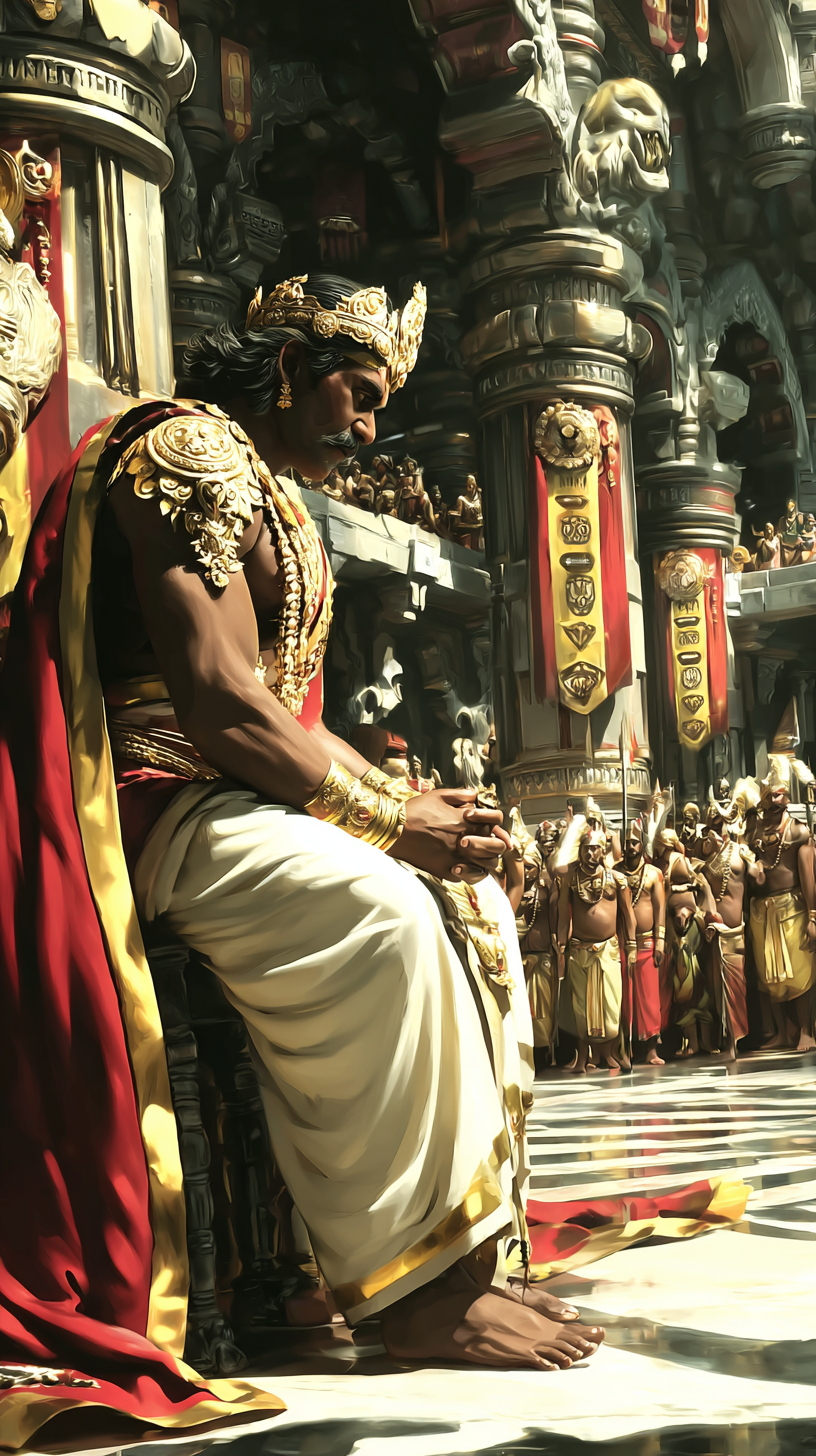
The Virudhagiriswarar Temple's rich history is deeply intertwined with the powerful Chola dynasty, who significantly contributed to its structure and patronage, solidifying its status as an ancient and continuously worshipped site. Its construction was initiated in the 10th century CE during the reign of the Chola queen Sembiyan Mahadevi, marking a pivotal period in its development. Numerous historical inscriptions from the Chola period document the temple's evolution, offering insights into its past and referencing significant features like the Kandarathithan gopuram, affirming its enduring legacy.
Sembiyan Mahadevi's Patronage
The temple's origins trace back to the 10th century CE, with its construction initiated by the Chola queen Sembiyan Mahadevi, a prominent patron of temple building during her era.
Inscriptional Evidence
Historical inscriptions from the Chola period found within the temple provide valuable documentation of its history, including references to the Kandarathithan gopuram, showcasing its architectural evolution.
Vijayanagara Period Renovations
During the Vijayanagara period, the temple underwent further renovations and was renamed, indicating its continued importance and adaptation through different historical epochs.
Scholarly Studies and Epigraphic Insights
The Virudhagiriswarar temple has been a subject of considerable scholarly interest, drawing attention from historians, archaeologists, and art critics alike. Its extensive architectural evolution, spanning from early Chola periods through Pandya and Vijayanagara influences, offers a rich canvas for academic study. Researchers meticulously analyze the temple's structural components, from its foundational plinth to its intricate vimana and gopurams, identifying distinct stylistic elements that mark different eras of construction and renovation. Iconographic studies delve into the symbolism and artistic representation of its numerous deities, shedding light on evolving theological concepts and regional artistic traditions. Furthermore, the temple's role as a continuous center of worship provides valuable data for understanding the dynamics of Hindu devotional practices over centuries, making it a focal point for multidisciplinary research.
A significant portion of scholarly understanding regarding Virudhagiriswarar temple is derived from its rich collection of epigraphic records. Numerous inscriptions, primarily in Tamil and Grantha scripts, adorn the temple walls, pillars, and mandapams, serving as invaluable primary sources. These ancient engravings provide precise dates for various constructions, renovations, and expansions, allowing historians to reconstruct the temple's chronological development with remarkable accuracy. Beyond architectural history, the inscriptions detail land grants, endowments by kings, queens, and local chieftains, and the administration of temple properties, offering a window into the socio-economic fabric of medieval Tamil Nadu. They also document ritual practices, festivals, and the roles of various temple functionaries, providing a comprehensive picture of the temple's institutional life and its profound impact on the surrounding community.
🗺 How to Reach
Hover a card to animate the journey on the map
Route to Temple
Common Questions
Where is Virudhagiriswarar Temple: Ancient Vishnu Shrine in Nathakuzhi located?
Virudhagiriswarar Temple: Ancient Vishnu Shrine in Nathakuzhi is documented at Tamil Nadu.
Which deity is associated with Virudhagiriswarar Temple: Ancient Vishnu Shrine in Nathakuzhi?
Virudhagiriswarar Temple: Ancient Vishnu Shrine in Nathakuzhi is associated with Shiva.
Related Temples


A Living Covenant