A complete pilgrim record drawn from the existing published article data.
Unveiling the Ancient Veerateeswarar Temple of Thirupariyalur
The Veerateeswarar Temple, nestled in Thirupariyalur, Tamil Nadu, stands as a significant pilgrimage site dedicated to Lord Shiva. Revered as one of the eight Ashta Veerattana Sthalams, it holds profound spiritual importance in Shaivism. These sacred sites commemorate Shiva's heroic acts, and Thirupariyalur specifically marks the place where Shiva, in his fierce form, destroyed the yagna of Daksha Prajapati. This ancient temple attracts devotees seeking blessings and spiritual solace.
A Sacred Ashta Veerattana Sthalam
Thirupariyalur is one of the eight Veerattana Sthalams, places where Lord Shiva performed a heroic deed, signifying his supreme power and cosmic role as the destroyer of evil.
Lord Shiva as Veerateswarar
Here, Lord Shiva is worshipped as Veerateswarar, a name signifying his fierce and victorious form, particularly associated with the legend of Daksha's yagna.
Architectural Marvels: Decoding the Dravidian Style of Veerateeswarar Temple
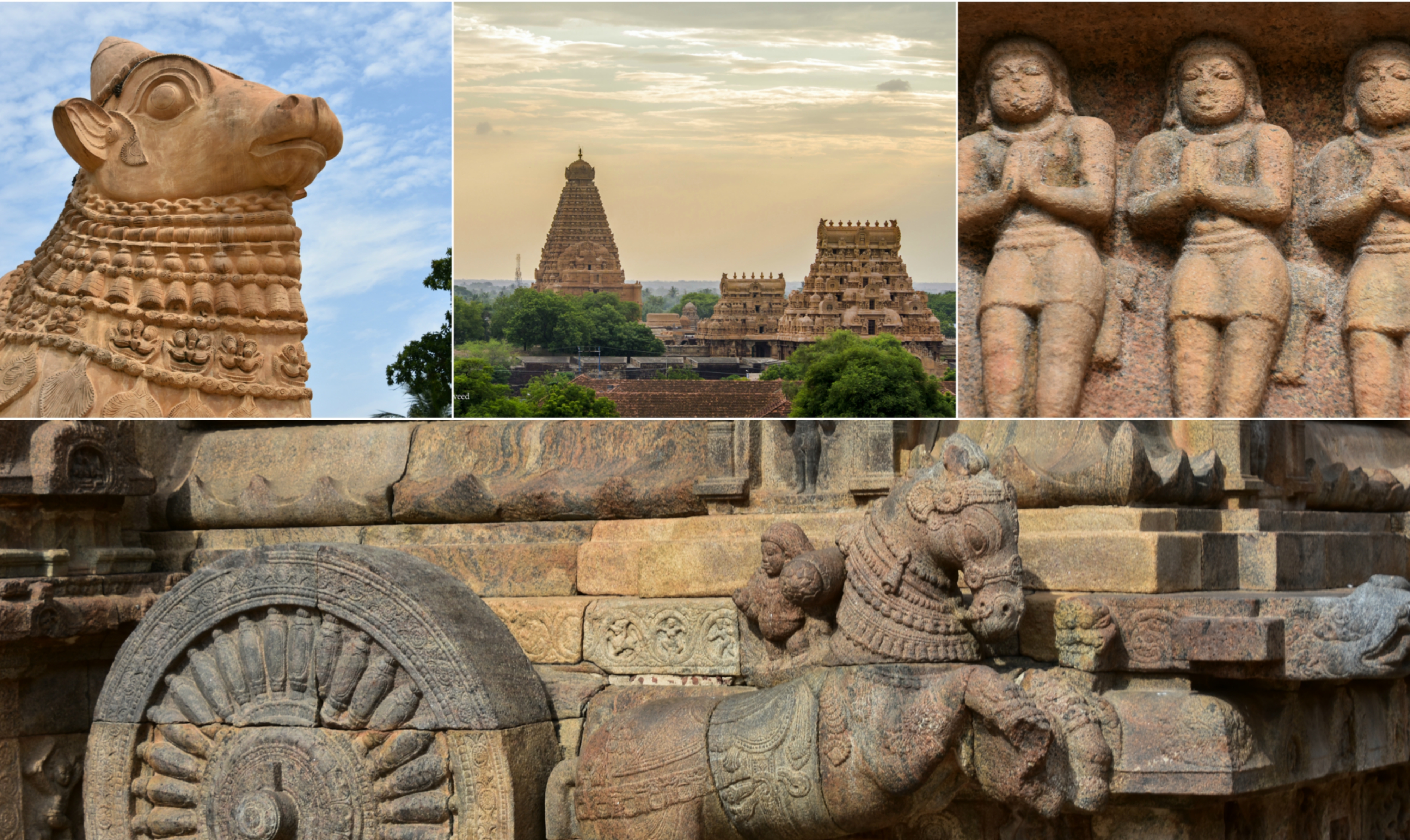
The Veerateeswarar Temple exemplifies the classic Dravidian architectural style, a hallmark of South Indian temple construction. Characterized by its towering gopurams (gateway towers), intricately carved vimanas (sanctum towers), and expansive mandapams (halls), the temple showcases the artistic prowess of its builders. Though the specific material and builder are unknown, the structure features typical granite construction, adorned with sculptures depicting mythological episodes and divine figures, reflecting a rich aesthetic and spiritual design. These elements combine to create a sacred space.
Signature Gopurams and Vimanas
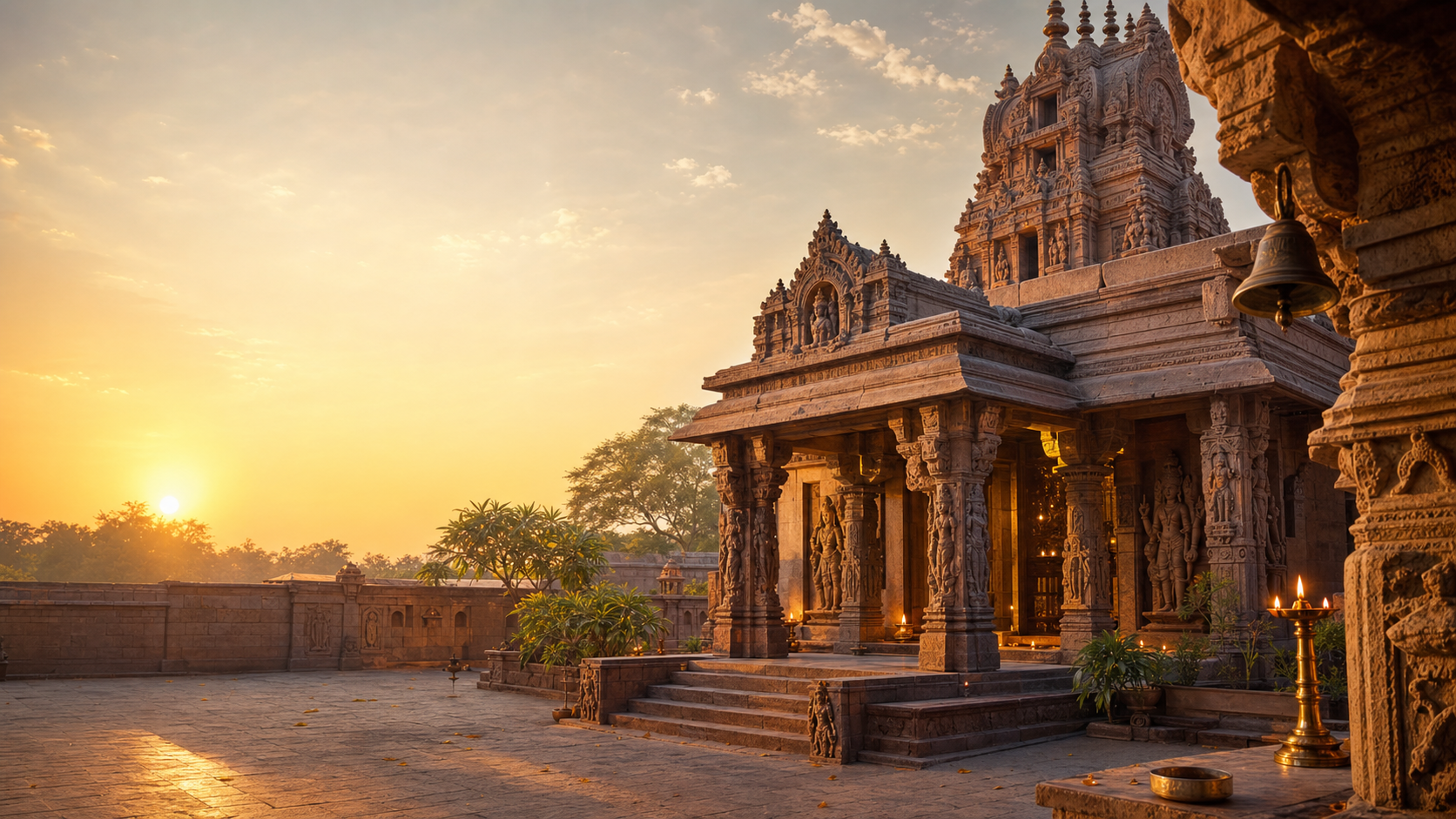
The temple's entrance is marked by a multi-tiered gopuram, leading to the central shrine crowned by a vimana, both adorned with detailed stucco figures and carvings.
Intricate Sculptural Narratives
Throughout the temple complex, numerous sculptures and reliefs narrate Puranic tales and depict various deities, serving both decorative and didactic purposes, typical of Dravidian artistry.
Lord Veerateswarar: The Destroyer of Daksha's Yagna and Divine Narratives
The presiding deity, Lord Shiva as Veerateswarar, is intrinsically linked to the powerful myth of Daksha's yagna. According to legend, Daksha, father of Sati (Shiva's first consort), conducted a grand sacrifice but intentionally excluded Shiva. Enraged by this insult and Sati's self-immolation, Shiva created Veerabhadra, a ferocious form, who stormed Daksha's yagna, destroying it and beheading Daksha. Thirupariyalur is revered as the site where Veerabhadra performed this heroic act of destruction, making it one of the eight Veerattana Sthalams where Shiva demonstrated his supreme power and cosmic justice.
The Legend of Daksha's Yagna
The temple's primary narrative revolves around Shiva's wrath and the destruction of Daksha's sacrificial ceremony, a pivotal event in Hindu mythology.
Shiva's Fierce Form: Veerabhadra
Veerateswarar embodies Veerabhadra, the fearsome manifestation of Shiva, created to avenge Sati's death and uphold divine dharma.
One of Eight Veerattana Sthalams
Thirupariyalur's status as a Veerattana Sthalam signifies its sacred importance as a place where Shiva triumphed over evil and injustice through a powerful, heroic deed.
Planning Your Pilgrimage: A Guide to Veerateeswarar Temple
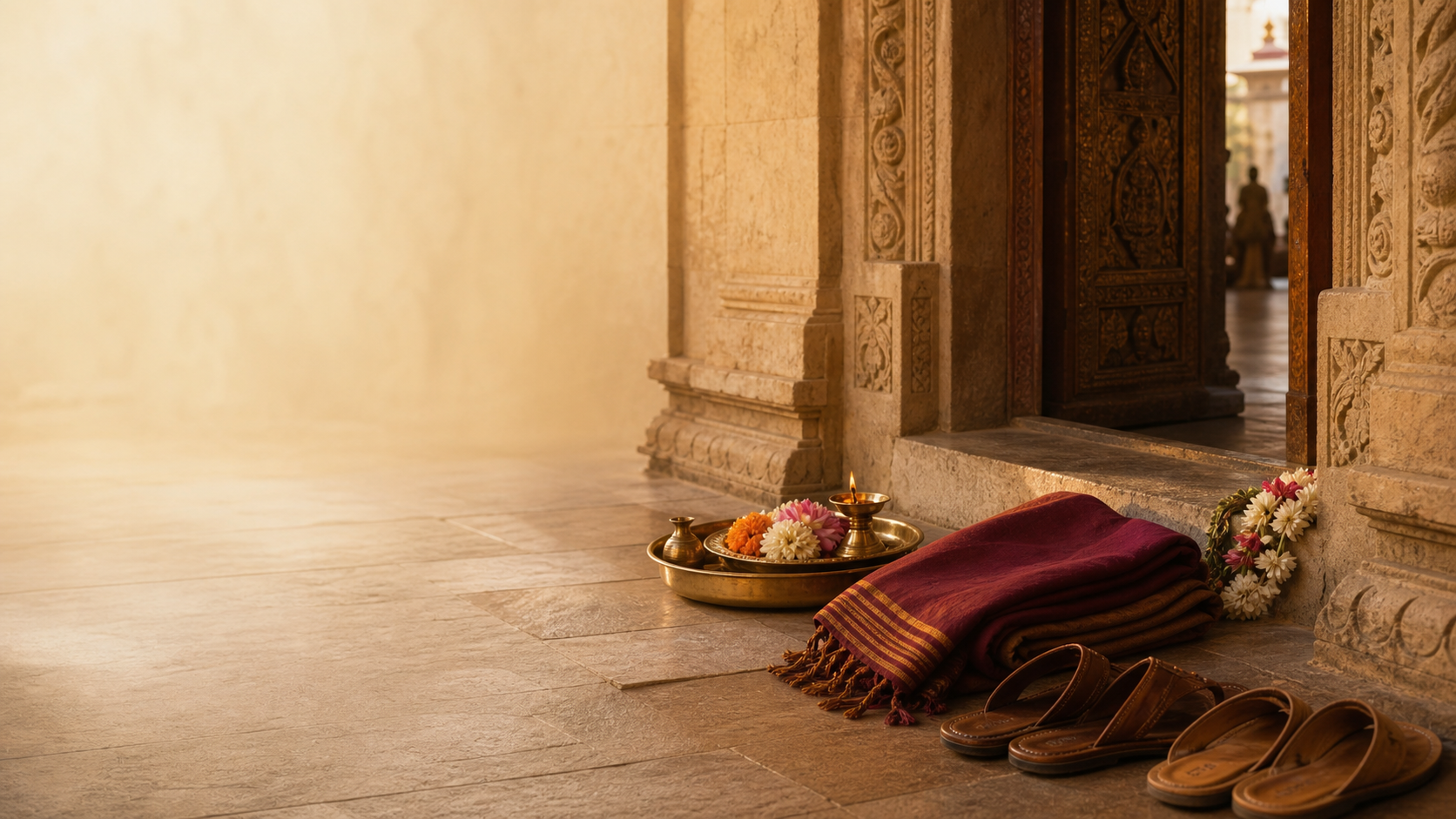
Visiting the Veerateeswarar Temple offers a profound spiritual experience. The temple welcomes devotees during specific timings: 6:00 AM to 12:30 PM and 4:00 PM to 9:00 PM, with free entry for all. The period from October to March is considered the best time to visit due to pleasant weather. Pilgrims are advised to wear traditional attire and remove footwear before entering the sacred premises. A typical visit duration is 1 to 2 hours, allowing ample time for darshan and exploration.
Darshan Timings and Entry
The temple is open from 6:00 AM to 12:30 PM and again from 4:00 PM to 9:00 PM daily, offering free entry to all visitors.
Travel and Accessibility
Thirupariyalur is approximately 10-15 km from Mayiladuthurai, accessible by local bus, train (Mayiladuthurai Junction, MV), or car via NH32. Tiruchirappalli International Airport (TRZ) is about 140 km away.
Visitor Guidelines
Visitors should observe a dress code of traditional attire and remove footwear. The best time for a comfortable visit is between October and March.
| Deity | Shiva in the form of Veerateswarar |
|---|
The Wrath of Veerateswarar: Daksha's Downfall
Daksha Prajapati, filled with arrogance, performed a grand yagna, intentionally excluding Shiva. His daughter Sati, Shiva's consort, went to the yagna uninvited and, humiliated by her father's disrespect towards Shiva, immolated herself. Enraged by Sati's demise, Shiva manifested as the fierce Veerabhadra (Veerateswarar), who stormed Daksha's sacrifice, destroying the yagna and beheading Daksha. This act demonstrated Shiva's supreme power and the consequences of pride and disrespect towards the divine.
In the form of Veerateswarar, Shiva embodies divine justice, reminding us that arrogance ultimately meets its downfall.
The fierce aspect of Shiva at Thirupariyalur stands as a testament to the supreme power that upholds dharma.
Related temples: Aakkoor Thanthondreeswarar Temple | Abhaya Varadeeswarar Temple, Adirampattinam
A Journey Through Time: The Rich History of Thirupariyalur
The Veerateeswarar Temple in Thirupariyalur boasts an ancient heritage, though specific details regarding its exact construction date, founding dynasty, and original builder remain largely unknown. Despite the absence of precise historical records, the temple's architectural style and sculptural elements suggest a long and continuous period of worship and renovation. It has served as a pivotal center for Shaivite devotion for centuries, evolving through various periods of local rule and patronage, contributing to its enduring legacy.
Ancient Origins and Enduring Legacy
While the precise age and initial patrons are not definitively documented, the temple's deep roots in Tamil Nadu's spiritual landscape are undeniable, pointing to an ancient foundation.
Evolution Through Eras
Over time, the temple likely witnessed various phases of expansion and modification, reflecting the artistic and religious trends of different historical periods, even if specific dynasties are not recorded.
Restoration and Conservation Efforts
The Veerateeswarar Temple, like many ancient Hindu shrines across Tamil Nadu, has undergone various phases of restoration and conservation throughout its long history. The very nature of its construction, primarily using granite and traditional lime mortar, necessitates periodic maintenance to combat the ravages of time, weather, and human activity. Early efforts were often localized, driven by local chieftains or devout communities, focusing on immediate repairs to damaged structures or repainting faded murals. However, these interventions, while well-intentioned, sometimes lacked a systematic approach, occasionally leading to alterations that deviated from the original architectural or artistic intent. The challenges include structural stability, water ingress, erosion of intricate carvings, and the preservation of ancient inscriptions that chronicle the temple's past.
In more recent decades, a more structured and scientific approach to the temple's preservation has been adopted, often involving the Archaeological Survey of India (ASI) or the Tamil Nadu Hindu Religious and Charitable Endowments (HR&CE) Department. These modern conservation projects aim to meticulously document the temple's existing condition, analyze its materials, and implement restorative techniques that respect its historical integrity. Efforts include strengthening foundations, consolidating crumbling stonework, carefully cleaning sculptures without damaging their patina, and ensuring proper drainage systems to prevent water damage. Community involvement and fundraising initiatives also play a crucial role, highlighting the collective responsibility in safeguarding this invaluable cultural heritage for future generations, allowing them to experience the temple's spiritual and architectural grandeur.
🗺 How to Reach
Hover a card to animate the journey on the map
Verified routes to Veerateeswarar Temple, Thirupariyalur
Common Questions
Where is Veerateeswarar Temple: Shiva's Fierce Form in Thirupariyalur located?
Veerateeswarar Temple: Shiva's Fierce Form in Thirupariyalur is documented at Thanjavur, Tamil Nadu.
Which deity is associated with Veerateeswarar Temple: Shiva's Fierce Form in Thirupariyalur?
Veerateeswarar Temple: Shiva's Fierce Form in Thirupariyalur is associated with Shiva.