



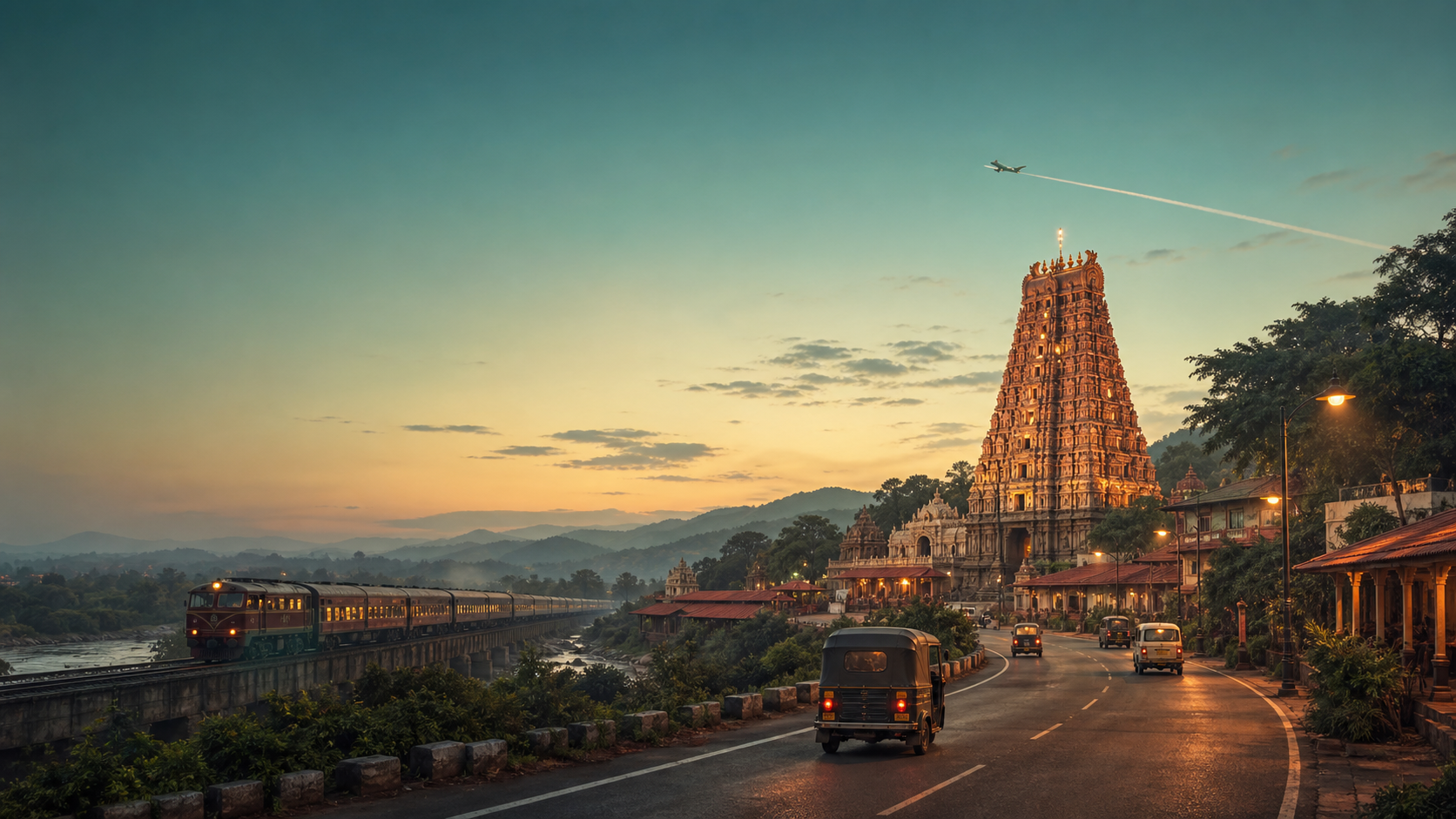
A complete pilgrim record drawn from the existing published article data.
Historical Foundation
Origins under the Chalukyas
Vijayanagara Patronage and Revival
Inscriptional Evidence and Royal Gifts
"The Veeranarayana Temple stands as a living document, its stones telling tales of Chalukyan artistry and Vijayanagara devotion, a testament to Karnataka's rich heritage."
Architecture & Craftsmanship
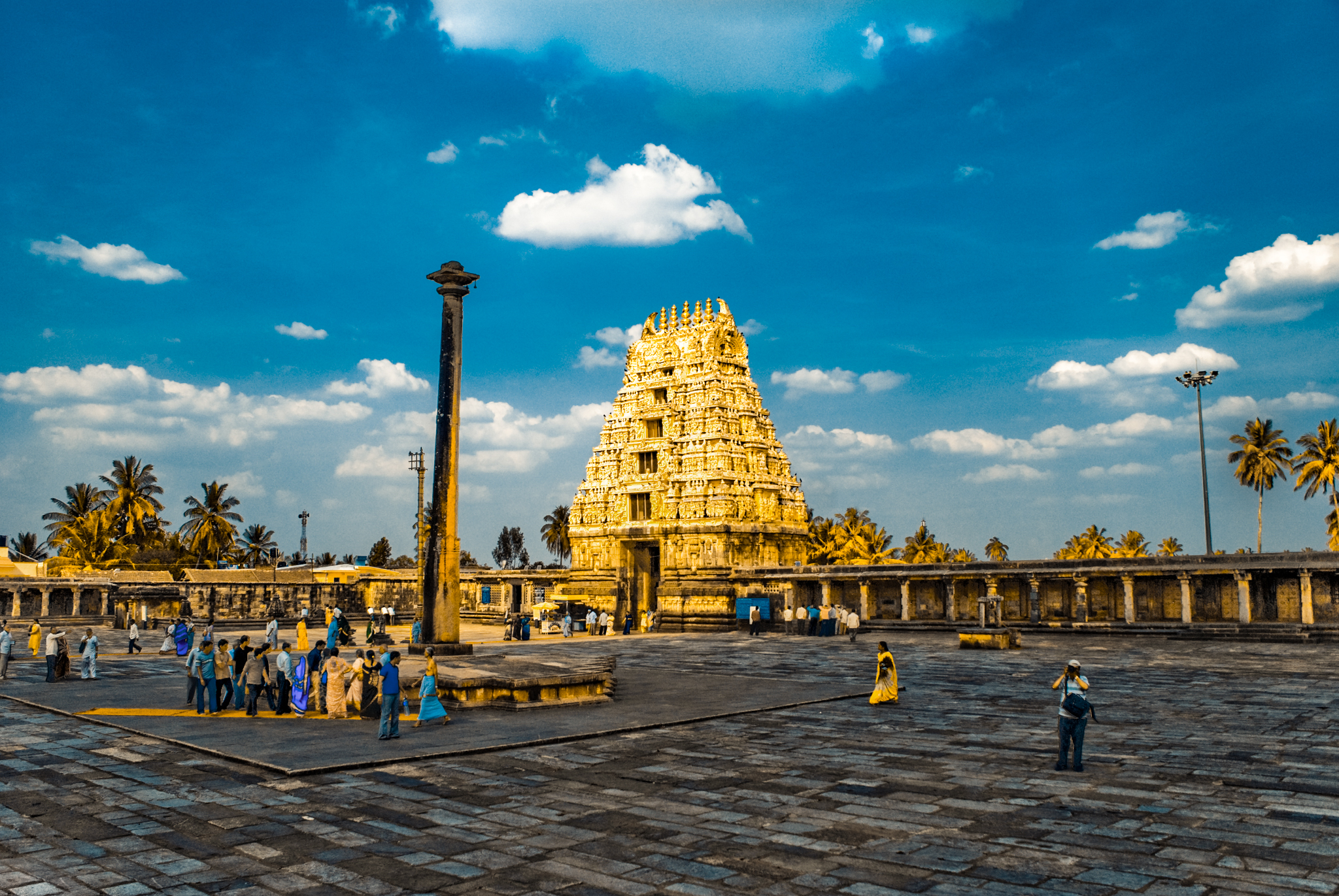
Eclectic Architectural Blend
Definition: Vesara Style
Vesara is an indigenous Indian architectural style that originated in the Deccan region. It is a synthesis of the northern Nagara and southern Dravida temple architectures, characterized by a curvilinear shikhara (tower) and a plan that is often star-shaped or polygonal, offering a unique aesthetic balance.

Structural Marvels and Layout
Pro-Tip for Architects & Historians: Pay close attention to the transitions between the gopuram (Vijayanagara), garuda stambha and ranga mantapa (Hoysala), and the inner mantapa (Chalukya) to observe the distinct architectural phases of the temple.
Sculptural Narratives

The Presiding Deity
The Valiant Narayana
Veeranarayana Profile
- Main Deity: Narayana (Vishnu)
- Form: Veeranarayana (Brave Narayana)
- Posture: Standing, Four-armed
- Attributes: Shanka (conch), Chakra (disc), Gadha (mace), Padma (lotus)
- Unique Feature: Depicted in Veera Kaccha (warrior-style dhoti)
- Flanked By: Lakshmi (consort) and Garuda (mount)
- Tradition: Vaishnava
Unique Iconography of Veeranarayana
"The Veeranarayana idol is a rare fusion of divine serenity and martial readiness, inspiring both devotion and courage in its devotees."
Divine Companions

Festivals & Living Traditions
Annual Celebrations and Rathotsava

Kumara Vyasa Jayanti: A Literary Tribute
Daily Worship and Cultural Practices
Key Takeaway
The Veeranarayana Temple is unique for its profound link to Kumara Vyasa's Kannada Mahabharata, making it a rare confluence of spiritual worship and literary inspiration, celebrated through unique festivals like Kumara Vyasa Jayanti.
Plan Your Visit
A visit to the Veeranarayana Temple offers a rich blend of history, architecture, and spiritual solace. To make the most of your experience, planning your trip thoughtfully is highly recommended.
Getting There
Best Time and Tips for Visitors
Traveler's Pro-Tip: Plan your visit to coincide with the Kumara Vyasa Jayanti in Kartika month. You might catch literary events and recitations, offering a deeper insight into the temple's cultural significance.
Exploring Nearby Heritage
Gadag and its surroundings are rich in Chalukyan heritage. Consider extending your trip to explore other notable temples in the vicinity, forming a fascinating temple circuit:
- Someshwara Temple: Another impressive Chalukyan temple showcasing intricate carvings.
- Rameshwara Temple: Known for its ancient structure and historical significance.
- Trikuteshwara Temple Complex: A sprawling complex in Gadag itself, featuring multiple shrines and exquisite Chalukyan architecture, including the famous Saraswati Temple.

Related temples: Akkana Basadi | Amareshwar Temple
Sacred Stories & Mythology
Kumara Vyasa and the Kannada Mahabharata
The Divine Inspiration of Kumara Vyasa
Legend holds that Kumara Vyasa, a devoted worshipper of Narayana, sought divine guidance for his epic poetic endeavor. It is believed that at a specific pillar within the temple's ranga mantapa, he received profound divine inspiration and revelation from Lord Veeranarayana himself. This miraculous intervention enabled him to achieve poetic perfection and complete his extensive work. So deep was his devotion and the perceived divine assistance that Kumara Vyasa concluded each of his cantos (sandhi) with an adulatory reference to the deity of this temple, making the Veeranarayana of Gadag an intrinsic part of the epic's very structure and narrative.
Divine Inspiration at Gadag
Over 1450: The approximate number of poetic cantos (sandhis) in Kumara Vyasa's Kannada Mahabharata, each concluding with a homage to Veeranarayana of Gadag.
The Significance of 'Veeranarayana'

Saints, Poets & Devotees
Kumara Vyasa: The Bard of Gadag
Definition: Sthala Purana
A Sthala Purana is a genre of Hindu religious texts that extols the legends and myths associated with a particular place, usually a temple or a holy site. These narratives often describe the origin of the deity, the temple's construction, and the miracles attributed to the sacred location.
Madhva Tradition and Temple Management
Devotional Lineage
Records, Marvels & Heritage
Protected Heritage Site
A Unique Literary-Spiritual Nexus

Ongoing Preservation Efforts
🗺 How to Reach
Hover a card to animate the journey on the map
Route to Gadag-Betageri
Common Questions
Where is Veeranarayana Temple, Gadag: A Legacy of Valor & Verse located?
Veeranarayana Temple, Gadag: A Legacy of Valor & Verse is documented at Gadag-Betageri, Karnataka.
Which deity is associated with Veeranarayana Temple, Gadag: A Legacy of Valor & Verse?
Veeranarayana Temple, Gadag: A Legacy of Valor & Verse is associated with Gadag was built during Chalukya times.
Related Temples


A Living Covenant