



A complete pilgrim record drawn from the existing published article data.
Tracing the Ancient Footprints: History of Vasishteswarar Temple
The Vasishteswarar Temple boasts a history stretching back to the 7th century CE or earlier, evidenced by its mention in Tevaram hymns, making it a Paadal Petra Sthalam. While an earlier shrine existed, the major construction and expansion occurred in the 12th century CE under the powerful Chola dynasty. Documented donations and enhancements by figures like Uttama Chola and Sembiyan Mahadevi between 973–985 CE further underscore its historical significance and continuous patronage over centuries.
Early Origins
The temple's roots predate the Chola period, with an earlier shrine existing by the 7th century CE, as attested by the Tevaram compositions of saints Tirugnanasambandar and Thirunavukkarasar.
Chola Patronage
The 12th century CE marked significant development, with Chola kings undertaking major construction. Earlier, Uttama Chola and Sembiyan Mahadevi contributed to its expansion and made donations during 973–985 CE.
Vasishteswarar Temple, Thittai: A Stone Marvel of Devotion
The Vasishteswarar Temple in Thittai, Tamil Nadu, stands as a significant spiritual landmark, revered as a Paadal Petra Sthalam and a Guru Kshetram. Constructed predominantly in the 12th century CE in the Dravidian style, this temple is a testament to ancient devotion and architectural prowess. Its entirely stone-built structure showcases the enduring craftsmanship of its era, offering pilgrims and visitors a profound connection to its sacred heritage.
Spiritual Significance
The temple is one of the 275 Paadal Petra Sthalams, glorified in the Tevaram hymns by the Nayanmars. It is also known as a Guru Kshetram, signifying its importance for the worship of Jupiter (Guru).
Architectural Style
Built primarily from granite and stone, the temple exemplifies the classic Dravidian architectural style, characterized by its intricate carvings and robust construction.
Divine Narratives: Lord Shiva and the Legends of Thittai
At the heart of the Vasishteswarar Temple resides Lord Shiva, known here as Vasishteswarar. Mythology recounts that during a cosmic deluge, only a sacred mound, 'Thittai', remained, upon which a Shiva Lingam stood. Lord Brahma and Lord Vishnu worshipped this Lingam, leading to Shiva's manifestation and the restoration of creation. Later, Sage Vasishta performed penance here, earning the deity its name. The temple is also significant as a Guru Kshetram, with special reverence for Brihaspati.
The Cosmic Deluge
Legend states that during the Pralaya, a cosmic deluge, a Shiva Lingam on a resilient mound, 'Thittai', was the only surviving entity, worshipped by Brahma and Vishnu.
Sage Vasishta's Penance
The temple's name, Vasishteswarar, derives from Sage Vasishta, who performed intense penance at this site, receiving blessings from Lord Shiva.
Guru's Significance
As a Guru Kshetram, the temple holds special importance for the worship of Brihaspati (Jupiter), particularly during the Guru Peyarchi transit event.
Pilgrim's Path: A Guide to Visiting Vasishteswarar Temple
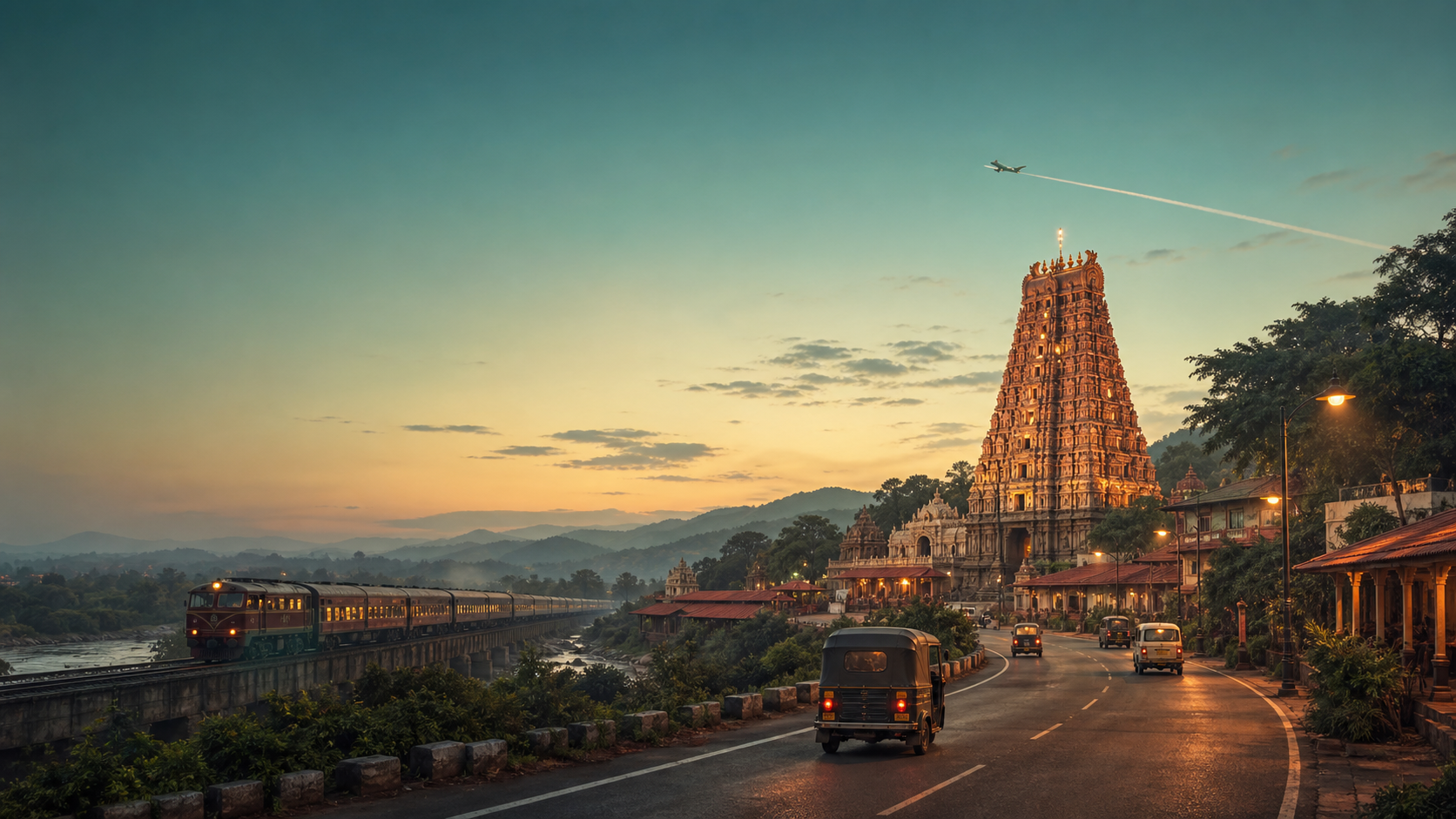
Planning a visit to the Vasishteswarar Temple offers a spiritually enriching experience. The temple is conveniently accessible, located approximately 10-11 km from Thanjavur Junction Railway Station and about 55 km from Tiruchirappalli International Airport. The best time to visit is between October and March, offering pleasant weather. Visitors are advised to adhere to a modest dress code, with traditional attire preferred, and to remove footwear before entering the inner prakaram.
Getting There
The temple is located near Thanjavur. Thanjavur Junction Railway Station is approximately 10-11 km away, and Tiruchirappalli International Airport (TRZ) is about 55 km distant.
Best Time and Attire
The ideal period for a visit is from October to March. A modest dress code is expected, with traditional attire being preferred for entry into the inner sanctums.
Visit Duration
A typical visit to the temple, allowing for worship and exploration, usually takes between 1.5 to 2 hours.
| Deity | Vasishteswarar |
|---|---|
| Form | Swayambhu Lingam |
| Consort | Ulaganayaki (Sugandha Kunthalambikai) |
| Sampradaya | Shaiva |
| Significance | This self-manifested Shiva Lingam is believed to have survived the cosmic deluge and was worshipped by Brahma, Vishnu, and Sage Vasishta. A unique feature is a perennial water droplet falling on the lingam every 24 minutes, attributed to a Chandrakantha/Suryakantha stone. |
The Cosmic Deluge and Divine Rebirth
When the universe succumbed to the mighty Pralaya, a cosmic deluge that dissolved all creation, only a single, sacred mound remained, untouched by the swirling waters. Upon this resilient 'Thittai' (mound), a radiant Shiva Lingam stood as a beacon of hope amidst the desolation. Lord Brahma, the creator, and Lord Vishnu, the preserver, found refuge here and fervently worshipped the potent Lingam. Moved by their devotion, Lord Shiva manifested, restoring order to the cosmos and delegating their vital duties of creation and preservation, thus setting the cycle of existence in motion once more.
Upon this resilient 'Thittai', a radiant Shiva Lingam stood as a beacon of hope amidst the desolation.
This self-manifested Shiva Lingam is believed to have survived the cosmic deluge and was worshipped by Brahma, Vishnu, and Sage Vasishta.
Related temples: Aakkoor Thanthondreeswarar Temple | Abhaya Varadeeswarar Temple, Adirampattinam
The Stone Symphony: Architectural Marvels of Thittai
The Vasishteswarar Temple exemplifies the robust Dravidian architectural style, constructed entirely from granite and stone. Dating primarily to the 12th century CE, its design showcases the intricate craftsmanship characteristic of the Chola period. A unique architectural feature is the presence of a four-armed deity of Brihaspati (Guru), distinct from other temples, where he is typically depicted with two arms. This detail highlights the temple's specific reverence as a Guru Kshetram.
Stone Construction
The temple is renowned for its complete construction using granite and other stones, reflecting the durability and artistic skill of 12th-century Dravidian architecture.
Unique Brihaspati Sculpture
A notable architectural and iconographic feature is the idol of Brihaspati, depicted with four arms, which is a rare representation compared to the more common two-armed depictions found elsewhere.
Scholarly Studies and Research
The Vasishteswarar Temple in Thittai has been a subject of considerable scholarly interest, particularly for its rich epigraphic evidence and distinctive architectural features that illuminate the Chola period. Historians and archaeologists have meticulously studied the numerous inscriptions found on its walls, which provide invaluable insights into the temple's construction phases, royal patronage, land grants, and the social and economic life of the region during the 11th to 13th centuries. These epigraphs, often detailing donations by various Chola kings and local chieftains, help to establish a precise chronology for the temple's expansion and renovation. Furthermore, architectural historians have analyzed the *vimana* and *mandapas*, noting the transition in sculptural styles and construction techniques, offering a window into the evolving artistic traditions of the Chola empire. The unique "floating lingam" phenomenon has also attracted scientific and religious scholars, prompting investigations into its geological and hydrological underpinnings.
Ongoing research at Vasishteswarar Temple extends beyond historical dating to encompass broader themes of religious practice, water management systems, and the integration of astronomical principles into temple design. Scholars have explored the temple's role as a significant center for Vedic learning and spiritual discourse, evidenced by references in ancient texts and the presence of specific iconography. Modern archaeological surveys have sought to uncover earlier structures or foundations beneath the current complex, potentially revealing layers of pre-Chola worship. The temple's unique architectural anomaly, where a drop of water is said to fall on the Shiva Lingam every 24 minutes, has also spurred interdisciplinary studies, attempting to explain this phenomenon through scientific principles of condensation and atmospheric pressure, while also acknowledging its profound spiritual significance for devotees. These scholarly endeavors collectively enrich our understanding of this ancient site, preserving its legacy for future generations.
🗺 How to Reach
Hover a card to animate the journey on the map
Route to Temple
Common Questions
Where is Vasishteswarar Temple: Chola Era Shiva Shrine located?
Vasishteswarar Temple: Chola Era Shiva Shrine is documented at Thittai, Tamil Nadu.
Which deity is associated with Vasishteswarar Temple: Chola Era Shiva Shrine?
Vasishteswarar Temple: Chola Era Shiva Shrine is associated with Shiva.
Related Temples


A Living Covenant