



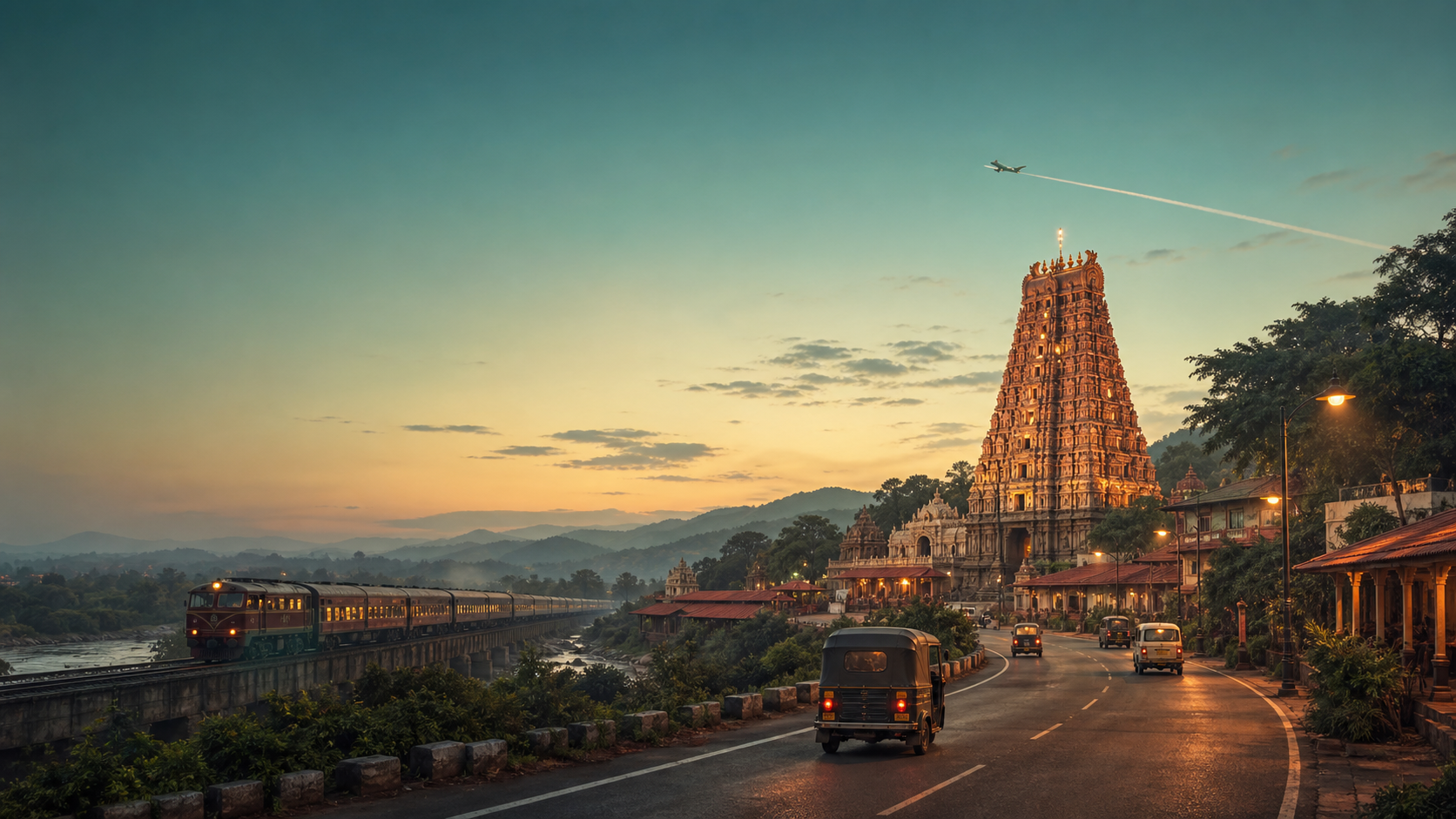
A complete pilgrim record drawn from the existing published article data.
Tracing the Ancient Legacy: Pallava Origins and Evolution
The Ulagalantha Perumal Temple boasts deep historical roots, with its core construction initiated by the Pallava dynasty in the 9th century CE. Epigraphic evidence, including an inscription from 846 CE during the reign of Pallava king Nandivarman III, confirms its ancient status. Subsequent centuries saw significant expansions and renovations, particularly by the Chola dynasty from the 11th to 13th centuries. Chola king Kulothunga Chola I granted land in 1110 CE, and further additions were made by Sambuvarayar chieftains and Nayaks in the 16th century, contributing to its Dravidian architectural style and granite material.
Pallava Foundations
The temple's initial structure was built by Pallava kings in the 9th century CE. The earliest known inscription dates to 846 CE, under Pallava king Nandivarman III.
Chola and Later Patronage
Significant expansions occurred during the Chola period (11th-13th centuries), with land grants from kings like Kulothunga Chola I. Further additions were made by Sambuvarayar chieftains and Nayaks in the 16th century.
Epigraphic Confirmations
Inscriptions from various reigns, including Rajadhiraja Chola II (1166–1178 CE) and Rajaraja Chola III (1216–1256 CE), provide historical documentation of the temple's continuous development.
Ulagalantha Perumal Temple: A Divine Marvel in Kanchipuram
The Ulagalantha Perumal Temple in Kanchipuram, Tamil Nadu, stands as a unique and ancient Vaishnavite shrine dedicated to Lord Vishnu. Recognized as one of the 108 Divya Desams, this temple holds immense spiritual significance. Its unparalleled feature is housing four distinct Divya Desams within a single complex, making it a rare architectural and religious marvel. Dating back to the 9th century CE, it represents a cornerstone of the Vaishnava tradition in the historic city of Kanchipuram.
Location and Significance
Situated in the ancient city of Kanchipuram, the temple is a prominent pilgrimage site. It is revered as one of the 108 Divya Desams, the holy abodes of Vishnu praised by the Alvars.
The Unique Quadruple Divya Desam
Uniquely, the Ulagalantha Perumal Temple complex encompasses four separate Divya Desams—Tirukkaravanam, Tirukarakam, Tiruneerakam, and Tiruürakam—all within its sacred precincts.
Ancient Vaishnava Heritage
The temple's origins trace back to the 9th century CE, established by the Pallava dynasty, solidifying its place in the long-standing Vaishnava tradition of the region.
Plan Your Pilgrimage: A Guide to Ulagalantha Perumal Temple
For prospective visitors, the Ulagalantha Perumal Temple offers a spiritually enriching experience in Kanchipuram. The best time to visit is from October to March, coinciding with pleasant weather and major festivals like Brahmotsavam (January–February) and Vamana Jayanthi (August–September). Modest dress is expected, and footwear must be removed before entering the sanctum. Entry to the temple is free. Kanchipuram is well-connected by road, rail, and air, with Chennai International Airport approximately 72 km away and Kanchipuram Railway Station about 35-40 km distant. Local buses and taxis are readily available for transport within the city, which is renowned for its numerous ancient temples.
Getting There
The temple is accessible via Vandavasi Bus Stand and Kanchipuram Railway Station. Chennai International Airport (72 km) serves air travelers. Major highways connect Kanchipuram, making car travel convenient.
Visitor Guidelines
Visitors are requested to observe a modest dress code and remove footwear before entering the temple's sacred areas. Entry to the temple is free of charge.
Optimal Visiting Period
The months between October and March are ideal for a visit, offering comfortable weather. Attending during Brahmotsavam (January–February) or Vamana Jayanthi (August–September) enhances the spiritual experience.
| Deity | Ulagalantha Perumal |
|---|---|
| Form | Ulagalantha Perumal is depicted as a colossal standing Vamana (Trivikrama) icon. His left leg is horizontal, his right foot rests on Mahabali’s head, two left fingers are extended, and his right hand gestures for the third step. |
| Consort | Amuthavalli (Amirthavalli) |
| Sampradaya | Vaishnava |
| Significance | This form represents Vishnu's cosmic expansion to cover the three worlds, symbolizing his supreme power and dominion over the universe. The temple is unique for housing four distinct Divya Desams within one complex, showcasing both giant and diminutive manifestations of Vishnu. |
The Cosmic Strides of Ulagalantha Perumal
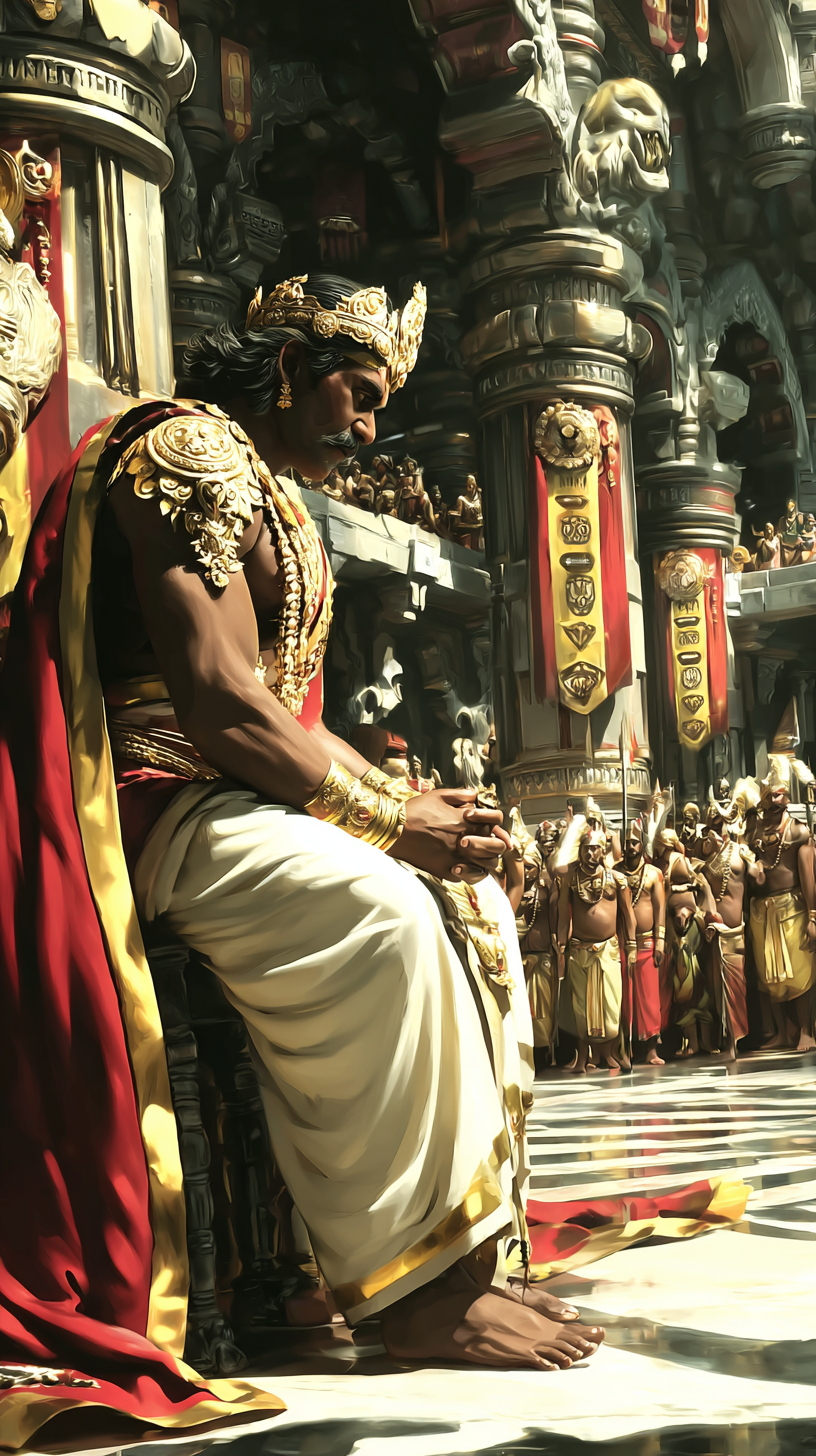
In the ancient city of Kanchipuram, a divine spectacle unfolded at this sacred site. The mighty asura king Mahabali, puffed with pride from his conquests, held sway over the three worlds. To humble him, Lord Vishnu manifested as the dwarf Brahmin Vamana. Approaching Mahabali's grand sacrifice, Vamana humbly requested just three paces of land. Amused, Mahabali granted the boon. To the astonishment of all, Vamana suddenly swelled to cosmic proportions, becoming Ulagalantha Perumal, the measurer of the worlds. With one giant stride, he covered the heavens, and with the second, the earth. With no space left for the third step, the repentant Mahabali, in an act of supreme devotion, offered his own head. Vishnu then placed his foot upon the king, banishing him to the netherworld, thus restoring cosmic order. Unable to fully comprehend such a vast cosmic form, Mahabali later implored Vishnu for a more accessible manifestation. Granting his wish, the Lord appeared as the serpent deity Adishesha in the Tiruürakam shrine, a form now reverently worshipped by childless couples seeking the blessing of progeny.
With one giant stride, Vishnu covered the heavens, and with the second, the earth, demonstrating his boundless power and dominion over all creation.
Witness the colossal form of Ulagalantha Perumal, a unique manifestation of Vishnu that encapsulates the entire universe within his cosmic steps.
Related temples: Aakkoor Thanthondreeswarar Temple | Abhaya Varadeeswarar Temple, Adirampattinam
Architectural Splendor: Housing Four Divya Desams
The Ulagalantha Perumal Temple exemplifies the distinctive Dravidian architectural style, characterized by its robust granite construction. Its most remarkable feature is the ingenious layout that integrates four separate Divya Desams within a single temple complex. These include Tirukkaravanam, Tirukarakam, Tiruneerakam, and Tiruürakam, each with its own sanctum. This structural ingenuity allows devotees to worship different manifestations of Vishnu, making the temple a unique pilgrimage destination where the architectural design directly supports its profound religious significance.
Dravidian Design Principles
Built predominantly with granite, the temple showcases classic Dravidian architectural elements, reflecting the artistic and engineering prowess of its builders.
The Quadruple Sanctum Layout
A hallmark of this temple is its unique design, housing four distinct Divya Desams—Tirukkaravanam, Tirukarakam, Tiruneerakam, and Tiruürakam—within its expansive premises.
Structural Ingenuity
This intricate layout demonstrates exceptional architectural planning, allowing for the veneration of multiple forms of Vishnu within a cohesive and sacred space.
Ulagalantha Perumal: The Cosmic Strider and Vamana Avatar
The presiding deity of the temple is Vishnu, manifest as Ulagalantha Perumal, depicting the awe-inspiring Trivikrama aspect of the Vamana avatar. The mythology recounts how Lord Vishnu, as the dwarf Brahmin Vamana, approached the arrogant asura king Mahabali. Vamana requested three paces of land, then miraculously grew to cosmic proportions, becoming Ulagalantha Perumal. With two gigantic strides, he covered the heavens and earth. For the third step, Mahabali humbly offered his own head, accepting his fate. Vishnu placed his foot upon him, banishing him to the netherworld and restoring cosmic order. Later, Mahabali's request for an accessible form led to Vishnu appearing as Adishesha in the Tiruürakam shrine, revered by those seeking progeny.
The Vamana Incarnation
Lord Vishnu's Vamana avatar, a dwarf Brahmin, was undertaken to humble the powerful asura king Mahabali, who had conquered the three worlds.
Trivikrama's Cosmic Strides
Upon Mahabali granting three paces of land, Vamana transformed into the colossal Ulagalantha Perumal, covering the heavens and earth with two immense strides.
Mahabali's Devotion and Adishesha
Mahabali offered his head for the third step, showcasing his ultimate devotion. Vishnu banished him, and later manifested as Adishesha in the Tiruürakam shrine for Mahabali and childless couples.
Restoration & Conservation
Given its ancient origins, the Ulagalantha Perumal Temple has undergone numerous phases of restoration and maintenance throughout its long history, albeit with varying degrees of success and documentation. Early efforts were often localized, driven by devout rulers or local communities who understood the importance of preserving this sacred site. However, the passage of centuries brought inevitable challenges, including the erosive effects of monsoon rains, tropical humidity, and the natural degradation of traditional building materials like granite and stucco. Structural issues, often exacerbated by seismic activity or neglect during periods of political instability, also posed significant threats. The complexity lay in preserving the original architectural integrity and sculptural details while ensuring the temple's continued structural stability and its role as an active place of worship, a delicate balance that required skilled artisans and a deep understanding of traditional construction methods.
In more recent times, conservation efforts at Ulagalantha Perumal Temple have become more systematic, often involving archaeological departments and heritage organizations. These modern initiatives employ advanced techniques for structural analysis, chemical cleaning of intricate carvings, and the careful replacement of deteriorated elements with historically accurate materials. The Archaeological Survey of India (ASI) or state archaeology departments frequently oversee such projects, aiming to not only stabilize the structure but also to document its various layers of history. Balancing the needs of conservation with the continuous flow of pilgrims presents a unique challenge, requiring careful planning to minimize disruption. Ongoing funding and the cultivation of specialized expertise in temple architecture conservation remain crucial for the long-term preservation of this invaluable heritage site, ensuring its grandeur endures for future generations.
🗺 How to Reach
Hover a card to animate the journey on the map
Route to Vandavasi
Common Questions
Where is Ulagalantha Perumal: Vishnu's Cosmic Stride in Kanchi located?
Ulagalantha Perumal: Vishnu's Cosmic Stride in Kanchi is documented at Vandavasi, Tamil Nadu.
Which deity is associated with Ulagalantha Perumal: Vishnu's Cosmic Stride in Kanchi?
Ulagalantha Perumal: Vishnu's Cosmic Stride in Kanchi is associated with Vishnu.
Related Temples


A Living Covenant