



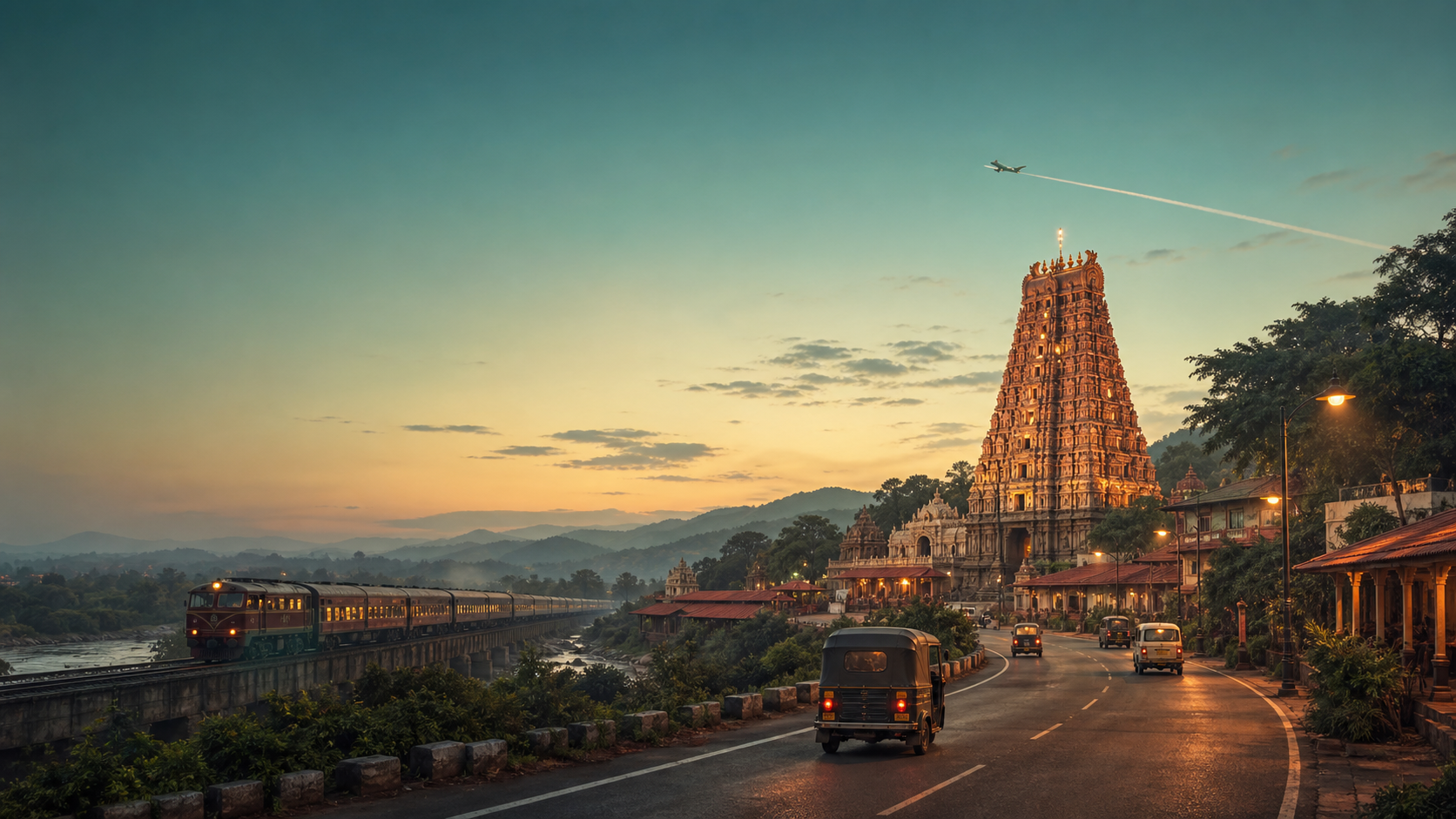
A complete pilgrim record drawn from the existing published article data.
Tracing the Legacy: History and the Dvaita Tradition
The Udupi Sri Krishna Matha's rich history begins in the 13th century CE with its founding by Sri Madhvacharya. He not only installed the revered Krishna vigraha but also established this institution as the central seat for the Dvaita philosophy, also known as Tatvavada. The Matha became instrumental in propagating Madhvacharya's teachings, influencing spiritual discourse across generations. A distinctive feature is the Paryaya system, where the administration of the temple rotates among the eight monastic institutions (Ashta Mathas) founded by Madhvacharya himself, ensuring continuous spiritual stewardship and maintenance over centuries.
Founding by Madhvacharya
The Matha was established in the 13th century CE by Madhvacharya, who installed the Krishna vigraha and laid the foundation for the Dvaita tradition.
Dvaita Philosophy
It serves as the paramount center for the Dvaita school of thought, propagating the philosophical tenets of Madhvacharya's Tatvavada.
The Paryaya System
This unique biennial ritual involves the transfer of temple management among the Ashta Mathas, ensuring ongoing administration and spiritual leadership.
Architectural Uniqueness and the Kanakana Kindi
The Udupi Sri Krishna Matha showcases distinct Kerala architecture, primarily constructed from granite and wood. Its most unique architectural feature is the west-facing (Pashchimabhimukha) deity of Lord Krishna, a rare orientation for a temple's main idol. This orientation is directly linked to the miraculous event involving the Haridasa saint Kanakadasa. Devotees traditionally receive darshana of the Lord through the renowned Kanakana Kindi, a small window in the western wall. This window symbolizes Krishna's boundless love for his devotees, transcending social barriers, and remains a central point of veneration.
Kerala Architectural Style
The temple complex exhibits traditional Kerala architectural elements, characterized by structures built with granite and intricate wooden carvings.
West-Facing Deity
Uniquely, the main Krishna idol faces west, a result of a divine miracle when the Lord turned to grant darshana to his devotee, Kanakadasa.
The Kanakana Kindi
This sacred window in the western wall allows devotees to glimpse Lord Krishna, commemorating the miraculous event of Kanakadasa's devotion.
The Enigmatic Deity: Lord Krishna and His Miraculous Arrival
The sacred Krishna vigraha at Udupi possesses a captivating legend surrounding its origin. It is widely believed that Sri Madhvacharya, the Matha's founder, discovered this divine idol embedded within a large ball of gopichandana (sacred clay) near the seashore in the 13th century CE. This miraculous find is imbued with profound spiritual significance, echoing ancient Puranic narratives of Krishna's manifestation. Madhvacharya reverently installed the idol, initially facing east, establishing the spiritual heart of the Matha. This unique arrival story underscores the temple's deep spiritual roots and the direct divine intervention believed to have brought Krishna to Udupi.
Discovery from Gopichandana
Madhvacharya found the Krishna idol within a ball of sacred gopichandana on the seashore, a miraculous event central to the temple's lore.
Divine Manifestation
The idol's discovery is considered a divine manifestation of Lord Krishna, linking the temple's origins to ancient spiritual traditions.
Installation by Madhvacharya
The revered idol was installed by Madhvacharya in the 13th century CE, initially facing east, setting the foundation for the Matha's worship.
Planning Your Pilgrimage: Essential Guide to Udupi Krishna Matha
For those planning a visit to Udupi Sri Krishna Matha, several practical details enhance the pilgrimage experience. The temple generally welcomes visitors during specific timings; it is advisable to contact the temple office for current schedules. Entry is free, and the best time to visit is typically from October to March, when the weather is pleasant. Devotees are requested to adhere to a modest traditional dress code and remove footwear before entering the temple premises. A typical visit duration is estimated at 2 to 3 hours, allowing ample time for darshana and experiencing the spiritual ambiance.
Visitor Information
Contact the temple office for current timings; entry is free, and the recommended visit duration is 2-3 hours.
Etiquette and Attire
Visitors should wear modest traditional attire and remove footwear before entering the temple, respecting local customs.
Reaching the Matha
The Matha is easily accessible by local bus within Udupi, 1 km from Udupi Railway Station (UDI), and 60 km from Mangaluru International Airport (IXE).
| Deity | Krishna |
|---|---|
| Form | Bala Krishna (child) form, uniquely holding a churning rod and rope instead of a flute or butter. |
| Consort | Unknown |
| Sampradaya | Vaishnava (Dvaita Matha) |
| Significance | The deity is unique for being Pashchimabhimukha (west-facing), a miraculous event attributed to the devotion of Kanakadasa. Darshana is exclusively through the silver-plated nine-hole Navagraha Kindi. |
Kanakana Kindi: Krishna's Love for His Devotee
Centuries after its installation, the Udupi temple witnessed a profound miracle of devotion. Kanakadasa, a devout Haridasa saint, was denied entry into the temple due to his caste. Undeterred, he stood before the western wall, pouring out his heart in devotional songs. Moved by Kanakadasa’s pure bhakti, Lord Krishna performed an extraordinary miracle: the deity spontaneously turned westward to face his ardent devotee. Simultaneously, an earthquake caused a crack in the western wall, granting Kanakadasa a direct glimpse of his beloved Lord. This crack was later widened into the famous Kanakana Kindi, a sacred window through which devotees still receive darshana, symbolizing Krishna's boundless love for all his bhaktas, regardless of social standing.
Lord Krishna, moved by pure devotion, turned to face his ardent devotee, proving that true bhakti transcends all barriers.
Through the Kanakana Kindi, devotees glimpse not just Krishna, but the boundless love of the divine for every sincere heart.
Related temples: A. C. Bhaktivedanta Swami Prabhupada | Abhimanyu Temple, Vayotthidam
Udupi Sri Krishna Matha: A Divine Abode of Lord Krishna
The Udupi Sri Krishna Matha stands as a revered Vaishnava pilgrimage site in Karnataka, dedicated to Lord Krishna. Established in the 13th century by Madhvacharya, the founder of the Dvaita philosophy, it is a pivotal center for Tatvavada. The Matha is renowned for its unique traditions, including the biennial Paryaya festival, and its significant contribution to Daasa Saahitya. Devotees flock here to experience its profound spiritual legacy and witness the distinct rituals that have been preserved for centuries, making it a spiritual heartland.
Core of Dvaita Philosophy
Founded by Madhvacharya, the Matha serves as the primary center for the Dvaita school of Hindu philosophy, also known as Tatvavada, guiding spiritual thought.
Unique Traditions
The temple is known for its distinctive practices, notably the Paryaya system, where administrative responsibilities rotate among the Ashta Mathas every two years.
Epicenter of Devotion
It has been a significant hub for the Daasa Saahitya movement, nurturing numerous Haridasa saints and their devotional compositions.
Cultural Impact
The Udupi Sri Krishna Matha's cultural impact extends far beyond its religious observances, deeply embedding itself into the artistic and traditional fabric of Karnataka. It has been a significant patron and preserver of Carnatic music, with many renowned musicians having performed within its hallowed precincts and contributing to its rich devotional repertoire. The Matha also plays a crucial role in the development and sustenance of Yakshagana, the vibrant folk theatre form, often featuring mythological narratives centered around Krishna and providing a platform for local artists. Furthermore, its association with the Dvaita philosophy, propagated by Sri Madhvacharya, has inspired a rich body of philosophical and devotional literature, influencing the Haridasa movement and shaping the spiritual landscape of the region. The daily rituals, festivals, and discourses conducted at the Matha have become integral to the cultural calendar, reinforcing local customs and providing a continuous link to ancient traditions. This spiritual epicenter thus acts as a dynamic crucible for regional artistic and intellectual expression. Beyond its artistic contributions, the Udupi Sri Krishna Matha serves as a vital social and community anchor, fostering a strong sense of identity for the city and its inhabitants. Historically, it has been involved in various philanthropic activities, including providing free meals (Annadana) to thousands daily, which is a cornerstone of its service ethos and a testament to its commitment to community welfare. The Matha also supports educational initiatives, operating schools and colleges that impart traditional Vedic knowledge alongside modern curricula, ensuring the continuity of scholarly traditions and nurturing future generations. It acts as a significant economic driver for Udupi, attracting pilgrims and tourists who support local businesses and artisans. The vibrant atmosphere during festivals, such as Krishna Janmashtami and Paryaya, transforms the town into a bustling cultural hub, drawing people from all walks of life and reinforcing community bonds. This multifaceted role solidifies the Matha's position as not just a religious institution, but a cornerstone of Udupi's social and cultural life.🗺 How to Reach
Hover a card to animate the journey on the map
Route to Udupi
Common Questions
Where is Udupi Sri Krishna Matha: Dvaita Philosophy & Navagraha Kindi located?
Udupi Sri Krishna Matha: Dvaita Philosophy & Navagraha Kindi is documented at Udupi, Karnataka.
Which deity is associated with Udupi Sri Krishna Matha: Dvaita Philosophy & Navagraha Kindi?
Udupi Sri Krishna Matha: Dvaita Philosophy & Navagraha Kindi is associated with Krishna.
Related Temples


A Living Covenant