



A complete pilgrim record drawn from the existing published article data.
Thyagaraja Temple, Tiruvarur: A Grandeur of Dravidian Heritage
The Thyagaraja Temple in Tiruvarur, Tamil Nadu, stands as a monumental testament to Dravidian architectural prowess and spiritual devotion. This ancient temple, a significant Paadal Petra Sthalam and Shakti Peetha, is renowned for its immense scale and unique religious significance, particularly its association with the Saptha Vidangam dancing Shiva icons. Its granite structures, initiated by Pallavas and expanded by Cholas, showcase centuries of artistic and engineering excellence, making it a prominent heritage site.
Ancient Origins
The temple's existence is referenced in the 7th century CE Tevaram, indicating Pallava initiation of its construction.
Dravidian Style
Built primarily with granite, the temple exemplifies the classic Dravidian architectural style, characterized by towering gopurams and intricate carvings.
Unique Significance
It holds unique religious significance as the primary shrine for the Saptha Vidangam icons, embodying Shiva's unique dance.
The Divine Presence: Thyagaraja, Neelotpalambika, and Sacred Lore
At the heart of the temple's spiritual essence lies the worship of Lord Thyagaraja and Goddess Neelotpalambika, whose divine narratives and associated legends form the bedrock of the temple's profound religious identity and devotional practices. Lord Thyagaraja is revered as a dancing form of Shiva, famously chosen by King Muchukunda from seven identical icons. This event established Tiruvarur as the prime center of the Saptha Vidangam. Goddess Neelotpalambika, a form of Parvati, is central to the temple's Shakti Peetha heritage, with legends detailing her wish to marry Shiva here.
Lord Thyagaraja
The main deity, Thyagaraja, represents a unique dancing form of Shiva, central to the Saptha Vidangam tradition, identified by King Muchukunda.
Goddess Neelotpalambika
As a Shakti Peetha, the temple reveres Goddess Neelotpalambika, a form of Parvati, whose desire to unite with Shiva in Tiruvarur is a key legend.
Sacred Narratives
The temple's spiritual identity is deeply rooted in stories like Kamalambika's wish and King Muchukunda's selection, enriching its devotional practices.
Planning Your Pilgrimage: Experiencing Tiruvarur's Sacred Heart
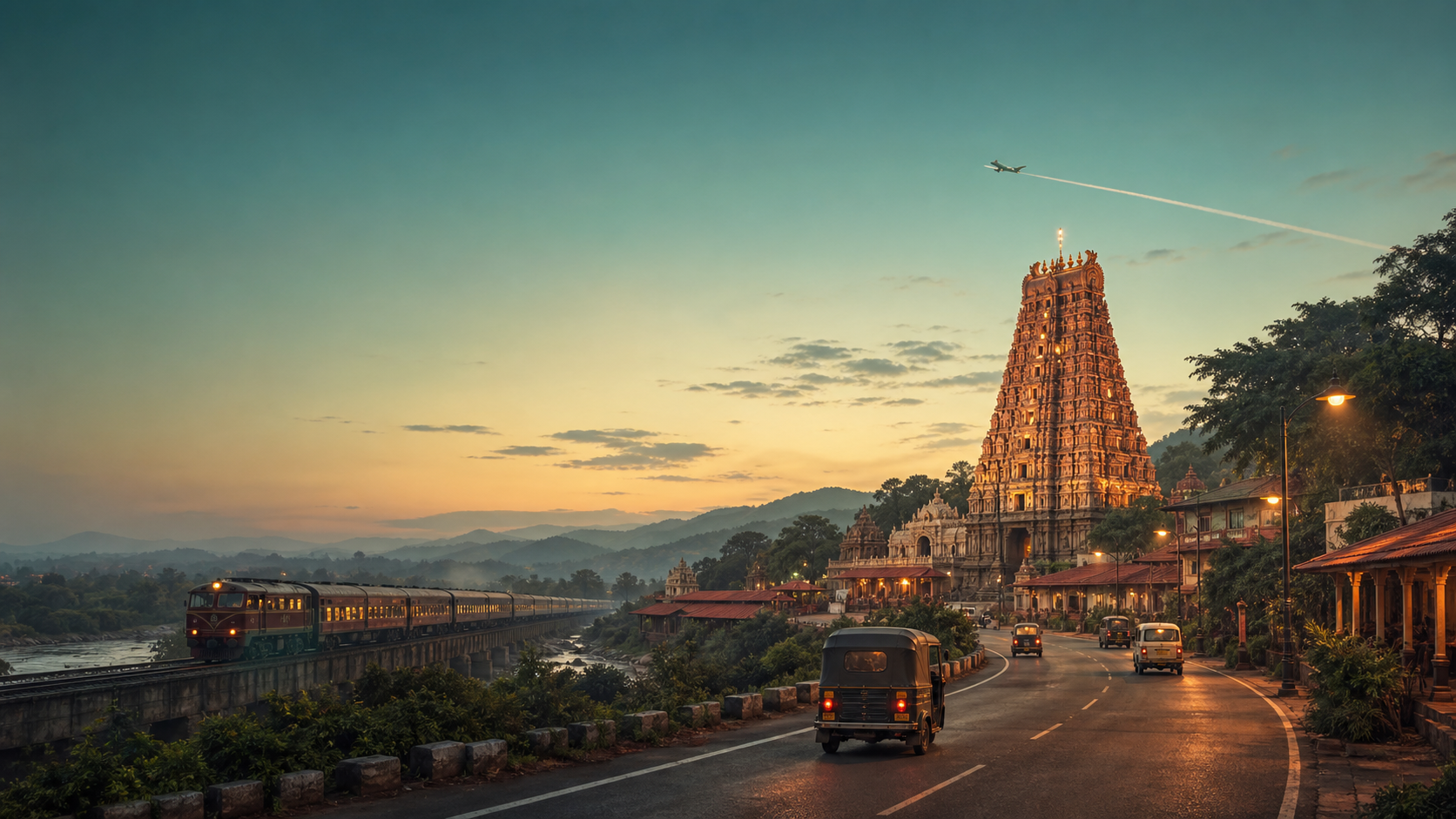
A visit to the Thyagaraja Temple offers a profound spiritual and cultural experience, requiring careful planning to fully appreciate its vastness, participate in its rituals, and explore its many historical and architectural wonders. Located in Tiruvarur, Tamil Nadu, the temple is accessible by bus, train, and is approximately 65 km from Tiruchirappalli International Airport. With a recommended visit duration of a full day (6–8 hours), pilgrims can immerse themselves in its ancient traditions. Modest dress is enforced, and footwear must be removed before entering the complex.
Accessibility
Tiruvarur is well-connected by road and rail, with a dedicated railway junction and a bus stand within the town.
Optimal Timing
The best time to visit is between January and April, allowing for comfortable exploration of the expansive temple grounds.
Visitor Guidelines
A modest dress code is required, and visitors should plan for a minimum of 6–8 hours to fully experience all precincts and rituals.
| Deity | Shiva |
|---|---|
| Form | Worshipped as Thyagarajaswami in a lingam form, and also as Vanmikinathar in an ant-hill form. Uniquely depicted in a dancing form (ajapa natanam) with his right foot revealed during specific festivals. |
| Consort | Neelotpalambika |
| Sampradaya | Shaiva |
| Significance | Shiva as Thyagarajaswami is central to the unique 'dancing lingam' tradition, representing the ajapa natanam dance. The temple is also significant as a Shakti Peetha, with Kamalambika being a prominent deity and a center for Shaktism/Tantra. |
The King, The Dance, and The True Thyagaraja
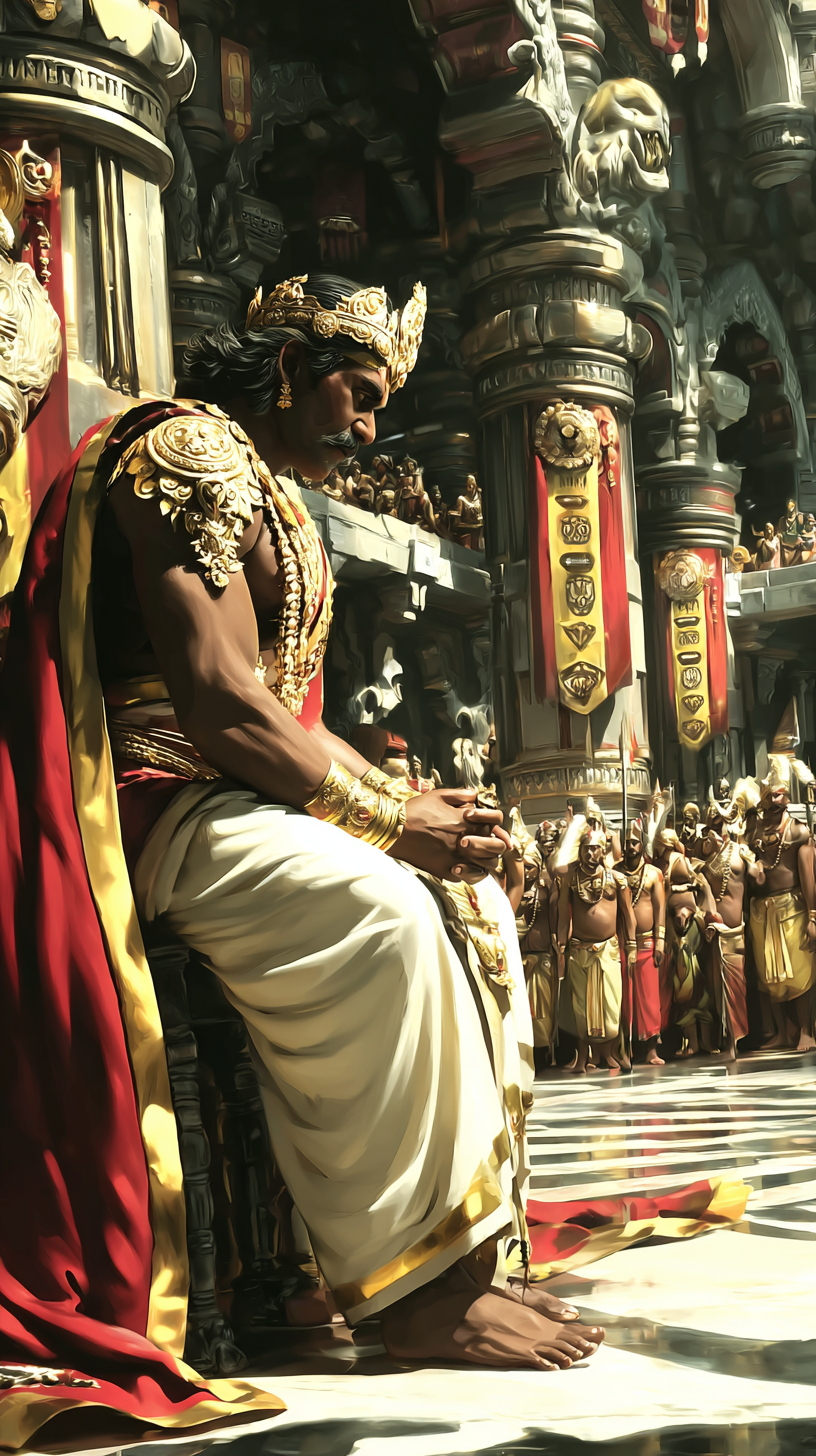
Legend says King Muchukunda received a divine boon from Indra. To test him, Indra presented seven identical images of Shiva performing his unique dance. With divine insight, Muchukunda correctly identified the true Thyagaraja icon, the one now enshrined in Tiruvarur. This original image became the progenitor of the 'Saptha Vidangam,' seven sacred dancing Shiva icons, with the others installed across the Cauvery delta. This pivotal selection established Tiruvarur as the sacred heart of this unique dance tradition, making it a site of immense spiritual and historical significance.
Here, Shiva dances not with sound, but with the breath of life itself – the silent ajapa natanam.
Justice, even for a calf, once guided a king's hand in this sacred land.
Related temples: Aakkoor Thanthondreeswarar Temple | Abhaya Varadeeswarar Temple, Adirampattinam
Tracing the Chola Legacy: A Millennium of Devotion
The Thyagaraja Temple's rich history is deeply intertwined with the powerful Chola dynasty, who were instrumental in its construction and subsequent expansions, shaping its enduring spiritual and cultural narrative over centuries. While Pallavas initiated its presence, major masonry structures emerged in the 9th century CE under Chola patronage. Notable emperors like Rajendra I and Kulothunga Chola II significantly contributed to its grandeur through extensive additions and renovations, solidifying its status as a premier Shaiva center and a testament to Chola architectural and devotional zeal.
Chola Patronage
The Chola dynasty, particularly from the 9th century CE onwards, undertook significant construction, transforming the temple into a major masonry complex.
Imperial Expansions
Inscriptions from Rajendra I (c. 1030 CE) record gifts and expansions, while Kulothunga Chola II (1133–50 CE) further enlarged the temple.
Enduring Influence
The Cholas' sustained devotion and architectural contributions left an indelible mark, establishing the temple's enduring spiritual and cultural narrative.
An Architectural Colossus: Scale, Shrines, and Unique Features
Spanning an impressive 20 acres, the Thyagaraja Temple complex is an architectural marvel, distinguished by its numerous shrines, towering gopurams, and unique design elements, reflecting unparalleled engineering and artistic skill. The temple features a vast temple tank, Kamalalayam, and multiple prakarams (enclosures). Its main deity, Shiva as Thyagaraja, is depicted in a reclining posture, a distinct feature. Another peculiarity is the Nandi facing away from the main shrine, a rare arrangement signifying its role in guarding the entrance rather than directly facing the deity.
Expansive Complex
Covering 20 acres, the temple complex houses multiple shrines, including those for Thyagaraja, Neelotpalambika, and other deities.
Unique Nandi Placement
Unlike most Shiva temples, the Nandi here faces away from the main shrine, positioned to guard the temple's entrance.
Architectural Grandeur
The temple boasts towering gopurams and intricate carvings, characteristic of the Dravidian style, showcasing centuries of craftsmanship.
Cultural Impact
The Thyagaraja Temple in Tiruvarur holds an unparalleled position in the cultural landscape of Tamil Nadu, particularly in the realm of performing arts. It is deeply intertwined with the development and patronage of Carnatic music and traditional dance forms. The temple's unique deity, Lord Thyagaraja, is revered for his 'Ajapa Natanam' – a cosmic dance without movement, which has inspired countless compositions and artistic interpretations. Historically, the temple premises and its grand festivals have served as vital stages for renowned musicians, Nadaswaram artists, and Bharatanatyam dancers, fostering a vibrant ecosystem for these art forms. Its influence extends to the very foundations of Carnatic music, with the town of Tiruvarur being the birthplace of the revered Carnatic Trinity (though Thyagaraja, the composer, is distinct from the temple deity, the name resonance is significant), solidifying its status as a cradle of South Indian classical arts. Beyond its direct patronage of performing arts, the Thyagaraja Temple has profoundly shaped the literary and communal identity of Tiruvarur. Its antiquity and sanctity are celebrated in the devotional hymns of the Nayanmars, particularly in the Tevaram compositions of Appar, Sambandar, and Sundarar, which form a cornerstone of Tamil Saivite literature. The temple's annual festivals, most notably the colossal chariot festival (Therottam), are not merely religious observances but grand cultural spectacles that draw pilgrims and tourists alike, showcasing traditional crafts, music, and community participation. This continuous cycle of worship and celebration reinforces the temple's role as a cultural anchor, preserving centuries-old traditions, fostering social cohesion, and ensuring the transmission of a rich heritage across generations within the Tiruvarur district and beyond.🗺 How to Reach
Hover a card to animate the journey on the map
Route to Temple
Common Questions
Where is Thyagaraja Temple: Ancient Shakti Peetha of Tiruvarur located?
Thyagaraja Temple: Ancient Shakti Peetha of Tiruvarur is documented at Tiruvarur, Tamil Nadu.
Which deity is associated with Thyagaraja Temple: Ancient Shakti Peetha of Tiruvarur?
Thyagaraja Temple: Ancient Shakti Peetha of Tiruvarur is associated with Shiva.
Related Temples


A Living Covenant