



A complete pilgrim record drawn from the existing published article data.
Tracing the Ancient History of Thirumohoor
The Thirumohoor Kalamegaperumal Temple boasts a long and storied history, with its origins dating back to ancient times. Earliest references to the temple appear in Sangam literature, dating from c. 300 BCE to 300 CE, indicating its profound antiquity. Its existence was also noted in Ptolemaic texts between c. 100 and 170 CE. The current structure largely attributes its construction to the Pandya period, specifically in 1259 CE under Sadaiya Varman Sundhara Pandiyan. Subsequent significant renovations and additions were made by the Madurai Nayaks during the 16th to 18th centuries. Recognized as a State Protected site under the TNHRCE, its heritage is further evidenced by epigraphic documentation.
Early Mentions and Origins
The temple's antiquity is established through its references in Sangam literature and Ptolemaic texts, placing its origins well over two millennia ago.
Pandya Dynasty Construction
The foundation of the temple's present form was laid in 1259 CE by Sadaiya Varman Sundhara Pandiyan, marking a significant period of construction during the Later Pandya rule.
Later Additions and Heritage Status
The Madurai Nayaks contributed extensively to the temple's architecture between the 16th and 18th centuries. It is recognized as an ASI-protected site, administered by the Tamil Nadu HR&CE Board.
The Distinctive Architecture and Iconography of Kalamegaperumal
The Thirumohoor Kalamegaperumal Temple exemplifies the Dravidian style of architecture, predominantly built using granite. This architectural grandeur is characterized by its intricate carvings and towering gopurams, reflecting the artistic prowess of the Pandya and Nayak periods. The most striking feature, however, is the unparalleled iconography of the presiding deity, Kalamegaperumal. He is uniquely depicted in a rare 16-handed form, possessing three eyes, a representation not commonly found in other Vishnu temples. This distinctive iconography adds to the temple's spiritual allure and architectural significance.
Dravidian Architectural Style
The temple showcases the classic Dravidian architectural style, characterized by its use of granite and elaborate sculptural details, a hallmark of the Pandya and Nayak dynasties.
Unique Iconography of Kalamegaperumal
Lord Kalamegaperumal is depicted in a rare and powerful form with 16 hands and three eyes, an exceptional representation of Vishnu that distinguishes this temple.
Material and Craftsmanship
Constructed primarily from granite, the temple exhibits the enduring craftsmanship of its builders, with intricate details preserved through centuries.
Unveiling the Mythology and Deities of Thirumohoor
The Thirumohoor Kalamegaperumal Temple is steeped in profound mythology, primarily associated with Lord Vishnu's enchanting Mohini avatar. One significant narrative recounts Vishnu's transformation into Mohini to trick the asura Bhasmasura, leading to his self-destruction and giving the place its name, 'Thirumohur'. Another tale describes Mohini's intervention before the Samudra Manthanam, where she beguiled the asuras to aid the devas. The temple also features Lord Vishnu in his Prathanasayana form, a unique reclining posture that signifies cosmic repose and creation. These mythological accounts underscore the spiritual significance and the protective role of Lord Kalamegaperumal.
The Enchantress Mohini
The temple's name, Thirumohur, is derived from the divine enchantment ('Moham') of Vishnu's Mohini avatar, as recounted in tales like the defeat of Bhasmasura and the intervention before the Samudra Manthanam.
Prathanasayana Form of Vishnu
Lord Kalamegaperumal is revered in his Prathanasayana form, a distinctive reclining posture that holds deep symbolic meaning within Vaishnava theology.
Significance of Divine Intervention
The stories associated with Mohini highlight Vishnu's role as a protector and savior, intervening in cosmic conflicts to restore order and righteousness.
Planning Your Pilgrimage to Thirumohoor
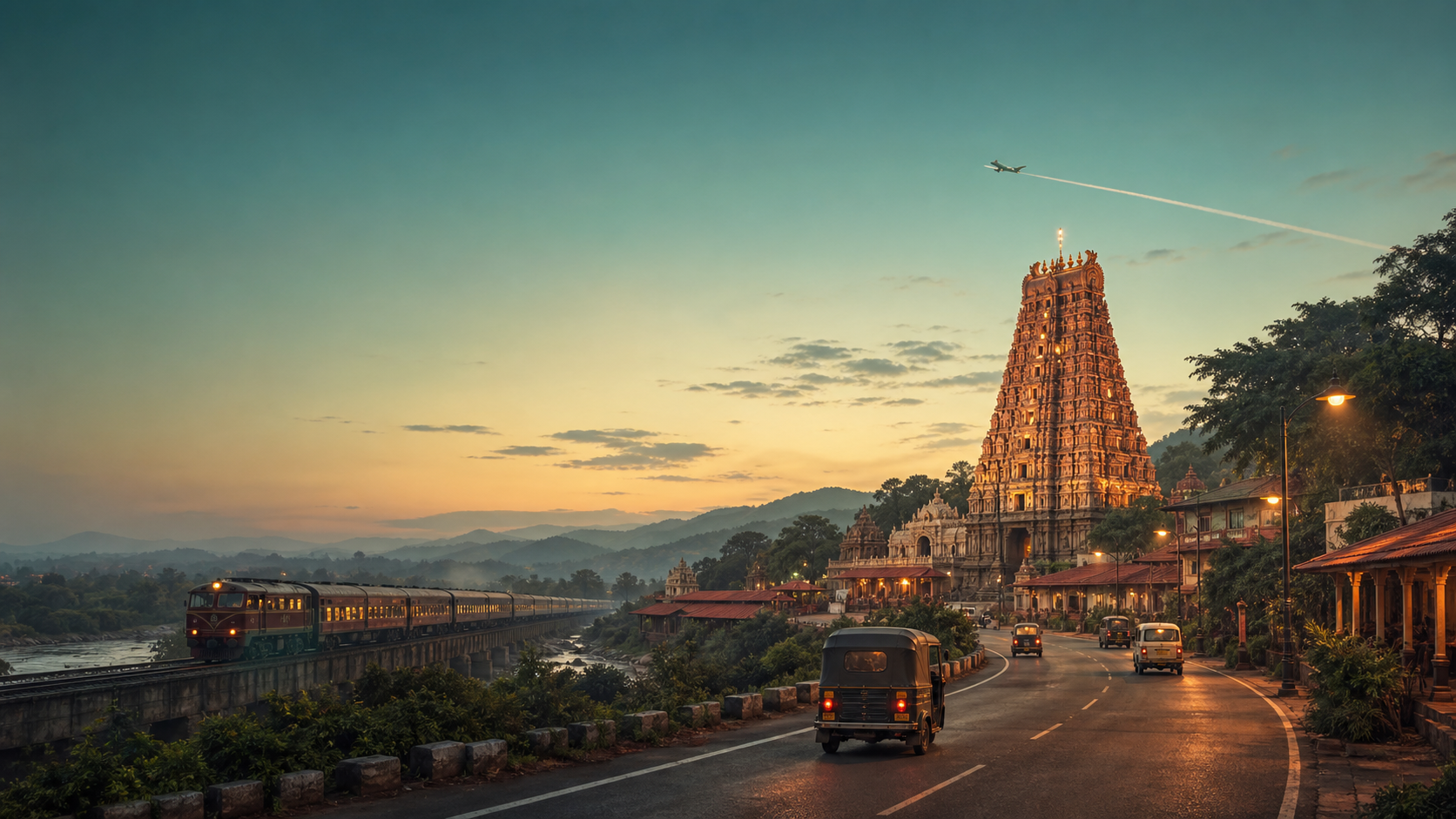
For those planning a pilgrimage to the Thirumohoor Kalamegaperumal Temple, essential information ensures a fulfilling spiritual experience. While specific timings should be confirmed with the temple office, entry is generally free. The best times to visit are during Vaikasi (April–May) for the grand Brahmotsavam, a ten-day festival, or Margazhi (December–January) for Vaikunta Ekadashi, which features a special darshan through the Paramapada Vasal. Devotees are expected to wear traditional modest attire and remove footwear. A typical visit duration is 2–3 hours. Madurai serves as the primary hub for transportation, with the temple located approximately 20 km from Madurai Junction Railway Station and 18 km from Madurai International Airport.
Key Festivals and Auspicious Times
The Vaikasi Brahmotsavam and Vaikunta Ekadashi are the most prominent festivals, offering unique spiritual experiences. Gajendra Moksham is also celebrated in Masi Poornima.
Visitor Information and Etiquette
Visitors should adhere to the traditional modest dress code and remove footwear before entering. While entry is free, timings should be verified directly with the temple office.
Transportation and Accessibility
The temple is easily accessible from Madurai, with bus, train, and flight options available. Madurai International Airport and Madurai Junction Railway Station are key access points.
| Deity | Kalamegaperumal (Vishnu) |
|---|---|
| Form | Kalamegaperumal is depicted in a standing panchayudha form, known as Prathanasayana posture, characterized by 16 hands and three fiery eyes. |
| Consort | Mohanavalli Thayar (Tirumohurvalli) |
| Sampradaya | Vaishnava |
| Significance | The temple is significant for Vishnu's role as Mohini, who enchanted asuras to secure victory for the devas and defeated the asura Bhasmasura, leading to the place being named Thirumohur. |
The Enchantress and the Ash Demon
The formidable asura Bhasmasura, gifted by Lord Shiva with the power to turn anyone to ash with a touch, terrorized the devas. In their despair, they sought Lord Vishnu's help. Vishnu assumed the captivating form of Mohini, an enchantress of unparalleled beauty. Mohini charmed Bhasmasura, who was instantly captivated. Through her mesmerizing dance, she cleverly tricked the arrogant asura into placing his own hand upon his head, leading to his swift and fiery self-destruction. This divine enchantment, or 'Moham,' is believed to be the origin of the sacred place's name, Thirumohur.
Through divine enchantment, Vishnu as Mohini secured victory for the devas, giving this sacred place its name, Thirumohur.
Witness the unique 16-handed, three-eyed Kalamegaperumal, a rare manifestation of Vishnu in the Prathanasayana posture.
Related temples: Aakkoor Thanthondreeswarar Temple | Abhaya Varadeeswarar Temple, Adirampattinam
Thirumohoor Kalamegaperumal Temple: A Divine Abode of Vishnu
The Thirumohoor Kalamegaperumal Temple, located in Tamil Nadu, stands as a significant Divya Desam, revered by the Vaishnava tradition. Dedicated to the Hindu god Vishnu, known here as Kalamegaperumal, this ancient shrine is a testament to rich spiritual heritage. It is particularly renowned for its unique representation of Lord Vishnu, attracting devotees seeking divine blessings. The temple's historical and religious importance is deeply embedded in the cultural landscape of the region, making it a pivotal pilgrimage site.
Significance as a Divya Desam
As one of the 108 Divya Desams, sacred abodes of Vishnu glorified by the Alvars, Thirumohoor holds immense spiritual value. It is a destination for devotees seeking a profound connection with the deity.
The Presiding Deity, Kalamegaperumal
The main deity, Vishnu, is worshipped as Kalamegaperumal. The temple is celebrated for the unique and powerful iconography of the Lord, making it distinct among Vishnu temples.
Modern Pilgrimage
Thirumohoor Kalamegaperumal Temple continues to be a vibrant center for Vaishnavite devotion in the modern era, attracting pilgrims from across India and the globe. While traditional rituals and offerings remain central to the pilgrimage experience, contemporary devotees often integrate technology into their spiritual journey. Online resources provide detailed information about temple timings, festivals, and darshan schedules, facilitating planning for visitors. The temple's accessibility, located near Madurai, a major transportation hub, makes it a convenient destination for both seasoned pilgrims and first-time visitors. Many come seeking blessings for health, prosperity, and spiritual solace, participating in special pujas and abhishekams, or simply spending quiet moments in contemplation before the deity.
Beyond individual spiritual quests, the Thirumohoor Kalamegaperumal Temple plays a significant role in fostering community and cultural tourism. Organized tours and pilgrimage groups frequently include the temple in their itineraries, highlighting its architectural grandeur and historical significance. The temple management, alongside local community efforts, often works to enhance visitor experience, though specific modern amenities might vary. Its enduring appeal lies not only in its ancient traditions but also in its ability to offer a serene sanctuary amidst the bustle of modern life. For many, a visit to Thirumohoor is a powerful affirmation of faith, connecting them to centuries of devotion and the timeless presence of Lord Kalamegaperumal, ensuring its continued relevance for generations to come.
🗺 How to Reach
Hover a card to animate the journey on the map
Route to Temple
Common Questions
Where is Thirumohoor Kalamegaperumal: Ancient Divya Desam of Vishnu located?
Thirumohoor Kalamegaperumal: Ancient Divya Desam of Vishnu is documented at Tamil Nadu.
Which deity is associated with Thirumohoor Kalamegaperumal: Ancient Divya Desam of Vishnu?
Thirumohoor Kalamegaperumal: Ancient Divya Desam of Vishnu is associated with Vishnu.
Related Temples


A Living Covenant