A complete pilgrim record drawn from the existing published article data.
Tracing the Ancient Roots of Thiruchsemponsey
The history of Thiruchsemponsey is deeply intertwined with the ancient devotional landscape of Tamil Nadu. While specific foundation dates are often lost to antiquity, the temple's existence is affirmed through its inclusion in the _Nalayira Divya Prabandham_, a collection of hymns by the Alvars. This places its origins firmly within the early medieval period, suggesting continuous worship and patronage over many centuries. Various South Indian dynasties, including the Cholas, are believed to have contributed to its upkeep and expansion, solidifying its enduring legacy as a significant religious site.
Alvar Glorification
The temple's ancient roots are primarily evidenced by the hymns of the Alvars, particularly Tirumangai Alvar, who sang praises of the presiding deity. These _pasurams_ date back to the 6th-9th centuries CE, affirming the temple's veneration during that era.
Dynastic Patronage
Over the centuries, various South Indian dynasties, most notably the Cholas, are believed to have provided patronage to Thiruchsemponsey. Their contributions would have included renovations, endowments, and the maintenance of its sacred rituals, ensuring its continuity.
Enduring Legacy
Despite the passage of time, Thiruchsemponsey has maintained its spiritual significance. Its continuous worship and preservation through different historical periods highlight its resilience and its central role in the local religious traditions.
Lord Perarulaalan and the Legends of Thiruchsemponsey
At the heart of Thiruchsemponsey lies Lord Perarulaalan, a form of Vishnu whose name translates to "The Great Benefactor." The deity is revered for his immense grace and compassion, bestowing blessings upon his devotees. Numerous legends surround the temple and its presiding deity, often recounted in local folklore and devotional literature. These stories frequently highlight the Lord's miraculous interventions and his role in protecting the righteous. The temple is also closely associated with the _Nalayira Divya Prabandham_, where the Alvars, especially Tirumangai Alvar, have sung heartfelt praises, further cementing its spiritual importance and the glory of Perarulaalan.
The Gracious Deity
Lord Perarulaalan, the main deity, is an embodiment of Vishnu's boundless mercy. Devotees believe that worshipping him at Thiruchsemponsey brings immense blessings, prosperity, and spiritual liberation due to his benevolent nature.
Associated Legends
While specific detailed legends are often passed down orally, the general mythology surrounding Thiruchsemponsey speaks of Vishnu's presence in this sacred grove. These tales reinforce the temple's sanctity and its connection to divine events.
Alvar Pasurams
The temple is hallowed by the _pasurams_ (hymns) of Tirumangai Alvar, one of the twelve Vaishnavite saints. His poetic verses describe the beauty of the deity and the temple, making it a significant site for followers of the Alvar tradition.
A Visitor's Guide to Thiruchsemponsey Temple
Planning a visit to Thiruchsemponsey temple is straightforward, ensuring a fulfilling spiritual experience. The temple operates on a dual schedule: 6:00 AM to 12:30 PM and 4:00 PM to 9:00 PM, allowing ample time for darshan. Entry is free for all visitors. The months from October to March are considered the best time to visit due to pleasant weather conditions. For travel, Sirkali serves as the primary hub, accessible by both bus and train, with local transport readily available to Thirunangur. Parking is available near the temple premises for those traveling by car.
Darshan Timings and Entry
The temple welcomes devotees from 6:00 AM to 12:30 PM and again from 4:00 PM to 9:00 PM daily. There is no entry fee, making it accessible to all who wish to seek blessings.
Transportation and Accessibility
Thiruchsemponsey is approximately 10-15 km from Sirkali, which has a bus stand and railway station (Sirkali Railway Station, code SY). Regular local buses connect Sirkali to Thirunangur. Parking is available for private vehicles.
Etiquette and Best Time to Visit
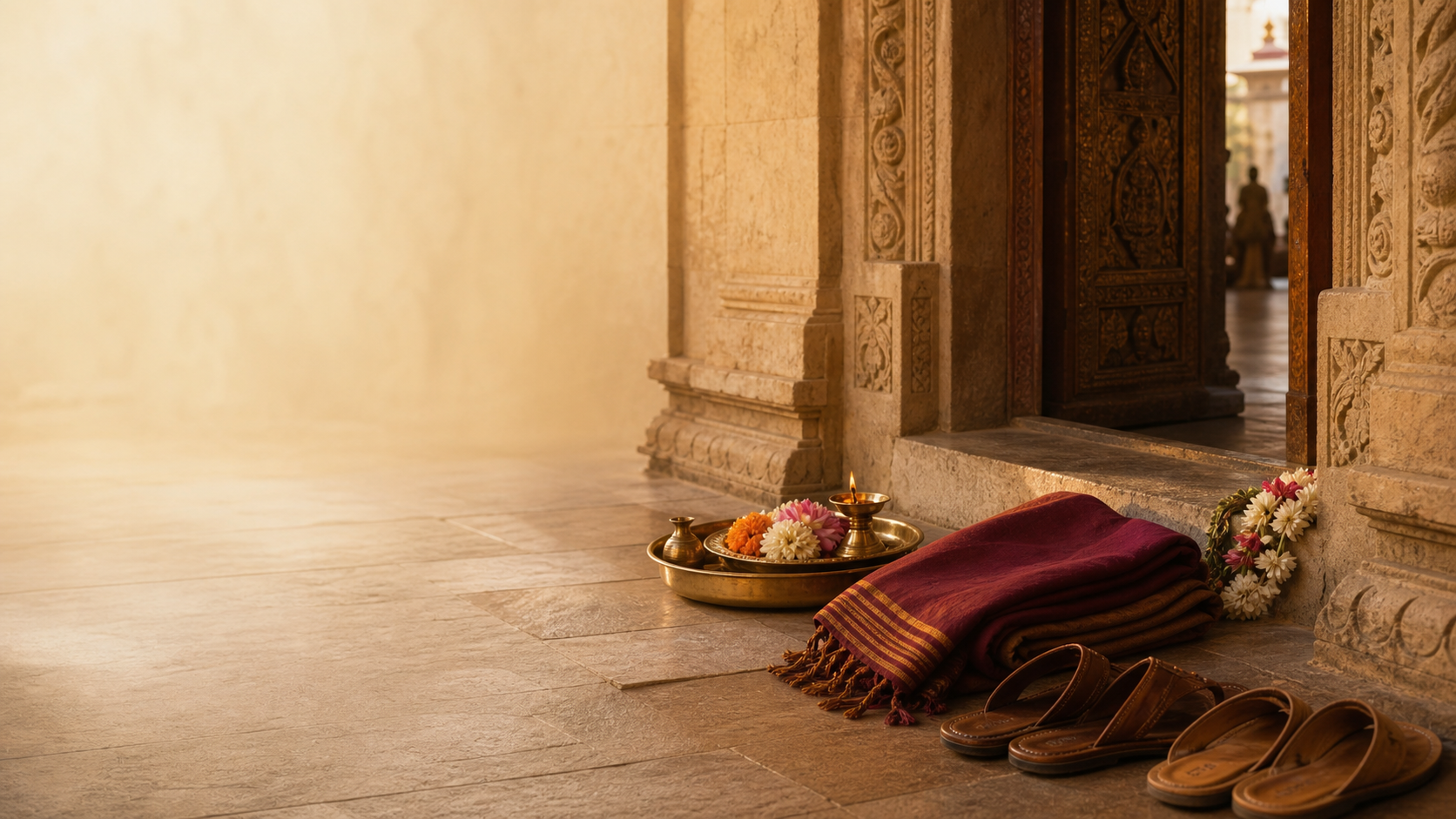
Visitors are encouraged to wear traditional attire as a mark of respect and to remove footwear before entering. The period from October to March offers the most comfortable weather for a visit, typically lasting 1-2 hours.
| Deity | Vishnu |
|---|---|
| Form | Vishnu is typically depicted with four arms, holding a conch, discus, mace, and lotus, often standing or reclining on the cosmic serpent Adishesha. |
| Sampradaya | Hindu |
| Significance | As the Preserver god in the Hindu Trimurti, Vishnu is responsible for maintaining cosmic order and righteousness, often incarnating to restore dharma. |
Vishnu, the Preserver, maintains cosmic order and righteousness, often incarnating to restore dharma to the world.
In Thirunangur, devotees find solace in the divine presence of Vishnu, seeking blessings for peace and prosperity.
Thiruchsemponsey: A Golden Abode of Vishnu
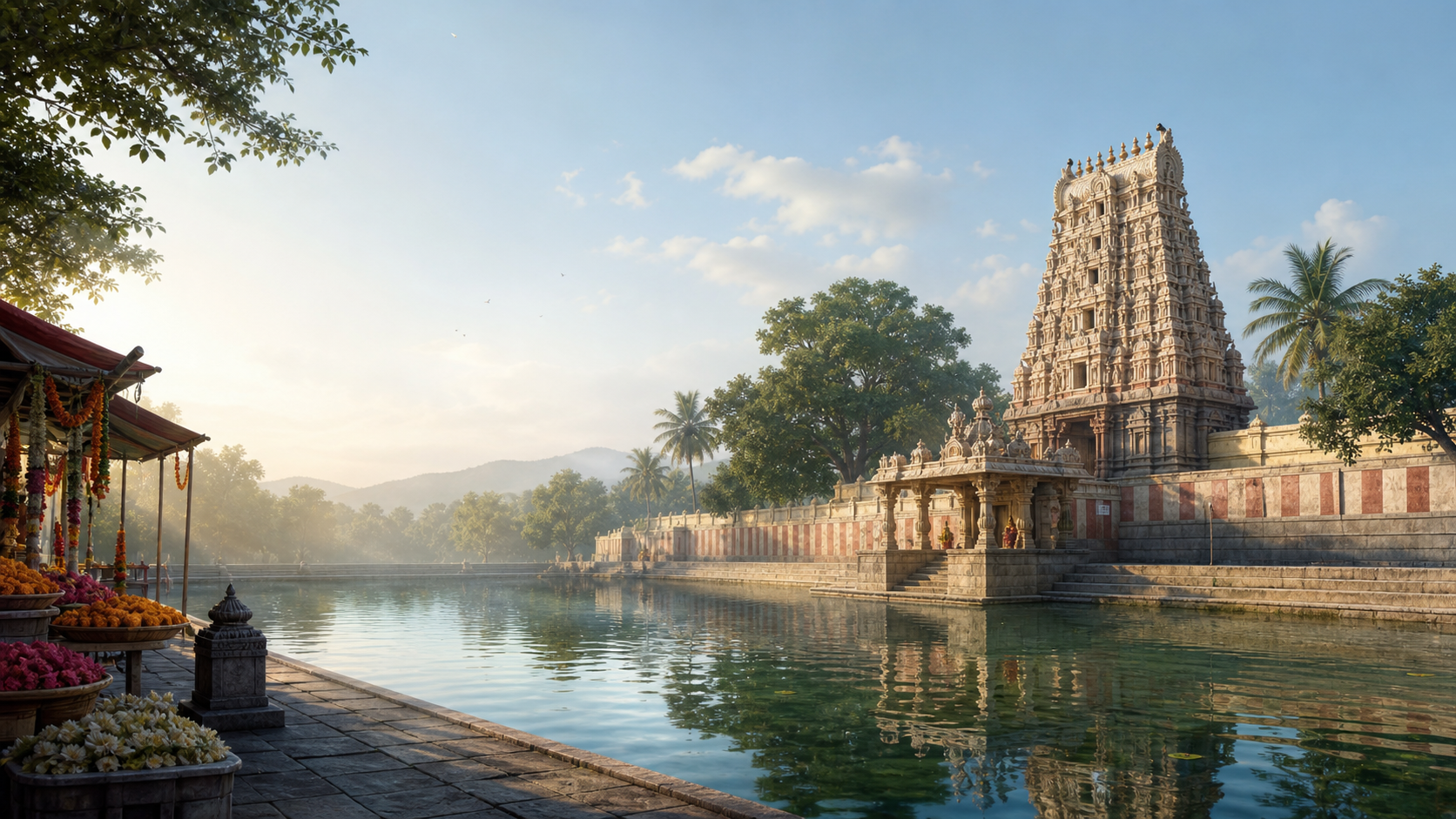
Thiruchsemponsey, a revered Divya Desam, stands as a sacred sanctuary dedicated to Lord Vishnu in Thirunangur, Tamil Nadu. This temple is celebrated for its profound spiritual significance and the serene beauty that envelops its premises. It offers devotees a tranquil environment for worship and contemplation, embodying the rich devotional heritage of Vaishnavism. The temple's architectural elegance, though modest, contributes significantly to its charm, making it a cherished destination for pilgrims seeking divine solace and spiritual connection. Its status as one of the 108 Divya Desams underscores its paramount importance in the Vaishnavite tradition.
Divya Desam Significance
Thiruchsemponsey is one of the 108 Divya Desams, the holy abodes of Lord Vishnu glorified by the Alvars in their hymns. This designation marks it as a site of immense spiritual merit and historical importance for Vaishnavites.
Serene Spiritual Atmosphere
The temple exudes a profound sense of peace and devotion. Its quiet surroundings provide an ideal setting for meditation and prayer, allowing visitors to connect deeply with the divine presence of Lord Vishnu.
Architectural Charm
While not monumental in scale, the temple's architecture showcases a simple yet elegant Dravidian style. Its design elements reflect centuries of traditional craftsmanship, adding to its overall serene and sacred ambiance.
The Dravidian Splendor of Thiruchsemponsey Temple
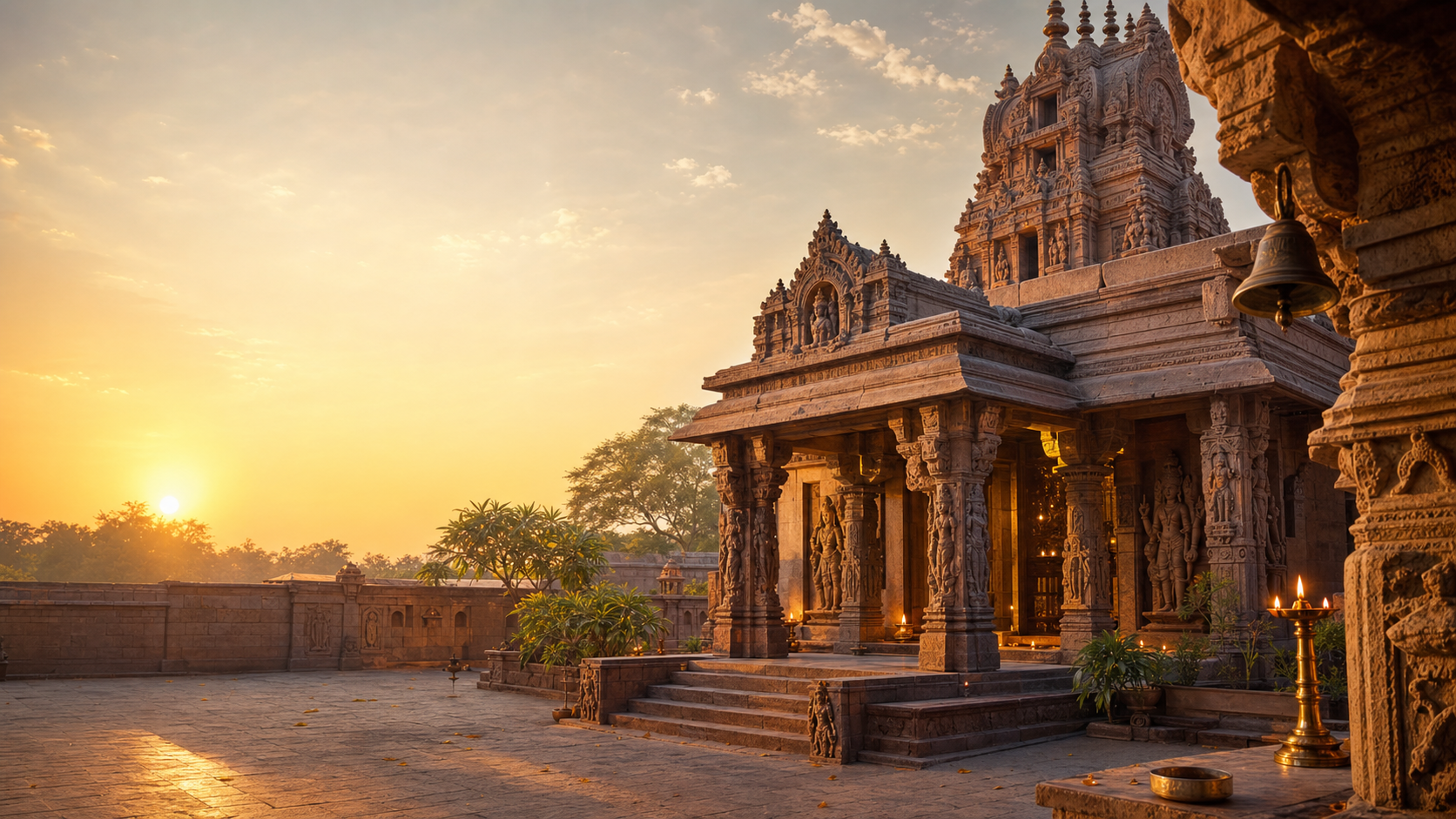
Thiruchsemponsey temple exemplifies the classic Dravidian architectural style, characterized by its robust stone construction and intricate detailing. Though not as grand as some larger temples, its design elements are meticulously crafted, reflecting the artistic traditions prevalent in Tamil Nadu. The temple features a modest _vimana_ above the sanctum and a small _gopuram_ at its entrance, both adorned with stucco figures of deities and mythological creatures. The inner _mandapams_ are supported by carved pillars, leading to the central shrine where Lord Perarulaalan resides, showcasing a harmonious blend of form and function.
Vimana and Gopuram
The temple features a compact yet aesthetically pleasing _vimana_ (tower above the sanctum) and a small _gopuram_ (entrance tower). These structures are typically adorned with vibrant stucco sculptures depicting various divine forms and epic scenes.
Sculptural Details
Within the temple complex, one can observe finely carved sculptures on pillars and walls. These intricate details often portray episodes from Vaishnavite mythology, celestial beings, and floral motifs, adding to the temple's visual richness.
Mandapams and Sanctum
The path to the main deity, Lord Perarulaalan, leads through several _mandapams_ (halls), each serving a specific ritualistic purpose. These halls are supported by sturdy pillars, culminating in the _garbhagriha_, the sacred sanctum housing the principal idol.
🗺 How to Reach
Hover a card to animate the journey on the map
Verified routes to Thiruchsemponsey
Common Questions
Where is Thiruchsemponsey: Sacred Divya Desam Vishnu Temple located?
Thiruchsemponsey: Sacred Divya Desam Vishnu Temple is documented at Sirkali, Tamil Nadu.
Which deity is associated with Thiruchsemponsey: Sacred Divya Desam Vishnu Temple?
Thiruchsemponsey: Sacred Divya Desam Vishnu Temple is associated with Vishnu.