



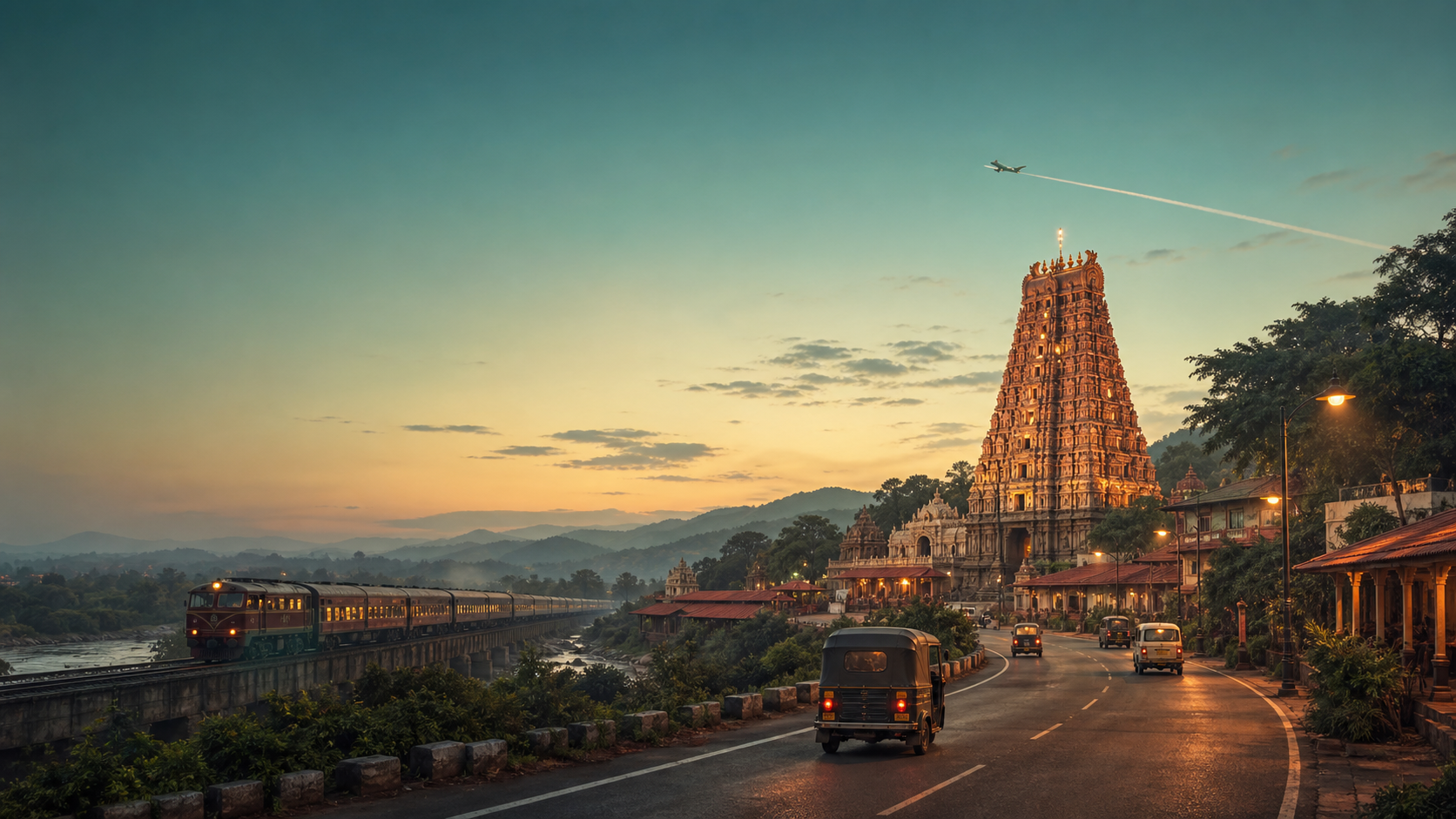
A complete pilgrim record drawn from the existing published article data.
Dravidian Grandeur and Unique Features
The Thindal Murugan Temple exemplifies the classic Dravidian architectural style, characterized by its towering gopurams, intricately carved mandapams, and a sacred sanctum sanctorum. The temple's structure showcases the remarkable craftsmanship of its artisans, with detailed sculptures and vibrant paintings adorning its walls and pillars, depicting mythological scenes and deities. A prominent feature is its golden chariot, used during festivals, which reflects the temple's rich heritage and the devotion of its patrons. The aesthetic appeal of the temple, combined with its spiritual ambiance, creates a powerful experience for visitors, highlighting the enduring artistic traditions of Tamil Nadu temple architecture.
Architectural Elements
The temple features traditional Dravidian gopurams, pillared mandapams, and a central sanctum, all richly adorned.
The Golden Chariot
A significant highlight is the temple's golden chariot, a symbol of its grandeur, utilized in special processions.
Planning Your Pilgrimage to Thindal
Visitors planning a pilgrimage to the Thindal Murugan Temple should note that specific timings, entry details, and dress codes are best confirmed by contacting the temple office directly. The temple is particularly vibrant during the Tamil months of Margazhi (December–January) and Thai Poosam (January–February), especially during temple car festivals, which offer a unique cultural experience. The temple is accessible by bus from Erode Bus Stand (8 km) and by train from Erode Junction (8 km). Coimbatore International Airport is approximately 85 km away. Parking information and drive times should also be verified with the temple authorities for a smooth visit.
Best Time to Visit
The months of Margazhi and Thai Poosam, coinciding with major festivals, are ideal for a visit.
Accessibility
The temple is conveniently located 8 km from both Erode Bus Stand and Erode Junction railway station.
| Deity | Murugan |
|---|---|
| Form | Lord Murugan is worshipped here as Velayudhaswami, a form associated with his divine spear (Vel). |
| Consort | Unknown |
| Sampradaya | Shaiva |
| Significance | As Velayudhaswami, Lord Murugan is revered for his divine presence on the Thindalmalai hillock, embodying spiritual power and protection. |
The Sacred Presence of Thindalmalai
Perched majestically atop the Thindalmalai hillock, the Thindal Murugan Temple stands as a testament to the enduring divine presence of Lord Murugan. Though ancient texts do not detail a specific tale of its genesis, local tradition reveres this sacred site as a place personally chosen by Murugan himself. Devotees believe that the very air of Thindalmalai resonates with the spiritual energy of Velayudhaswami, the youthful warrior god. It is said that Murugan, wielding his sacred Vel, surveyed the land and found this serene hillock to be an ideal abode, blessing it with his eternal grace. Pilgrims ascend the winding path, each step bringing them closer to the palpable aura of sanctity, feeling the Lord’s watchful presence guarding the faithful. The temple thus serves not just as a place of worship, but as a living manifestation of Murugan's benevolent oversight, an anchor of faith on this hallowed peak.
Devotees believe that the very air of Thindalmalai resonates with the spiritual energy of Velayudhaswami.
Pilgrims ascend the winding path, each step bringing them closer to the palpable aura of sanctity, feeling the Lord’s watchful presence.
Related temples: Aakkoor Thanthondreeswarar Temple | Abhaya Varadeeswarar Temple, Adirampattinam
The Enduring Legacy of Thindal Murugan
The exact origins of the Thindal Murugan Temple remain largely unrecorded in ancient texts, with its founding dynasty and builder unknown. However, its architectural style, predominantly Dravidian, suggests a history spanning centuries, indicative of continuous worship and patronage. While specific historical records are scarce, the temple has undoubtedly undergone various renovations and expansions over time, contributing to its current form. Local traditions and the enduring faith of generations serve as the primary testament to its long-standing presence and spiritual evolution. The temple stands as a living monument, reflecting the continuous devotion of its community through the ages, preserving its sacred legacy.
Unknown Origins
The temple's foundational history, including its specific builder and initial dynasty, is not explicitly documented.
Dravidian Influence
The architectural style points to a long history, with elements characteristic of the ancient Dravidian tradition.
Thindal Murugan Temple: A Sacred Abode in Erode
The Thindal Murugan Temple, situated atop the Thindalmalai hillock in Erode, Tamil Nadu, is a revered pilgrimage site dedicated to Lord Murugan. This ancient temple holds profound spiritual significance, drawing devotees from across the region seeking the blessings of Velayudhaswami. Its serene location and the palpable aura of sanctity make it a unique destination for spiritual solace and devotion. The temple stands as a testament to the enduring presence of the warrior god, offering a tranquil retreat from the mundane and an anchor of faith for its followers, setting the stage for a deeper exploration of its rich heritage and cultural impact.
Location and Significance
Perched on Thindalmalai hill, the temple offers panoramic views of Erode and is considered a beacon of spiritual energy.
Spiritual Importance
Devotees believe Lord Murugan personally chose this site, blessing it with his eternal grace and watchful presence.
Lord Murugan: The Warrior God of Thindal
The Thindal Murugan Temple is dedicated to Lord Murugan, revered here primarily as Velayudhaswami, the youthful warrior god wielding his divine spear, the Vel. Local tradition holds that Murugan himself surveyed the land and chose Thindalmalai as his sacred abode, blessing it with his eternal presence. Devotees believe that worshipping Murugan at this hallowed site bestows blessings of courage, wisdom, and protection, and helps overcome obstacles. The temple serves as a focal point for the worship of Murugan, embodying his benevolent oversight and spiritual energy, making it a significant pilgrimage destination for those seeking divine intervention and spiritual growth.
Velayudhaswami
Lord Murugan is worshipped in his form as Velayudhaswami, the youthful warrior deity carrying his sacred spear.
Local Legends
It is believed that Murugan personally selected Thindalmalai as his divine residence, imbuing the hill with sanctity.
Modern Pilgrimage and Facilities
Thindal Murugan Temple, while steeped in ancient traditions, has adeptly evolved to meet the demands of modern pilgrimage. Improved road connectivity and public transport networks have significantly enhanced its accessibility, drawing devotees not only from nearby Erode and Tiruppur but also from distant cities across Tamil Nadu and other states. The temple experiences a substantial influx of worshippers during auspicious occasions like Krithigai, Thaipusam, and Panguni Uthiram, showcasing a blend of traditional 'padayatra' (foot pilgrimage) undertaken by many, alongside those arriving by contemporary means of transport. This adaptation ensures that the spiritual journey remains central, even as the logistics of reaching the sacred site have become considerably easier for a wider demographic of devotees seeking solace and blessings from Lord Murugan. To further enhance the pilgrim experience, the temple administration has invested in developing modern facilities that cater to the needs of its growing visitor base. Dedicated parking areas, clean restroom facilities, and sheltered waiting halls are now available, significantly improving comfort during peak festival seasons. Within the temple complex, devotees can find shops offering puja items, religious literature, and souvenirs, adding convenience to their spiritual visit. Furthermore, the temple actively participates in community welfare initiatives, including organized 'annadhanam' (free food distribution) and occasional medical camps, demonstrating its role beyond a place of worship to a center of social support. These thoughtful additions ensure that Thindal Murugan Temple remains a vibrant and accessible spiritual hub for all.🗺 How to Reach
Hover a card to animate the journey on the map
Route to Erode
Common Questions
Where is Thindal Murugan Temple: Erode's Hilltop Spiritual Gem located?
Thindal Murugan Temple: Erode's Hilltop Spiritual Gem is documented at Erode.
Which deity is associated with Thindal Murugan Temple: Erode's Hilltop Spiritual Gem?
Thindal Murugan Temple: Erode's Hilltop Spiritual Gem is associated with Murugan.
Related Temples


A Living Covenant