



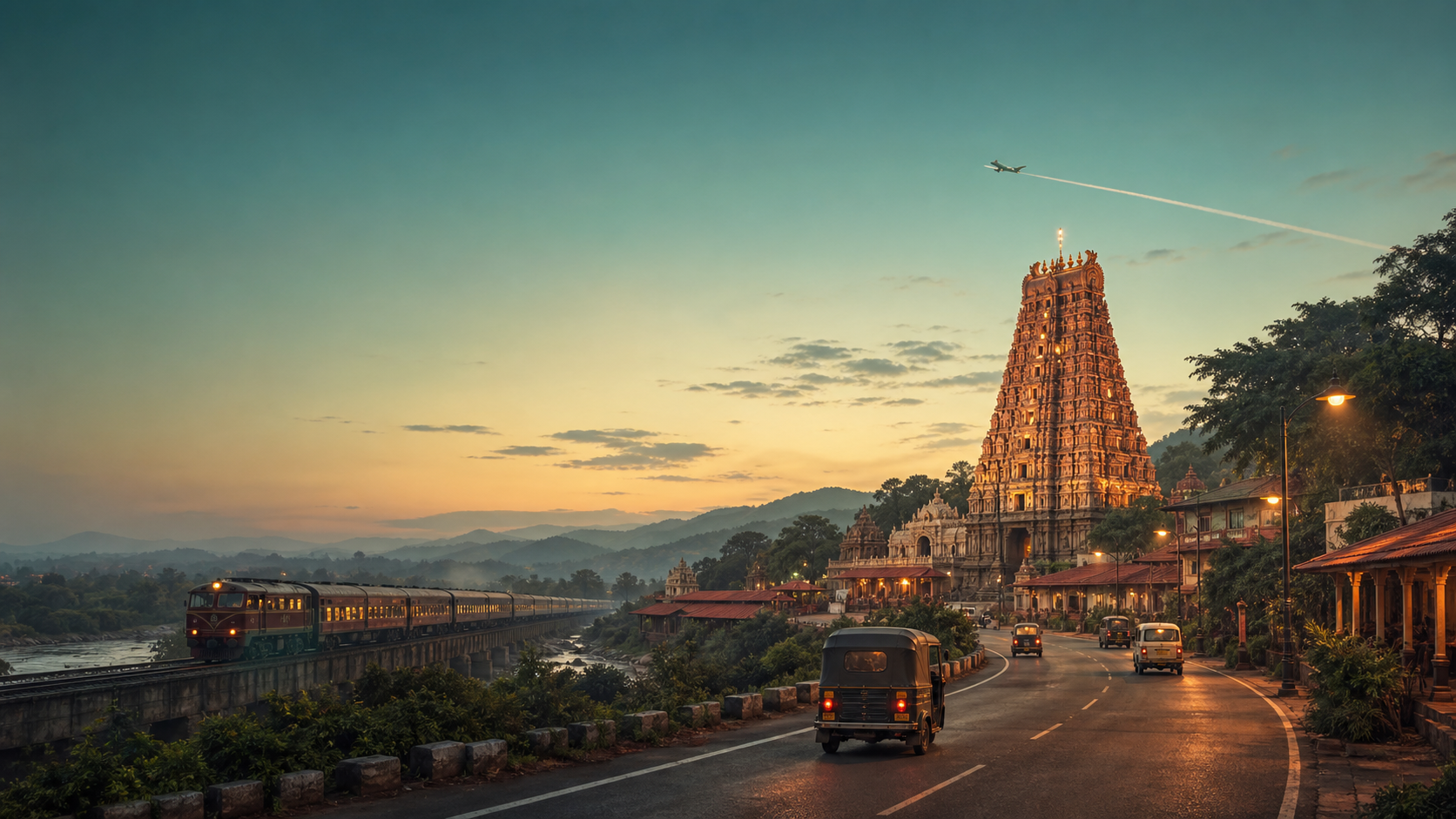
A complete pilgrim record drawn from the existing published article data.
Thanthondreeswarar Temple: A Chola Marvel in Karumandurai
The Thanthondreeswarar Temple, nestled in Belur, Salem, Tamil Nadu, stands as a testament to ancient Dravidian architectural prowess. Dating back to the 12th century CE, this significant Hindu shrine is dedicated to Lord Thanthondreeswarar, a manifestation of Shiva. Constructed primarily from granite, it reflects the grandeur of the Chola dynasty. Renowned for its spiritual heritage within the Shaiva tradition, the temple offers a profound glimpse into South Indian religious and artistic history, attracting devotees and history enthusiasts alike to its sacred precincts.
Location and Historical Context
Situated in Belur, Salem, the temple's origins are deeply intertwined with the region's rich past, particularly the influential Chola period, which shaped its foundational design and spiritual significance.
Architectural Grandeur
Built predominantly with granite, the temple exemplifies the classic Dravidian style, characterized by intricate carvings and robust structures that have withstood centuries, showcasing remarkable craftsmanship.
Spiritual Importance
As a revered Shaiva shrine, the temple is a pivotal center for the worship of Lord Shiva, embodying centuries of devotion and serving as a spiritual beacon for its community.
Planning Your Pilgrimage: A Guide to Thanthondreeswarar Temple
For a fulfilling visit to Thanthondreeswarar Temple, planning is key. Accessible by bus from Salem, train via Vazhappady Railway Station (6 km), and flight to Salem Airport (60 km), the temple also offers ample parking for drivers on State Highway 18. Entry is free, but visitors should confirm timings with the temple office. Traditional attire is preferred, and footwear removal is customary. Optimal visiting times include the Chithirai month (mid-April) for its solar alignment or Maha Shivratri (February/March) for major festivals, allowing 2-3 hours for a comprehensive experience.
Accessibility and Transport
The temple is well-connected by road from Salem, with bus services, and is near Vazhappady Railway Station. Salem Airport provides air access, and State Highway 18 offers easy driving.
Visitor Guidelines
Entry is free, though visitors should verify timings. Traditional attire is encouraged, and removing footwear is a customary sign of respect within the temple premises.
Optimal Visiting Times
Experience the temple during the Chithirai month (mid-April) for special solar alignment rituals, or for the vibrant Maha Shivratri festival (February/March) to witness grand celebrations.
| Deity | Thanthondreeswarar |
|---|---|
| Form | Thanthondreeswarar is worshipped in the form of a Suyambu Lingam, meaning a self-manifested Shiva Lingam. |
| Consort | Dharmasamvarthini |
| Sampradaya | Shaiva |
| Significance | This deity is a self-manifested Lingam, central to a legend where a pepper merchant discovered it after divine intervention involving pepper and black gram. It also features a rare depiction of Shiva riding a Vedic horse. |
The Miracle of Milagu Chetty
Journeying through a dense forest, the pepper merchant Manickam Chetty, later Milagu Chetty, accidentally crushed a wild pea aubergine on a stone. A divine voice cried out from the stone, requesting pepper. Puzzled, he offered black gram. The next morning, his pepper had transformed into black gram. Distraught, he received divine instruction to apply mud from that spot, and his black gram reverted to pepper. Overwhelmed, he unearthed a self-manifested (Suyambu) Lingam, recognizing it as the source of the voice. In reverence, he built the inner sanctum for Lord Thanthondreeswarar.
From a divine voice in a stone to the miraculous transformation of pepper, the Lord revealed Himself as a self-manifested Lingam.
Kanampullar's unwavering devotion shone brightest when he used his own hair as a lamp wick, ensuring the divine light never faded.
Related temples: Akkana Basadi | Amareshwar Temple
Echoes of the Cholas: The Temple's Enduring Legacy
The historical narrative of Thanthondreeswarar Temple is a tapestry woven across centuries, beginning even before the Chola dynasty's significant contributions. Its origins trace back to the pre-12th century CE, when Milagu Chetty discovered the self-manifested Lingam and constructed the inner sanctum. This foundational act was followed by the patronage of Paranthaka Chola in the 12th century, who commissioned the main temple structure and the initial Rajagopuram, solidifying its place as a major religious site. The temple's legacy continued through the ages, receiving mention in historical texts and undergoing significant renovations in the late 20th century, ensuring its preservation.
Early Foundations
The temple's spiritual core was established pre-12th century CE by Milagu Chetty, who, after a divine encounter, unearthed the Suyambu Lingam and built its initial inner sanctum.
Chola Patronage
During the 12th century CE, Paranthaka Chola significantly expanded the temple, overseeing the construction of the main edifice and the original Rajagopuram, marking a golden era of development.
Enduring Preservation
The temple's historical importance was documented in 1883 and later reinforced by extensive renovation efforts by the Belur Narpani Mandram between 1992 and 2002, ensuring its longevity.
Architectural Marvels: Rajagopuram, Yazhi, and Vedic Horse
Thanthondreeswarar Temple is a prime example of Dravidian architectural brilliance, featuring several distinctive elements. Its towering 97-foot Rajagopuram serves as a grand entrance, adorned with intricate sculptures. Inside, visitors can marvel at the rare single-stone Yazhi, a mythical creature often depicted in temple architecture, symbolizing strength and protection. A particularly unique carving depicts Lord Shiva riding a Vedic horse, a distinct artistic representation not commonly found, highlighting the temple's rich sculptural heritage and the artisans' mastery over granite.
The Grand Rajagopuram
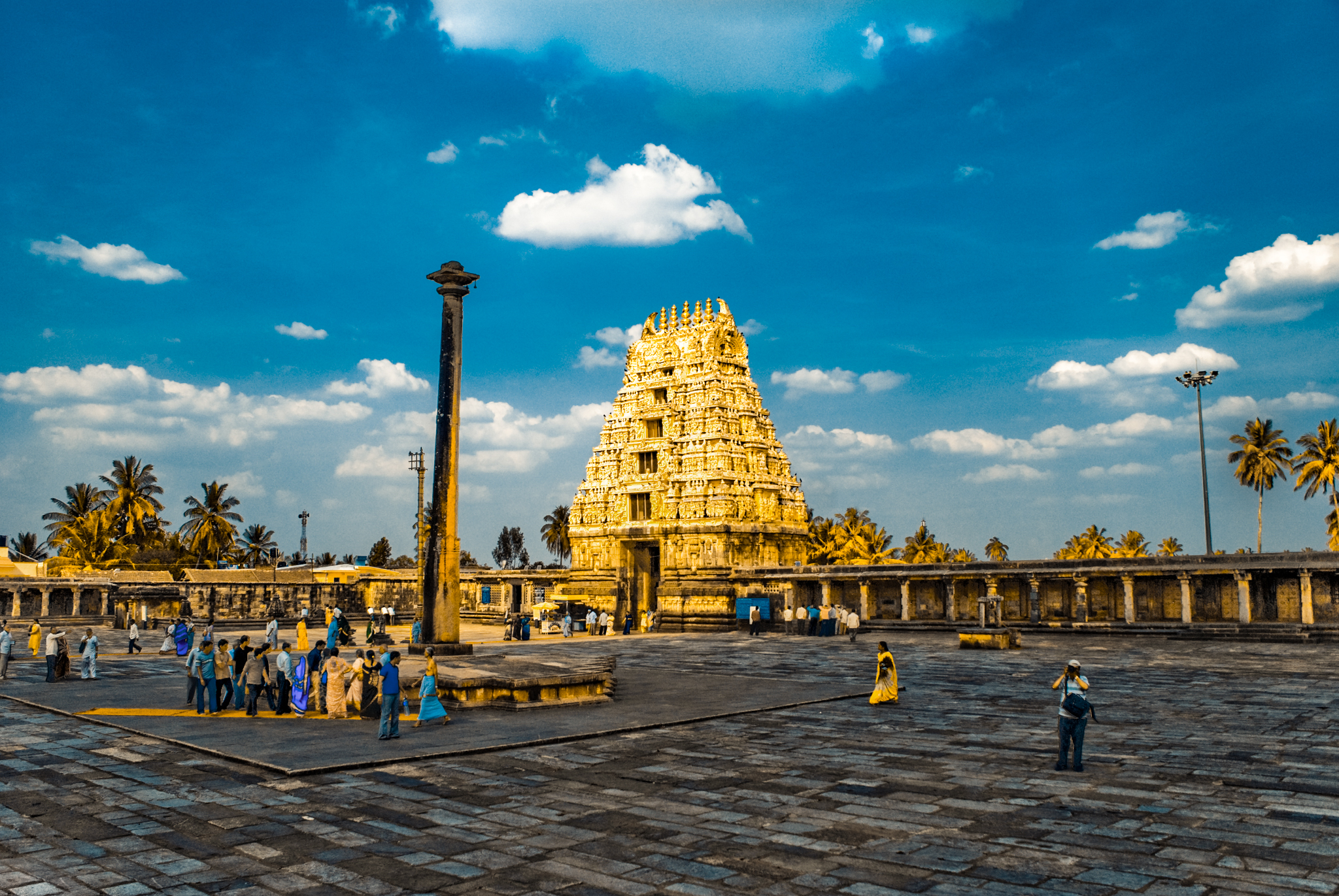
The temple's impressive 97-foot Rajagopuram, a multi-tiered pyramidal tower, stands as a prominent feature, showcasing elaborate carvings typical of Dravidian temple gateways.
Unique Sculptural Elements
Among its artistic treasures are a rare single-stone Yazhi, a mythical leonine creature, and an exceptional carving of Lord Shiva astride a Vedic horse, both demonstrating unique craftsmanship.
Dravidian Craftsmanship
Constructed primarily from granite, the temple's architecture reflects the enduring quality and intricate detailing characteristic of the Chola period's Dravidian style, evident in every pillar and wall.
Thanthondreeswarar: The Self-Manifested Lord and Sacred Lore
At the heart of Thanthondreeswarar Temple lies its presiding deity, Lord Thanthondreeswarar, revered as a Suyambu Lingam – a self-manifested form of Shiva. This divine presence is central to the temple's spiritual essence and its captivating origin story. Legend recounts the tale of Milagu Chetty, a pepper merchant, who discovered the Lingam after a miraculous encounter involving his pepper. This led to the unearthing of the sacred Lingam and the construction of the inner sanctum. Further enriching the temple's lore is the unwavering devotion of Kanampullar, a Nayanmar saint born in Belur, who famously used his own hair as a lamp wick to keep the temple illuminated, achieving liberation at this very site.
The Suyambu Lingam
Lord Thanthondreeswarar is uniquely revered as a Suyambu Lingam, signifying its self-manifested origin, a sacred aspect that imbues the temple with profound spiritual power.
Milagu Chetty's Discovery
The temple's foundation is rooted in the miraculous discovery of the Lingam by Milagu Chetty, whose divine encounter led to the consecration of this sacred site and the construction of its inner sanctum.
Kanampullar's Devotion
The lore includes the Nayanmar saint Kanampullar, born in Belur, whose ultimate act of devotion—using his hair as a lamp wick—underscores the temple's deep spiritual significance and the path to liberation.
Modern Pilgrimage
The Thanthondreeswarar Temple continues to be a vibrant center of faith and devotion, attracting pilgrims from across Tamil Nadu and neighboring states. Its relatively accessible location, though nestled in a rural setting, makes it a popular destination for devotees seeking spiritual solace and blessings from Lord Shiva. Modern pilgrimage to Belur often involves a journey by road, with many visitors combining their trip with visits to other significant temples in the Salem district. The temple's serene atmosphere, coupled with the historical significance of its self-manifested deity, creates a profound experience for worshippers. During auspicious days like Maha Shivaratri, Pradosham, and other Shiva-related festivals, the temple witnesses a significant surge in visitors, with special pujas and rituals performed throughout the day, often extending late into the night.
To accommodate the increasing number of devotees, the temple administration and local community have made efforts to improve facilities, including basic amenities like drinking water, restrooms, and modest lodging options for those wishing to stay overnight. Local businesses, including small eateries and shops selling puja items, thrive on the pilgrim traffic, contributing to the economic vitality of Belur. The temple also plays a role in promoting local tourism, with its unique architectural style and ancient history drawing interest from cultural enthusiasts and historians alike. As awareness of its spiritual and historical importance grows, the Thanthondreeswarar Temple is poised to continue its legacy as a significant pilgrimage site, adapting to modern needs while preserving its timeless traditions and sanctity for generations to come.
🗺 How to Reach
Hover a card to animate the journey on the map
Route to Karumandurai
Common Questions
Where is Thanthondreeswarar Temple: Chola Legacy in Belur located?
Thanthondreeswarar Temple: Chola Legacy in Belur is documented at Karumandurai, Karnataka.
Which deity is associated with Thanthondreeswarar Temple: Chola Legacy in Belur?
Thanthondreeswarar Temple: Chola Legacy in Belur is associated with Thanthondreeswarar.
Related Temples


A Living Covenant