A complete pilgrim record drawn from the existing published article data.
Tracing the Temple's Ancient Origins
The precise historical timeline of the Thanjavur Sankaranarayanar Temple remains largely undocumented, with its initial construction and founding dynasty shrouded in antiquity. While specific details about its original builder are not definitively known, the temple is believed to have ancient roots, possibly predating major documented dynasties. Over centuries, the site likely underwent various phases of development, expansion, and renovation, reflecting the patronage of local rulers and communities. Its enduring legacy is a testament to the continuous devotion it has inspired through generations.
Unknown Founding
The exact period of the temple's construction and the identity of its original patrons are not precisely recorded, pointing to a long and unwritten history.
Continuous Development
Despite the lack of specific historical records, the temple's architecture and layout suggest a series of expansions and modifications over many centuries.
Architectural Marvels of Sankaranarayanar
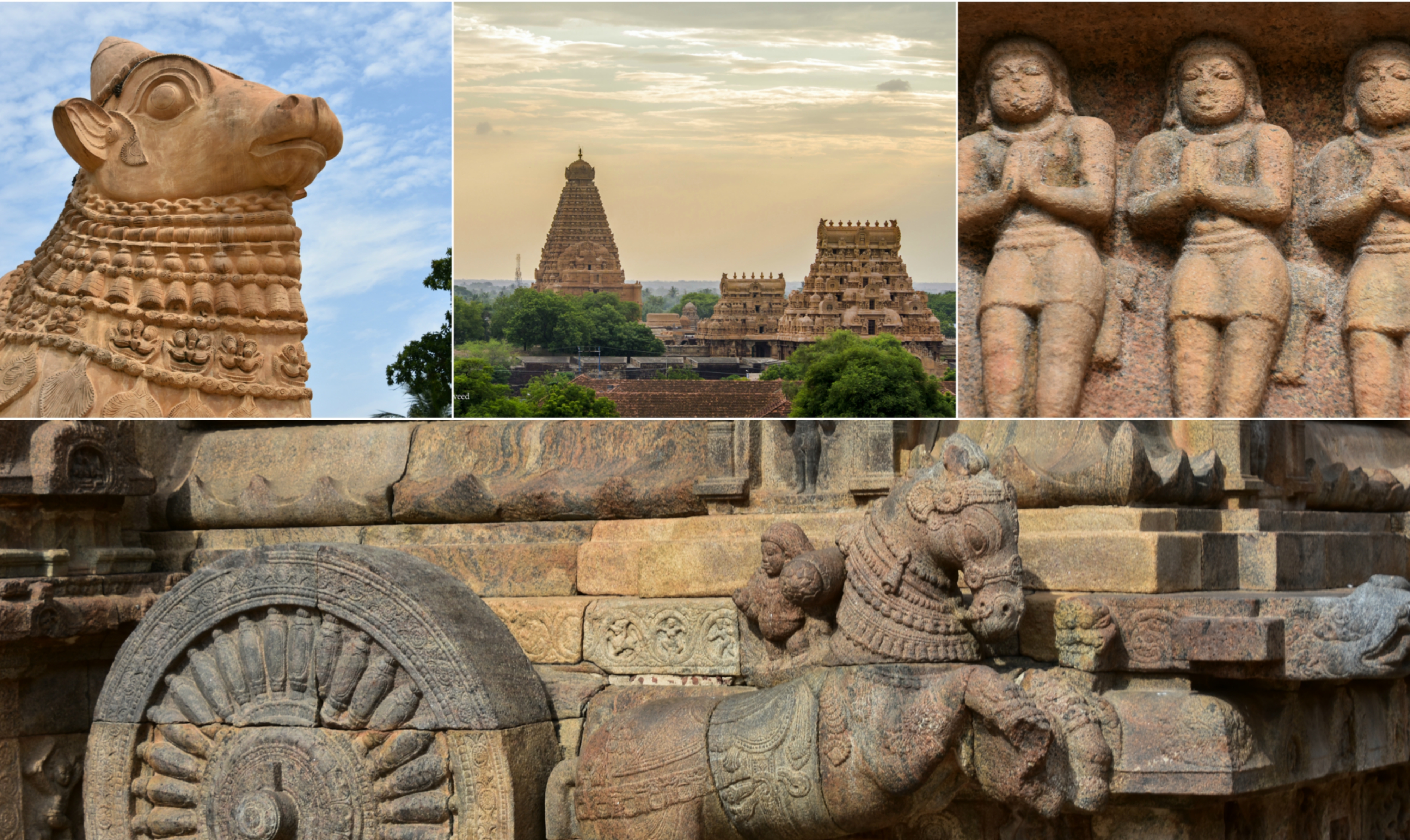
The Thanjavur Sankaranarayanar Temple exemplifies the distinctive Dravidian architectural style, characterized by its towering gopurams, elaborate mandapams, and intricate sculptural work. The temple complex is a visual narrative, with each structure and carving contributing to its artistic brilliance and spiritual ambiance. The main shrine, though modest, is surrounded by halls that feature finely carved pillars and ceilings, showcasing a harmonious blend of form and function. These architectural elements not only serve a functional purpose but also narrate ancient mythological tales, meticulously carved to showcase the craftsmanship of artisans from past eras.
Gopurams and Mandapams
The temple features impressive gopurams, or monumental entrance towers, and various mandapams, such as the maha mandapam and ardha mandapam, each adorned with detailed carvings.
Sculptural Narratives
Intricate sculptures on pillars and walls depict episodes from Hindu mythology, forms of deities, and celestial beings, serving as visual texts for devotees.
Material and Craftsmanship
Constructed primarily from stone, the temple showcases remarkable masonry and sculptural techniques, reflecting the high level of artistry prevalent in ancient Tamil Nadu.
Experiencing the Divine: A Visitor's Guide
Visiting the Thanjavur Sankaranarayanar Temple offers a deeply spiritual and culturally enriching experience. The temple welcomes devotees and tourists during specific hours, from 6:00 AM to 12:30 PM and 4:00 PM to 9:00 PM, with free entry. The best time to visit is between October and March, when the weather is pleasant. Visitors are encouraged to wear traditional attire as a sign of respect and must remove their footwear before entering. A typical visit duration ranges from one to two hours, allowing ample time for darshan and appreciating the architecture.
Operating Hours
The temple is open daily from 6:00 AM to 12:30 PM and again from 4:00 PM to 9:00 PM. There is no entry fee.
Visitor Etiquette
Traditional attire is preferred, and all visitors are required to remove their footwear before entering the sacred precincts.
Optimal Visit Period
The cooler months, specifically from October to March, are recommended for a comfortable and enjoyable visit to the temple.
| Deity | Shiva |
|---|---|
| Form | Shiva is often depicted with a third eye, a crescent moon in his matted hair, the river Ganga flowing from his head, and a blue throat. He typically holds a trident (Trishula) and a drum (Damaru), and is adorned with snakes and ashes. |
| Consort | Parvati |
| Sampradaya | Hindu |
| Significance | As part of the Hindu Trimurti, Shiva is known as 'The Destroyer' or 'The Transformer', responsible for cosmic dissolution and recreation. He represents asceticism, meditation, and the ultimate reality, embodying both destructive and benevolent aspects. |
Mythological Story Not Provided
No specific mythological story or legend associated with the Thanjavur Sankaranarayanar Temple was provided in the input data.
Shiva, the Destroyer and Transformer, embodies the cosmic dance of creation and dissolution, guiding souls towards ultimate liberation.
In the sacred presence of Shiva, one finds peace, reflection, and a profound connection to the eternal cycles of the universe.
Related temples: Aakkoor Thanthondreeswarar Temple | Aazhimala Shiva Temple
Thanjavur Sankaranarayanar Temple: A Symbol of Unity
The Thanjavur Sankaranarayanar Temple, nestled in Tamil Nadu, stands as a unique testament to religious harmony. It is dedicated to Sankaranarayanar, a composite deity embodying the unified forms of Shiva (Sankara) and Vishnu (Narayana). This sacred site is revered for its profound spiritual message of non-duality, attracting devotees who seek to experience the confluence of these two major Hindu traditions. The temple's presence in Thanjavur underscores its significant cultural importance within the region.
The Unified Form
Sankaranarayanar is depicted as a single idol, with the right half representing Shiva and the left half representing Vishnu, illustrating their inseparable nature and divine unity.
Promoting Harmony
The temple serves as a powerful symbol of religious tolerance, promoting the underlying unity between Shaivism and Vaishnavism within the Hindu faith.
Sankaranarayanar: The Fusion of Shiva and Vishnu
The profound theological concept behind Sankaranarayanar represents the ultimate unity of the divine, merging Shiva, the destroyer and transformer, with Vishnu, the preserver. This unique half-Shiva, half-Vishnu deity, often depicted with the right side representing Shiva (trident, serpent, ash-smeared body) and the left representing Vishnu (conch, discus, golden attire), symbolizes that both deities are aspects of the one supreme being. The mythology surrounding Sankaranarayanar emphasizes that despite their distinct roles and followers, their essence is indivisible. This fusion underscores the idea that different paths lead to the same divine truth, promoting spiritual inclusivity and challenging sectarian divisions within Hinduism.
Symbolism of Unity
The composite form of Sankaranarayanar visually articulates the philosophical principle that Shiva and Vishnu are not separate but manifestations of a single ultimate reality.
Mythological Origins
Legends describe how this form manifested to demonstrate the equality and interconnectedness of Shiva and Vishnu to devotees who were once divided by sectarian beliefs.
Spiritual Significance
The deity inspires devotees to transcend dualities, recognizing the underlying oneness of all creation and the harmonious nature of the divine.
Cultural Impact and Local Traditions
The Sankaranarayanar Temple is not merely a place of worship but a vibrant nucleus of cultural preservation and expression within Thanjavur and its surrounding regions. Its festivals, particularly the annual Brahmotsavam, serve as significant cultural events, drawing not only devotees but also artists and performers who showcase traditional Tamil music, Bharatanatyam dance, and folk arts. These celebrations often feature elaborate processions with deities adorned in rich silks and jewels, accompanied by traditional Nadaswaram and Thavil music, echoing through the streets and fostering a deep sense of community identity. The temple's architectural grandeur and sculptural narratives have also historically inspired local artisans, influencing styles in painting, carving, and textile design, thereby embedding its spiritual essence into the very fabric of local artistic traditions. Beyond its artistic influence, the Sankaranarayanar Temple plays a crucial role in the social cohesion and traditional practices of the local community. It acts as a gathering point for various life cycle rituals, from naming ceremonies to annual ancestral rites, reinforcing familial and communal bonds. The temple complex often hosts discourses on ancient scriptures and moral teachings, contributing to the spiritual education of younger generations. Local communities actively participate in the maintenance and daily rituals of the temple, viewing it as a shared heritage. This collective stewardship ensures that the temple remains a living institution, perpetuating age-old customs and fostering a continuous dialogue between the past and present, making it an indispensable part of Thanjavur's socio-cultural landscape.🗺 How to Reach
Hover a card to animate the journey on the map
Verified routes to Thanjavur Sankaranarayanar Temple
Common Questions
Where is Thanjavur Sankaranarayanar Temple: Marvel of Dravidian Art located?
Thanjavur Sankaranarayanar Temple: Marvel of Dravidian Art is documented at Thanjavur, Tamil Nadu.
Which deity is associated with Thanjavur Sankaranarayanar Temple: Marvel of Dravidian Art?
Thanjavur Sankaranarayanar Temple: Marvel of Dravidian Art is associated with Shiva.