A complete pilgrim record drawn from the existing published article data.
Tracing the Legacy: History of Thanjai Mamani Koil
The historical roots of Thanjai Mamani Koil stretch back to antiquity, with its origins often attributed to early Chola patrons, though specific construction dates remain debated. Over centuries, the temple complex has witnessed significant expansions and renovations under various powerful South Indian dynasties. The Cholas, renowned for their temple-building prowess, likely laid much of its foundational structure. Later periods, including the Nayak rule, contributed to its architectural grandeur and preserved its sanctity. These royal patrons ensured the continuous worship and maintenance of the temple, allowing its legacy to flourish through generations as a beacon of devotion.
Ancient Origins
The temple's history is believed to date back to ancient times, with its sacredness recognized across various historical periods.
Chola and Nayak Patronage
Major contributions to the temple's structure and upkeep came from powerful dynasties like the Cholas and later the Nayaks, who were devout patrons.
Enduring Legacy
Despite the passage of centuries, the temple has maintained its religious significance and architectural integrity, standing as a testament to its enduring legacy.
Architectural Marvels of Thanjai Mamani Koil
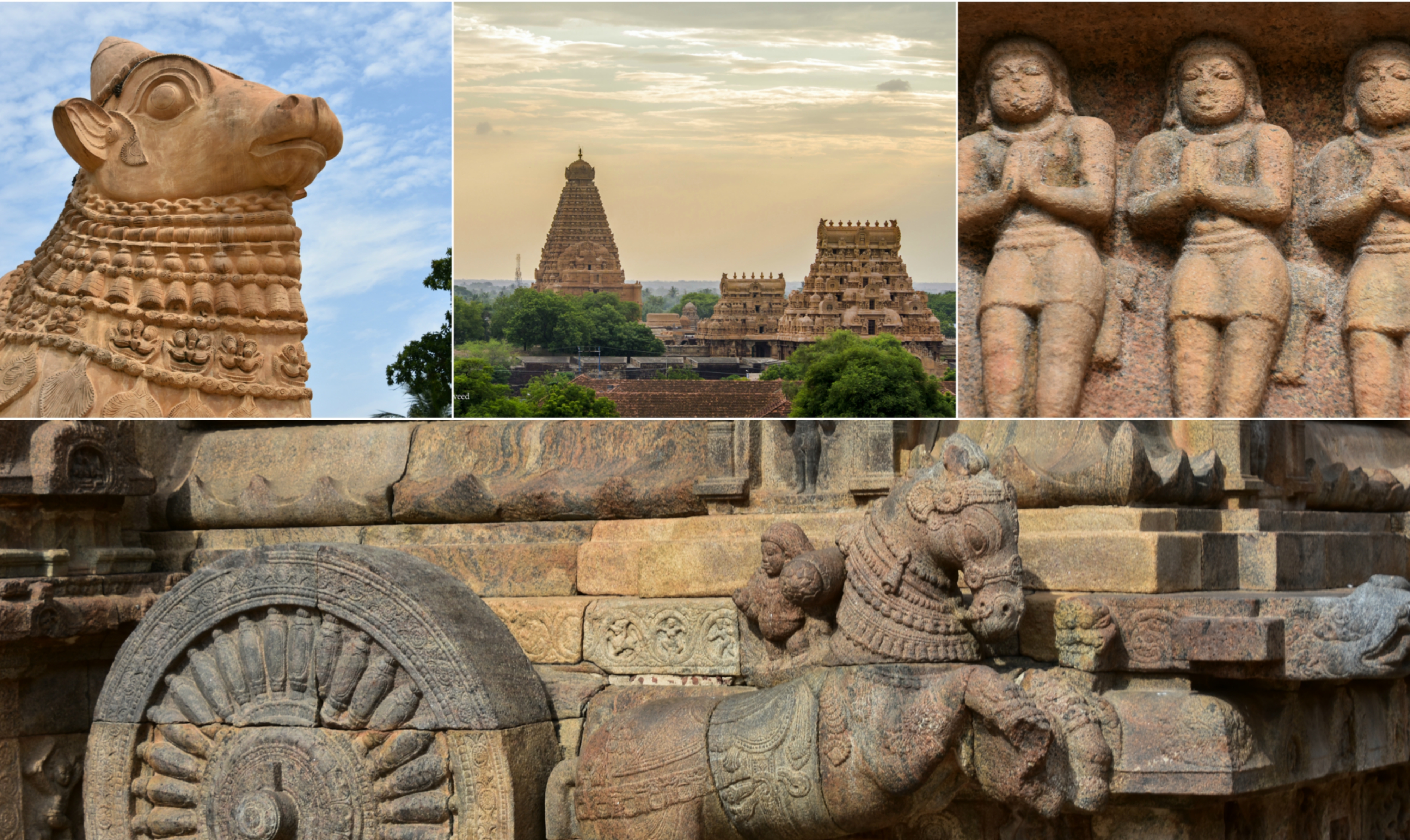
Thanjai Mamani Koil exemplifies the classic Dravidian architectural style, characterized by its towering gopurams and intricate sculptural details. The temple complex features three distinct vimanas, each surmounting a sanctum dedicated to a different form of Vishnu. The walls and pillars of the mandapams are adorned with exquisite carvings depicting mythological episodes from Vaishnavite traditions, celestial beings, and various divine forms. The craftsmanship reflects the artistic brilliance of the eras during which the temple was constructed and renovated, showcasing a harmonious blend of structural grandeur and delicate artistry, making it a visual spectacle.
Dravidian Style Elements
The temple showcases quintessential Dravidian architectural features, including multi-tiered gopurams and pyramidal vimanas.
Intricate Sculptures
Every surface, from pillars to walls, is embellished with detailed sculptures narrating Puranic tales and depicting various deities.
Unique Tri-Shrine Layout
Its distinct layout features three separate shrines for Vishnu within a single complex, each with its own architectural nuances.
The Divine Presence: Lord Vishnu at Thanjai Mamani Koil
At Thanjai Mamani Koil, Lord Vishnu is worshipped in three distinct forms, making it a unique pilgrimage destination. The primary deity, Neelamega Perumal, is enshrined alongside Thanjaiyali Nagar and Manikunra Perumal, each in their dedicated sanctums. Puranic narratives link the temple to the sage Markandeya, who is believed to have worshipped Vishnu here. Local legends recount the lord's manifestation to protect devotees, emphasizing his compassionate nature. These stories highlight the temple's sacred geography and the deep spiritual connection devotees feel with the various divine presences within its hallowed precincts.
The Triple Manifestations of Vishnu
The temple is unique for housing three distinct forms of Lord Vishnu: Neelamega Perumal, Thanjaiyali Nagar, and Manikunra Perumal.
Puranic Narratives
Associated with ancient Puranic stories, the temple is believed to be a site where sage Markandeya performed penance and was graced by Vishnu.
Local Legends
Folklore and local legends further enrich the temple's spiritual ambiance, detailing divine interventions and miracles attributed to the deities.
Planning Your Visit to Thanjai Mamani Koil
Thanjai Mamani Koil welcomes visitors from 6:00 AM to 12:30 PM and 4:00 PM to 9:00 PM, with free entry. The best time to visit is from October to March, offering pleasant weather. Traditional attire is preferred, and footwear must be removed before entering. The temple is easily accessible from Thanjavur city center; it is 5-7 km from Thanjavur New Bus Stand and 3-5 km from Thanjavur Junction railway station, reachable by auto-rickshaws or taxis. Allow 1-2 hours for a meaningful visit. Parking is available for those arriving by car.
Visitor Information and Timings
The temple is open daily during specific hours, with free entry, and offers a serene environment for worship and sightseeing.
Accessibility and Transport
Conveniently located near major transport hubs in Thanjavur, the temple is easily accessible by various local transportation options.
Etiquette and Best Practices
Visitors are encouraged to observe traditional dress codes and remove footwear to respect the sanctity of the temple.
| Deity | Vishnu |
|---|---|
| Form | Preserver of the Universe |
| Consort | Lakshmi |
| Sampradaya | Vaishnavism |
| Significance | One of the principal deities of Hinduism, Vishnu is the Preserver and Protector of the universe. He is revered for his role in maintaining cosmic order and righteousness. |
The Cosmic Sleep of Vishnu
Lord Vishnu is often depicted reclining on the cosmic serpent Adishesha, floating on the primordial waters of the causal ocean. This posture, known as Ananthasayana, symbolizes the period between two cosmic cycles (yugas). While Vishnu rests, the universe is unmanifested, existing within Him. From His navel emerges a lotus, upon which Lord Brahma, the creator, is born to begin the next cycle of creation. This profound imagery represents Vishnu's role as the sustainer of all existence, from whom creation springs forth and into whom it ultimately dissolves, awaiting the next cosmic dawn.
In the heart of Thanjavur, Vishnu's grace flows, a timeless sanctuary where devotion truly grows.
Seek solace in the divine presence; let the ancient stones whisper tales of eternal peace.
Thanjai Mamani Koil: A Divine Abode in Thanjavur
Thanjai Mamani Koil, also known as Neelamega Perumal Temple, is a revered Vaishnavite shrine situated in Thanjavur, Tamil Nadu. It holds immense spiritual significance as one of the 108 Divya Desams, the holy abodes of Lord Vishnu glorified by the Azhwars. This temple is unique for encompassing three distinct Vishnu temples within a single complex, each housing a different manifestation of the deity. It is a vital pilgrimage site, deeply embedded in the rich cultural and religious tapestry of the region, attracting devotees seeking divine blessings and spiritual solace.
Significance as a Divya Desam
The temple's inclusion among the 108 Divya Desams underscores its paramount importance in Vaishnavite tradition, making it a must-visit for devotees.
The Three Shrines
Uniquely, the complex houses three separate shrines, each dedicated to a distinct form of Lord Vishnu, offering a rare spiritual experience.
Vaishnavite Heritage
As a prominent Vaishnavite temple, it serves as a center for the propagation of Vishnu's teachings and the preservation of ancient traditions.
🗺 How to Reach
Hover a card to animate the journey on the map
Verified routes to Thanjai Mamani Koil
Common Questions
Where is Thanjai Mamani Koil: Ancient Vishnu Divya Desam located?
Thanjai Mamani Koil: Ancient Vishnu Divya Desam is documented at Thanjavur, Tamil Nadu.
Which deity is associated with Thanjai Mamani Koil: Ancient Vishnu Divya Desam?
Thanjai Mamani Koil: Ancient Vishnu Divya Desam is associated with Vishnu.