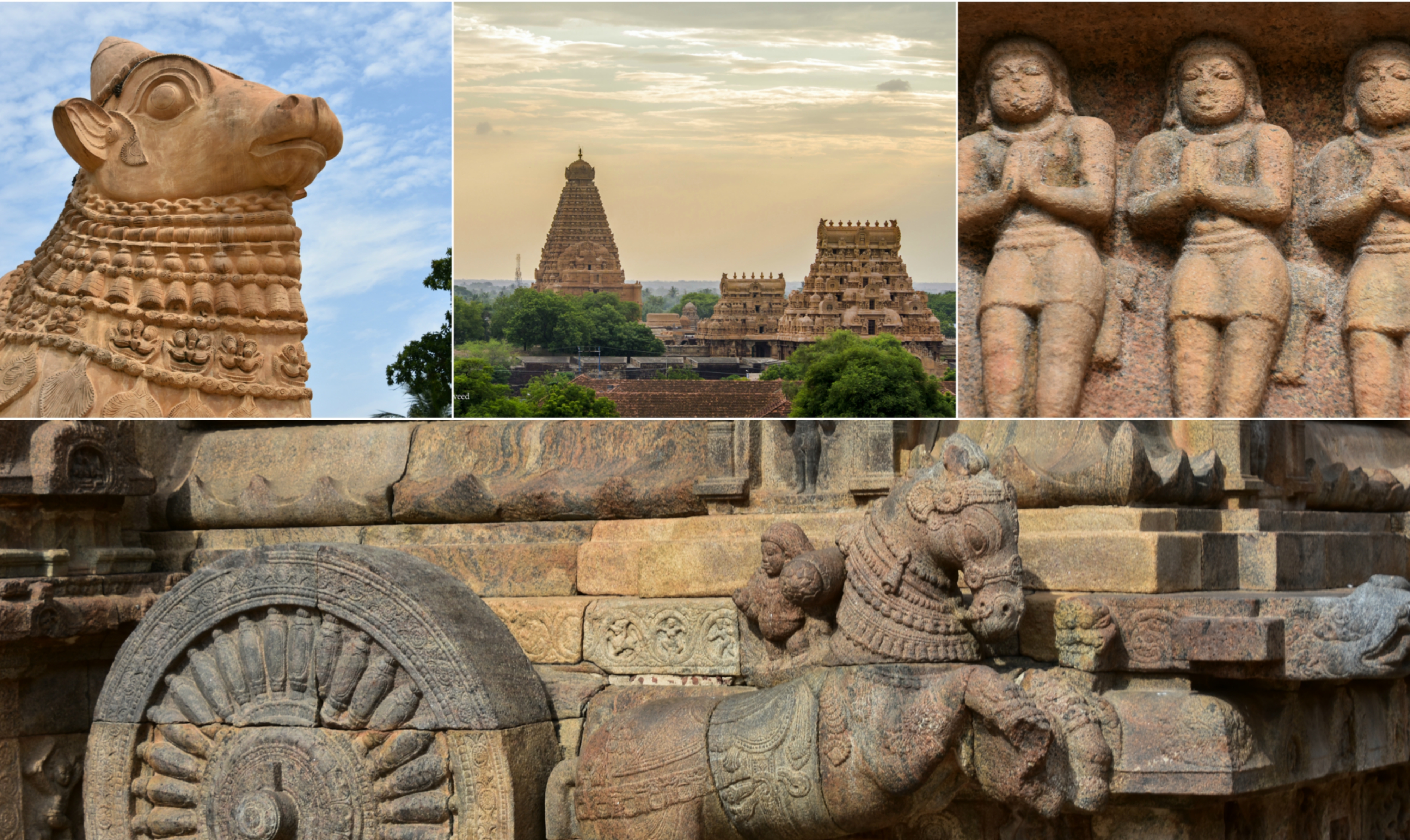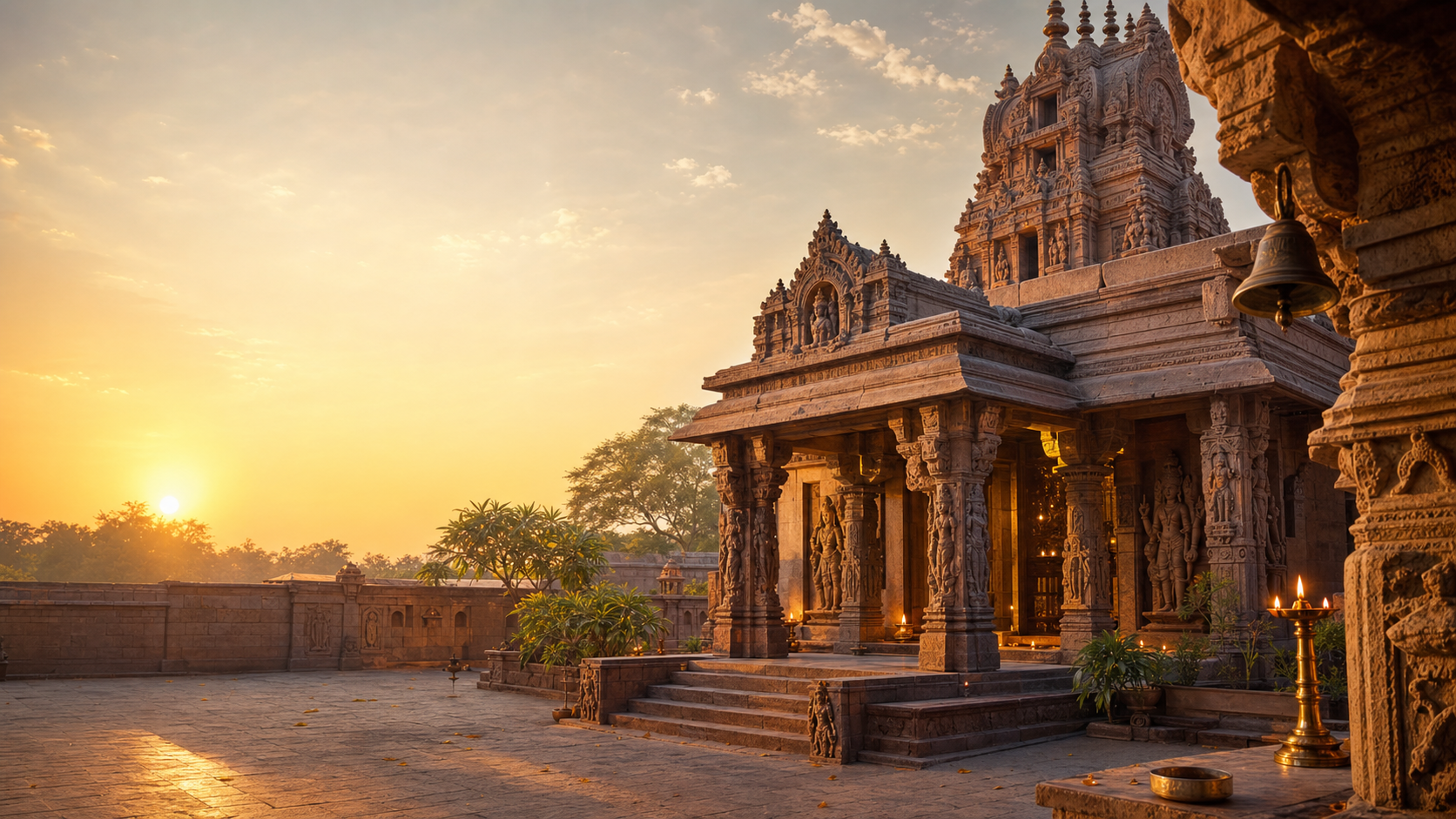

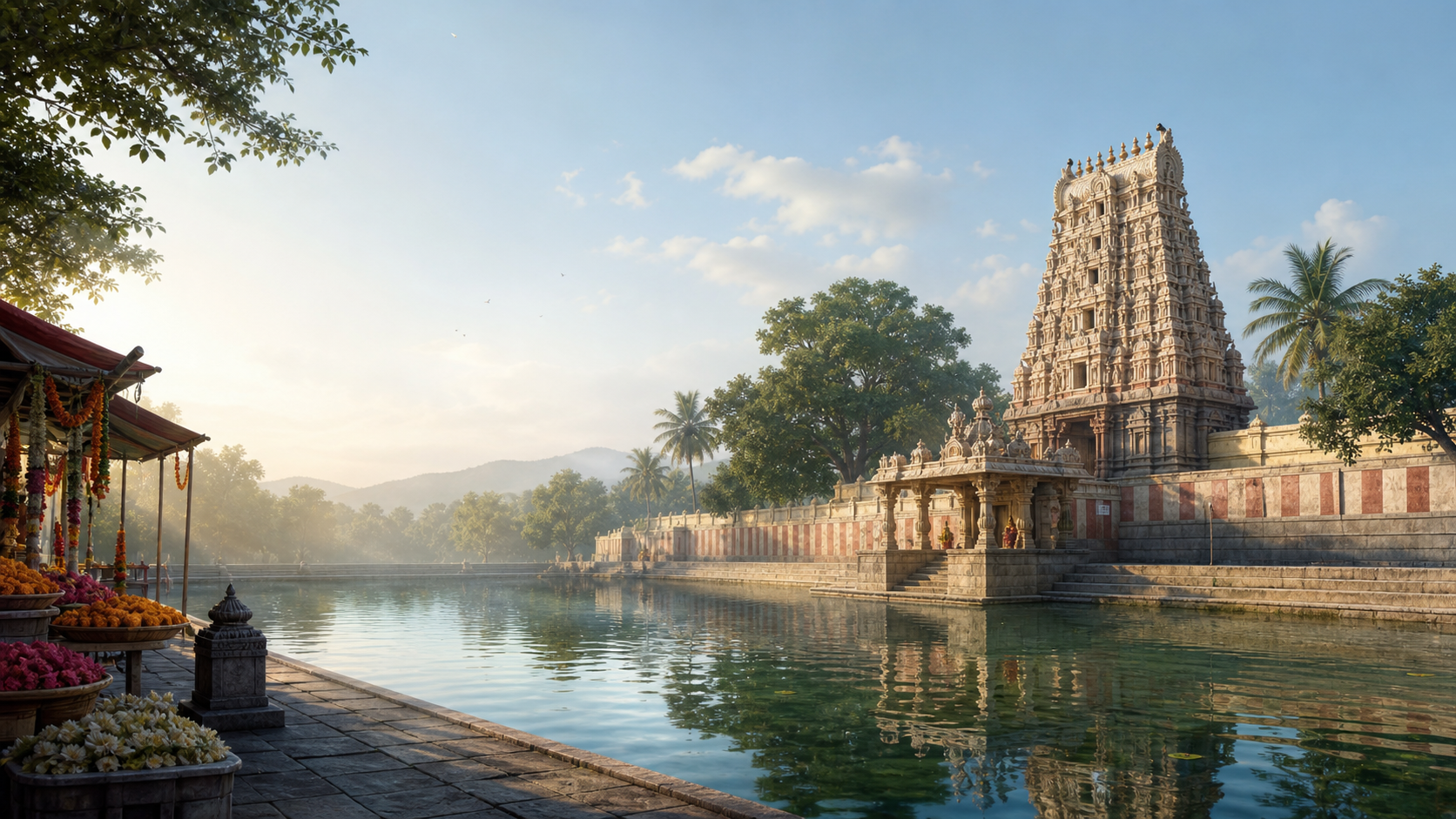

A complete pilgrim record drawn from the existing published article data.
From Humble Beginnings to Monumental Heights: The History of Gopuram Development
Tracing their origins from simple, modest gateways in early Dravidian temple architecture, Gopurams gradually evolved into the colossal, multi-tiered, and intricately sculpted marvels seen today. This transformation reflects centuries of continuous architectural innovation, religious devotion, and the patronage of powerful dynasties in South India. Initially, the main shrine tower (vimana) was the most prominent feature. Over time, as temple complexes expanded, the outer gateways began to grow in scale and ornamentation, eventually surpassing the vimanas in height during the later Chola, Pandya, and Vijayanagara periods, becoming the defining elements of the temple landscape.
Early Forms
The earliest Gopurams were smaller, less ornate structures, often integrated directly into the temple wall.
Dynastic Patronage
The Chola, Pandya, and Vijayanagara empires played crucial roles in funding and inspiring the construction of increasingly taller and more elaborate Gopurams.
Evolution of Scale
The shift from prioritizing the central shrine's height to emphasizing the outer gateways marked a significant change in temple design philosophy.
Anatomy of a Giant: Unpacking the Architectural Elements of Gopurams
The structural complexity of Gopurams showcases remarkable engineering and artistic skill. They are characterized by their massive stone bases, which provide stability for the towering superstructure. Above this solid foundation, the Gopuram tapers upwards through multiple tiers, or talas, each adorned with a profusion of vibrant stucco sculptures. These sculptures depict a vast pantheon of deities, mythological figures, and narrative scenes, often painted in vivid colors. The apex of the Gopuram is typically crowned with a series of kalasams, or ornamental pots, signifying auspiciousness. The central passageway beneath the tower allows devotees to enter the temple courtyard.
Base and Superstructure
The upapitha (sub-base) and adhisthana (base) support the main structure, which is divided into multiple talas (tiers) that progressively recede.
Sculptural Adornment
Thousands of stucco figures, often brightly painted, cover the tapering tiers, depicting Hindu mythology and iconography.
Kalasam Finials
The topmost part features barrel-vaulted roofs (sikhara) crowned with kalasams, metal or stone finials that symbolize prosperity and divinity.
Beyond the Stone: The Cultural and Spiritual Heart of Gopurams
Gopurams serve not only as physical gateways but also as profound spiritual symbols, deeply embedded in the cultural and religious fabric of South India. They embody the concept of cosmic mountains, protecting sacred spaces from negative influences and acting as a visual representation of the divine cosmos. For devotees, passing through a Gopuram is a ritualistic act, signifying a transition from the material world to a spiritual one. They continue to inspire awe and devotion in contemporary society, drawing millions of pilgrims and tourists who marvel at their grandeur and spiritual significance, reinforcing their role as living heritage.
Cosmic Symbolism
Often likened to Mount Meru, the mythical cosmic mountain, symbolizing the universe and its divine order.
Threshold to Divinity
They mark the boundary between the outer, secular world and the inner, sacred sanctum of the temple.
Cultural Identity
Gopurams are enduring symbols of South Indian culture, art, and religious devotion, frequently depicted in art and literature.
The Sky-Piercing Sentinels: An Introduction to India's Grand Gopurams
Gopurams are iconic, towering gateway structures that define South Indian temple architecture. These monumental entrances serve as both majestic portals to sacred spaces and profound symbolic representations of the divine. Characterized by their multi-tiered construction and elaborate sculptural adornments, Gopurams stand as a testament to ancient Indian engineering and artistic prowess. They not only guide devotees into the temple complex but also visually dominate the landscape, announcing the presence of a sacred precinct from afar. Their intricate carvings often depict mythological narratives and deities.
Architectural Significance
Gopurams are central to the visual identity of South Indian temples, often overshadowing the main shrine in height and grandeur.
Symbolic Role
They symbolize the cosmic mountain Meru, acting as a threshold between the mundane and the sacred realm, purifying devotees upon entry.
Reaching for the Heavens: India's Most Stupendous Gopurams Ranked
This section delves into the most impressive and tallest Gopurams across India, highlighting their unique features, historical context, and the sheer scale that places them among the world's architectural wonders. Many of these towering gateways are found in Tamil Nadu, a state renowned for its temple architecture. The Rajagopuram of the Srirangam Ranganathaswamy Temple, reaching 73 meters (240 feet), stands as the tallest in Asia. Other notable examples include the Gopurams of the Meenakshi Amman Temple in Madurai and the Annamalaiyar Temple in Tiruvannamalai, each showcasing distinct artistic styles and historical periods. Their colossal size and intricate detailing make them significant cultural landmarks.
Srirangam Ranganathaswamy Temple
Its 236-foot tall Rajagopuram is the tallest temple tower in Asia, completed in 1987, though the temple complex dates back centuries.
Meenakshi Amman Temple, Madurai
Features 14 Gopurams, with the tallest southern tower reaching over 51 meters (170 feet), adorned with thousands of vibrant sculptures.
Annamalaiyar Temple, Tiruvannamalai
Known for its four massive Gopurams, the tallest being the eastern Rajagopuram at approximately 66 meters (217 feet), built by Krishnadevaraya.
Guardians of Heritage: Experiencing and Protecting India's Towering Gateways
Understanding the best ways to visit these magnificent structures and the ongoing efforts to conserve their intricate artistry and structural integrity is crucial for future generations. Many Gopurams are active places of worship, requiring visitors to adhere to specific dress codes and customs, such as removing footwear. Conservation involves intricate restoration of stucco figures, structural reinforcement, and protection from environmental degradation. Organizations and local communities work tirelessly to preserve these architectural wonders, ensuring their longevity and continued cultural relevance. Responsible tourism plays a vital role in supporting these preservation efforts.
Visiting Etiquette
Visitors are encouraged to respect local customs, including modest dress and removing shoes, especially within temple precincts.
Conservation Challenges
Preserving Gopurams involves addressing weather erosion, material degradation, and the delicate restoration of intricate sculptures.
Community Involvement
Local artisans, religious institutions, and heritage organizations are actively involved in the ongoing maintenance and protection of these structures.
| Deity | Unknown |
|---|---|
| Form | Unknown |
| Consort | Unknown |
| Sampradaya | other |
| Significance | Unknown |
The towering Gopurams stand as celestial gateways, inviting devotees into a realm of divine beauty and spiritual grandeur.
Each sculpted detail on the Gopuram narrates ancient tales, a silent testament to devotion and architectural mastery.
Related temples: Aakkoor Thanthondreeswarar Temple | Abhaya Varadeeswarar Temple, Adirampattinam
🗺 How to Reach
Hover a card to animate the journey on the map