A complete pilgrim record drawn from the existing published article data.
The Enduring History of Tangrakottai Temple
The history of Tangrakottai Temple is deeply intertwined with the fort it inhabits, reflecting centuries of regional power shifts and religious patronage in Tamil Nadu. While precise founding dates are often debated, architectural styles and historical records suggest its origins likely trace back to medieval periods, possibly under local chieftains or larger South Indian dynasties. The temple has witnessed various rulers and empires, each leaving an imprint on its structure and spiritual practices. Its strategic location within the fort underscored its importance not just as a place of worship but also as a cultural anchor for the community through turbulent times.
Origins and Early Period
The temple's initial construction is believed to date back several centuries, possibly to the Vijayanagara period or earlier, a time of significant temple building activity in South India.
Patronage and Rulers
Over time, various local rulers and larger dynasties, including possibly the Hoysalas or Vijayanagara kings, extended their patronage, contributing to the temple's maintenance and expansion.
Role within the Fort
The temple was not merely a religious edifice but an integral part of the fort's life, serving as a spiritual center for its inhabitants and a symbol of their faith and resilience.
Architectural Marvels of Tangrakottai: A Temple within a Fort
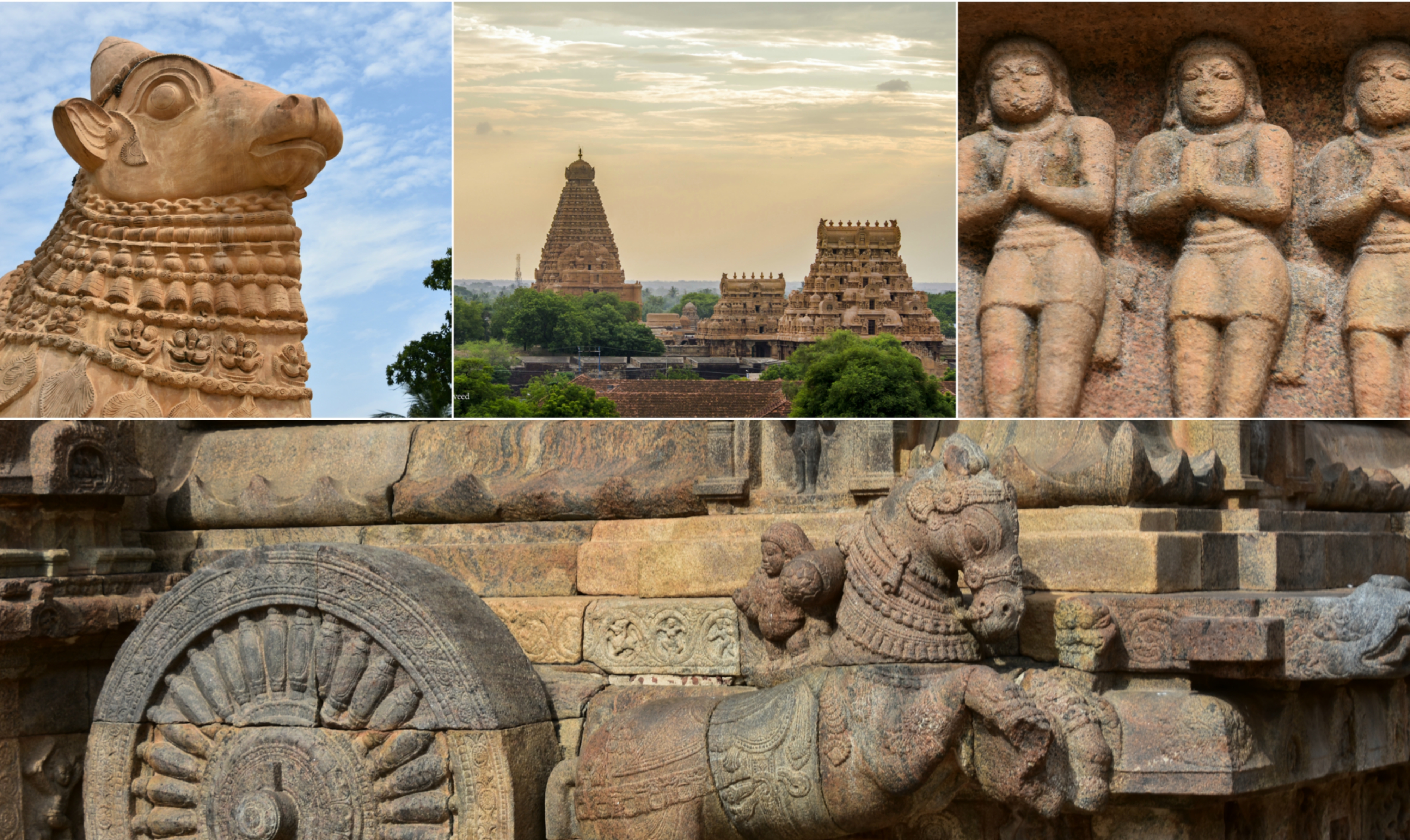
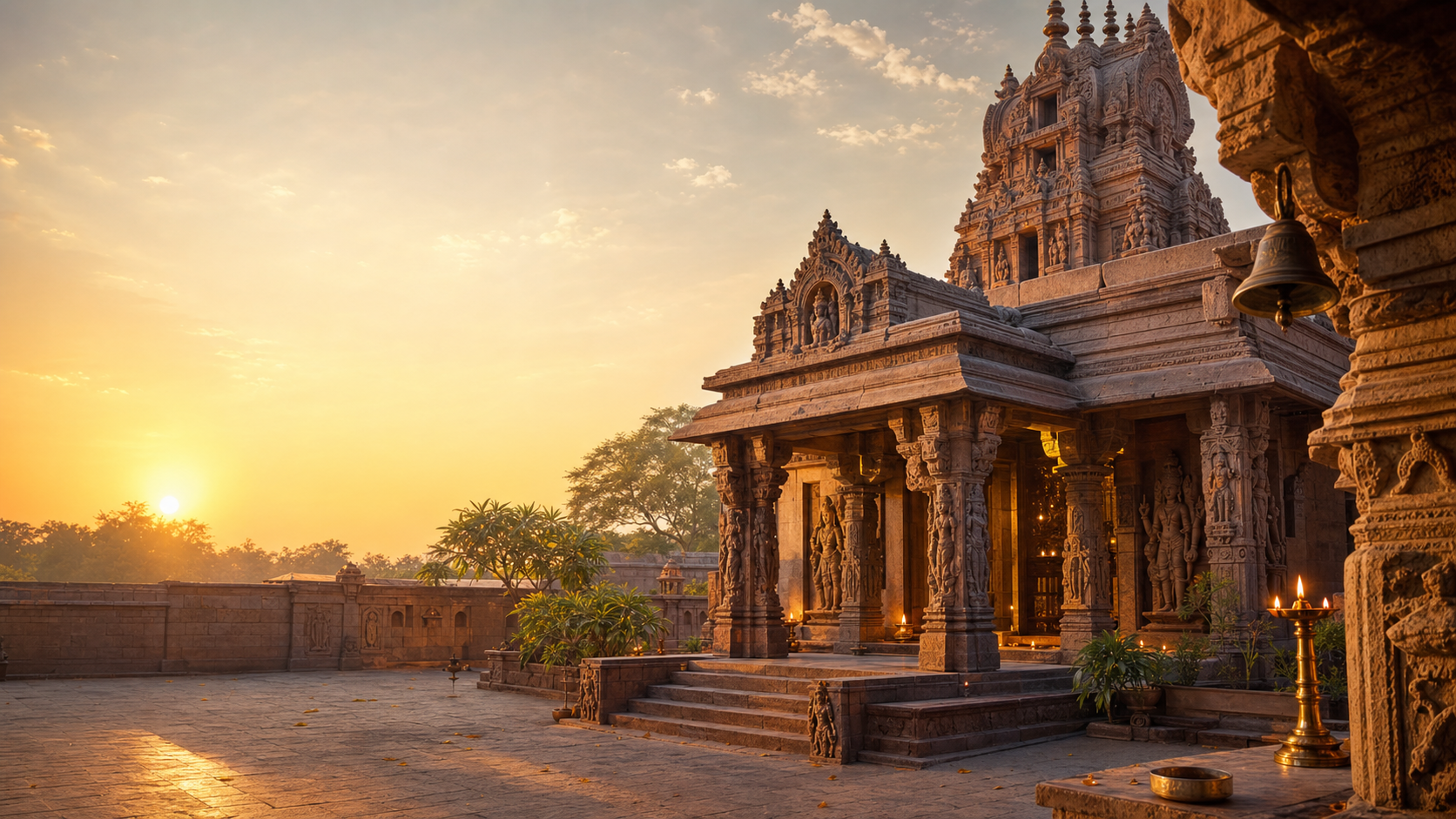
The Tangrakottai Temple showcases distinctive architectural features, harmoniously blending traditional Hindu temple design with its fortified environment. The 'beautiful architecture' is characterized by elements typical of South Indian temple styles, possibly Dravidian, with intricate carvings and a well-planned layout. Its placement within the fort's confines is particularly notable, demonstrating how sacred spaces were integrated into defensive structures. The temple's central position within the fort highlights its significance, with its gopurams or central shrine standing as a spiritual beacon amidst the military architecture.
Temple Design Elements
The temple exhibits classic South Indian architectural motifs, including detailed sculptures, sturdy stone construction, and traditional shrine layouts, reflecting skilled craftsmanship.
Integration with Fort
A unique aspect is the seamless integration of the temple within the fort walls, showcasing a historical approach where spiritual and defensive needs were often met by a single complex.
Central Shrine and Deity
The main shrine, dedicated to Lord Rama, is typically the focal point, often featuring a finely sculpted idol and architectural details that emphasize the deity's importance.
Lord Rama: The Central Deity and His Legends
Lord Rama, the central deity of Tangrakottai Temple, is revered as the seventh avatar of Vishnu, embodying dharma (righteousness), courage, and sacrifice. His life story, chronicled in the epic Ramayana, is a cornerstone of Hindu mythology, influencing countless devotees. At Tangrakottai, the presence of Lord Rama as the main deity reinforces the temple's spiritual identity. While specific local legends directly tied to Rama's visit to Tangrakottai are not widely documented, the temple serves as a focal point for devotion, celebrating his divine attributes and the universal values he represents.
Rama's Divine Significance
Lord Rama is worshipped as the ideal man and king, known for his unwavering adherence to duty, his compassion, and his victory over evil, making him a revered figure.
Avatar of Vishnu
As an incarnation of Vishnu, Rama's role is to protect the cosmic order and restore righteousness to the world, a belief central to the temple's veneration.
Devotional Practices
Devotees at Tangrakottai Temple engage in prayers, rituals, and chanting, seeking blessings and spiritual guidance from Lord Rama, continuing a timeless tradition.
Planning Your Visit to Tangrakottai Temple
Visiting Tangrakottai Temple offers a blend of spiritual and historical exploration. The temple is accessible by local buses and private taxis from Dharmapuri Bus Stand, approximately 15-20 km away. Dharmapuri Railway Station (DPJ) also serves as a convenient access point. For air travelers, Kempegowda International Airport, Bangalore (BLR), is about 150 km distant. The temple is open from 6:00 AM to 12:30 PM and 4:00 PM to 9:00 PM, with free entry. The best time to visit is from October to March, offering pleasant weather. Visitors are encouraged to wear traditional attire and remove footwear before entering the temple premises.
Accessibility and Transport
The temple is well-connected by road, with buses and taxis available from Dharmapuri. The nearest railway station is Dharmapuri (DPJ), and the closest major airport is Bangalore (BLR).
Best Time and Timings
The ideal period for a visit is between October and March. The temple operates daily from 6:00 AM to 12:30 PM and 4:00 PM to 9:00 PM, allowing ample time for darshan.
Visitor Etiquette
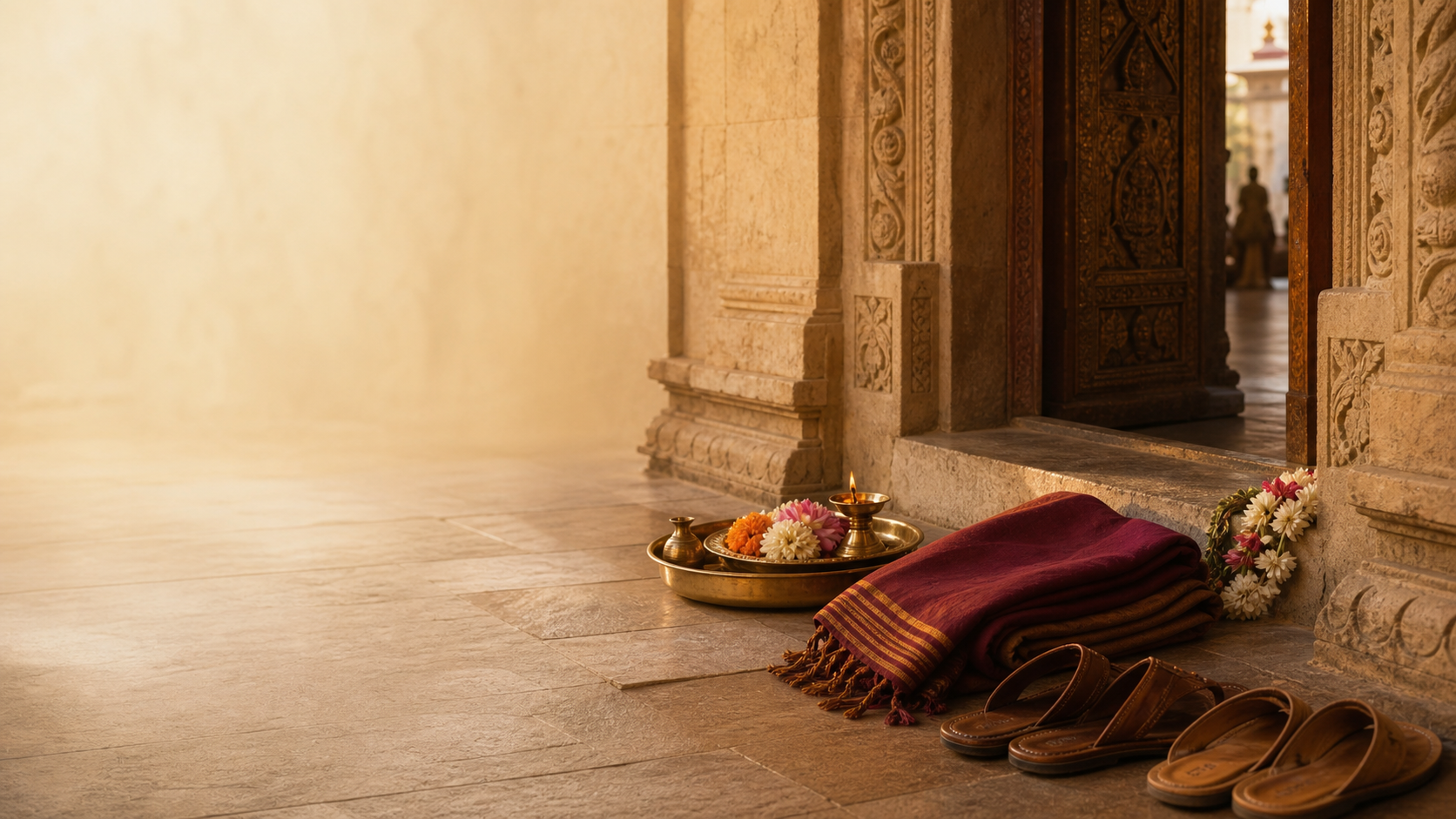
Entry is free, and a visit typically lasts 1-2 hours. Guests are requested to wear modest, traditional attire and to remove their footwear as a mark of respect within the sacred precincts.
| Deity | Lord Rama |
|---|---|
| Form | Lord Rama is depicted as an avatar of Vishnu. His form is associated with righteousness and ideal kingship. |
| Sampradaya | Hindu |
| Significance | As the main deity, Lord Rama is central to the temple's worship and is present in the center of the fort, indicating his prominent spiritual role. |
No Specific Temple Legend Provided
Information regarding a specific mythological story or legend directly associated with the Tangrakottai temple was not provided in the input data. The temple is dedicated to Lord Rama, an avatar of Vishnu, whose life story is extensively documented in the Ramayana.
Lord Rama, the epitome of righteousness, graces the heart of Tangrakottai Fort, embodying ideal kingship and divine virtue.
Experience the serene devotion and architectural beauty of Tangrakottai, where Lord Rama's presence offers solace and spiritual reflection.
Discovering Tangrakottai: A Fortified Abode of Lord Rama
Nestled within the historic Tangrakottai fort in Dharmapuri, Tamil Nadu, lies a unique Hindu temple dedicated to Lord Rama, an avatar of Vishnu. This distinctive setting makes the temple a remarkable cultural and architectural site, offering visitors a glimpse into both spiritual devotion and historical defense. The temple, known for its beautiful architecture, stands as a central feature of the fort, drawing devotees and history enthusiasts alike to experience its serene ambiance and rich heritage. It represents a harmonious blend of spiritual sanctity and strategic fortification, characteristic of ancient South Indian constructions.
Unique Fort Setting
The temple's most striking feature is its location within the Tangrakottai fort. This integration highlights a historical period where religious sites were often protected within strategic fortifications, blending spiritual importance with defensive architecture.
Dedication to Lord Rama
At its heart, the temple venerates Lord Rama, the seventh avatar of Vishnu, revered for his righteousness and valor. His presence as the main deity underscores the temple's significance within the Hindu tradition.
Cultural Significance
Tangrakottai Temple serves as a vital cultural landmark in Dharmapuri, embodying centuries of devotion and architectural skill. It stands as a testament to the enduring spiritual practices of the region.
🗺 How to Reach
Hover a card to animate the journey on the map
Verified routes to Tangrakottai
Common Questions
Where is Tangrakottai: Rama Temple in a Fort, 15th Century Grandeur located?
Tangrakottai: Rama Temple in a Fort, 15th Century Grandeur is documented at Dharmapuri, Tamil Nadu.
Which deity is associated with Tangrakottai: Rama Temple in a Fort, 15th Century Grandeur?
Tangrakottai: Rama Temple in a Fort, 15th Century Grandeur is associated with Vishnu.