



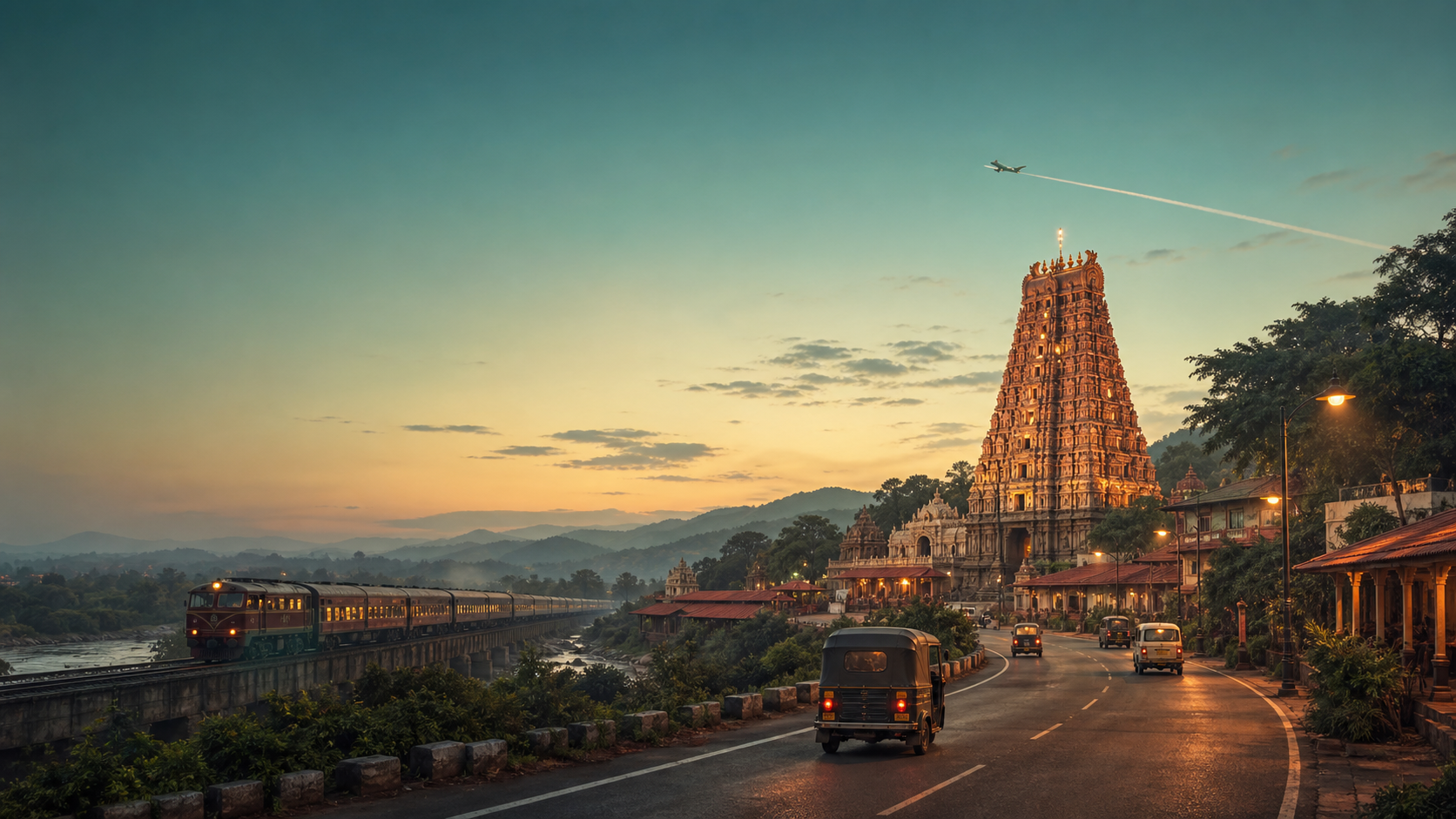
A complete pilgrim record drawn from the existing published article data.
Ancient Roots: Tracing the Temple's Pandya Legacy and Sangam Era Connections
The Subramaniya Swamy Temple’s history extends deep into antiquity, with its origins tracing back to the Sangam period. Built by the Pandya kings in the 6th century CE, the original rock-cut temple stands as a testament to their early patronage. Evidence of human presence, possibly Jain, dates to the 1st century BCE with Tamil-Brahmi inscriptions found in natural caverns. Sangam literature, specifically Tirumurukāṟṟuppaṭai, lists Thiruparankundram as the first of the Arupadai Veedu even before the 6th-century rock-cut construction, establishing its ancient spiritual significance and making it the earliest among Murugan's sacred abodes.
Pandya Dynasty's Patronage
The 6th century CE marks the construction of the original rock-cut temple by Pandya kings. Later Pandya rulers, notably under minister Gajapathy in the 8th century CE, contributed significantly with additions and reconversions.
Sangam Era Mentions
The temple's status as the first Arupadai Veedu is enshrined in the Tirumurukāṟṟuppaṭai, a Sangam era poetic work, indicating its revered position long before its structural development.
Early Inscriptions
Archaeological findings, such as Tamil-Brahmi inscriptions from the 1st century BCE on the hilltop, suggest early human activity and possible Jain presence, predating the Hindu temple's construction.
Subramaniya Swamy Temple: A Sacred Rock-Cut Abode of Murugan
The Subramaniya Swamy Temple, located in Thiruparankundram, Tamil Nadu, is a revered rock-cut shrine dedicated to the Hindu god Murugan. It holds immense spiritual and historical significance as the first of the Arupadai Veedu, the six sacred abodes of Lord Murugan. Built by the Pandya kings in the 6th century CE, this ancient temple is carved into the side of a granite hill, showcasing distinctive Dravidian architectural style. It is recognized as a State Protected monument.
Arupadai Veedu Significance
Thiruparankundram is traditionally considered the first and foremost of Lord Murugan's six battle camps, where he rested after defeating the demon Surapadman. This status elevates its spiritual importance among devotees.
Rock-Cut Heritage
The temple's primary structure is a magnificent rock-cut cave temple, dating back to the 6th century CE. This ancient construction method highlights the early Pandya dynasty's architectural prowess and devotion.
Deity and Tradition
The main deity is Murugan, enshrined alongside Shiva as Parangirinathar. The temple follows the Shaiva tradition with a notable syncretism of Vaishnava and Kaumara elements, reflecting its rich religious tapestry.
Lord Murugan's Abode: Legends and Spiritual Narratives of Thiruparankundram
The Subramaniya Swamy Temple is deeply embedded in the rich mythology surrounding Lord Murugan, attracting countless devotees seeking blessings and spiritual solace. It is famously known as the sacred site where Lord Murugan, after his triumphant victory over the demon Surapadman at Tiruchendur, married Deivanai, the daughter of Indra. This divine union is a central narrative. Furthermore, Murugan is believed to have worshipped his father, Shiva, here, enshrining him as Parangirinathar. These profound legends imbue Thiruparankundram with immense spiritual significance, celebrated in ancient texts and hymns.
The Divine Marriage
Thiruparankundram is revered as the auspicious location where Lord Murugan and Deivanai, Indra's daughter, were united in holy matrimony, a pivotal event in Hindu mythology.
Post-Victory Homage
Following his victory over Surapadman, Lord Murugan is said to have journeyed to this hill to offer devout worship to his father, Shiva, establishing a shrine to Parangirinathar.
Saintly Praises
The temple's spiritual eminence is highlighted by its mention in the Tevaram hymns by Sambandar and the Tiruppugazh compositions by Arunagirinathar, underscoring its long-standing sanctity.
Plan Your Pilgrimage: Essential Information for Visiting Thiruparankundram
For pilgrims and tourists planning a visit to the Subramaniya Swamy Temple, essential information ensures a meaningful and well-prepared experience. The best time to visit is between October and March, when the weather is most favorable. While entry is free, a modest dress code is required, with traditional attire like dhoti for men and sari for women often preferred, and footwear must be removed before entering the sanctum. The temple is easily accessible within Madurai city, well-connected by local buses, and close to Madurai Junction Railway Station and Madurai International Airport.
Optimal Visiting Period
The ideal time to visit Thiruparankundram is during the cooler months from October to March, offering comfortable weather for exploration and participation in temple activities.
Dress Code and Entry
Visitors are requested to observe a modest dress code, and entry to the temple is free of charge. Footwear must be removed before entering the inner sanctums.
Accessibility and Transport
Located within Madurai city limits, the temple is easily reachable by frequent local buses. Madurai Junction Railway Station is 8 km away, and Madurai International Airport (IXM) is 12 km, providing excellent connectivity.
| Deity | Murugan |
|---|---|
| Form | Murugan is worshipped here as Subramaniya Swamy, depicted in a standing form holding his divine spear, the Vel. |
| Consort | Deivanai |
| Sampradaya | Shaiva (with strong Vaishnava and Kaumara syncretism) |
| Significance | This temple is revered as the sacred site where Murugan worshipped his father Shiva after his victory over the asura Surapadman. It is also the location where Murugan's marriage to Deivanai was solemnized, making it a significant pilgrimage spot for devotees. |
The Triumph and Reverence of Lord Murugan
After a fierce and divine battle at Tiruchendur, Lord Murugan, the valiant commander of the celestial armies, emerged victorious over the formidable asura Surapadman. His triumph brought peace to the cosmos. Seeking to honor his divine father, Shiva, Murugan journeyed to Thiruparankundram. Here, amidst the sacred hills, he performed devout worship, enshrining Shiva as Parangirinathar. This sacred act cemented Thiruparankundram as a place of profound reverence, where the victorious son paid homage to the supreme father, marking the site with an aura of divine victory and filial devotion.
Here, the victorious son paid homage to the supreme father, cementing Thiruparankundram as a place of profound reverence.
A celestial wedding solemnized, uniting the divine warrior with his consort, marking a testament to divine love and cosmic harmony.
Related temples: Aakkoor Thanthondreeswarar Temple | Abhaya Varadeeswarar Temple, Adirampattinam
Carved in Stone: The Unique Rock-Cut Architecture of Thiruparankundram
The Subramaniya Swamy Temple is distinguished by its remarkable rock-cut construction, primarily carved directly into the granite hillside. This ancient Dravidian style showcases intricate sculptures and a unique layout. The primary icon of Lord Murugan, along with other deities, is sculpted directly from the living rock of the cave temple. While the original structure dates to the 6th century CE, later additions by the Madurai Nayaks in the 16th century CE introduced elaborate pillared halls and life-sized sculptures, blending historical periods into a cohesive architectural marvel.
Original Rock-Cut Structure
The core of the temple is a 6th-century CE rock-cut shrine, a testament to the Pandya dynasty's mastery of carving directly into the granite hill. This forms the sanctum sanctorum for Murugan.
Sculptural Integration
The main deity of Murugan, along with other shrines for Shiva, Vishnu, Ganesha, and Durga, are not separate idols but are meticulously carved directly from the rock face within the cave.
Nayak Period Additions
Subsequent architectural enhancements by the Madurai Nayaks in the 16th century CE include the construction of expansive mandapams (pillared halls) and the addition of numerous detailed, life-sized sculptures, enriching the temple complex.
Modern Pilgrimage Experience
The Subramaniya Swamy Temple at Thiruparankundram continues to be a vibrant center for devotees in the 21st century, attracting pilgrims from across India and the Tamil diaspora worldwide. Its proximity to Madurai, a major transportation hub, makes it easily accessible by road, rail, and air, contributing to its sustained popularity. Modern pilgrims often arrive equipped with digital guides and pre-booked accommodations, yet the core spiritual experience remains deeply traditional. The temple complex provides essential amenities, including cloakrooms, clean drinking water, and designated queuing areas, to manage the substantial influx of visitors, particularly during auspicious days and festivals like Skanda Sashti and Panguni Uthiram. The climb up the hill, though now facilitated by well-maintained steps, still evokes a sense of ancient devotion, blending convenience with timeless ritual. The contemporary pilgrimage experience at Thiruparankundram is a fascinating blend of ancient rites and modern conveniences, posing both opportunities and challenges for the temple administration. While the influx of devotees boosts the local economy, supporting numerous small businesses from flower vendors to souvenir shops, it also necessitates careful management of crowds, waste, and infrastructure. Efforts are continuously made to preserve the sanctity and architectural integrity of the ancient rock-cut shrine amidst increasing footfall. Furthermore, the temple actively engages with the digital age, offering online information and, at times, live broadcasts of major rituals, allowing a wider audience to participate virtually. This adaptation ensures that the spiritual legacy of Thiruparankundram remains relevant and accessible to new generations of devotees.🗺 How to Reach
Hover a card to animate the journey on the map
Route to Temple
Common Questions
Where is Subramaniya Swamy Temple: Murugan's Sacred Abode located?
Subramaniya Swamy Temple: Murugan's Sacred Abode is documented at Thiruparankundram (Tamil Nadu).
Which deity is associated with Subramaniya Swamy Temple: Murugan's Sacred Abode?
Subramaniya Swamy Temple: Murugan's Sacred Abode is associated with Murugan.
Related Temples

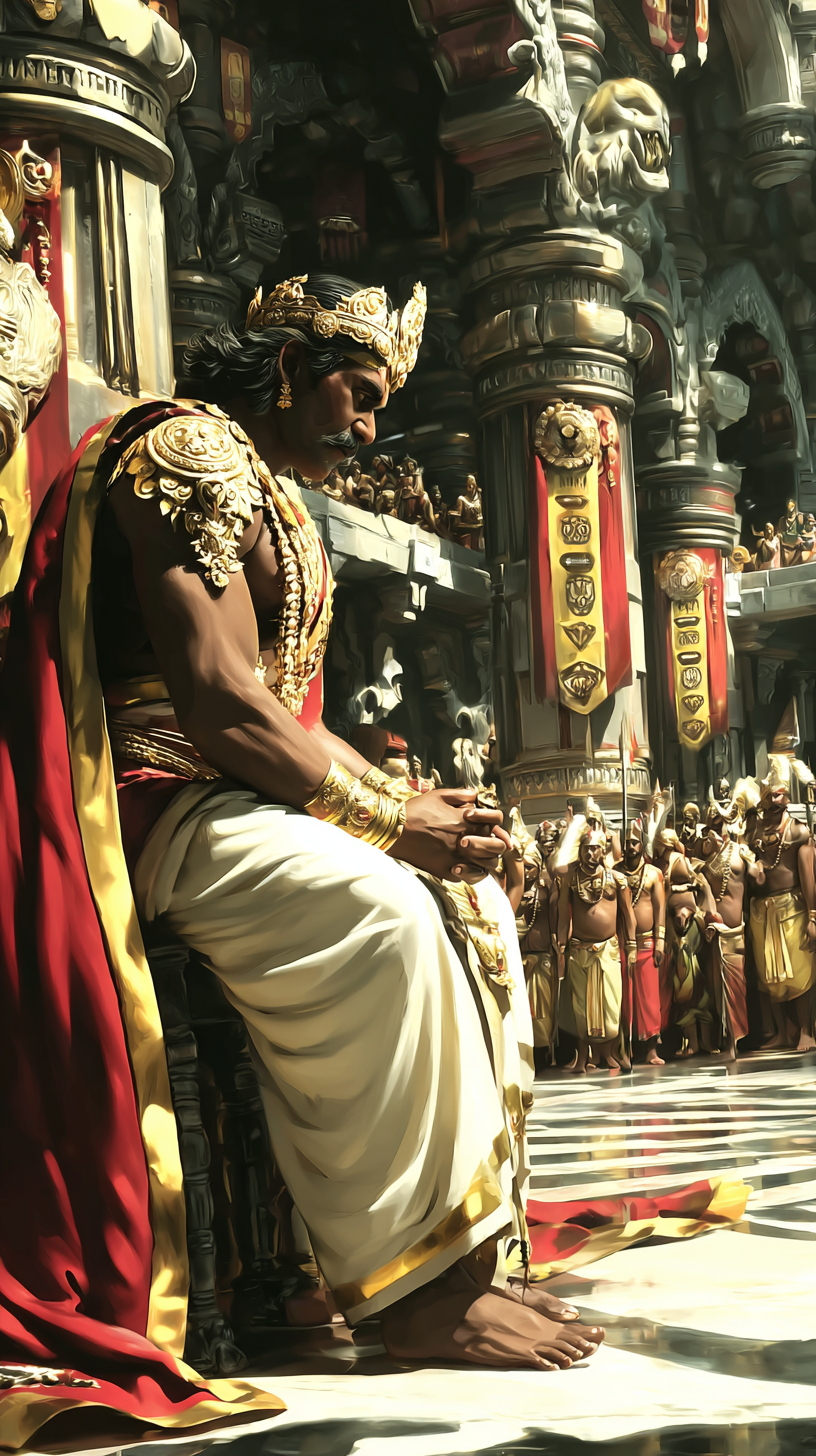

A Living Covenant