



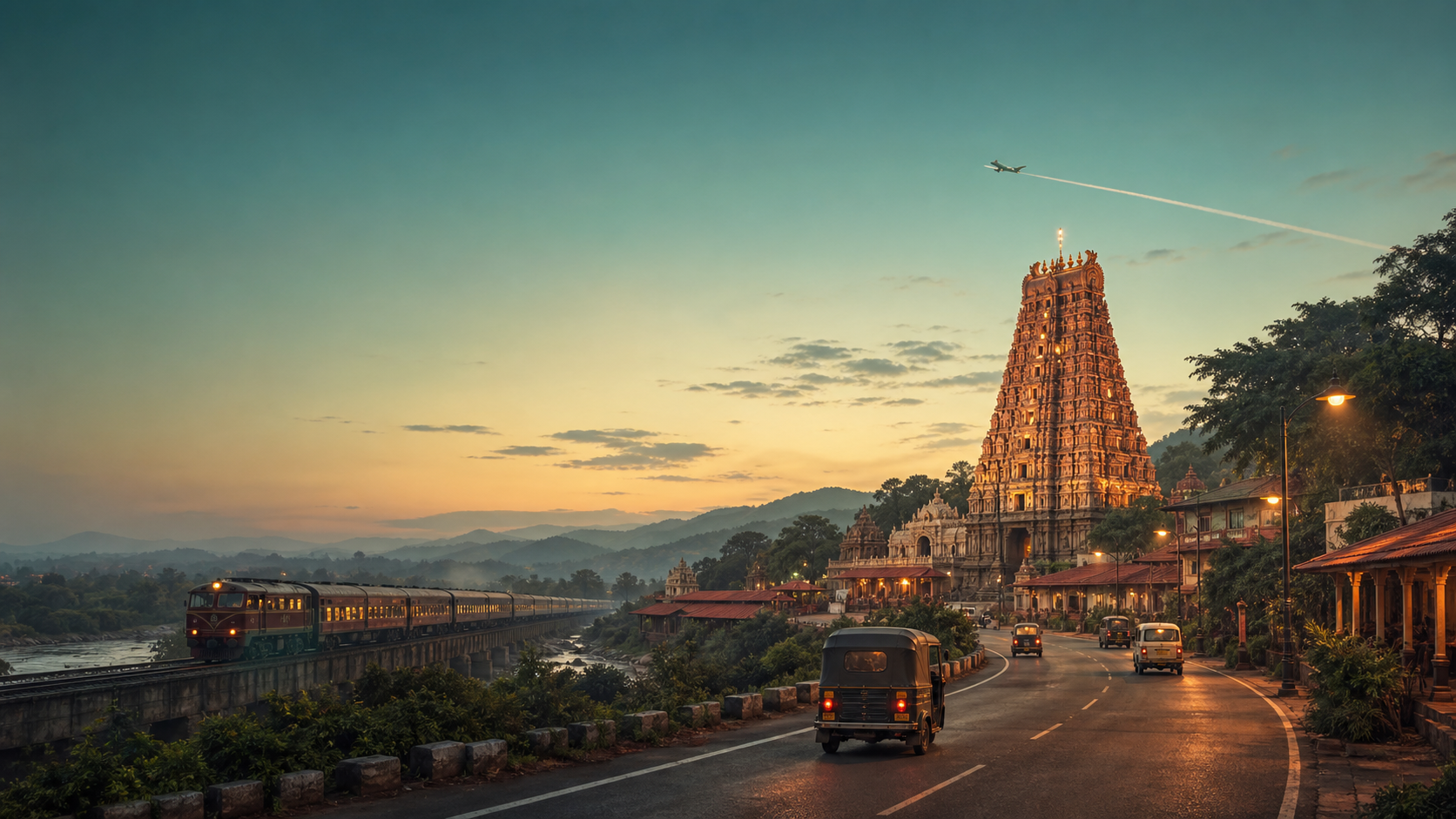
A complete pilgrim record drawn from the existing published article data.
Centuries of Devotion: The Temple's Rich History
The Srivilliputhur Andal Temple boasts a rich historical tapestry, shaped by centuries of patronage from powerful South Indian dynasties. Originating in the 8th century CE with the Vatapatrasayi temple, it later saw significant expansions under the Cholas and Pandyas, whose epigraphic records attest to their contributions. The Vijayanagara Empire, particularly during the 14th and 15th centuries, was instrumental in building the iconic Andal shrine and the magnificent Rajagopuram. Subsequent renovations by Nayak rulers like Thirumalai Nayak and Rani Mangammal further enhanced its grandeur, solidifying its spiritual legacy through continuous royal support.
Early Origins and Chola Influence
The original Vatapatrasayi temple dates back to the 8th century CE, attributed to Tribuvana Chakravarthy Konerinmai Kondan Kulasekaran. Early Chola epigraphic records from the 10th century CE confirm their patronage and presence.
Vijayanagara and Nayak Contributions
The 14th–15th centuries marked significant expansion under the Vijayanagara Empire, with Barathi Rayar overseeing the construction of the Andal shrine and the grand Rajagopuram. Later, Nayak rulers like Thirumalai Nayak (1623–1659) and Rani Mangammal (1689–1706) undertook major renovations.
Continuous Patronage
The temple's enduring grandeur is a testament to the continuous patronage it received from various dynasties, including the Chola, Pandya, Vijayanagara, and Nayak rulers, each leaving an indelible mark on its architecture and spiritual significance.
Architectural Marvels: Dravidian Splendor and Iconic Gopuram
The Srivilliputhur Andal Temple is a quintessential example of Dravidian temple architecture, characterized by its intricate carvings, towering gateways, and distinct shrine complexes. The most striking feature is its magnificent 194-ft tall Rajagopuram, built of granite. This gopuram is not merely an entrance; it is an official symbol of the Government of Tamil Nadu, signifying its cultural importance. The temple complex masterfully integrates two primary shrines: the ancient Vatapatrasayi temple and the later, equally significant, Andal shrine, each preserving unique architectural nuances while contributing to the overall grandeur.
Dravidian Architectural Style
The temple exemplifies the Dravidian style, featuring multi-tiered pyramidal towers (gopurams), pillared halls (mandapams), and intricate sculptures carved from granite, reflecting centuries of South Indian craftsmanship.
The Rajagopuram: A State Symbol
The 194-ft tall Rajagopuram, constructed during the Vijayanagara period, is the tallest in Tamil Nadu and has been adopted as the official emblem of the state government, symbolizing its historical and cultural importance.
Distinct Shrines
The temple complex houses two main shrines: the ancient Vatapatrasayi temple, dedicated to Lord Vishnu, and the separate, yet integrated, shrine for Andal, showcasing a harmonious blend of architectural development over centuries.
Plan Your Pilgrimage: Experiencing Srivilliputhur
Planning a pilgrimage to Srivilliputhur offers an immersive journey into South Indian temple culture, vibrant festivals, and deep spiritual heritage. The temple welcomes visitors year-round, with specific periods offering unique experiences. The best times to visit are during Margazhi (December–January) for the Thiruppavai recitals and Adi (July–August) for the Aadipooram festival, celebrating Andal's birthday. Visitors should allocate 3–4 hours to explore the complex. Modest attire is required, with traditional clothing preferred, and footwear must be removed before entering inner enclosures.
Best Time to Visit
The months of Margazhi (December–January) are ideal for witnessing Thiruppavai recitals, while Adi (July–August) is vibrant with the Aadipooram festival, celebrating Andal's birthday.
Getting There
Srivilliputhur is accessible by bus from major towns like Madurai and Virudhunagar, by local train to Srivilliputhur Railway Station, and by flight to Madurai International Airport (approx. 80 km away).
Visitor Information
Entry to the temple is free. Modest attire is mandatory, with traditional clothing preferred, and footwear must be removed in inner enclosures. A visit typically spans 3–4 hours to fully experience the temple.
| Deity | Vishnu |
|---|---|
| Form | Vishnu is depicted as Vatapatrasayi, reclining on a banyan leaf, with Adisesha serving as his bed. This unique form represents the cosmic sleep of the deity. |
| Consort | Andal (as Lakshmi/ Bhudevi incarnation) |
| Sampradaya | Vaishnava |
| Significance | As Vatapatrasayi, Vishnu is revered in a rare iconographic configuration, symbolizing cosmic preservation. The temple is also significant as the birthplace of two Alvars, Periyalvar and Andal, and houses the unique Andal shrine where she is enshrined with Rangamannar. |
Andal's Divine Love and Union
The temple witnessed the extraordinary devotion of Andal, foster-daughter of Periyalvar. From a young age, her love for Lord Ranganatha was absolute. She would secretly adorn herself with garlands meant for the deity, believing herself to be his bride. One day, this act was discovered, but Lord Vishnu appeared in Periyalvar’s dream, sanctioning Andal’s unique offering and declaring his acceptance. Her devotion culminated in a divine marriage to Ranganatha of Srirangam, after which she miraculously merged with the Lord, symbolizing the ultimate union of the individual soul with the Divine. Her garlands continue to be sent to other temples, carrying her sacred love.
Her devotion culminated in a divine marriage to Ranganatha, after which she miraculously merged with the Lord, symbolizing the ultimate union of the soul with the Divine.
A unique Divya Desam, the birthplace of two Alvars, and home to the rare Vatapatrasayi form of Vishnu, this temple stands as a beacon of Vaishnava tradition.
Related temples: Aakkoor Thanthondreeswarar Temple | Abeyadana Temple
Srivilliputhur Andal Temple: A Jewel of Vaishnavism
The Srivilliputhur Andal Temple is a revered Divya Desam, one of the 108 sacred abodes of Vishnu. It holds unique significance as the birthplace and spiritual home of two prominent Alvars, Periyalvar and his foster-daughter Andal. Its towering 194-ft Rajagopuram is not only an architectural marvel but also serves as the official emblem of the Government of Tamil Nadu, cementing its status as a vital spiritual and cultural landmark in the region.
Divya Desam Significance
As one of the 108 Divya Desams, Srivilliputhur holds immense spiritual importance for Vaishnavites, dedicated to Lord Vishnu and celebrated in the hymns of the Alvars.
Home of the Alvars
The temple is uniquely associated with two of the twelve Alvars: Periyalvar, a profound devotee, and his foster-daughter Andal, the only female Alvar, whose lives and compositions are central to Vaishnavite tradition.
Iconic Rajagopuram
The temple's magnificent 194-ft tall Rajagopuram, built of granite, is an architectural masterpiece and stands as the official emblem of the Government of Tamil Nadu, symbolizing the state's rich heritage.
Andal and Vatapatrasayi: The Heart of Srivilliputhur
At the spiritual core of Srivilliputhur Andal Temple lies the profound devotion centered around Lord Vishnu, enshrined as Vatapatrasayi, and the extraordinary life of Andal. Lord Vatapatrasayi is depicted in his reclining form, symbolizing cosmic repose. Andal, the foster-daughter of Periyalvar, is revered as the only female among the twelve Alvars, Vaishnavite poet-saints. Her passionate devotion found expression in the timeless hymns of Thiruppavai and Nachiar Tirumoli, which are central to Vaishnavite liturgy. Her unique spiritual journey, culminating in her mystical union with Ranganatha, defines the temple's sanctity and draws countless devotees.
Lord Vatapatrasayi
The primary deity, Lord Vatapatrasayi, is a form of Vishnu depicted in a reclining posture on a banyan leaf (Vatapatram), symbolizing his cosmic slumber and providing solace to devotees.
Andal: The Poet-Saint
Andal, also known as Kodhai, is the only female among the twelve Alvars. Her devotional poetry, particularly Thiruppavai and Nachiar Tirumoli, are revered texts in the Vaishnava tradition, expressing her intense love for Lord Ranganatha.
Spiritual Significance
The temple is a pilgrimage site for Vaishnavites, not only for the presence of Lord Vatapatrasayi but also as the sacred birthplace of Andal, whose divine love story and literary contributions deeply enrich the Vaishnava faith.
Cultural Impact
The Srivilliputhur Andal Temple holds an indelible place in the cultural tapestry of Tamil Nadu, primarily due to its association with Andal, the only female Alvar saint. Her devotional compositions, the *Thiruppavai* and *Nachiyar Thirumozhi*, are considered literary masterpieces and fundamental texts within the Sri Vaishnava tradition. These hymns have profoundly influenced Tamil literature, Carnatic music, and classical dance forms like Bharatanatyam, with artists frequently interpreting her verses. The temple itself, with its intricate sculptures and vibrant murals, serves as a living canvas reflecting centuries of artistic tradition inspired by Andal's fervent devotion. Its cultural impact extends beyond religious boundaries, enriching the broader South Indian artistic and philosophical landscape.
Beyond its spiritual significance, the Srivilliputhur Andal Temple acts as a vital social and cultural anchor for the town and its surrounding regions. Major festivals, particularly *Aadi Pooram* (Andal's birth anniversary) and the annual Car Festival, transform Srivilliputhur into a vibrant hub of activity, drawing devotees and tourists alike. These celebrations are not merely religious observances but grand cultural spectacles that foster community cohesion, showcase traditional arts, and stimulate local economies. The temple's iconic gopuram, a symbol of Tamil Nadu's state emblem, further cements its role as a source of local pride and a powerful emblem of Dravidian heritage, deeply embedding itself into the collective identity of the people.
🗺 How to Reach
Hover a card to animate the journey on the map
Route to Thiruvilliputtur state assembly constituency
Common Questions
Where is Srivilliputhur Andal Temple: A Divya Desam Legacy located?
Srivilliputhur Andal Temple: A Divya Desam Legacy is documented at Tamil Nadu.
Which deity is associated with Srivilliputhur Andal Temple: A Divya Desam Legacy?
Srivilliputhur Andal Temple: A Divya Desam Legacy is associated with Vishnu.
Related Temples


A Living Covenant