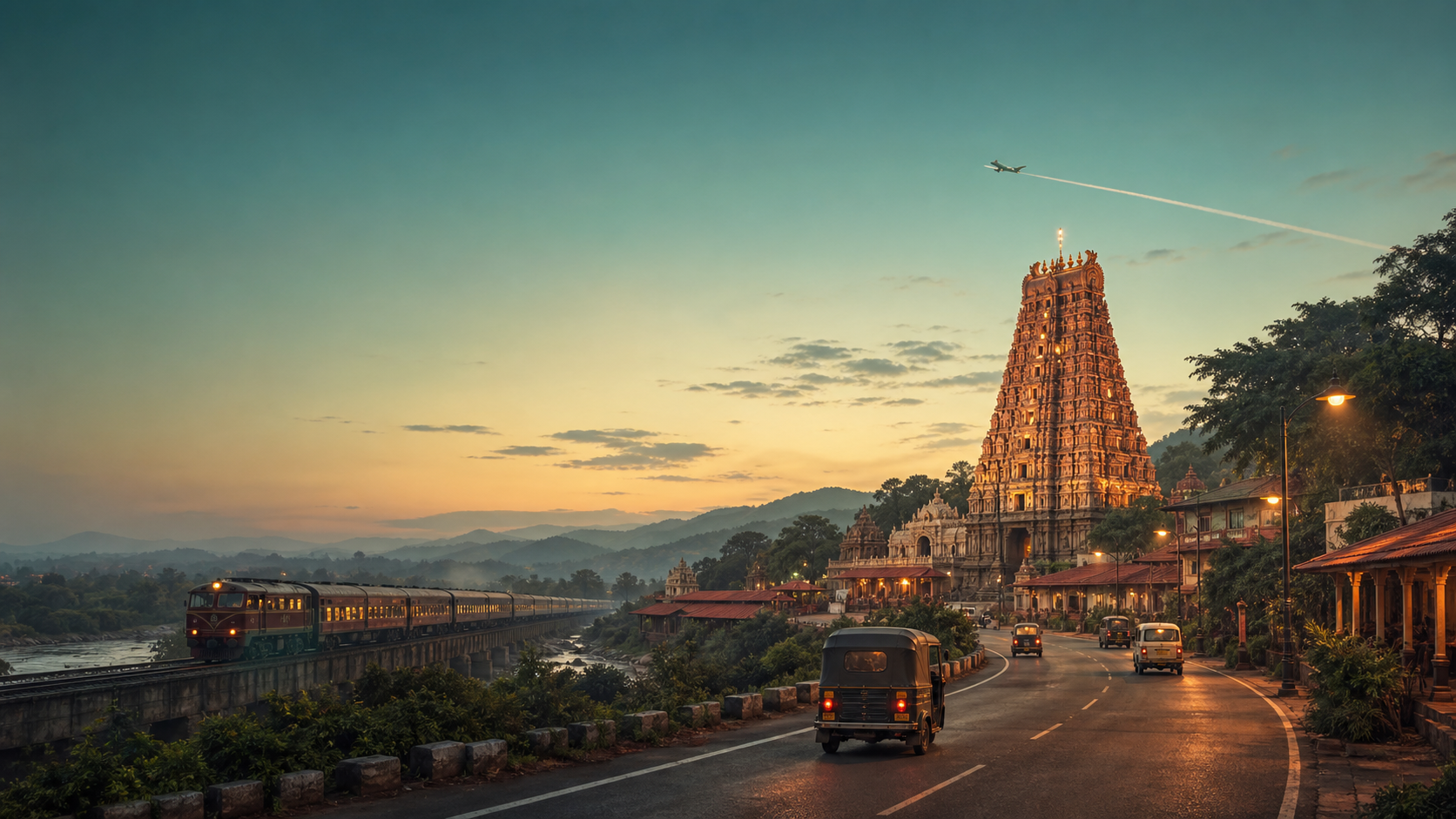
A complete pilgrim record drawn from the existing published article data.
Centuries of Devotion: The Temple's Royal Legacy
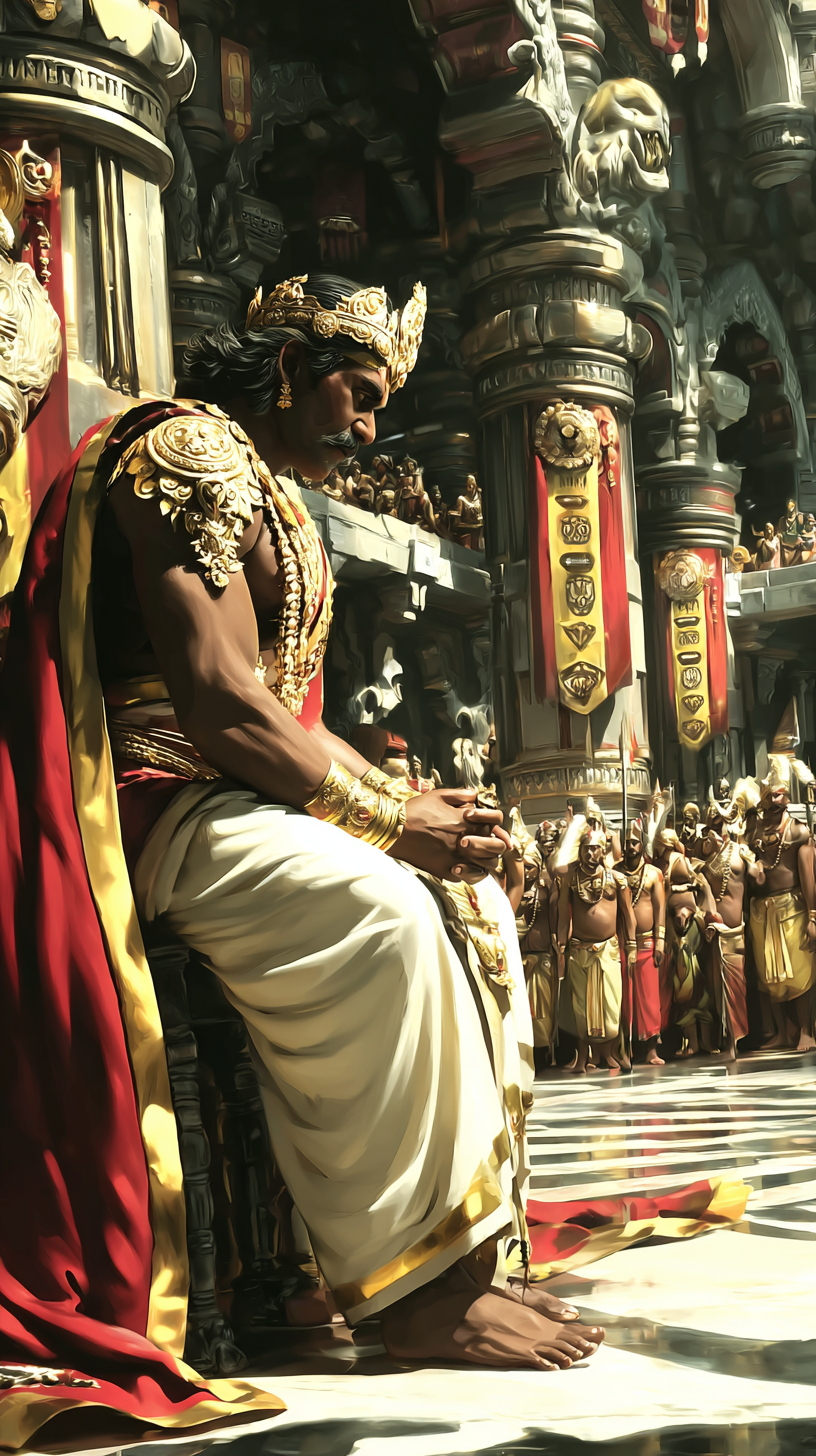
The Sri Varadharaja Perumal Kovil boasts a profound royal legacy, with its origins tracing back to the 8th century CE when Pallava king Nandivarman II initiated its construction. Over subsequent centuries, powerful dynasties significantly expanded and embellished the temple. Chola kings, including Rajendra Chola I, Kulottunga Chola I, and Vikrama Chola, contributed substantially, with major expansions recorded in 1053 CE. Later Cholas added walls and gopuras in the 14th century. The temple's present form owes much to the extensive Vijayanagara-era additions during the 13th–14th centuries and a significant phase in 1532 CE, showcasing a continuous tradition of royal patronage.
Pallava Origins
The temple's foundation was laid in the 8th century CE by the Pallava king Nandivarman II, marking its earliest known structural form.
Chola Expansions
Major expansions occurred under Chola rulers, notably in 1053 CE, with further contributions from Kulottunga Chola I and Vikrama Chola.
Vijayanagara Influence
Significant additions and renovations in the 13th–14th centuries and 1532 CE by the Vijayanagara empire shaped much of the temple's current layout.
Sri Varadharaja Perumal Kovil: A Vaishnava Marvel
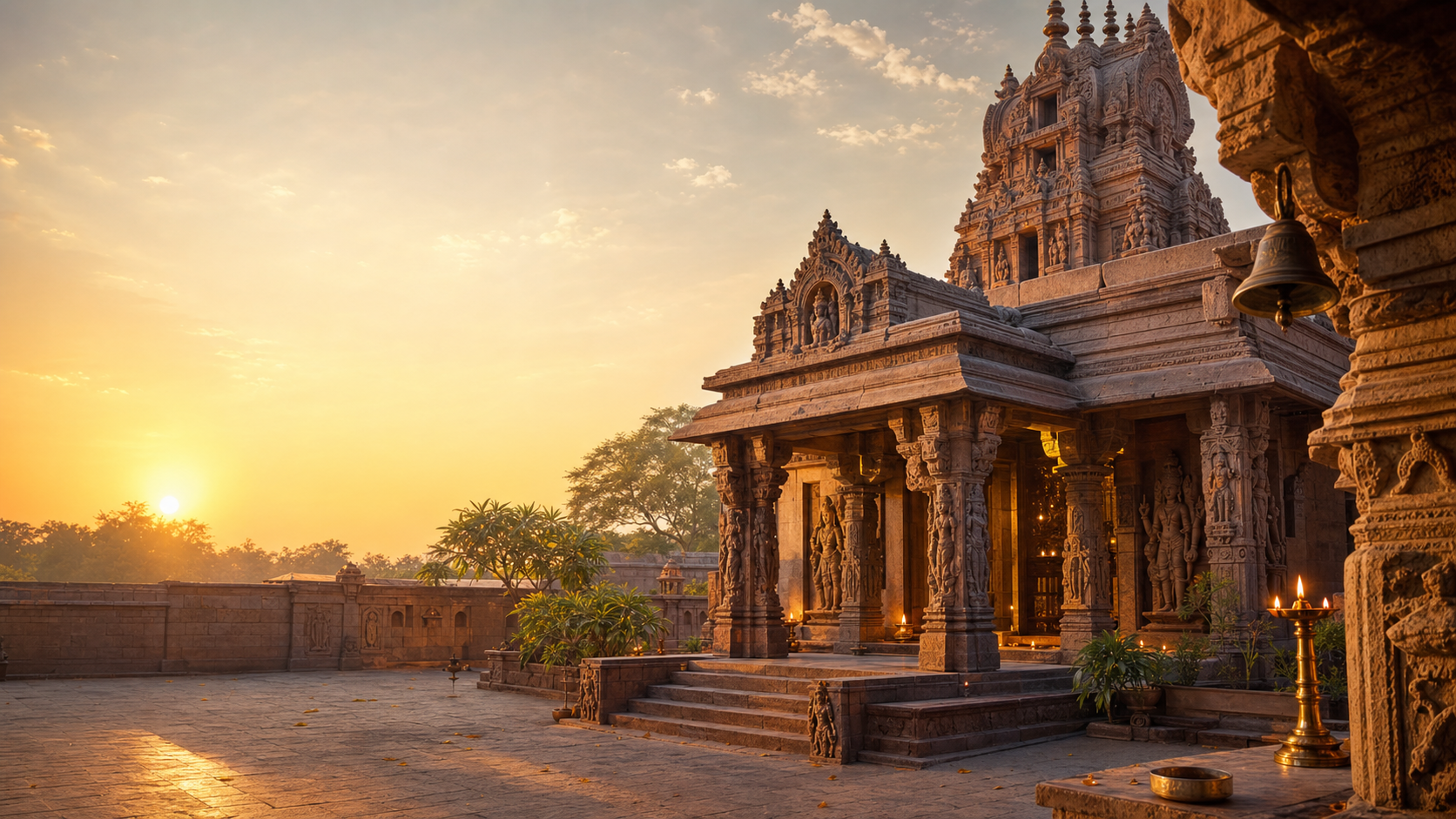
Sri Varadharaja Perumal Kovil, located in Tamil Nadu, stands as a prominent Vaishnava temple and a revered Divya Desam. Dedicated to Lord Varadharaja Perumal, an aspect of Vishnu, this ancient shrine is celebrated for its profound spiritual significance and distinctive traditions. Its sprawling complex showcases impressive Dravidian architecture, reflecting centuries of artistic and devotional patronage. The temple's grandeur and unique rituals draw pilgrims and visitors, offering a glimpse into a rich cultural and religious heritage. It serves as a vital center for Vaishnavite worship and a testament to enduring faith.
A Sacred Divya Desam
As a Divya Desam, Sri Varadharaja Perumal Kovil holds immense spiritual importance within the Vaishnava tradition, signifying its veneration by the Alvars.
Vaishnava Tradition
Dedicated to Lord Varadharaja Perumal, a form of Vishnu, the temple is a central hub for Vaishnavite worship and practices in Tamil Nadu.
Architectural Grandeur
The temple's design exemplifies the Dravidian style, characterized by its elaborate structures and intricate craftsmanship developed over centuries.
Planning Your Pilgrimage: A Visitor's Guide
Planning a visit to Sri Varadharaja Perumal Kovil offers a deeply enriching experience. The temple welcomes visitors with free entry, though specific timings should be confirmed. The ideal period for a pilgrimage is between October and March, avoiding the peak summer heat. However, during the rare Athi-Varadar festival years (July–August), the temple becomes a bustling hub of devotion. Traditional attire is preferred, and removing footwear is customary. The temple is accessible via Tirunelveli Junction for trains, Tuticorin Airport for flights, and well-connected by bus and car, with parking available. A half to full day is recommended to explore its vastness.
Best Time to Visit
The months of October to March are recommended for comfortable weather, with the Athi-Varadar festival in July–August being a unique event.
Getting There
The temple is easily reachable by train to Tirunelveli Junction, flights to Tuticorin Airport, and a network of local buses and national highways.
Visitor Etiquette
Free entry is available, but visitors are encouraged to wear traditional attire and observe the practice of removing footwear before entering.
| Deity | Varadharaja Perumal |
|---|---|
| Form | Primarily worshipped as a 10 ft tall standing granite idol. A wooden Athi-Varadar idol is retrieved from the temple tank and worshipped every 40 years. |
| Consort | Perundevi Thayar |
| Sampradaya | Vaishnava |
| Significance | Lord Vishnu, as Varadharaja Perumal, is significant for his role in ensuring the success of Lord Brahma's yajna by halting the Vegavathi river. He is also uniquely worshipped through the Athi-Varadar idol, which emerges from the temple tank every 40 years. |
Lord Vishnu Halts the Raging River
During a grand yajna by Lord Brahma, his consort Saraswati, in her fury, transformed into the Vegavathi River, threatening to flood the sacred site. To protect the ritual, Lord Vishnu mercifully intervened, lying across the raging river to halt its forceful flow. This divine act of compassion allowed Brahma’s yajna to proceed undisturbed, leading to the miraculous emergence of Lord Varadaraja himself. This foundational event underscores the temple's deep mythological roots and the protective nature of the deity.
A divine secret, revealed once every forty years, drawing millions to witness the sacred Athi-Varadar. A profound blessing, a rare darshan.
From Pallava origins to Vijayanagara grandeur, this sacred abode stands as a testament to devotion, where Lord Vishnu himself intervened to protect a cosmic yajna.
Related temples: Aakkoor Thanthondreeswarar Temple | Abeyadana Temple
Engineering Marvels: The Temple's Distinctive Architecture
The Sri Varadharaja Perumal Kovil exemplifies the grandeur of Dravidian architecture, characterized by its intricate carvings and towering gopuras. Constructed primarily from granite and stone, the temple's design reflects centuries of evolving artistic traditions. Originally built by the Pallavas, it underwent significant expansions under the Cholas and later the Vijayanagara rulers, resulting in a vast and complex layout. These successive contributions led to the addition of numerous mandapams, prakarams, and gopuras, creating an impressive architectural ensemble. The craftsmanship visible throughout the complex highlights the engineering prowess of the various dynasties that shaped its form.
Dravidian Style
The temple showcases the classic Dravidian architectural style, featuring pyramidal multi-storied gopuras and elaborate mandapams.
Material and Craftsmanship
Built predominantly with granite and stone, the temple exhibits detailed sculptural work and robust construction techniques from various eras.
Evolution of Design
Successive dynasties, including Pallava, Chola, and Vijayanagara, contributed to its vast complex, adding distinct architectural elements over time.
The Sacred Deities: Unveiling Vishnu and the Athi-Varadar Phenomenon
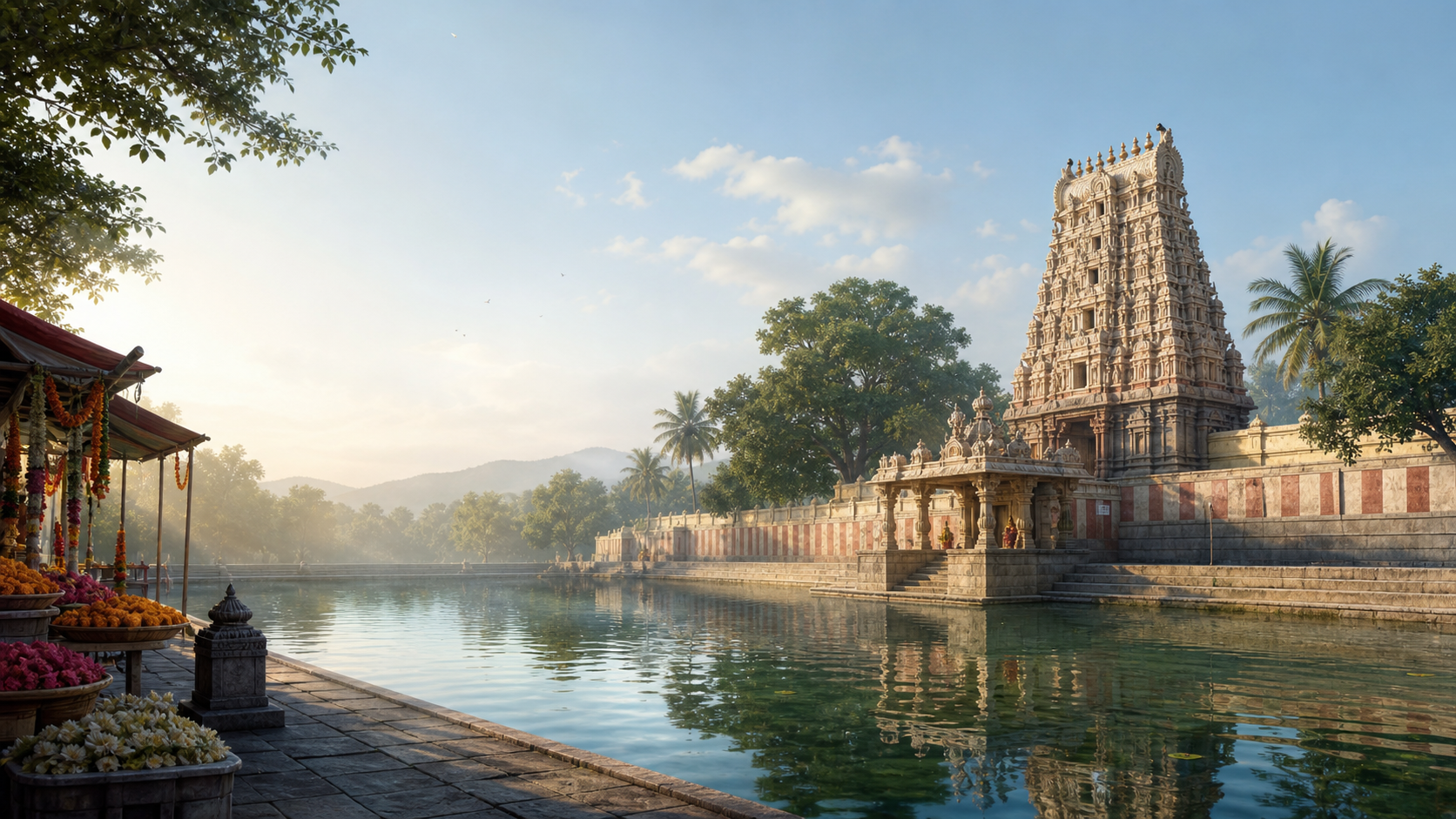
At the heart of Sri Varadharaja Perumal Kovil resides Lord Varadharaja Perumal, a manifestation of Vishnu, revered as the protector and grantor of boons. The temple's spiritual core is deeply intertwined with ancient narratives, including Lord Vishnu's intervention to halt the Vegavathi River during Brahma's yajna, leading to Varadaraja's emergence. A unique and profound ritual centers around the wooden Athi-Varadar idol, carved by Visvakarma. This sacred deity, hidden for centuries in the Anantha Theertham tank to safeguard it from invasions, emerges only once every 40 years for a 48-day darshan, drawing immense devotion and symbolizing divine reappearance.
Lord Varadharaja Perumal
The presiding deity, an aspect of Vishnu, is central to the temple's worship, believed to grant wishes and offer protection.
The Athi-Varadar Phenomenon
This extraordinary festival, occurring every 40 years, features the emergence of a wooden idol from the temple tank for public viewing.
Divine Origins
The temple's mythology recounts Lord Vishnu's intervention during Brahma's yajna, leading to the manifestation of Varadaraja Perumal.
Cultural Impact and Artistic Legacy
Sri Varadharaja Perumal Kovil, beyond its profound religious significance, has profoundly shaped the cultural landscape of Kanchipuram and Tamil Nadu. Its annual Brahmotsavam festival, particularly the famed Garuda Sevai, draws hundreds of thousands of devotees and tourists, transforming the city into a vibrant hub of traditional music, dance, and crafts. The temple's deep association with the Vaishnava saint Ramanuja and his philosophical contributions has cemented its role as a vital spiritual and intellectual center, influencing countless scholars and devotees over centuries. The architectural grandeur and intricate sculptures have also served as an enduring inspiration for subsequent temple constructions in the region, establishing a distinctive Kanchipuram style that seamlessly blends Dravidian aesthetics with rich Vaishnava iconography. The temple's meticulously preserved rituals and traditions, passed down through generations, contribute significantly to the preservation of ancient Hindu practices.
The artistic legacy of Sri Varadharaja Perumal Kovil is immense, effectively serving as a living museum of South Indian art and architecture. Its towering gopurams, expansive mandapams like the iconic Aayirankal Mandapam (1000-pillar hall), and the intricate carvings depicting a multitude of mythological narratives offer a visual feast and a powerful testament to the unparalleled skill of ancient artisans. The temple also houses exquisite frescoes and mural paintings, though some have naturally faded over time, which provide invaluable insights into the artistic styles and religious narratives prevalent during different historical periods. The bronze idols, particularly the Utsava Murti (processional deities), are revered masterpieces of Chola and Vijayanagara metallurgy, renowned for their delicate features and profound spiritual expressiveness. This rich artistic heritage continues to inspire contemporary artists and sculptors, ensuring the temple's influence extends far beyond its religious boundaries into the realm of cultural preservation and artistic innovation.
🗺 How to Reach
Hover a card to animate the journey on the map
Route to Tharuvai
Common Questions
Where is Sri Varadharaja Perumal Kovil: Tirunelveli's Vishnu Gem located?
Sri Varadharaja Perumal Kovil: Tirunelveli's Vishnu Gem is documented at Tharuvai, Tamil Nadu.
Which deity is associated with Sri Varadharaja Perumal Kovil: Tirunelveli's Vishnu Gem?
Sri Varadharaja Perumal Kovil: Tirunelveli's Vishnu Gem is associated with Vishnu.
Related Temples


A Living Covenant